International Day of Education January 24:Why It Matters
Why International Day of Education January 24 Matters in Today’s World
Education rarely makes breaking news. Yet it quietly shapes everything around us — from the jobs people can access to how societies grow, adapt, and stay peaceful. The International Day of Education January 24 exists to spotlight this often-overlooked truth. Education remains the foundation of equality, opportunity, and sustainable progress.
For many families, education determines whether the next generation moves forward with choice and confidence or remains limited by circumstances beyond their control.
Why Education Feels More Urgent in 2025–2026
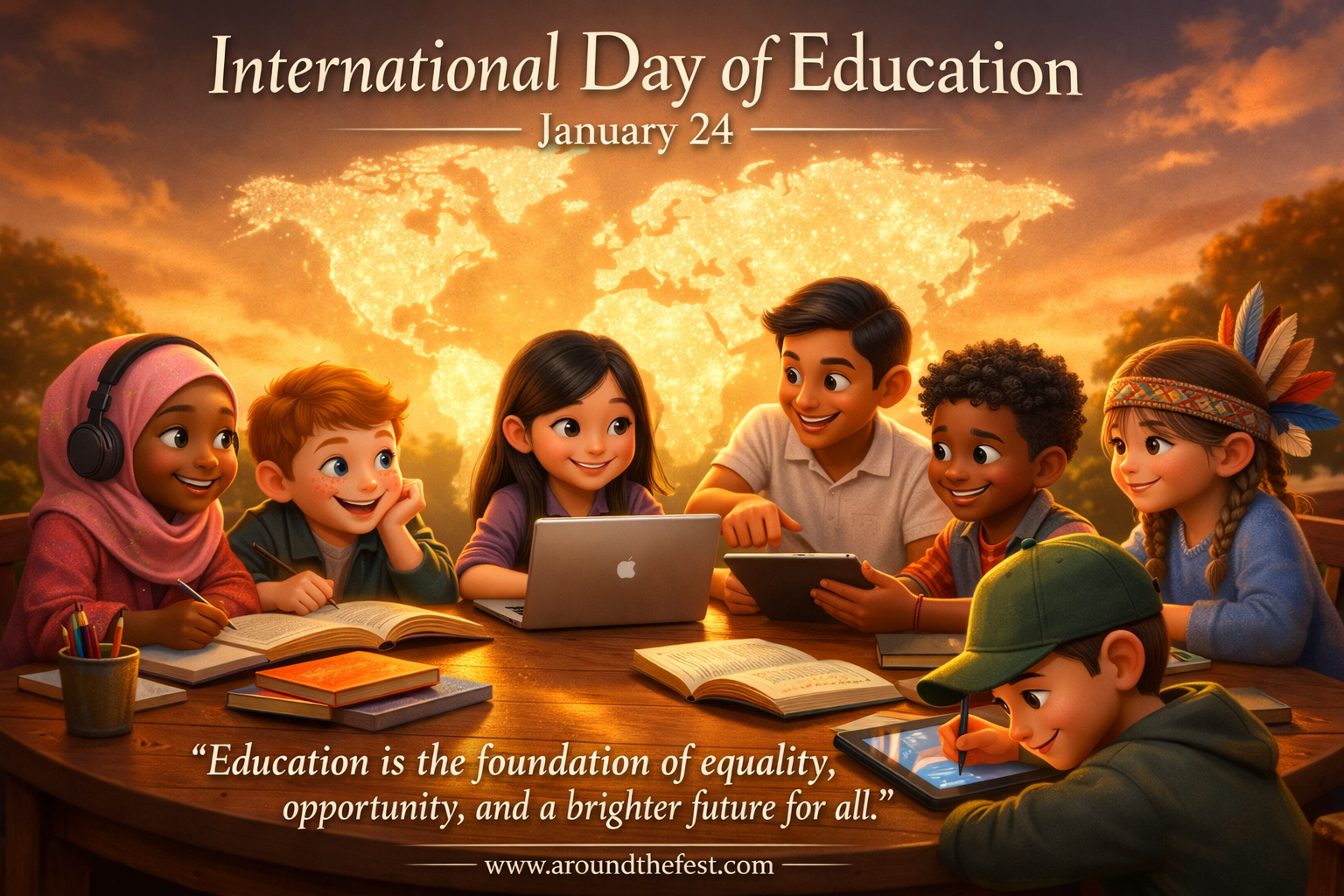
The United Nations established this global observance to recognize education as a basic human right and a shared global responsibility. It extends far beyond classrooms and textbooks. Today, education decides whether communities can keep pace with rapid technological change. It also shapes how societies recover from economic shocks and build inclusive futures.
Why does this matter now more than ever?
As the world moves through 2025 and into 2026, education systems face rapid transformation. Artificial intelligence is entering classrooms at scale. Digital learning continues to expand faster than ever. At the same time, millions of children still lack access to basic schooling.
Recent global education data shows that learning gaps widened after the pandemic. These gaps continue to affect low-income regions, girls, refugees, and marginalized communities the most.
These challenges look different across regions. Rural schools in India struggle with digital access. Underfunded districts in the United States face teacher shortages. In many parts of the Global South, conflict and displacement threaten education continuity itself.
The International Day of Education January 24 creates a global pause. It invites the world to reflect and ask essential questions:
- Who benefits from modern education systems today?
- Who continues to fall behind?
- How can education evolve without deepening inequality?
This observance encourages governments, educators, organizations, and individuals to reflect on these questions and take action. Each year, UNESCO leads global discussions around a central theme. These conversations connect education to real-world challenges such as digital transformation, employment shifts, climate change, and social justice.
In this guide, we explore what International Day of Education truly means. We explain why January 24 was chosen. We examine UNESCO’s role, unpack the 2026 theme in simple words, and show why education still shapes global equality today — in a clear, human, and practical way.
International Day of Education January 24: Meaning and Purpose
The International Day of Education January 24 is a global observance recognized by the United Nations to highlight the essential role education plays in shaping individuals, societies, and economies. It treats education not as a privilege, but as a basic human right that every person deserves, regardless of location, income, or background.
This day exists for a clear reason. Education influences far more than academic success. It shapes health outcomes, employment opportunities, gender equality, civic participation, and long-term economic growth. When education systems work well, communities gain stability and resilience. When access to learning breaks down, inequality grows deeper and harder to reverse.
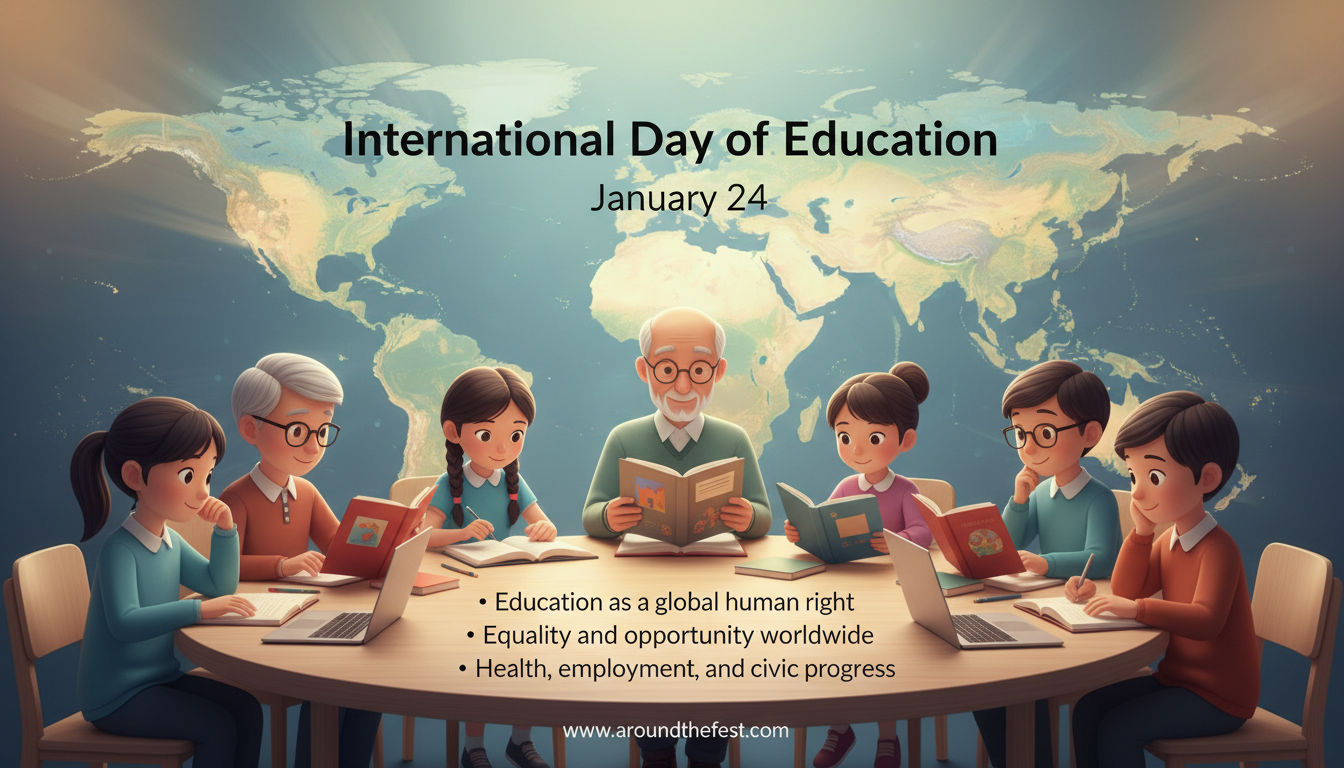
From a global perspective, the purpose of International Day of Education is to:
- Draw attention to gaps in access and learning quality
- Promote inclusive and equitable education systems
- Encourage lifelong learning beyond formal schooling
Unlike symbolic awareness days, International Day of Education January 24 pushes for accountability. Governments, international organizations, and education leaders often use this moment to review progress, announce reforms, and renew commitments toward education goals.
The International Day of Education January 24 is a global observance recognized by the United Nations to highlight the essential role education plays in shaping individuals, societies, and economies. At its core, it treats education not as a privilege, but as a basic human right that every person deserves, regardless of location, income, or background.
This day exists for a clear reason. Education influences far more than academic success. In practice, it shapes health outcomes, employment opportunities, gender equality, civic participation, and long-term economic growth. When education systems work well, communities gain stability and resilience. However, when access to learning breaks down, inequality grows deeper and harder to reverse.
Core Objectives of International Day of Education January 24
From a global perspective, the purpose of International Day of Education is to:
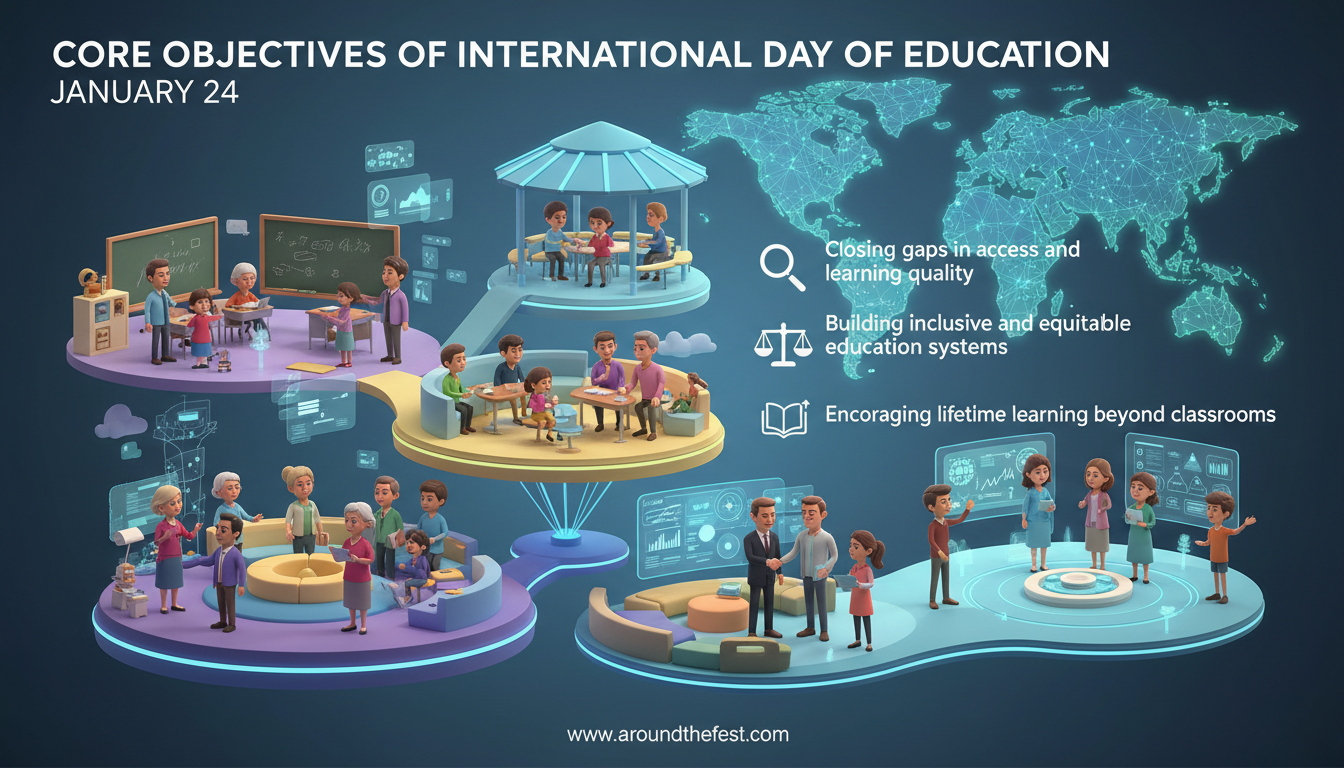
- Draw attention to gaps in access and learning quality
- Promote inclusive and equitable education systems
- Encourage lifelong learning beyond formal schooling
Unlike purely symbolic awareness days, International Day of Education January 24 pushes for accountability. As a result, governments, international organizations, and education leaders often use this moment to review progress, announce reforms, and renew commitments toward education goals.
What International Day of Education Represents Globally
Across the world, education realities differ widely. In some regions, students learn through advanced digital platforms and AI-supported classrooms. In others, children study without reliable electricity, internet access, or trained teachers. Yet, education carries the same promise everywhere.
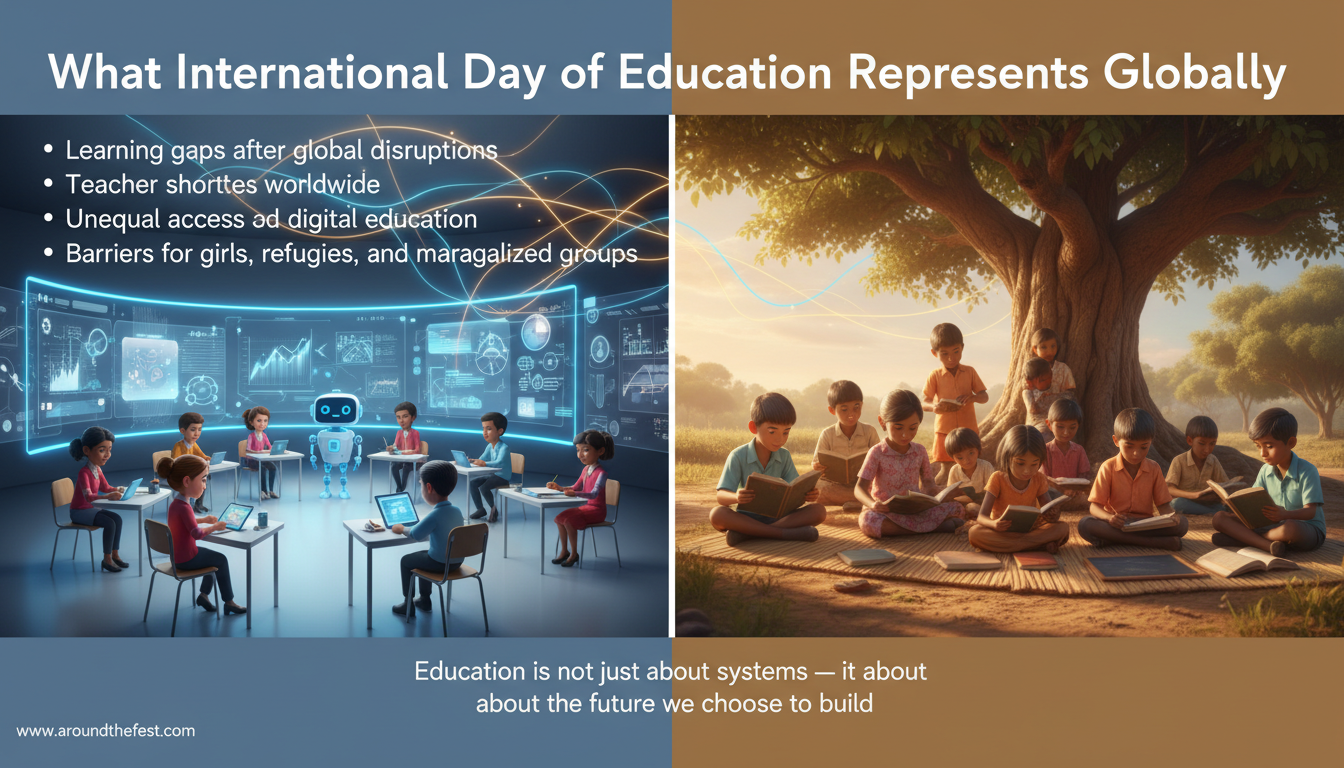 In 2025–2026, global education systems share several challenges:
- Learning loss caused by pandemic disruptions
- Shortages of qualified teachers
- Unequal access to digital education tools
- Barriers faced by girls, refugees, and marginalized groups
Because of these shared challenges, the International Day of Education January 24 represents a collective global responsibility. It brings together policymakers, educators, nonprofits, and communities to focus on solutions rather than statistics alone.
More importantly, education represents possibility. For individuals, it opens doors to better livelihoods. For societies, it strengthens social cohesion and innovation. Ultimately, for future generations, it creates choice, mobility, and dignity.
That is why International Day of Education is not only about learning systems. Instead, it is about the kind of world we want to build — fairer, more resilient, and more inclusive.
Why January 24 Was Chosen for International Day of Education
The United Nations officially designated January 24 as International Day of Education in 2018. The first global observance took place in 2019, marking a formal commitment to place education at the center of the global development agenda.
Rather than selecting a date tied to a single country or historic event, the UN chose January 24 deliberately. The goal was to create a neutral, globally relevant moment that every nation could observe without political or cultural barriers. As a result, the day belongs equally to students in classrooms, teachers in remote regions, policymakers in capital cities, and families navigating education challenges worldwide.
Why January 24 Matters in the Global Calendar
January holds symbolic importance. For many countries, it marks the beginning of a new academic cycle, new policy planning, and renewed social priorities after the start of the year. By placing the International Day of Education January 24 early in the calendar, the UN ensured education conversations begin before budgets, reforms, and global agendas are finalized.
This timing encourages governments and institutions to:
- Reflect on education outcomes from the previous year
- Identify gaps in access, quality, and equity
- Align national education goals with global development targets
Consequently, education is framed not as a side issue, but as a foundation for economic growth, innovation, and social stability.
The Connection Between January 24 and Global Education Goals
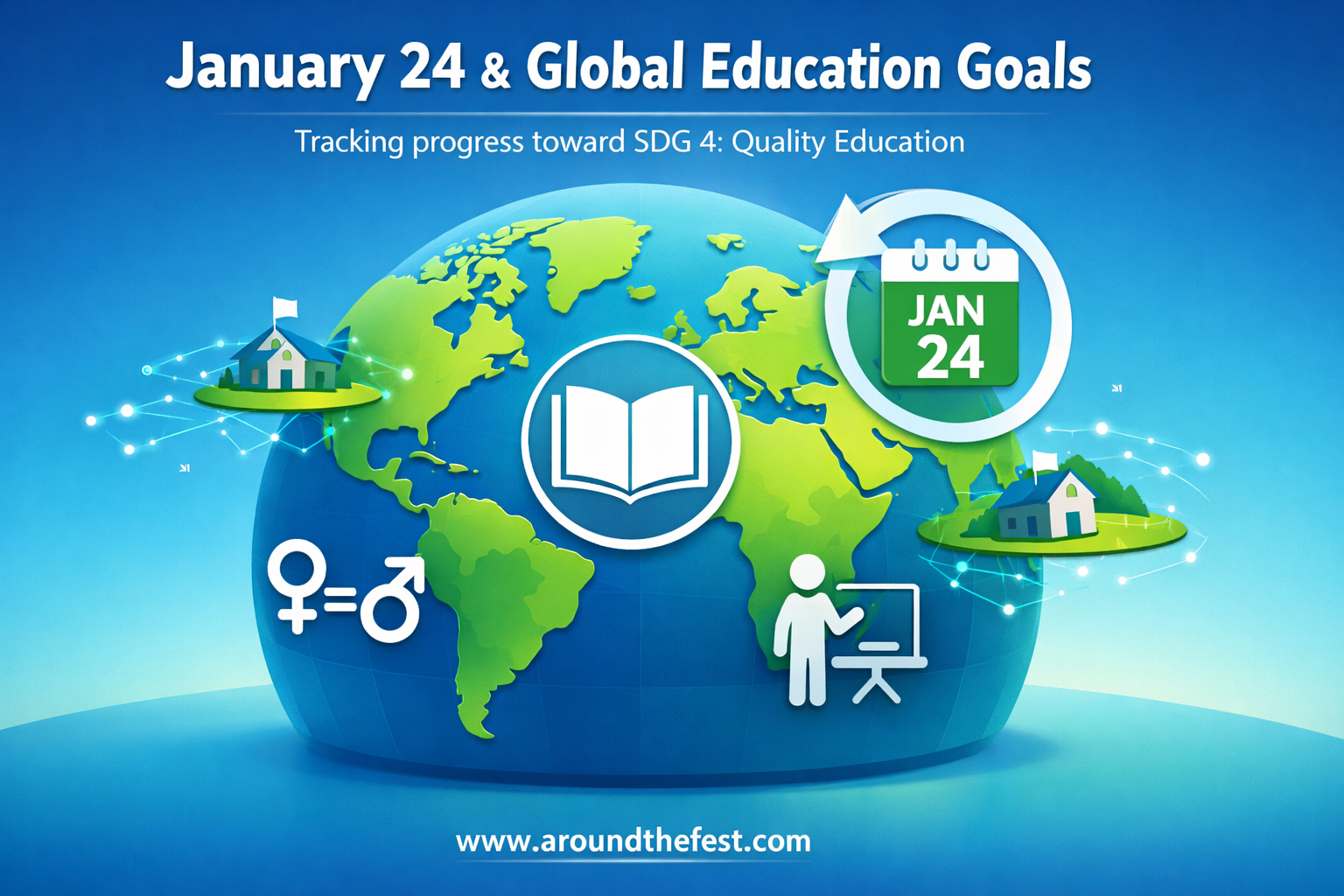
Another reason January 24 was chosen lies in its alignment with the UN Sustainable Development Goals (SDGs), especially SDG 4: Quality Education. This goal emphasizes inclusive, equitable, and lifelong learning for all.
By anchoring the International Day of Education to a fixed annual date, the UN created a recurring checkpoint. Each year, progress toward global education commitments can be assessed, questioned, and strengthened. Over time, this consistency has helped education remain visible even during global crises, economic slowdowns, and political shifts.
For many countries in the Global South, including India, this annual moment has become especially important. It draws international attention to challenges such as digital divides, teacher shortages, gender gaps, and rural access to schooling—issues that often remain invisible outside policy circles.
UNESCO’s Role in International Day of Education January 24
UNESCO plays a central role in shaping and coordinating the International Day of Education January 24 because education sits at the heart of its global mission. As the United Nations agency responsible for education, science, culture, and communication, UNESCO works to ensure education remains a shared international priority rather than a national afterthought.
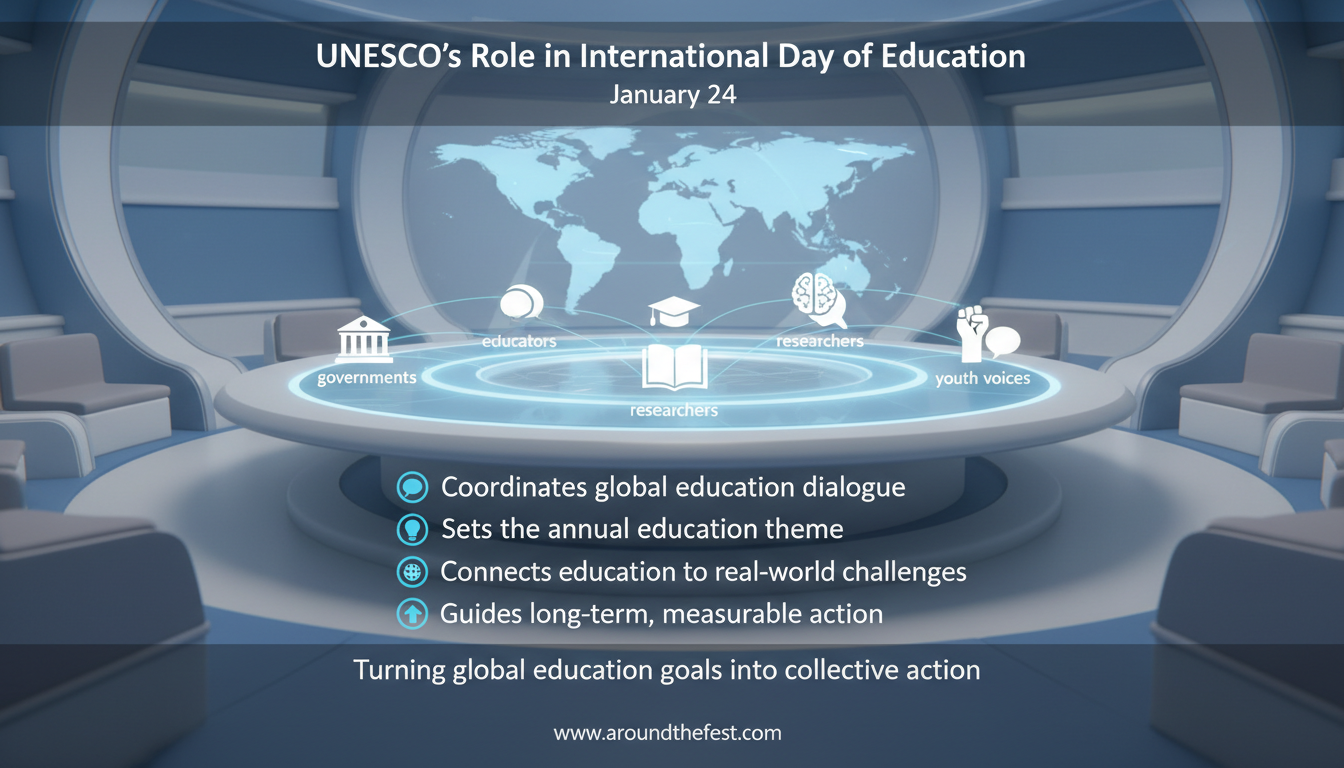
Instead of treating the day as a one-time observance, UNESCO uses it as a platform to guide long-term education conversations. Each year, it brings together governments, educators, researchers, civil society groups, and youth voices to discuss how education systems must adapt to changing global realities.
How UNESCO Shapes the Annual Education Theme
One of UNESCO’s most visible contributions is selecting and explaining the annual theme for International Day of Education. These themes are not chosen for symbolism alone. They reflect urgent challenges facing education systems worldwide, such as digital transformation, teacher shortages, learning inequality, and access to quality education during crises.
UNESCO works closely with member states and global partners to ensure each theme:
- Connects education to real-world social and economic issues
- Highlights gaps between policy promises and lived realities
- Encourages measurable action rather than abstract commitments
As a result, the themes help translate global education goals into practical discussion points that countries can act on locally.
Where UNESCO’s Impact Is Most Visible
UNESCO’s influence extends far beyond conferences and statements. On and around International Day of Education January 24, the organization supports:
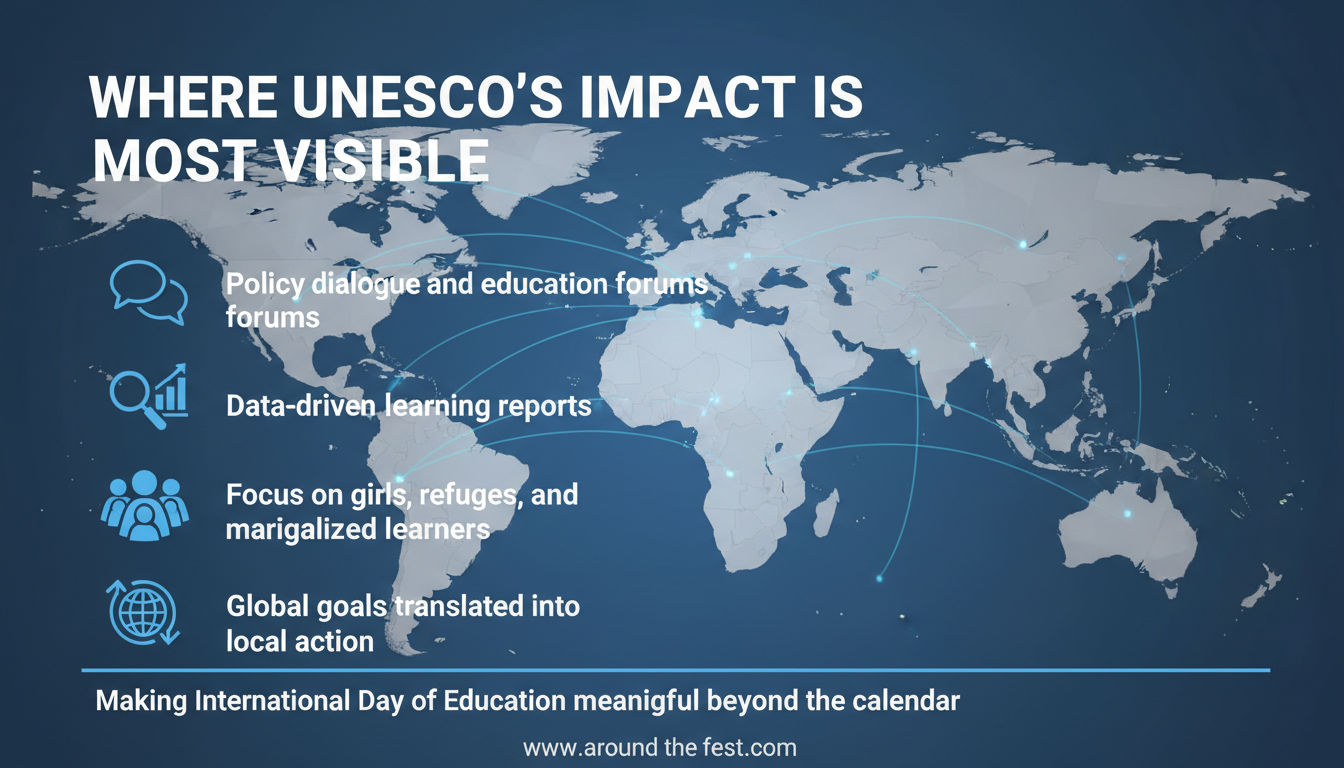
- Global policy dialogues and education forums
- Data-driven reports on learning access and quality
- Campaigns focused on marginalized learners, including girls, refugees, and rural communities
In countries like India and across the Global South, UNESCO-backed initiatives often spotlight teacher training, digital inclusion, and foundational literacy. Meanwhile, in high-income countries, the focus frequently shifts toward lifelong learning, skills for future jobs, and responsible use of technology in classrooms.
How UNESCO Connects Global Goals to Local Action
Perhaps UNESCO’s most important role lies in its ability to connect global frameworks with local realities. By aligning International Day of Education with Sustainable Development Goal 4, UNESCO helps governments track progress, identify gaps, and recalibrate education strategies year after year.
This ongoing involvement ensures that International Day of Education January 24 remains relevant, responsive, and rooted in real educational challenges rather than becoming a symbolic calendar event.
International Day of Education January 24: 2026 Theme Explained
What Is the 2026 Theme and Why It Matters
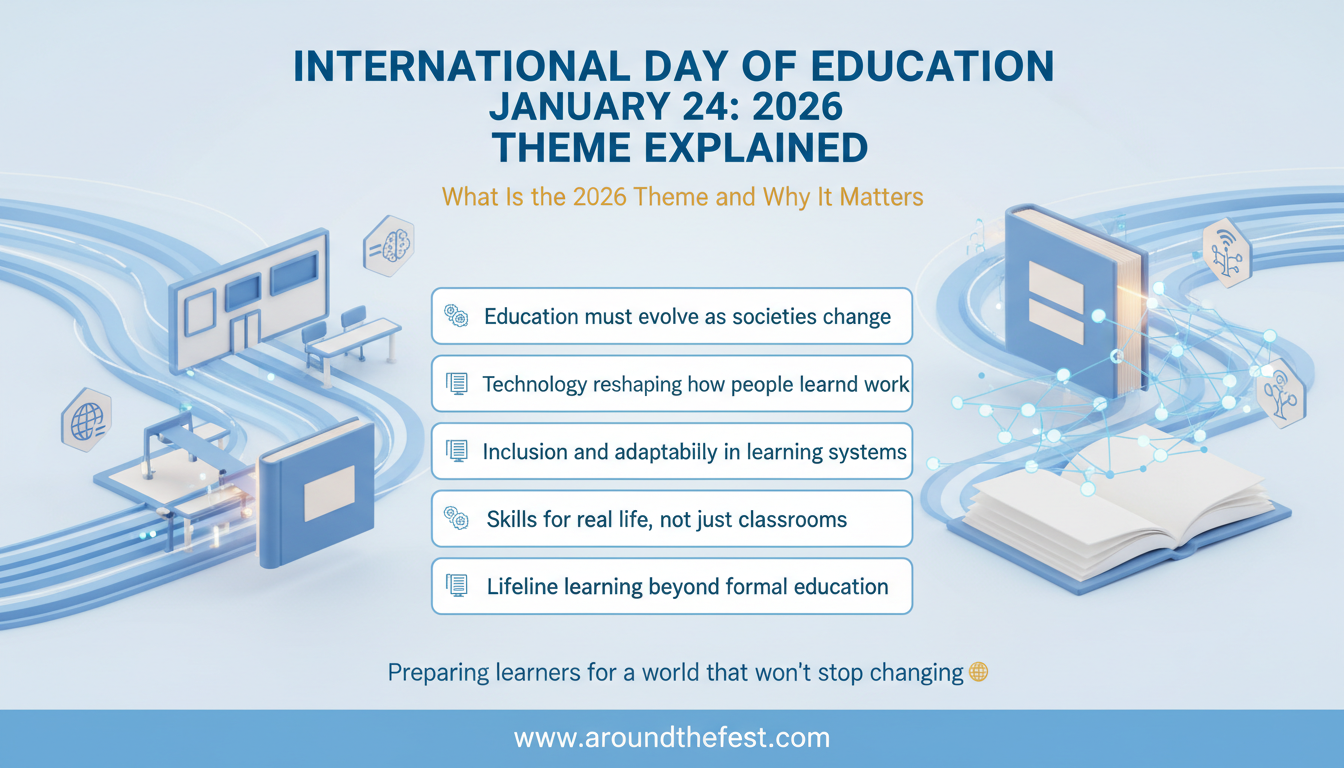
Each year, the International Day of Education January 24 focuses on a specific theme that reflects the most pressing challenges facing education systems worldwide. The 2026 theme centers on how education must evolve in a rapidly changing world, where technology, inequality, and social disruption increasingly shape how people learn and work.
In simple terms, the 2026 theme highlights one core idea: education cannot stay the same if societies are changing faster than classrooms. Learning systems must become more inclusive, adaptable, and relevant to real-life needs, especially for young people entering uncertain job markets.
Rather than focusing only on schools, the theme encourages a broader view of learning that includes digital skills, critical thinking, and lifelong education.
Why This Theme Was Chosen in 2026
The timing of the 2026 theme is not accidental. As we move deeper into the decade, education systems are facing multiple pressures at once. Artificial intelligence is transforming industries. Climate-related disruptions are affecting access to schooling. Meanwhile, economic inequality continues to influence who benefits from quality education.
UNESCO and its partners selected this theme to respond to these realities. The goal is to spark conversations about how education can prepare learners not just for exams, but for unpredictable futures.
This theme also reflects lessons learned after recent global disruptions. Learning losses, teacher shortages, and unequal access to digital tools remain visible across many regions, including parts of Asia, Africa, and Latin America.
How the 2026 Theme Connects to Everyday Learning
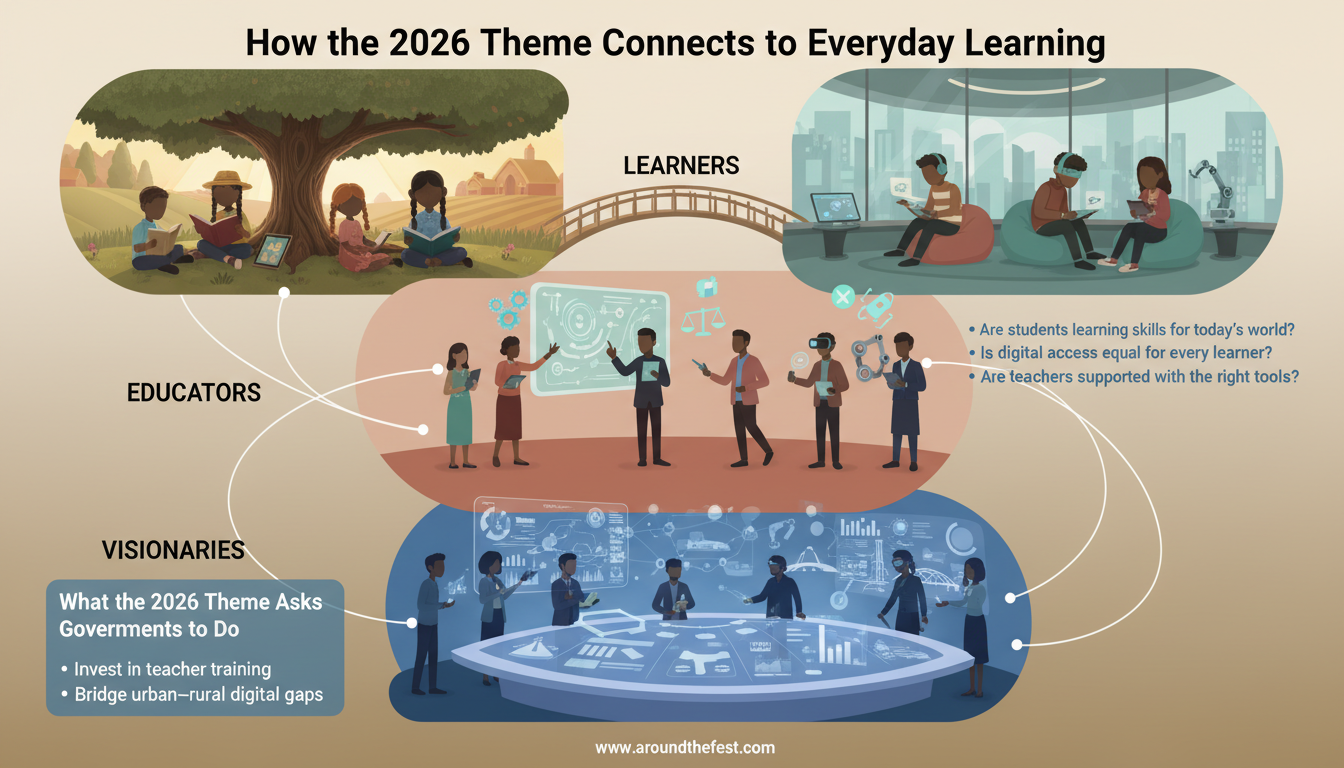
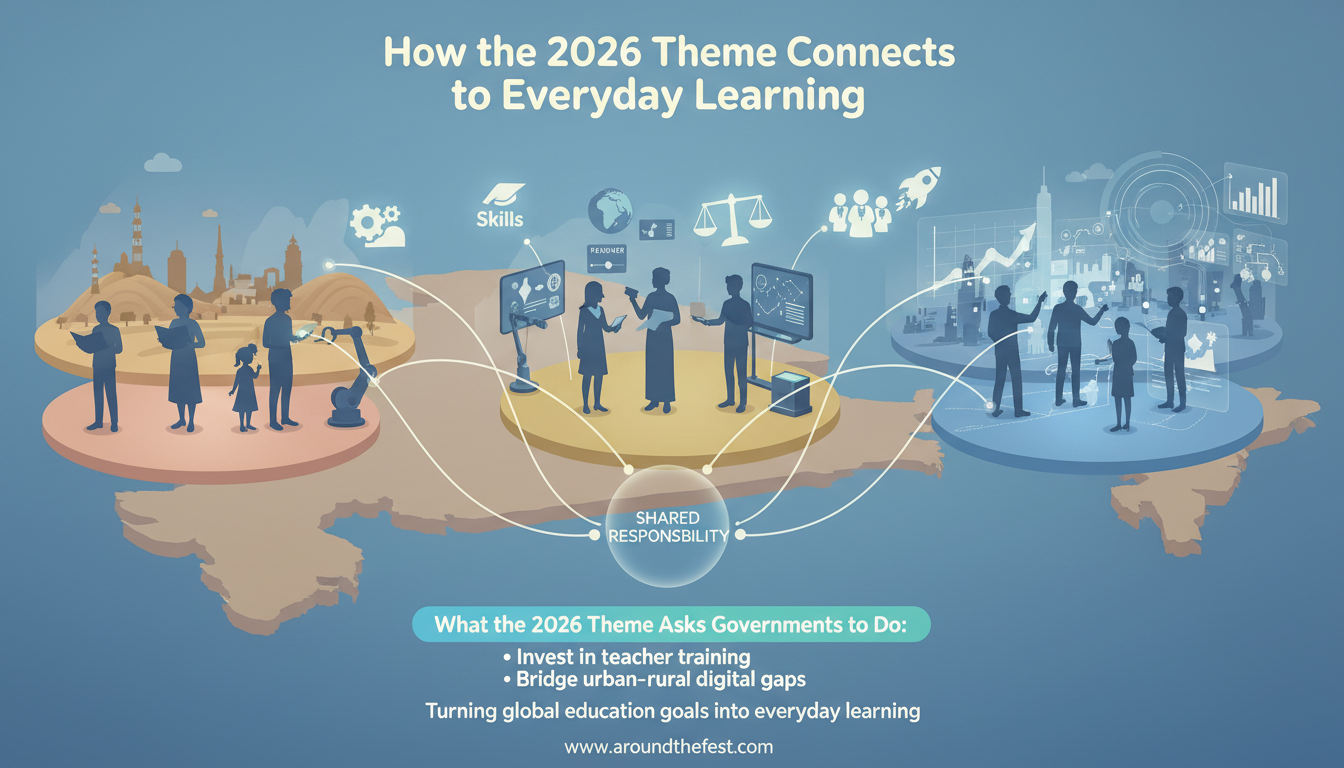
For students and families, the 2026 theme translates into practical questions:
- Are schools teaching skills that match today’s world?
- Do students have equal access to digital learning tools?
- Are teachers supported with training and resources?
In countries like India, this discussion often centers on balancing traditional education with digital inclusion. In higher-income regions, the focus shifts toward ethical technology use and lifelong reskilling. Despite these differences, the underlying message remains the same: education must work for everyone, not just those with privilege.
What the 2026 Theme Encourages Governments and Institutions to Do
Beyond awareness, the International Day of Education January 24 uses the 2026 theme as a call to action. Governments and education leaders are encouraged to:
- Invest in teacher training and support systems
- Reduce digital divides between urban and rural learners
- Align education policies with future workforce needs
By framing these goals around a shared annual theme, the observance helps turn global concerns into national and local priorities.
Why International Day of Education January 24 Still Shapes Global Equality
Education continues to be one of the most powerful tools for reducing inequality worldwide. The International Day of Education January 24 exists largely because access to quality learning still determines who gets opportunities and who remains excluded.
When education systems function well, they open doors to better health outcomes, stable employment, and civic participation. Children who complete basic education are more likely to escape poverty, participate in democratic processes, and support the education of the next generation. In contrast, when education access is limited, inequality compounds over time.
For many families, education determines whether the next generation moves forward or stays stuck.
How Education Gaps Create Long-Term Inequality
Despite global progress, education gaps remain deeply uneven. In many regions, factors such as income level, gender, disability, and geographic location continue to shape learning outcomes.
For example:
- Children in rural areas often face teacher shortages and limited infrastructure
- Girls in some regions still experience barriers to continued education
- Refugee and displaced children remain among the most excluded learners globally
These gaps do not stay confined to classrooms. Over time, they affect income distribution, social mobility, and national development. This is why International Day of Education January 24 repeatedly emphasizes equity, not just enrollment numbers.
Where Education Inequality Is Most Visible Today
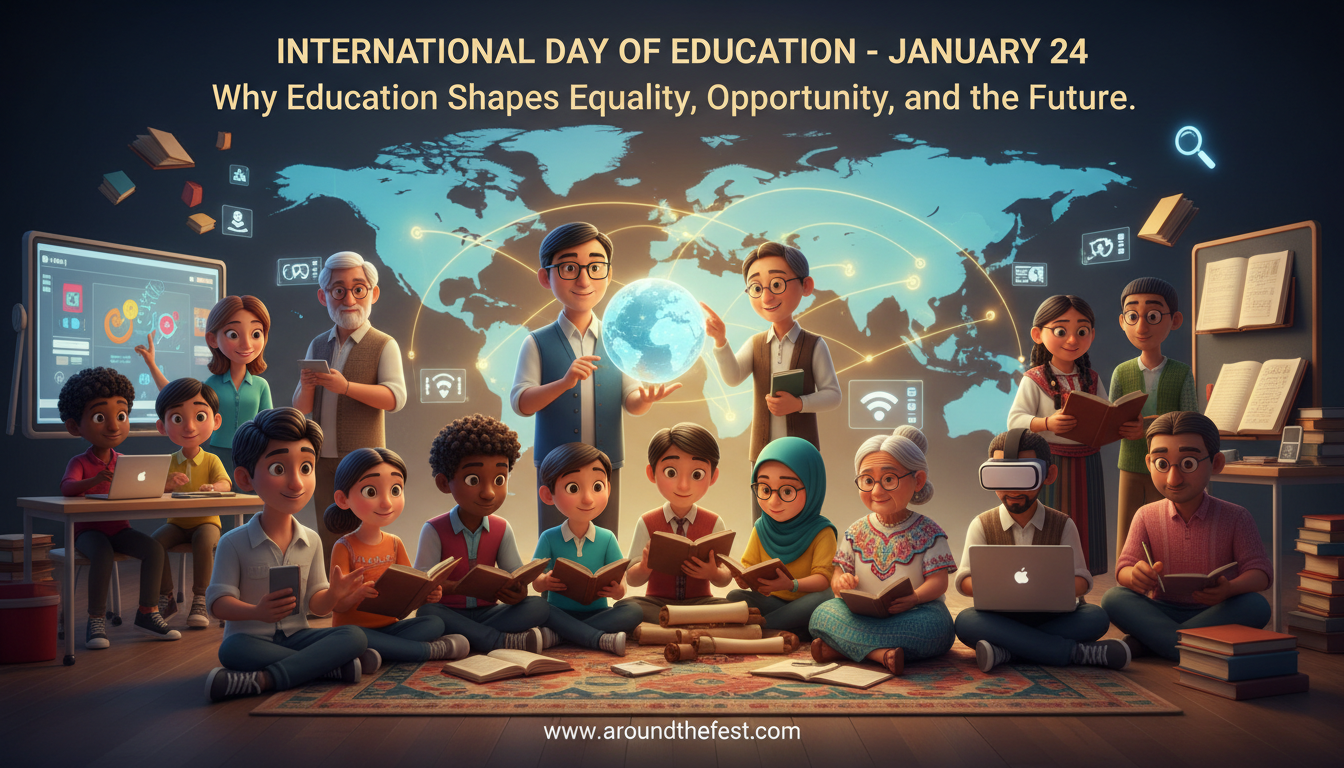
Education inequality takes different forms depending on geography and economic context. In many developing countries, limited access to basic schooling, qualified teachers, and digital tools remains a major barrier. Wealthier nations face a different challenge, where gaps often appear in learning quality, skill relevance, and access to affordable higher education.
Across India and much of the Global South, digital learning has grown rapidly in recent years. However, uneven internet access and infrastructure continue to determine who truly benefits from these advances. In contrast, the United States and Europe struggle with rising education costs and widening skill mismatches, issues that increasingly shape long-term career mobility.
How International Day of Education January 24 Drives Awareness and Action
The power of International Day of Education January 24 lies in its ability to turn inequality into a shared global concern. Each year, it encourages governments and institutions to examine who is being left behind and why.
More importantly, it reinforces a simple idea: education systems must adapt if equality is to improve. Policies focused on teacher support, inclusive learning environments, and affordable access to education remain central to closing these gaps.
How People and Communities Can Observe International Day of Education January 24
Observing International Day of Education January 24 does not require large-scale action. Individuals can participate by supporting education-focused organizations, sharing awareness about learning inequality, or mentoring students in their communities. Even reflecting on personal access to education helps reinforce why learning equity matters globally.
Schools and educators often use this day to spark conversations beyond the classroom. Activities may include discussions on global education challenges, workshops on digital learning, or projects focused on inclusion and lifelong learning. These small actions help students understand education as a shared global responsibility.
Community involvement plays a crucial role in turning awareness into impact. Local libraries, nonprofits, and parent groups can use International Day of Education January 24 to highlight access gaps, promote adult learning programs, or advocate for better education infrastructure at the local level.
FAQs: International Day of Education January 24
Q1. What is International Day of Education January 24?
Ans. International Day of Education January 24 is a United Nations–recognized global observance that highlights education as a basic human right and a key driver of equality, peace, and sustainable development worldwide.
Q2. Why is International Day of Education celebrated on January 24?
Ans. January 24 was chosen by the United Nations to create a neutral, globally inclusive date that allows countries to reflect on education priorities early in the year, before major policy and budget decisions are finalized.
Q3. Who started International Day of Education?
Ans. The United Nations General Assembly established International Day of Education in 2018, with UNESCO leading its global coordination and annual themes.
Q4. What is the theme of International Day of Education 2026?
Ans. The 2026 theme focuses on how education must adapt to rapid global change, including digital transformation, inequality, and future workforce needs, while remaining inclusive and accessible for all learners.
Q5. Why is International Day of Education important today?
Ans. International Day of Education remains important because millions of children and adults still lack access to quality learning. The observance draws attention to learning gaps, digital divides, and unequal education systems worldwide.
Q6. How does UNESCO support International Day of Education January 24?
Ans. UNESCO leads the observance by setting the annual theme, organizing global discussions, publishing education data, and helping countries align education policies with Sustainable Development Goal 4.
Q7. How does education help reduce inequality?
Ans. Education helps reduce inequality by improving access to employment, health, and civic participation. People with quality education are more likely to break cycles of poverty and support inclusive economic growth.
Q8. Is International Day of Education a public holiday?
Ans. No, International Day of Education January 24 is not a public holiday. It is an awareness and action-focused observance recognized globally through events, campaigns, and policy discussions.
Q9. How can individuals observe International Day of Education?
Ans. Individuals can observe the day by supporting education initiatives, sharing awareness, participating in learning events, advocating for equal access to education, or simply reflecting on the role education plays in their own lives.
Q10. How is International Day of Education different from World Teachers’ Day?
Ans. International Day of Education focuses on education systems as a whole, including access, equity, and lifelong learning, while World Teachers’ Day specifically celebrates teachers and the teaching profession.
Conclusion: Why International Day of Education January 24 Still Matters
The International Day of Education January 24 is more than a date on the global calendar. It serves as a yearly reminder that education shapes how societies grow, how economies adapt, and how individuals find opportunity in an uncertain world.
As we move through 2025 and into 2026, education systems face increasing pressure to evolve. Rapid technological change, widening inequality, and shifting workforce demands make it clear that learning cannot remain static. At the same time, millions of children and adults still struggle to access quality education, especially in underserved and marginalized communities.
This observance encourages governments, institutions, and individuals to look beyond enrollment numbers and ask deeper questions about equity, relevance, and inclusion. It also reinforces a simple truth: progress in education affects every other area of development, from health and employment to social stability and innovation.
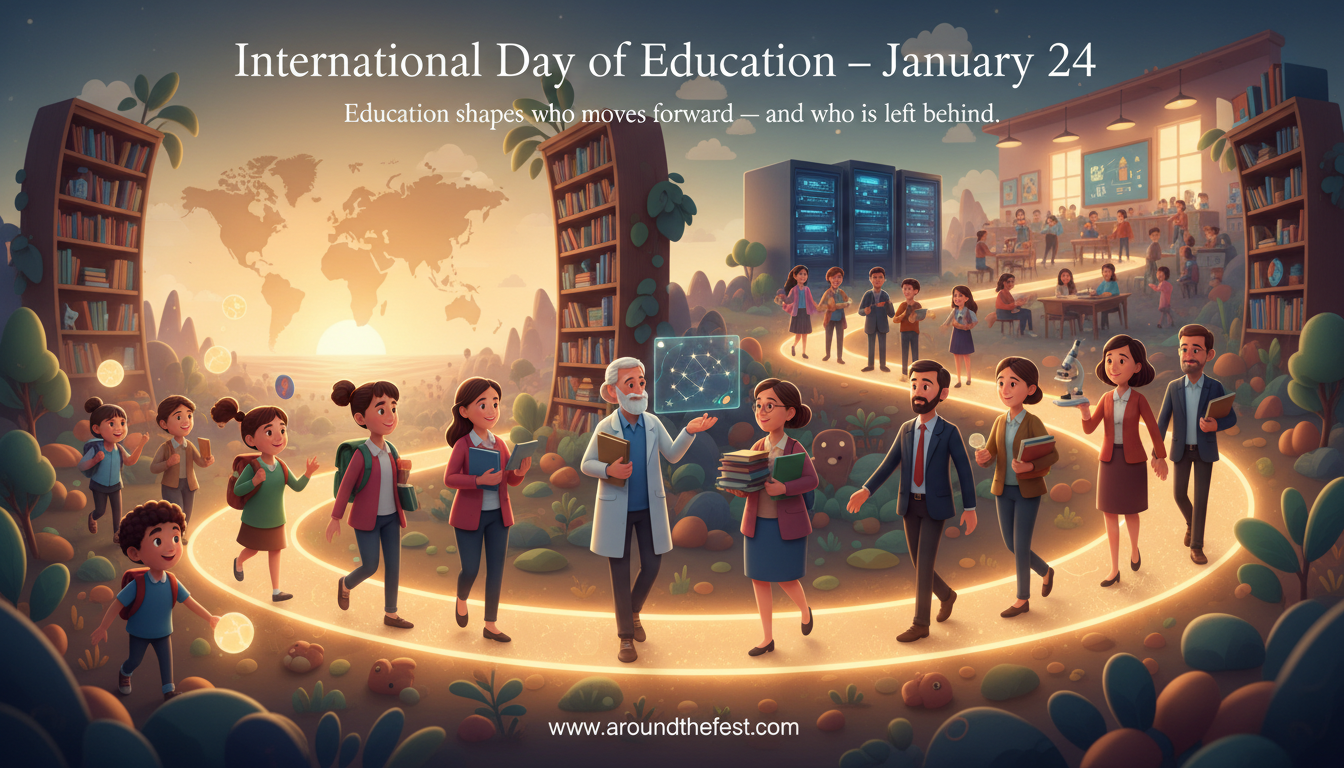
Ultimately, International Day of Education January 24 matters because education determines who gets left behind and who moves forward. By recognizing its impact and acting on its challenges, societies take a meaningful step toward a more equal and resilient future.