International Day of Education Activities for School
The International Day of Education Activities, observed every year on January 24, are more than just items on the academic calendar. They serve as a global reminder that education shapes societies, empowers individuals, and creates opportunities that last a lifetime. For schools, colleges, and online classrooms, this day offers a meaningful chance to go beyond textbooks and engage students in conversations about learning, equality, and the future.
Whether you teach young children, teenagers, college students, or conduct virtual classes, thoughtfully planned International Day of Education activities can spark curiosity, empathy, and motivation. This comprehensive guide shares practical, age-appropriate ideas that educators can easily adapt—no matter their classroom setting or resources.

International Day of Education Activities for Primary Students (Grades 1–5)
Primary students learn best through stories, visuals, creativity, and play. At this stage, the goal of International Day of Education activities is to help children understand that school is important, learning is valuable, and education connects children all around the world.
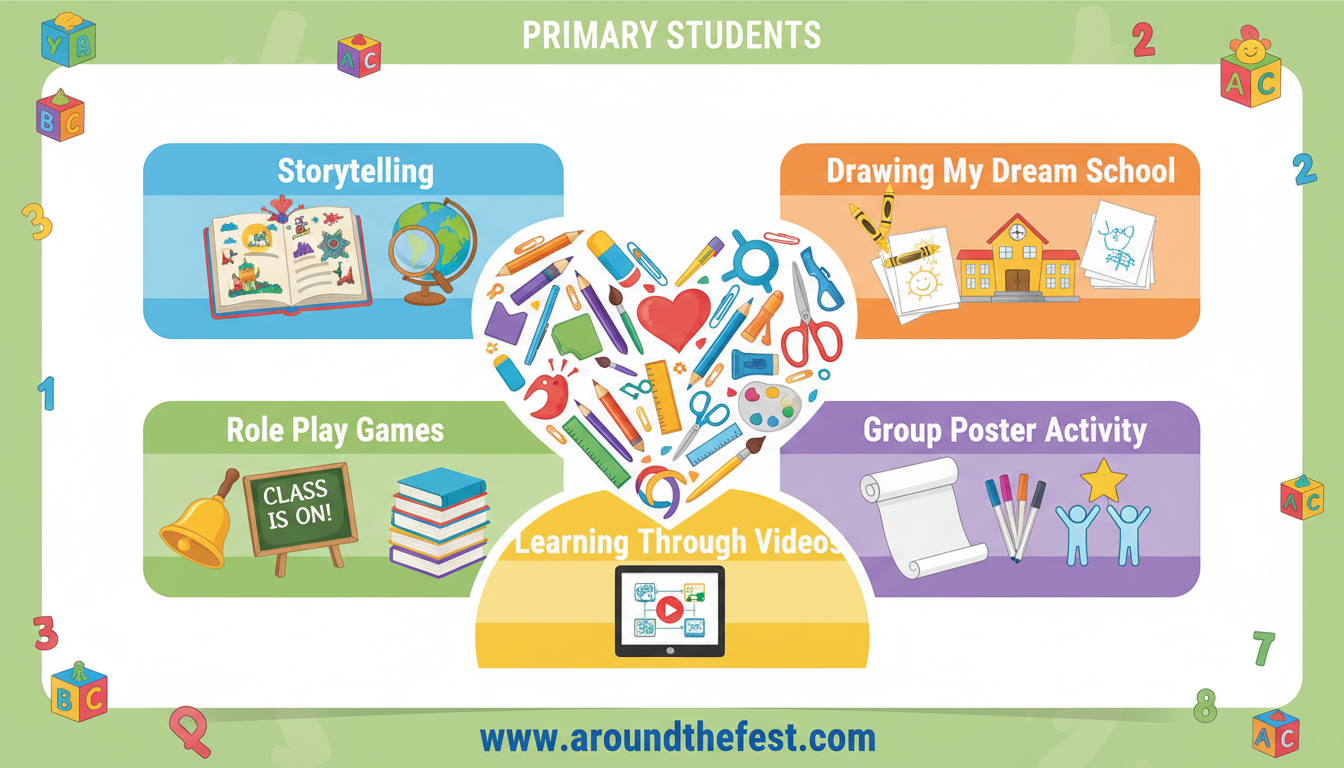
Storytelling Activities: Learning Through Stories for International Day of Education
Storytelling helps young learners grasp big ideas in a simple, emotional way.
- Teachers can read short stories about children from different countries and their school experiences.
- Stories may focus on friendship, kindness, curiosity, or overcoming challenges.
- After the story, ask gentle questions such as:
- “Why do you think school is important?”
- “What would you miss if you couldn’t go to school?”
- Encourage children to share what they enjoy most about school—friends, drawing, reading, or playing.
This activity builds empathy while reinforcing the idea that education brings joy and opportunity.
Drawing & Coloring Activity for Education Day: “My Dream School”
Creative expression works especially well for younger students.
- Ask students to draw their dream school.
- Some may draw libraries, playgrounds, computers, or kind teachers.
- Display their drawings on classroom walls or virtual galleries.
- Teachers can explain how education looks different across countries but has the same purpose everywhere.
This activity builds imagination while reinforcing the idea that education is universal.
Role-Play Games as Education Day Classroom Activities
Role-play introduces children to how education works as a shared effort.
- Assign simple roles such as teacher, student, librarian, or principal.
- Act out a short school-day scenario.
- Discuss how each role supports learning.
- In online classrooms, students can use props, costumes, or virtual backgrounds.
Children begin to understand that education is supported by many people working together.
Group Poster-Making Activity: Why School Is Important
This activity encourages teamwork and early communication skills.
- Divide students into small groups.
- Each group creates a poster answering one simple question:
- “Why do we go to school?”
- Posters can include drawings, symbols, and short phrases.
- Teachers can guide a short discussion on how education helps people learn new things and achieve dreams.
This introduces the idea of education as a foundation for the future.
Short Educational Videos & Guided Discussion for Education Awareness
Visual content helps maintain focus and curiosity.
- Show a short, child-friendly video about schools or classrooms around the world.
- Follow up with guided questions:
- “What was different from our school?”
- “What looked the same?”
- Keep discussions positive and age-appropriate.
This builds early global awareness without overwhelming young learners.
Quick Summary: Why These Activities Work for Primary Students
- They use visual, emotional, and creative learning
- They match short attention spans
- They encourage gratitude and curiosity
- They require minimal resources
- They work for both offline and online classrooms
International Day of Education Activities for High-School Students (Grades 6–12)
High-school students are capable of deeper thinking and reflection. At this level, International Day of Education activities should focus on discussion, debate, and personal connection to real-world issues related to education.
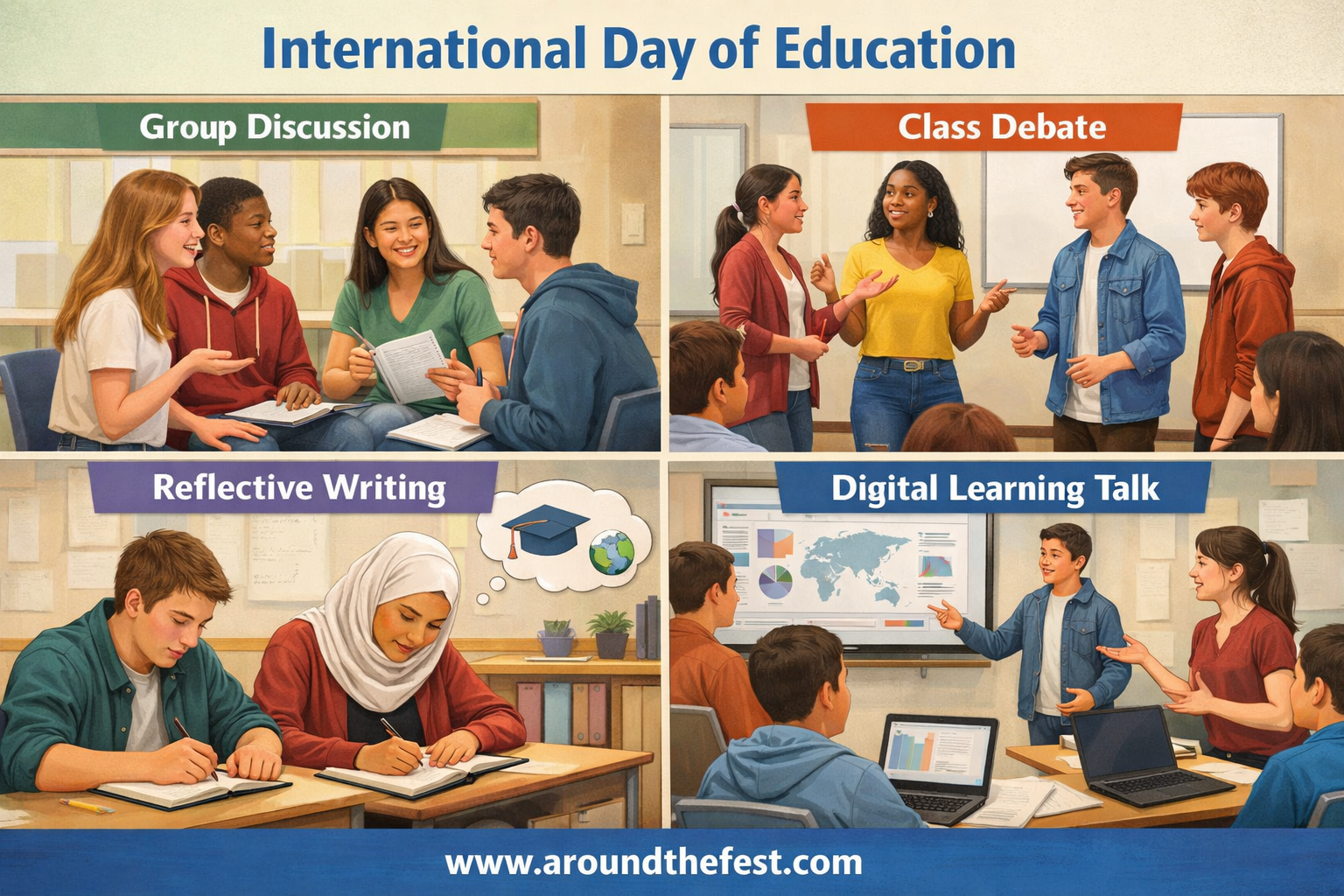
Group Discussions on Global Education Challenges
Structured discussions help students explore complex ideas respectfully.

- Topics may include:
- Unequal access to education
- Gender gaps in education
- Education and poverty
- Divide students into small groups to encourage participation.
- Teachers act as facilitators, not lecturers.
These discussions help students understand education as a global issue.
Case Studies Showing How Education Changes Lives
Real-life examples make abstract ideas relatable.

- Share short case studies of individuals whose lives improved through education.
- These may include teachers, innovators, or community leaders.
- Ask guiding questions such as:
- “What role did education play in their journey?”
- “What challenges did they overcome?”
Students begin to see education as a life-changing tool, not just a requirement.
Student-Led Conversations on Digital Learning & Online Education
Teenagers relate strongly to technology and online learning.

- Discuss:
- Online education vs traditional classrooms
- Benefits and challenges of digital learning
- The future of education and careers
- Allow students to lead parts of the discussion.
This builds confidence, leadership, and communication skills.
Debate Topics for International Day of Education in High School
Debates promote research, reasoning, and respectful disagreement.
- Suggested topics:
- “Is online education as effective as classroom learning?”
- “Should education be free for everyone?”
- “Does today’s education system prepare students for real life?”
Teachers should guide debates to ensure respectful and balanced participation.
Reflective Writing Activity: Education and My Future
Reflection helps students internalize learning.
- Ask students to write a short paragraph or journal entry on:
- “How education shapes my future”
- Writing can be private or shared voluntarily.
- This activity works well as a closing exercise.
Learning Outcomes for High-School Students
By the end of these activities, students should:
- Better understand global education challenges
- Develop critical thinking and communication skills
- Reflect on the role education plays in their own lives
- Practice respectful discussion and debate
International Day of Education Activities for College-Level Students
College students are at a stage where they can analyze systems, question policies, and connect education with society, economics, and global development. International Day of Education activities at the college level should therefore move beyond basic awareness and focus on critical thinking, dialogue, and real-world impact.
These activities work well for universities, colleges, professional institutes, and higher-education classrooms.
Panel Discussions on the Role of Education in Society
Panel discussions encourage diverse viewpoints and structured dialogue.

- Organize a panel with faculty members from different disciplines such as education, economics, technology, or social sciences.
- Discussion themes may include:
- Education and social equality
- The future of higher education
- Education’s role in economic growth
- Allow students to prepare and ask questions in advance.
- In online settings, panels can be conducted through webinars or live virtual sessions.
This format exposes students to interdisciplinary perspectives on education.
College-Level Debate Topics for International Day of Education
Debates are highly effective for engaging mature learners.

Suggested debate topics:
- “Should higher education be free for all?”
- “Is online education replacing traditional universities?”
- “Does the current education system meet industry needs?”
- “Is education a right or a privilege?”
Students can be divided into teams and encouraged to support arguments with data, research, and case studies.
Student Seminars & Paper Presentations on Education Topics
Academic seminars promote research and presentation skills.

- Students can prepare short presentations on:
- Education policies in different countries
- The impact of technology on learning
- Education and sustainable development
- Encourage use of real data, reports, and examples.
- Seminars can be conducted as in-class sessions or virtual presentations.
This activity aligns well with academic learning outcomes.
Guest Lectures & Expert Talks on Education and Careers
Guest sessions add authority and real-world relevance.
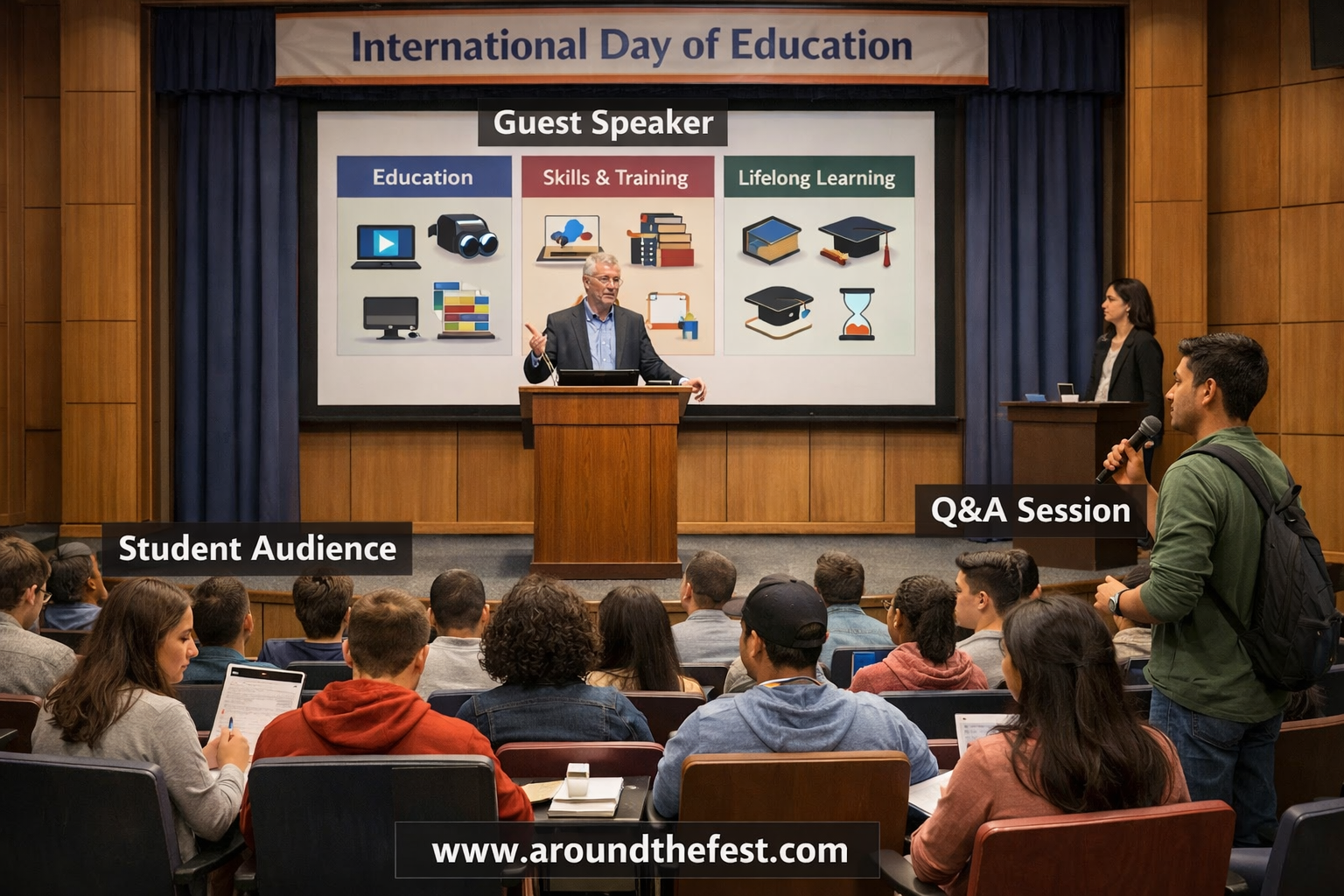
- Invite educators, researchers, social workers, or professionals working in education-related fields.
- Topics may include:
- Careers in education and training
- Education technology and innovation
- Lifelong learning in a changing job market
- Allocate time for Q&A to encourage interaction.
These sessions help students connect education with career pathways.
Workshops on Lifelong Learning & Skill Development in Education
Workshops focus on practical takeaways.
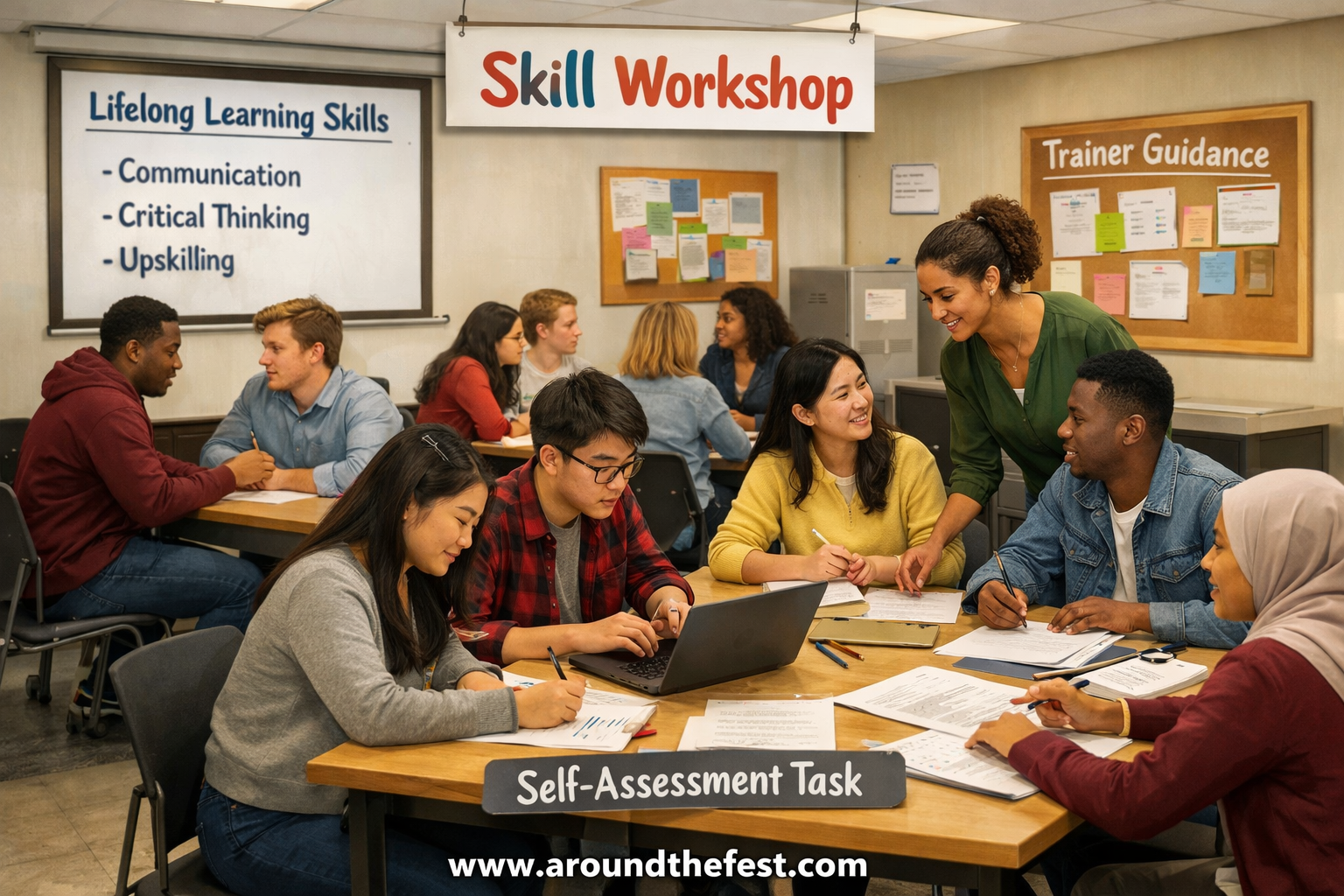
- Conduct workshops on:
- Upskilling and reskilling
- Critical thinking and communication skills
- Learning beyond formal education
- Include group activities or self-assessment exercises.
- Suitable for both offline workshops and online breakout rooms.
This reinforces the idea that education does not end with graduation.
Learning Outcomes of International Day of Education Activities for College Students
By participating in these International Day of Education activities, college students can:
- Develop analytical and debate skills
- Understand education as a global and social system
- Explore education-related career opportunities
- Reflect on the importance of lifelong learning
International Day of Education Activities for Virtual & Online Classrooms
With the rise of digital learning, International Day of Education activities for virtual and online classrooms have become just as important as in-person celebrations. Online classes require activities that are interactive, inclusive, and engaging—while still meaningful and easy to manage on digital platforms.
These ideas work well for schools, colleges, coaching institutes, and global online learning communities.
Interactive Online Quizzes for International Day of Education Activities
Quizzes are one of the simplest ways to engage students in virtual classrooms.

- Use tools like Google Forms, Kahoot, or live polls.
- Include questions about:
- The importance of education
- Global education facts
- Famous educators and thinkers
- Keep quizzes short to maintain attention.
- Display results instantly to encourage participation.
This activity makes learning fun while reinforcing awareness.
Virtual Group Discussions as International Day of Education Classroom Activities
Online discussions can be just as impactful as offline ones when structured well.

- Use breakout rooms to divide students into small groups.
- Assign discussion prompts such as:
- “How has online education changed learning?”
- “What challenges do students face without access to education?”
- Ask one student from each group to summarize key points.
- Teachers act as moderators to guide conversation.
This builds communication and collaboration skills in a digital setting.
Online Student Presentations for International Day of Education
Presentations help students research and articulate ideas clearly.

- Assign short presentation topics like:
- Education systems around the world
- The future of learning
- Education and technology
- Allow students to use slides, visuals, or short videos.
- Encourage peer feedback after each presentation.
This activity boosts confidence and digital literacy.
Virtual Storytelling & Reflection Activities for Education Day
Storytelling works well even in online environments.
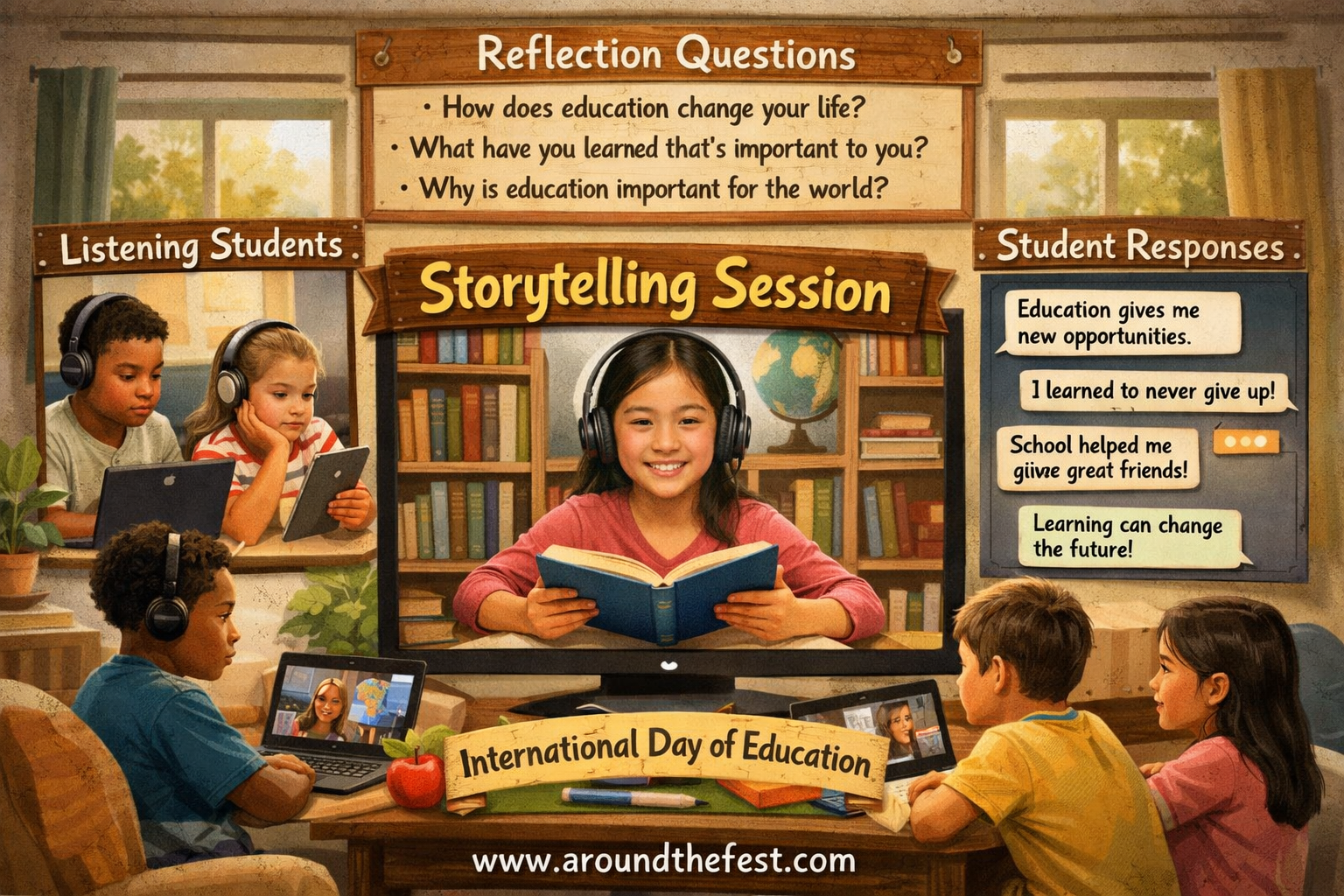
- Teachers or students can share short stories related to education and learning.
- Follow with reflection questions:
- “What did this story teach us about education?”
- “How can education change someone’s life?”
- Students can respond via chat, audio, or short written reflections.
This keeps the session emotionally engaging and inclusive.
Collaborative Digital Projects as International Day of Education Activities
Collaborative projects increase engagement and teamwork.
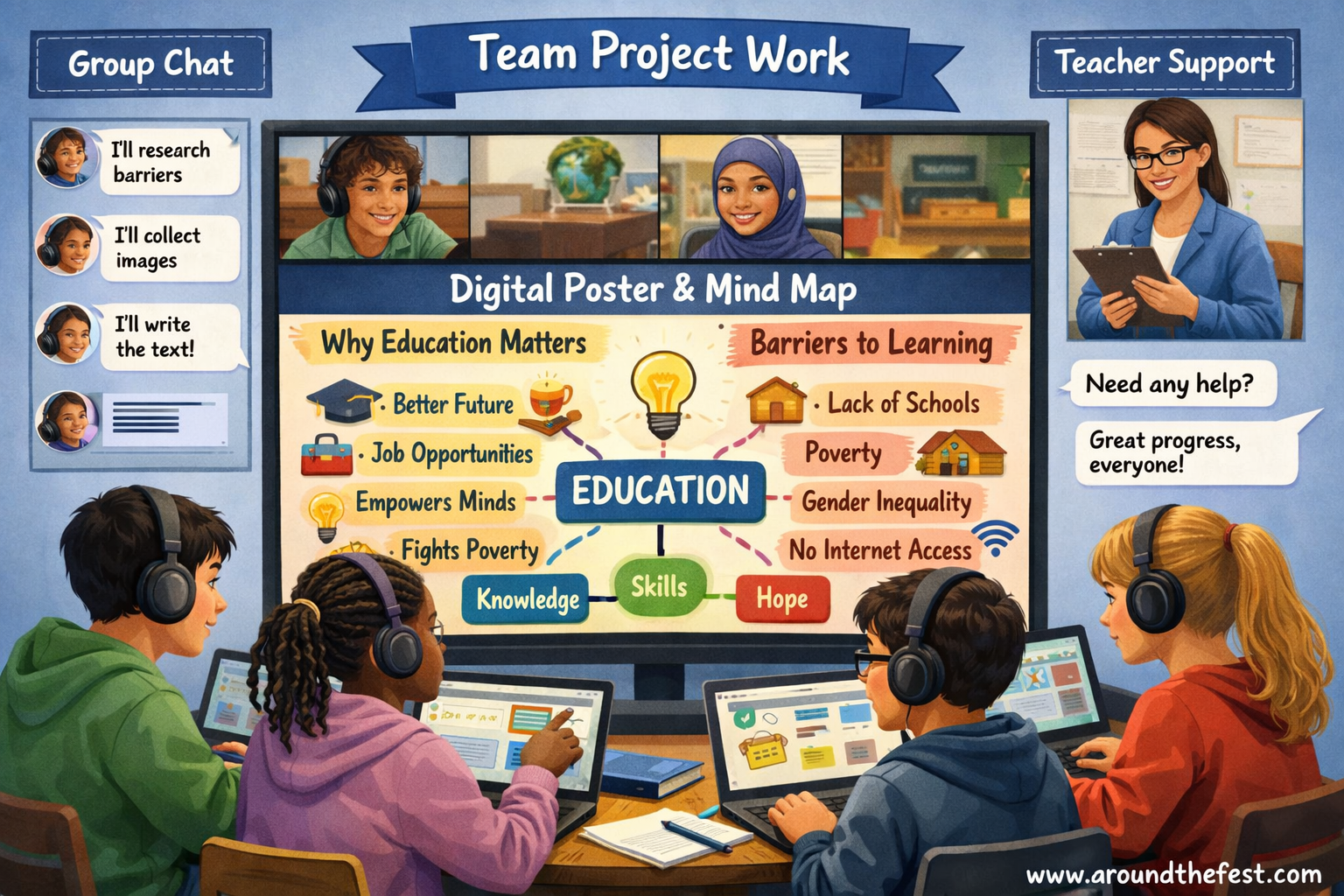
- Students work together on:
- Digital posters
- Shared documents
- Online mind maps
2. Topics can include:
- Why education matters
- Barriers to education
- Ideas to improve learning
3. Projects can be submitted or presented virtually.
This mirrors real-world remote collaboration skills.
Learning Outcomes of International Day of Education Activities for Online Classes
By participating in these International Day of Education activities for online classrooms, students can:
- Stay actively engaged in virtual learning
- Develop communication and digital collaboration skills
- Reflect on the importance of education in modern society
- Feel connected despite physical distance
International Day of Education Assembly Speech Ideas for Schools & Colleges
School and college assemblies are one of the most effective ways to observe International Day of Education, as they bring the entire learning community together. Well-crafted International Day of Education assembly speech ideas help set the tone for the day, spread awareness, and inspire students to value learning beyond academics.
These speech ideas can be used for morning assemblies, special events, online assemblies, and hybrid classrooms.
Short International Day of Education Assembly Speech for Primary Students
Primary students need speeches that are simple, positive, and easy to understand.

- Focus on basic ideas like:
- Why going to school is important
- How learning helps us grow
- Use short sentences and familiar examples.
- Include a simple message of gratitude for teachers and parents.
- Ideal length: 1–2 minutes.
This type of International Day of Education assembly speech helps young learners associate education with encouragement and care.
International Day of Education Assembly Speech Ideas for Middle & High School Students
Older students respond well to relatable and motivational content.
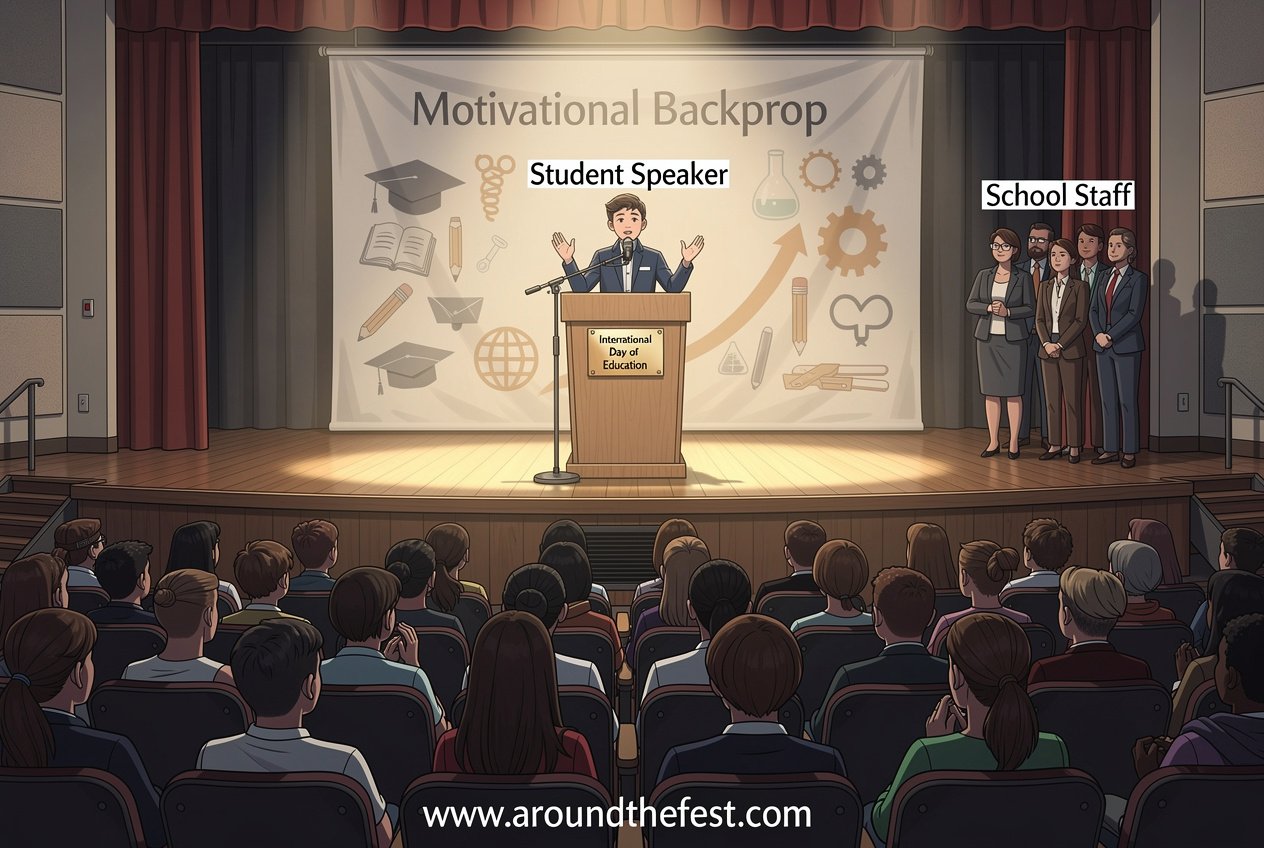
- Highlight:
- The role of education in shaping careers
- The importance of equal access to education
- Include real-life examples students can connect with.
- Encourage students to think about how education impacts their future.
- Suitable for 2–3 minute speeches.
These assembly speeches help students reflect on responsibility and opportunity.
Inspirational International Day of Education Assembly Speech for College Students
College-level speeches should be thoughtful and forward-looking.
- Discuss:
- Education as a tool for social change
- Lifelong learning in a fast-changing world
- Reference global challenges and innovation.
- Encourage students to use education for positive impact.
- Works well for seminars, assemblies, and virtual events.
This speech style aligns with mature academic audiences.
International Day of Education Assembly Speech by Teachers or Principals
Speeches delivered by educators carry authority and inspiration.
- Focus on:
- The purpose of International Day of Education (January 24)
- The role of teachers in shaping society
- Acknowledge students’ efforts and resilience.
- Encourage collaboration between teachers and learners.
These speeches reinforce trust, motivation, and shared goals.
International Day of Education Assembly Speech Ideas for Online & Virtual Assemblies
- Virtual assemblies require clarity and engagement.
- Keep speeches concise and well-structured.
- Use pauses, visuals, or slides to maintain attention.
- Address challenges and benefits of online education.
- Encourage students to participate via chat or polls.
This ensures International Day of Education assembly speeches remain impactful even in digital formats.
Tips for Delivering an Effective International Day of Education Assembly Speech
- Keep the message clear and age-appropriate
- Avoid overly complex language
- Focus on inspiration, not statistics
- End with a hopeful and motivating note
Strong delivery makes the message memorable.
Learning Outcomes of International Day of Education Assembly Activities
Through these International Day of Education assembly speech ideas, students and educators can:
- Understand the global importance of education
- Feel inspired to value learning
- Strengthen community awareness
- Create a meaningful start to the day’s activities
Printable International Day of Education Activity Ideas for Schools & Online Classes
Printable resources add long-term value to International Day of Education activities, as teachers can reuse them across classrooms, grade levels, and even online sessions. These materials are especially useful for educators who want ready-to-use content without additional preparation time.
This section includes worksheet ideas, templates, and printable resources suitable for schools, colleges, and virtual classrooms.
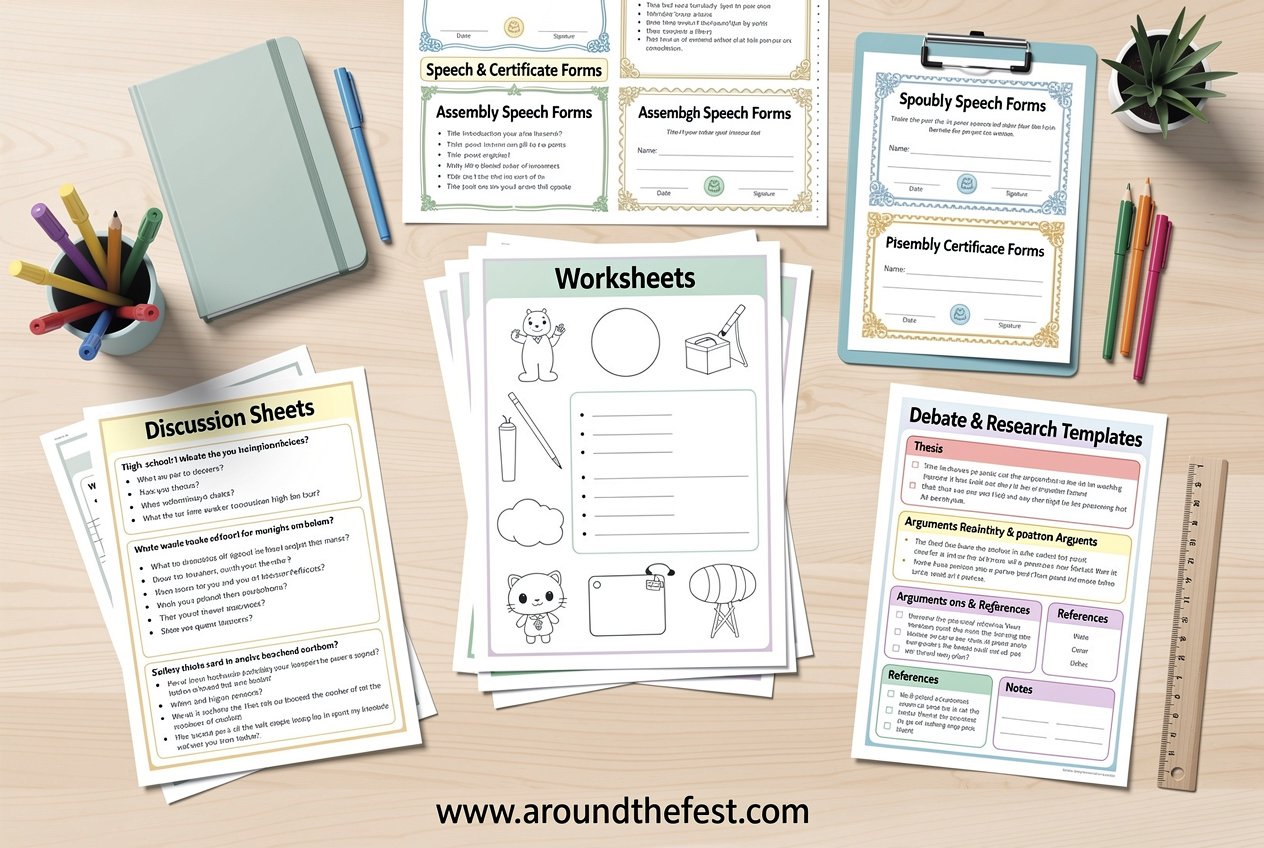
Printable International Day of Education Worksheets for Primary Students
Worksheets help reinforce concepts through simple, guided activities.
- Coloring sheets themed around school, books, and learning
- Fill-in-the-blank worksheets on “Why School Is Important”
- Matching activities (subjects, teachers, classroom items)
- Simple reflection prompts like “My favorite thing about school”
- Ideal for Grades 1–5 and early learners
These printable International Day of Education worksheets make learning interactive and fun.
Printable International Day of Education Discussion Sheets for High-School Students
Structured discussion sheets help guide classroom conversations.
- Open-ended questions on education equality and access
- Short reading passages followed by reflection questions
- Debate prompt sheets for group discussions
- Opinion-writing templates on education-related topics
- Suitable for Grades 6–12
These printables support deeper thinking and organized discussion.
Printable International Day of Education Debate Topics & Activity Sheets for College Students
College-level printables focus on analysis and critical thinking.
- Debate topic lists on higher education and policy
- Case study worksheets related to global education systems
- Research prompt templates for seminars and presentations
- Reflection sheets on lifelong learning and career growth
These International Day of Education activity sheets align well with academic objectives.
Printable International Day of Education Assembly Speech Templates
Speech templates save time and ensure clarity.
- Ready-to-use assembly speech formats for students
- Editable templates for teachers and principals
- Short, medium, and long speech versions
- Suitable for offline and virtual assemblies
These printables help maintain consistency and confidence during assemblies.
Printable International Day of Education Certificates & Participation Sheets
Recognition increases motivation and engagement.
- Participation certificates for students
- Appreciation certificates for teachers
- Customizable templates with school name and date
- Can be printed or shared digitally
Certificates make International Day of Education activities feel meaningful and memorable.
How to Use Printable Effectively
Choose printables based on age group and learning level
- Combine worksheets with discussions or presentations
- Use digital PDFs for online classrooms
- Encourage students to reflect, not just complete tasks
This ensures printables support learning rather than passive activity.
Learning Outcomes of Printable
Using these printable International Day of Education activity ideas, educators can:
- Save preparation time
- Increase student participation
- Reinforce key education concepts
- Support both offline and online teaching
Frequently Asked Questions About International Day of Education Activities
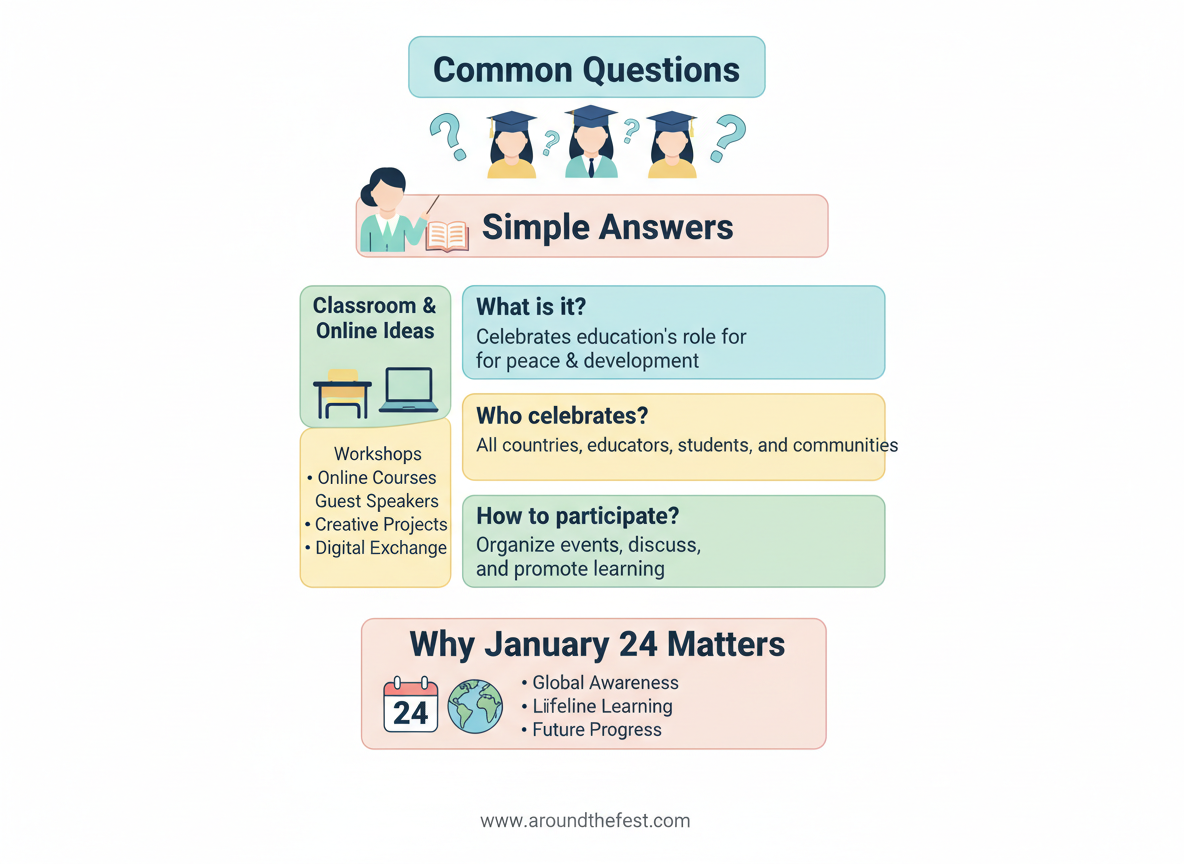
Q1. What are the best International Day of Education activities for schools?
Ans. The best International Day of Education activities for schools include storytelling and drawing for primary students, group discussions and debates for high-school students, and assemblies or workshops that highlight the importance of education. Activities should be age-appropriate, interactive, and focused on awareness rather than exams.
Q2. How can teachers celebrate International Day of Education in the classroom?
Ans. Teachers can celebrate International Day of Education by organizing special lessons, discussions on why education matters, short speeches, creative projects, or printable activities. Even a single class period dedicated to education awareness on January 24 can make the observance meaningful.
Q3. What are some International Day of Education activities for online classes?
Ans. Effective International Day of Education activities for online classes include virtual quizzes, breakout-room discussions, student presentations, digital posters, and reflective writing tasks. These activities help maintain engagement while spreading awareness in virtual classrooms.
Q4. Are International Day of Education activities different for primary, high school, and college students?
Ans. Yes, International Day of Education activities should vary by age group. Primary students benefit from creative and visual activities, high-school students engage better through discussions and debates, while college students respond well to panels, seminars, and critical analysis of education systems.
Q5. Why is International Day of Education celebrated on January 24?
Ans. International Day of Education is celebrated on January 24 to highlight the role of education in peace, development, and equality. The day was proclaimed by the United Nations to remind the world that education is a fundamental human right and a driver of sustainable growth.
Q6. Can International Day of Education activities be done with limited resources?
Ans. Yes, many International Day of Education activities require minimal or no resources. Discussions, reflection writing, storytelling, and printable worksheets can be conducted even in low-resource or rural classrooms, making the observance accessible to all schools.
Conclusion: Making International Day of Education Meaningful in Every Classroom
The International Day of Education, observed on January 24, is not just a symbolic event—it is a powerful reminder of how learning shapes individuals, communities, and societies. By using thoughtful International Day of Education activities for schools and online classes, educators can turn this day into a meaningful learning experience rather than a routine observance.
From creative activities for primary students to discussions, debates, assemblies, and printable resources, every classroom can participate in a way that suits its students and environment. When planned with purpose, these activities help students understand that education is not only about exams or degrees, but about opportunity, growth, and lifelong learning.
Educators are encouraged to adapt these ideas, share them with colleagues, and inspire students to value education—not just on January 24, but every day.