Holi 2026 : Exact Date, History, Significance and Celebration Guide
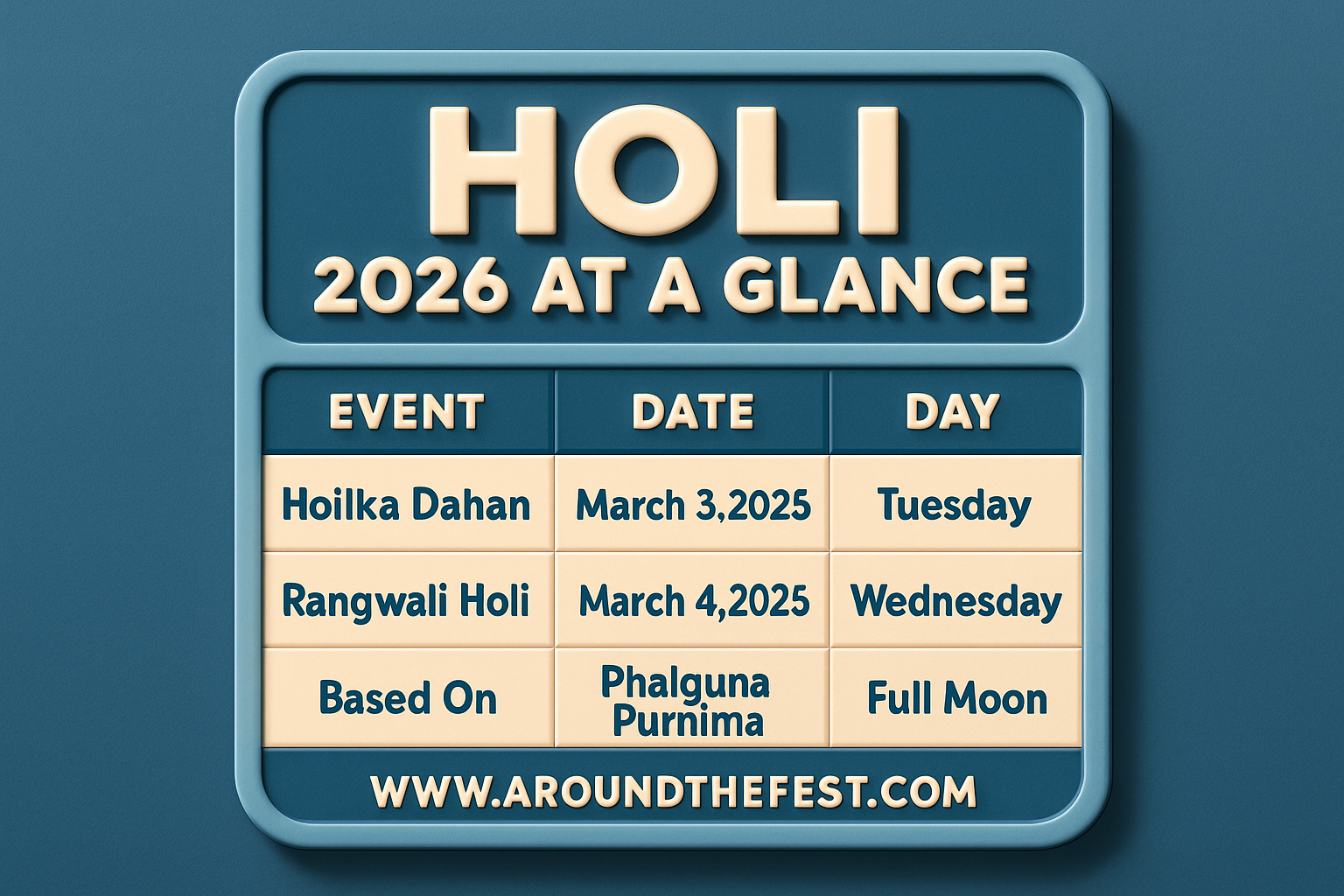
Holi 2026 will be celebrated on March 4, 2026, while Holika Dahan will take place on March 3, 2026. The festival falls on Phalguna Purnima, the full moon day in the Hindu lunar calendar, and marks the victory of good over evil and the arrival of spring. In this guide, you’ll discover the exact date, historical origins, spiritual significance, and how Holi 2026 will be celebrated across India and worldwide.
Holi 2026: Exact Date, Tithi and Calendar Explanation
If you’re searching for the Holi 2026 date, you probably want a clear answer first — and then the details.
So let’s start simple.
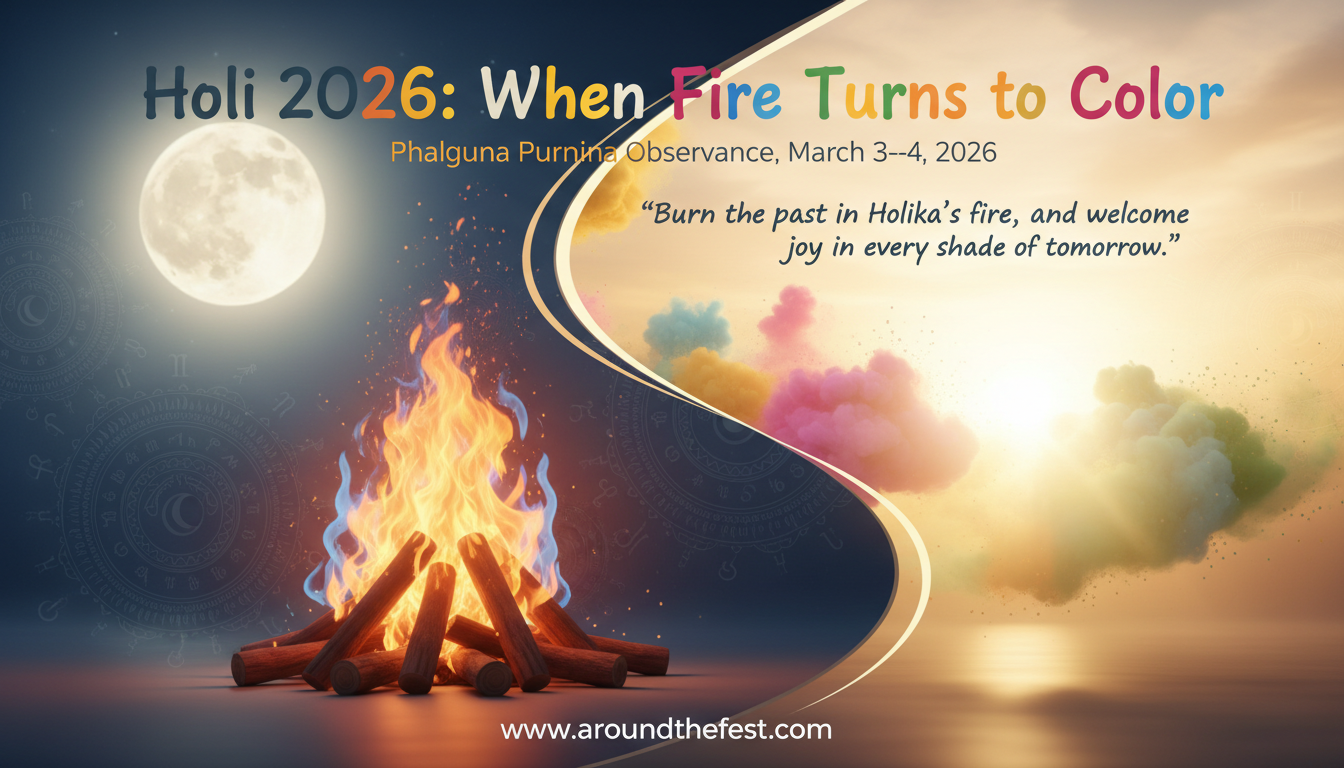
When is Holi 2026?
Holika Dahan: Tuesday, March 3, 2026
Rangwali Holi (Festival of Colors): Wednesday, March 4, 2026
That’s the official observance followed across most of India and globally.
But if you’re wondering why it falls on these dates — the answer is much more interesting than it looks.
Why Does Holi 2026 Fall on March 4?
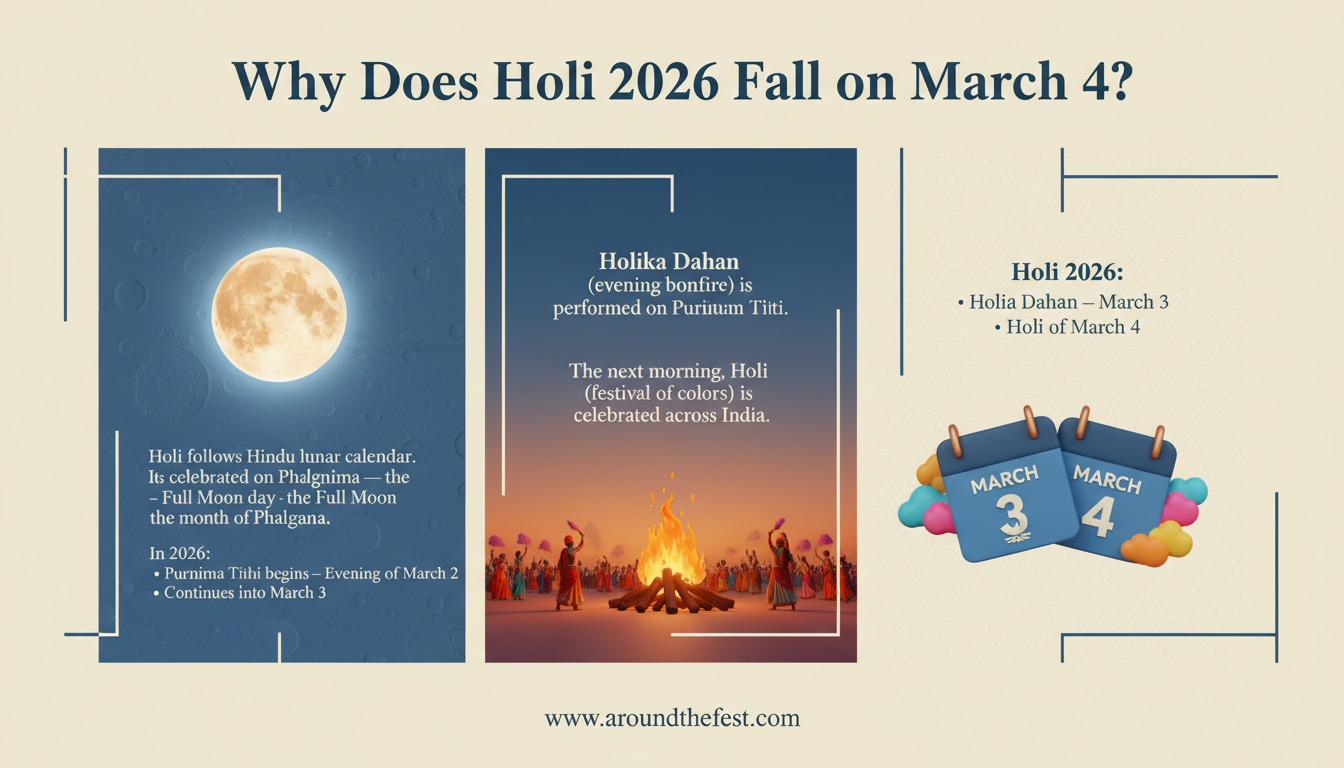
Holi is not fixed to a regular calendar date. It follows the Hindu lunar calendar, not the Gregorian calendar we use daily.
Holi is celebrated on:
Phalguna Purnima — the Full Moon day of the Hindu month of Phalguna.
In 2026:
- The Purnima Tithi (Full Moon period) begins on the evening of March 2
- It continues into March 3
Because Holika Dahan must be performed after sunset on the Purnima Tithi, the bonfire ritual takes place on March 3 evening.
The following morning — March 4 — becomes the day of playing with colors.
So the short answer is:
Holi 2026 falls on March 4 because that’s the first morning after the full moon night ritual.
How Is the Exact Date Calculated?
 This is where things get deeper — and more fascinating.
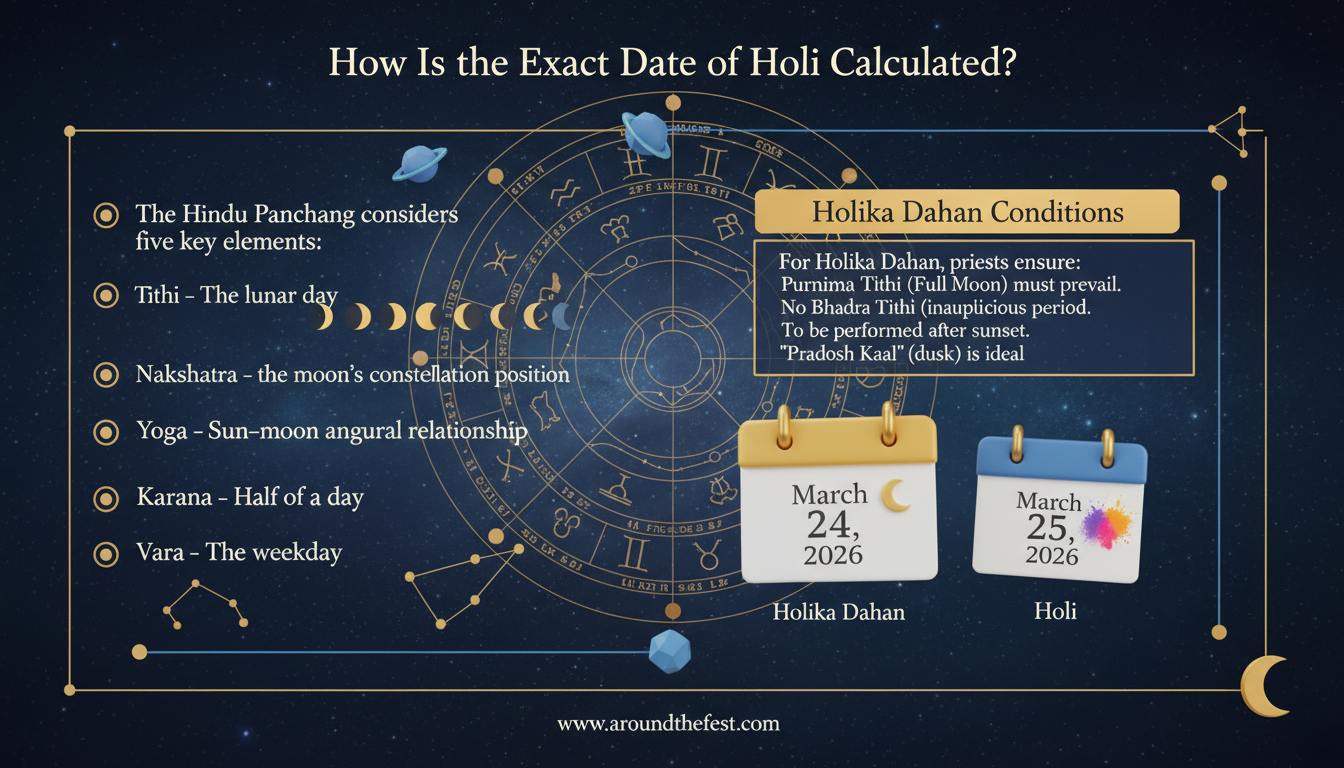
The date isn’t randomly chosen. It is calculated using the Hindu Panchang (traditional almanac), which considers five key elements:
Tithi – The lunar day
Nakshatra – The moon’s constellation position
Yoga – A specific sun-moon angular relationship
Karana – Half of a lunar day
Vara – The weekday
For Holika Dahan, priests carefully check:
- That the ritual happens after sunset
- That Bhadra period (an inauspicious time window) is avoided
- That Purnima Tithi is active
In 2026, these calculations become even more important because of something unusual.
What Makes Holi 2026 Astronomically Unique?
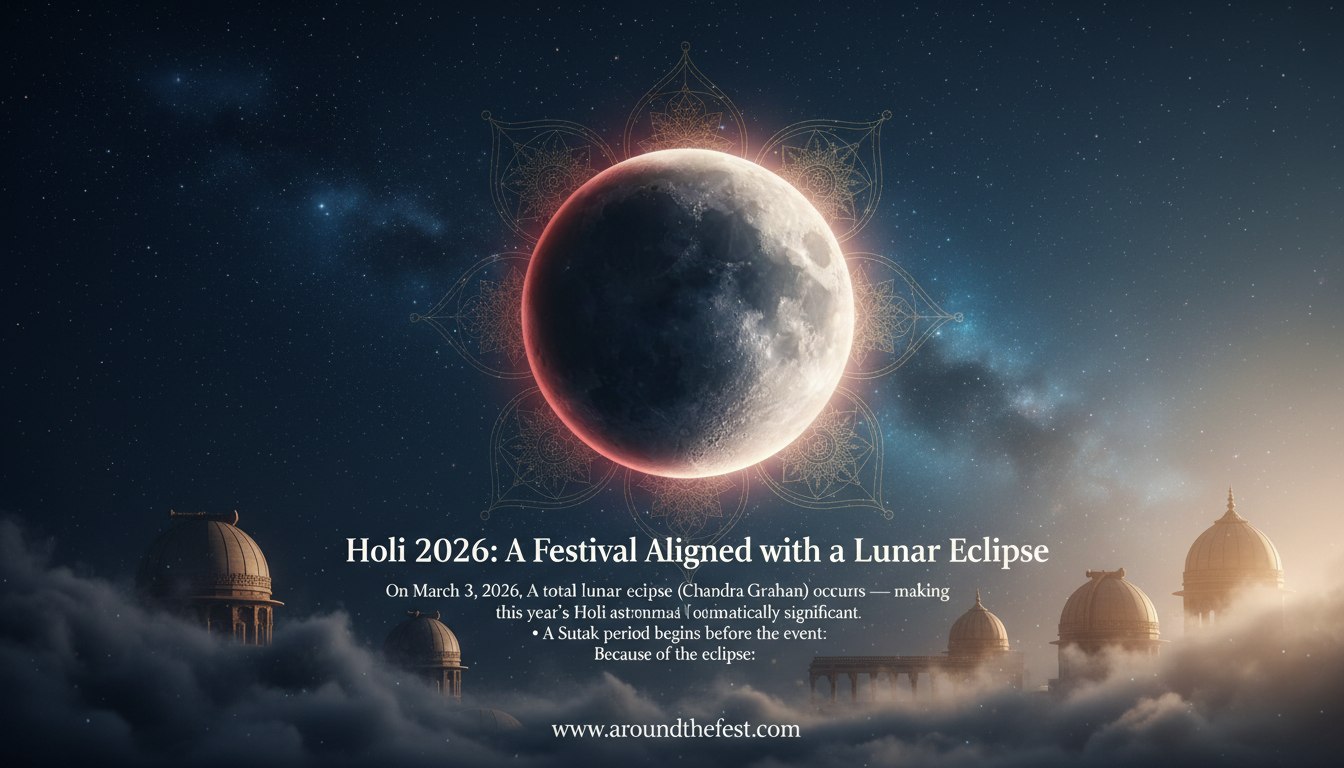
On March 3, 2026, a total lunar eclipse (Chandra Grahan) occurs.
This adds an extra layer of discussion and planning because:
- A Sutak period begins before the eclipse.
- Many temples close during Sutak.
- Ritual timing becomes more carefully evaluated.
While Rangwali Holi is still widely celebrated on March 4, 2026, the eclipse makes this year slightly more astrologically significant than most.
That’s one reason why search interest for “Holi 2026 exact date” started rising earlier than usual.
It’s not just another Holi — it’s one aligned with a rare celestial event.
Why Is There Sometimes Confusion About the Date?
Every year, you’ll see different websites listing slightly different timings. Here’s why:
1. Lunar Days Don’t Follow Midnight
A Tithi can start at 4:17 PM and end at 6:02 PM the next day.
It doesn’t run midnight-to-midnight like our regular calendar.
2. Regional Panchang Differences
Before British-era calendar reforms, India relied fully on regional almanacs. Even today:
North Indian Panchang calculations may slightly differ from South Indian ones.
Sunrise-based vs sunset-based interpretations can shift observance by a day in rare cases.
3. Bhadra Timing Matters
Holika Dahan should not be performed during Bhadra.
If Bhadra overlaps sunset on Purnima, rituals may shift slightly.
That’s why checking a reliable Panchang for your city is always recommended.
Where Will Holi 2026 Be Celebrated?
Holi 2026 will be celebrated across:
- India (public holiday in many states)
- Nepal
- Mauritius
- Fiji
- Trinidad & Tobago
- United Kingdom
- United States
- Canada
In fact, over the last few years, Holi has become one of the most globally recognized cultural festivals. Universities, city councils, and cultural organizations now host official Holi events — and 2026 is expected to see even higher participation due to growing global interest.
Holika Dahan vs Rangwali Holi in Holi 2026
Many people think Holi is just one day of throwing colors. However, that’s only half the story. In reality, Holi unfolds in two distinct phases — and each carries its own meaning, rituals, and emotional energy.
So before you plan Holi 2026 celebrations, let’s clearly understand the difference.
What is Holika Dahan in Holi 2026?
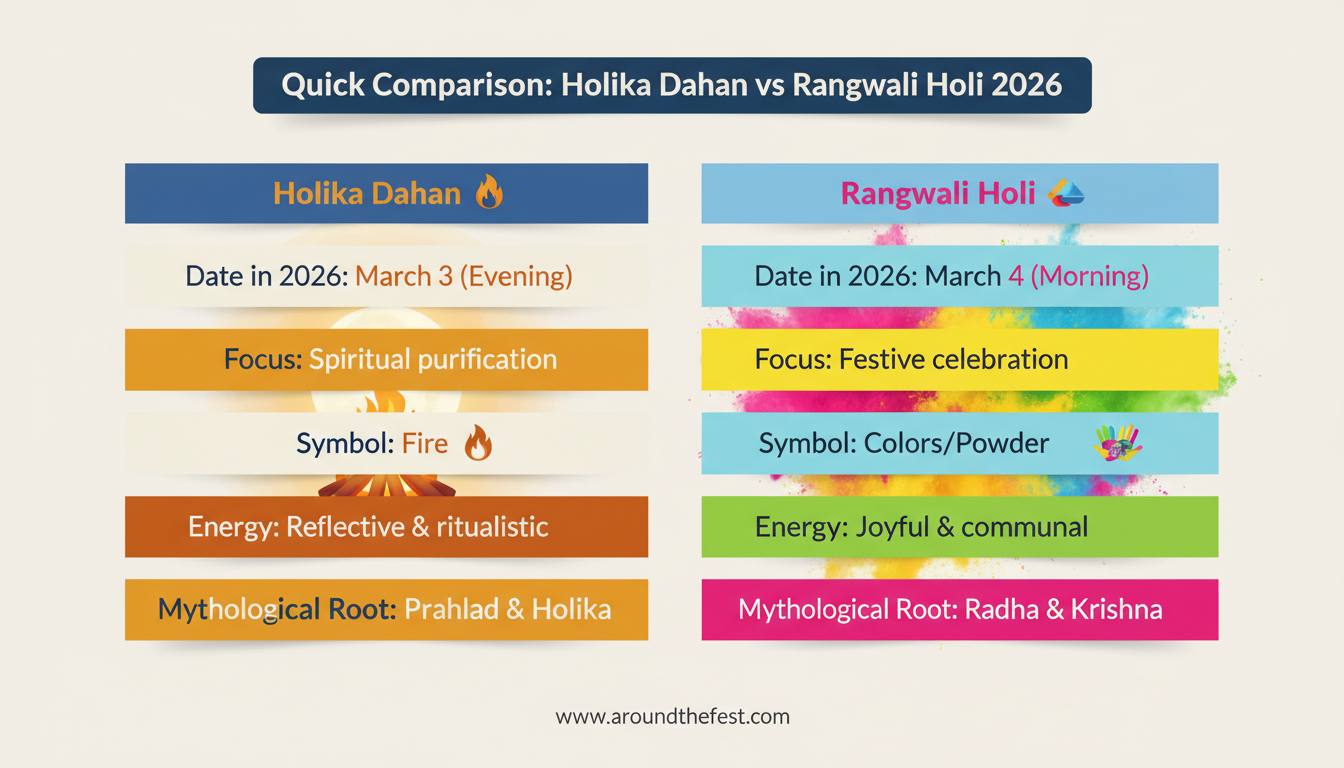
Holika Dahan marks the spiritual beginning of Holi. In 2026, communities will perform this ritual on the evening of March 3.
During this ceremony, families gather around a large bonfire. Priests chant mantras. People offer grains, coconuts, and prayers into the fire. As the flames rise, they symbolize the burning of negativity, ego, and harmful intentions.
Most importantly, Holika Dahan commemorates the story of Prahlad and Holika — where devotion defeated arrogance.
Because 2026 includes a lunar eclipse on March 3, many devotees will pay extra attention to the muhurat (auspicious timing). Therefore, consulting the local Panchang becomes especially important this year.
In short, Holika Dahan focuses on reflection and purification.
What is Rangwali Holi in 2026?
The very next morning — March 4, 2026 — the mood completely shifts.
Instead of silence and ritual, you see laughter, music, colors, and celebration. Rangwali Holi (also called Dhulandi) transforms streets into vibrant playgrounds.
People apply gulal (colored powder) on each other’s faces. Children spray water with pichkaris. Friends hug, forgive past misunderstandings, and share sweets.
While Holika Dahan encourages you to burn negativity, Rangwali Holi invites you to embrace joy.
That emotional transition — from fire to color — gives Holi its powerful rhythm.
Why Are Both Days Important in Holi 2026?
You cannot separate the two.
- Holika Dahan prepares the soul.
- Rangwali Holi celebrates life.
First, you let go.
Then, you welcome renewal.
Spiritually speaking, the bonfire represents internal cleansing. Socially speaking, the color festival strengthens community bonds. Together, they create balance.
And because Holi 2026 aligns closely with a lunar eclipse, many astrologers describe this year as symbolically powerful — a time of release followed by vibrant new beginnings.
How Different Regions Emphasize Each Day
Interestingly, not all regions emphasize both days equally.
For example:
- In many North Indian cities, Holika Dahan draws huge community participation.
- In Braj (Mathura-Vrindavan region), celebrations stretch over several days and heavily highlight Krishna traditions.
- Meanwhile, in metropolitan cities, people often focus more on Rangwali Holi gatherings and public events.
Because Holi 2026 falls midweek (Wednesday), many urban communities may shift large-scale color events to the weekend. Therefore, expect extended celebrations in some cities.
Why Understanding the Difference Matters
If you only show up for the colors, you miss the spiritual core. On the other hand, if you only observe the ritual, you miss the social magic.
Understanding both aspects helps you:
- Plan celebrations correctly
- Respect cultural practices
- Participate more meaningfully
- Explain Holi 2026 accurately to others
And ultimately, that deeper awareness makes the festival more powerful.
The History of Holi 2026 and Its Mythological Origins
Holi didn’t begin as a color festival.
In fact, its roots go much deeper — into ancient scriptures, devotion, rebellion, love, and seasonal transformation. Over centuries, stories merged, traditions evolved, and communities shaped the Holi we celebrate today.
So to truly understand Holi 2026, we need to look back.
The Story of Prahlad and Holika – Why Holika Dahan Exists
The most widely known origin of Holi begins with a powerful conflict between ego and faith.
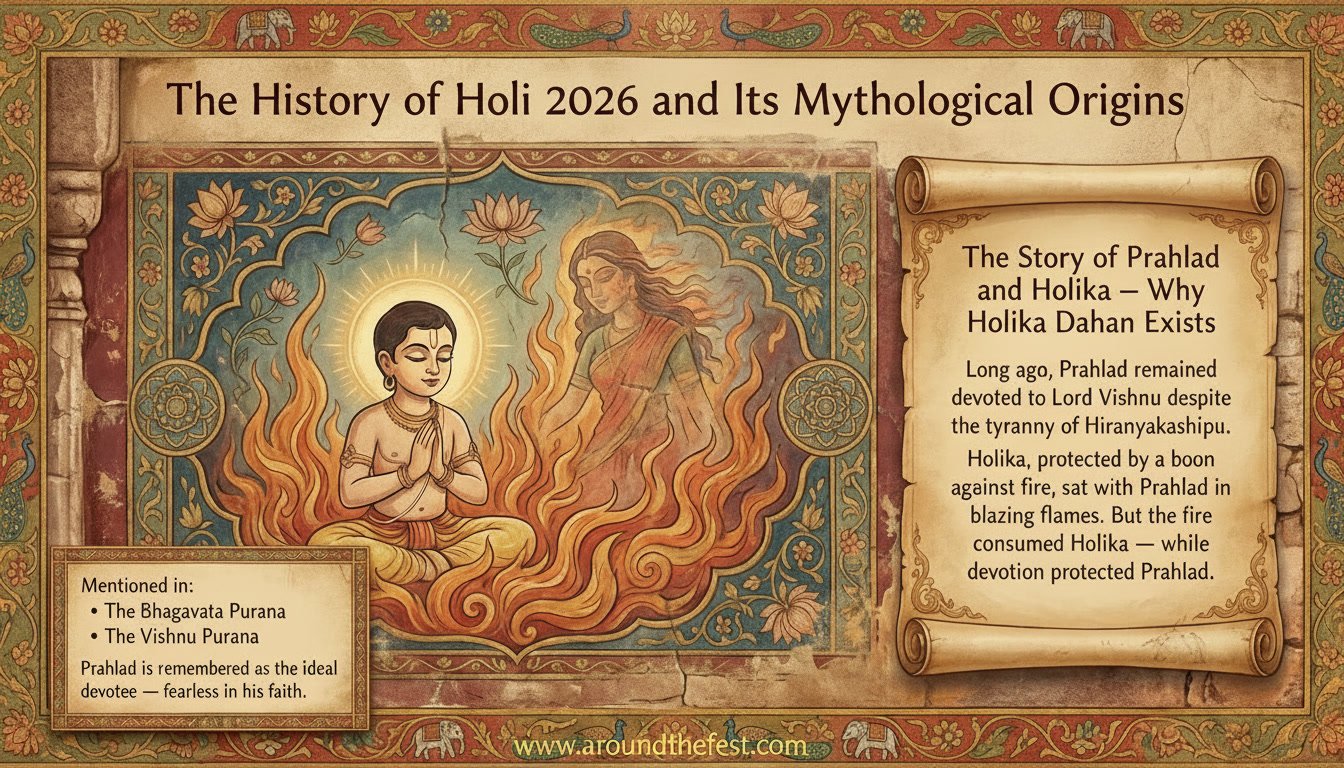
Long ago, the demon king Hiranyakashipu demanded that everyone worship him as a god. However, his own son, Prahlad, refused. Instead, Prahlad remained deeply devoted to Lord Vishnu.
Enraged, Hiranyakashipu tried repeatedly to kill his son. When those attempts failed, he turned to his sister Holika, who possessed a magical boon that protected her from fire.
Holika tricked Prahlad into sitting on her lap inside a blazing fire. She believed the flames would destroy him. Instead, something unexpected happened.
The fire consumed Holika — while Prahlad survived unharmed.
This moment symbolizes a timeless truth:
Arrogance destroys itself. Faith protects.
Every year, during Holika Dahan, communities recreate this symbolic victory of good over evil. And in 2026, when the bonfire rises on March 3, it will represent that same message of resilience and devotion.
Where Is This Story Mentioned?
Unlike many folk tales, this story appears in ancient Hindu scriptures, including:
- The Bhagavata Purana
- The Vishnu Purana
These texts describe Prahlad as an ideal devotee — calm under pressure, fearless in faith, and unwavering despite threats.
Because Holi connects directly to scriptural sources, it carries religious weight beyond just celebration.
Krishna and Radha – How Holi Became a Festival of Colors
 However, Holi didn’t remain only a ritual bonfire tradition.
Over time, another layer enriched it — this time through the playful stories of Lord Krishna in the Braj region.
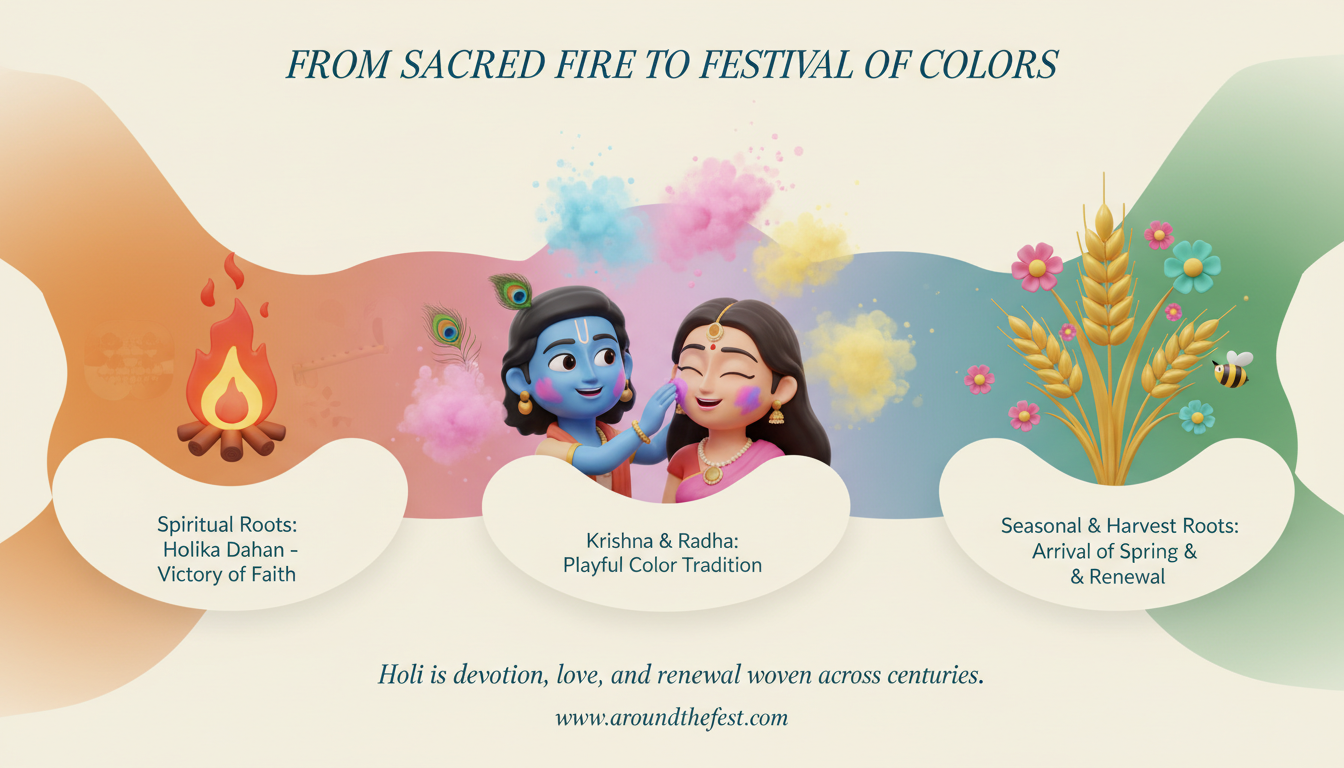
According to tradition, young Krishna worried that his dark blue complexion would make Radha reject him. His mother, Yashoda, playfully suggested that he color Radha’s face. Krishna followed her advice — and in that innocent act, he started a tradition.
Soon, villages across Vrindavan and Mathura began celebrating love and equality through colors.
And gradually, Holi transformed from a ritual fire ceremony into a joyful color festival.
Even today, Braj celebrations begin weeks in advance. Temples celebrate Phoolon wali Holi (Holi with flowers), widows participate in public Holi events (a modern social reform development), and thousands gather for multi-day festivities.
So while Holika Dahan represents spiritual victory, Krishna traditions represent love, playfulness, and unity.
How Ancient Seasonal Rituals Shaped Holi
Beyond mythology, Holi also connects to agricultural life.
Ancient communities celebrated the arrival of spring and the end of winter’s harshness. Farmers offered newly harvested grains into the Holika fire as a gesture of gratitude.
Therefore, Holi developed as:
- A harvest celebration
- A seasonal transition ritual
- A community reset
Even today, rural India reflects this agricultural connection more strongly than urban areas.
How Holi Evolved Through History
Interestingly, historical records suggest that Holi gained royal patronage during medieval times.
Some Mughal-era paintings depict emperors participating in spring color festivals. Additionally, temple carvings from centuries ago show groups celebrating with colored powders.
This shows something important:
Holi adapted across dynasties, communities, and regions — yet it retained its core themes of renewal and unity.
And because of that flexibility, Holi survived centuries of political and social change.
Why the History Matters for Holi 2026
You might wonder — why go so deep into ancient stories?
Because Holi 2026 is not just another annual event. When millions light bonfires and throw colors next March, they continue a tradition that has evolved for thousands of years.
Moreover, with increasing global interest in Holi, understanding its authentic origins prevents cultural oversimplification.
- Holi is not just a “color party.”
- It is devotion.
- It is seasonal wisdom.
- It is symbolic renewal.
- It is resistance against injustice.
And in 2026 — especially with the rare lunar eclipse near the festival — many people may reflect more deeply on its spiritual meaning.
The Deeper Pattern in Holi’s History
If you look closely, a pattern emerges:
First, fire destroys ego.
Then, colors celebrate connection.
First, faith survives fear.
Then, joy replaces division.
That progression — from darkness to light, from winter to spring — defines the true history of Holi.
And that same story will repeat again during Holi 2026.
The Spiritual and Cultural Significance of Holi 2026
By now, you know the dates and the history behind Holi 2026. However, dates and stories alone don’t explain why this festival continues to move millions of people every year.
To truly understand Holi, we need to ask a deeper question:
Why does Holi still matter today?
The answer lies in its spiritual core and its powerful cultural role.
Why Holi 2026 Represents Spiritual Renewal
At its heart, Holi symbolizes inner cleansing.
During Holika Dahan, people gather around the fire not just to watch flames — but to symbolically burn:
- Ego
- Anger
- Jealousy
- Past resentment
In other words, Holi encourages emotional reset.
First, the fire represents purification.
Then, the next morning, colors represent rebirth.
This sequence matters. It reminds us that before joy comes release.
In 2026, with a lunar eclipse occurring around the same time, many spiritual communities may emphasize this theme of reflection and transformation even more strongly. Eclipses traditionally symbolize shadow and illumination — which aligns naturally with Holi’s message of moving from darkness to light.
So spiritually speaking, Holi 2026 becomes more than celebration — it becomes symbolic alignment.
How Holi 2026 Promotes Social Unity
Beyond spirituality, Holi plays a powerful social role.
On Rangwali Holi, social hierarchies temporarily dissolve. People step outside rigid roles and interact freely. Strangers greet each other. Friends reconcile. Families laugh together.
Unlike many festivals that focus on formal rituals, Holi invites participation.
- You don’t just observe Holi.
You experience it.
Moreover, colors act as equalizers. When everyone wears the same bright powders, visible differences fade. That visual symbolism reinforces unity and inclusion.
In a world that often feels divided, Holi 2026 offers something rare — collective joy.
Why Holi 2026 Marks Seasonal Transformation
Holi also aligns with nature.
It signals the official transition from winter to spring. Flowers bloom. Temperatures rise. Agricultural cycles shift.
For centuries, farmers celebrated Holi as a harvest festival — offering gratitude for crops and praying for abundance. Even today, rural communities reflect this agricultural connection more strongly than urban areas.
Therefore, Holi operates on three levels at once:
- Spiritual purification
- Social connection
- Seasonal renewal
Few festivals balance all three so seamlessly.
Where Holi’s Cultural Influence Is Growing
Over the past decade, Holi has expanded globally.
Cities across the United States, United Kingdom, Australia, and Canada now host large public Holi festivals. Universities organize campus events. Cultural organizations promote awareness programs.
Interestingly, this global expansion has sparked new conversations about cultural respect and authenticity. As a result, many communities now emphasize educating participants about Holi’s origins — not just its colorful aesthetics.
Because of this growing awareness, Holi 2026 is likely to see even more structured, culturally mindful celebrations worldwide.
Why Holi 2026 Feels Especially Relevant Today
Every generation finds its own meaning in Holi.
- In earlier times, it reinforced agricultural gratitude.
- In medieval eras, it symbolized devotional faith.
- In modern society, it represents inclusivity and emotional release.
Right now, people crave connection, optimism, and renewal. Holi offers all three.
And because Holi 2026 occurs amid a unique astronomical backdrop, many may interpret it as a symbolic moment for letting go of old patterns and embracing brighter beginnings.
That layered meaning keeps Holi alive — not just as tradition, but as living culture.
The Deeper Message Behind Holi 2026
If you strip away the colors and celebrations, one simple message remains:
- Light over darkness.
- Connection over division.
- Hope over fear.
That message explains why Holi has endured for centuries — and why Holi 2026 will continue to inspire millions.
Religious Importance of Holika Dahan in Holi 2026
Before the colors fill the air on March 4, 2026, something much quieter — and spiritually powerful — happens the night before.
That ritual is Holika Dahan.
While many people associate Holi with celebration, Holika Dahan anchors the festival in devotion, symbolism, and sacred timing.
So let’s understand it properly.
What is Holika Dahan and Why Is It Performed?
Holika Dahan is a sacred bonfire ritual observed on the evening of March 3, 2026.
Communities gather after sunset and light a ceremonial fire. However, this isn’t just a symbolic act — it represents the burning of negativity and protection from harmful influences.
Spiritually, the fire stands for:
- Destruction of ego
- Victory of righteousness
- Protection through devotion
- Renewal before transformation
Because this ritual commemorates the survival of Prahlad and the fall of Holika, it reinforces the belief that faith overcomes arrogance.
In other words, Holika Dahan sets the emotional and spiritual tone for Holi 2026.
When Should Holika Dahan Be Performed in 2026?
Timing matters — and in 2026, it matters even more.
Priests determine the correct timing using the Panchang. They ensure that:
- Purnima Tithi remains active
- The ritual occurs after sunset
- Bhadra period does not interfere
In 2026, the presence of a lunar eclipse on March 3 adds another layer of complexity. Traditionally, during the Sutak period before an eclipse, temples close and ritual activity pauses.
Therefore, many communities will carefully check local muhurat timings to avoid conflict with eclipse visibility.
If you plan to observe Holika Dahan in 2026, consult your local temple or Panchang for precise city-specific timing.
This year requires extra awareness.
How is Holika Dahan Celebrated?
Although rituals vary slightly by region, most communities follow a similar sequence:
1.Preparation
Days before Holi, people collect wood and combustible materials. They build a pyre in an open area — often in the center of a neighborhood.
In some places, families symbolically tie threads around the structure and offer grains as a prayer for prosperity.
2. Ritual and Prayer
After sunset, priests chant mantras. Devotees walk around the fire (called parikrama) and offer:
- Coconut
- Wheat or barley
- Flowers
- Turmeric
These offerings symbolize surrendering negativity and inviting protection.
3. Sacred Ash Tradition
After the fire cools, many people take a small amount of ash home. They apply it on the forehead as a blessing.
The ash represents purification — a reminder that what burns away clears space for growth.
Why Holika Dahan Comes Before the Colors
There’s a reason Holika Dahan always precedes Rangwali Holi.
- First, you cleanse.
- Then, you celebrate.
The ritual encourages introspection before expression. It asks participants to release internal burdens before embracing joy.
That sequence gives Holi emotional depth.
- Without Holika Dahan, Holi becomes only external.
- With it, the festival becomes transformational.
Where Holika Dahan Holds Strongest Religious Presence
In smaller towns and traditional communities, Holika Dahan carries even greater emphasis than the color celebration.
In places like:
- Mathura
- Vrindavan
- Varanasi
- Rural Rajasthan
the ritual draws large crowds, temple participation, and devotional singing.
Meanwhile, metropolitan cities often focus more heavily on the color festivities the next day.
Understanding this regional difference helps you appreciate Holi 2026 in its full cultural context.
Why Holika Dahan 2026 Feels Spiritually Significant
Because 2026 includes a lunar eclipse near the ritual date, many spiritual practitioners view this year as symbolically intense.
- Fire represents purification.
- An eclipse represents shadow and revelation.
Together, they create a powerful symbolic pairing — one that aligns with Holi’s ancient theme of moving from darkness into light.
For those who approach Holi spiritually, 2026 may feel especially meaningful.
How Holi 2026 is Celebrated Across India
Once the Holika Dahan fire settles on March 3, 2026, the energy shifts completely.
The next morning, streets transform. Colors fill the air. Music echoes from rooftops. Laughter replaces silence.
However, Holi doesn’t look the same everywhere.
Although the core spirit remains universal — joy, unity, renewal — each region celebrates Holi 2026 in its own unique way.
Let’s explore how.
How North India Celebrates Holi 2026
If you want to experience Holi in its most intense and traditional form, North India sets the standard.
Braj Region (Mathura & Vrindavan)
This region, deeply associated with Lord Krishna, begins Holi celebrations weeks in advance.
- Temples host:
- Phoolon wali Holi (Holi with flowers)
- Lathmar Holi (playful stick tradition in Barsana)
Widow Holi (a powerful social reform celebration that gained global attention in recent years)
By the time March 4, 2026 arrives, the atmosphere feels electric. Devotees sing bhajans, throw gulal in temple courtyards, and dance in devotion.
Because Holi 2026 falls midweek, travel experts expect extended weekend celebrations in the Braj region, potentially increasing crowd sizes.
How West Bengal Celebrates Holi 2026
In West Bengal, Holi blends with Dol Jatra, a devotional festival dedicated to Krishna and Radha.
Instead of chaotic color play, celebrations often feel more artistic and graceful. People dress in yellow or saffron clothing, sing devotional songs, and apply colors respectfully.
Additionally, Shantiniketan hosts Basanta Utsav — a spring festival inspired by Rabindranath Tagore. Students perform traditional dances and songs, adding cultural elegance to the occasion.
Here, Holi feels poetic rather than wild.
How Rajasthan and Gujarat Celebrate Holi 2026
In Rajasthan, royal heritage adds grandeur.
Udaipur and Jaipur often host palace-style Holika Dahan ceremonies with folk performances and traditional music. Locals gather in large courtyards where community bonding takes center stage.
Meanwhile, Gujarat celebrates with energetic dance, especially in rural communities where agricultural gratitude still shapes the festival.
Because Holi marks the end of winter harvest cycles, farmers celebrate both prosperity and seasonal transition.
How Metropolitan Cities Celebrate Holi 2026
Cities like Mumbai, Delhi, Bengaluru, and Hyderabad approach Holi with a modern twist.
You’ll find:
- Organized Holi parties
- Music festivals
- Eco-friendly color events
- Gated community gatherings
Interestingly, over the past few years, eco-conscious celebrations have gained momentum. Many communities now promote organic gulal and water conservation campaigns.
Since Holi 2026 aligns with a lunar eclipse, some urban spiritual groups may also host guided meditation sessions around Holika Dahan, blending tradition with mindfulness.
How Rural India Celebrates Holi 2026
In rural villages, Holi still reflects its agricultural roots most clearly.
Families gather openly. Elders lead rituals. Folk songs echo across fields. People celebrate with simplicity and authenticity.
Unlike city events, rural Holi often emphasizes:
- Community unity
- Harvest gratitude
- Traditional music
- Homemade sweets
The celebration feels grounded — less commercial, more communal.
Why Regional Diversity Strengthens Holi 2026
Despite all these differences, one thing remains consistent:
Every region uses Holi to strengthen human connection.
- Some express it through devotion.
- Some through dance.
- Some through ritual.
- Some through celebration.
That adaptability explains why Holi continues to thrive.
And in 2026, with growing global participation and increased travel interest, regional diversity may attract even more cultural tourism.
What This Means for You
If you plan to celebrate Holi 2026:
- Choose North India for intensity and tradition.
- Choose West Bengal for cultural refinement.
- Choose Rajasthan for royal heritage atmosphere.
- Choose metropolitan cities for organized events.
- Choose rural areas for authenticity and community warmth.
No matter where you go, Holi will carry the same heartbeat — renewal, joy, and togetherness.
Holi 2026 Celebration Guide – Step-by-Step Overview
Now that you understand the meaning and regional diversity of Holi 2026, let’s simplify everything.
Here’s exactly how, when, and what happens — step by step.
When Does Holi 2026 Start and End?
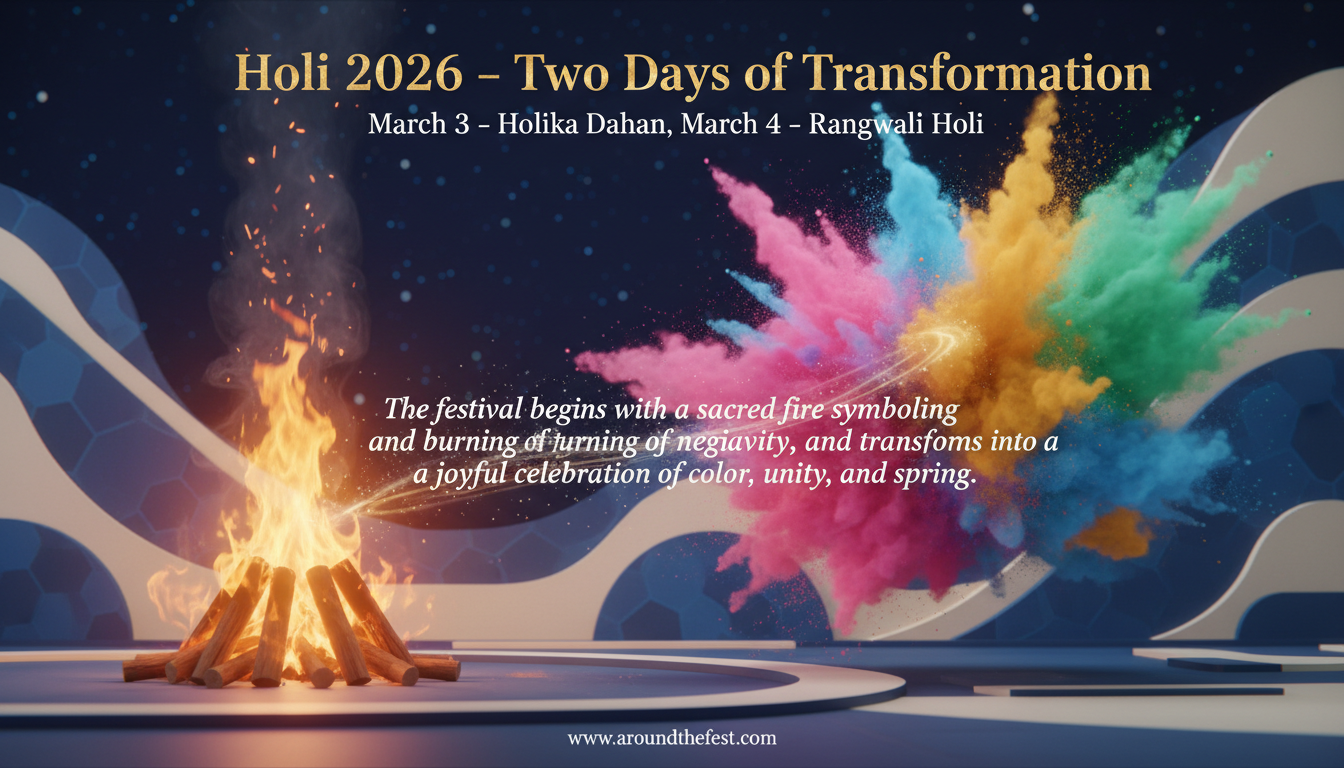
Holi 2026 spans two main days:
- March 3, 2026 (Evening): Holika Dahan
- March 4, 2026 (Daytime): Rangwali Holi (Festival of Colors)
Although celebrations begin earlier in some regions, these are the official observance dates across India.
Now let’s walk through the experience.
Day 1: Holika Dahan (March 3, 2026)
Why This Night Matters
Holika Dahan prepares you emotionally and spiritually for celebration.
Instead of jumping straight into colors, the festival begins with reflection.
Communities light a sacred bonfire to symbolize:
- Burning negativity
- Letting go of ego
- Welcoming renewal
Because Holi represents transformation, this night anchors the deeper meaning behind the joy.
How to Participate in Holika Dahan
You don’t need elaborate rituals to participate meaningfully.
Here’s a simple guide:
- Visit a community bonfire after sunset.
- Offer small items like coconut, grains, or flowers.
- Walk around the fire (parikrama) with intention.
- Pray for protection and clarity for the coming year.
In many places, families also sing devotional songs before the fire is lit.
Importantly, since a lunar eclipse aligns closely with March 3, 2026, some communities may adjust ritual timing slightly. Always check local temple announcements for accurate muhurat.
Day 2: Rangwali Holi (March 4, 2026)
Now the energy shifts completely.
From sacred stillness to vibrant celebration — that contrast defines Holi.
Why Colors Are Used
Colors represent spring, life, and emotional release.
They dissolve social barriers. They equalize everyone. Once covered in color, status disappears.
That’s the deeper symbolism.
- Red represents love.
- Yellow represents knowledge and turmeric purity.
- Green symbolizes new beginnings.
- Blue connects to Krishna’s playful spirit.
So when you apply color, you participate in something symbolic — not random.
How Holi 2026 Is Celebrated on Color Day
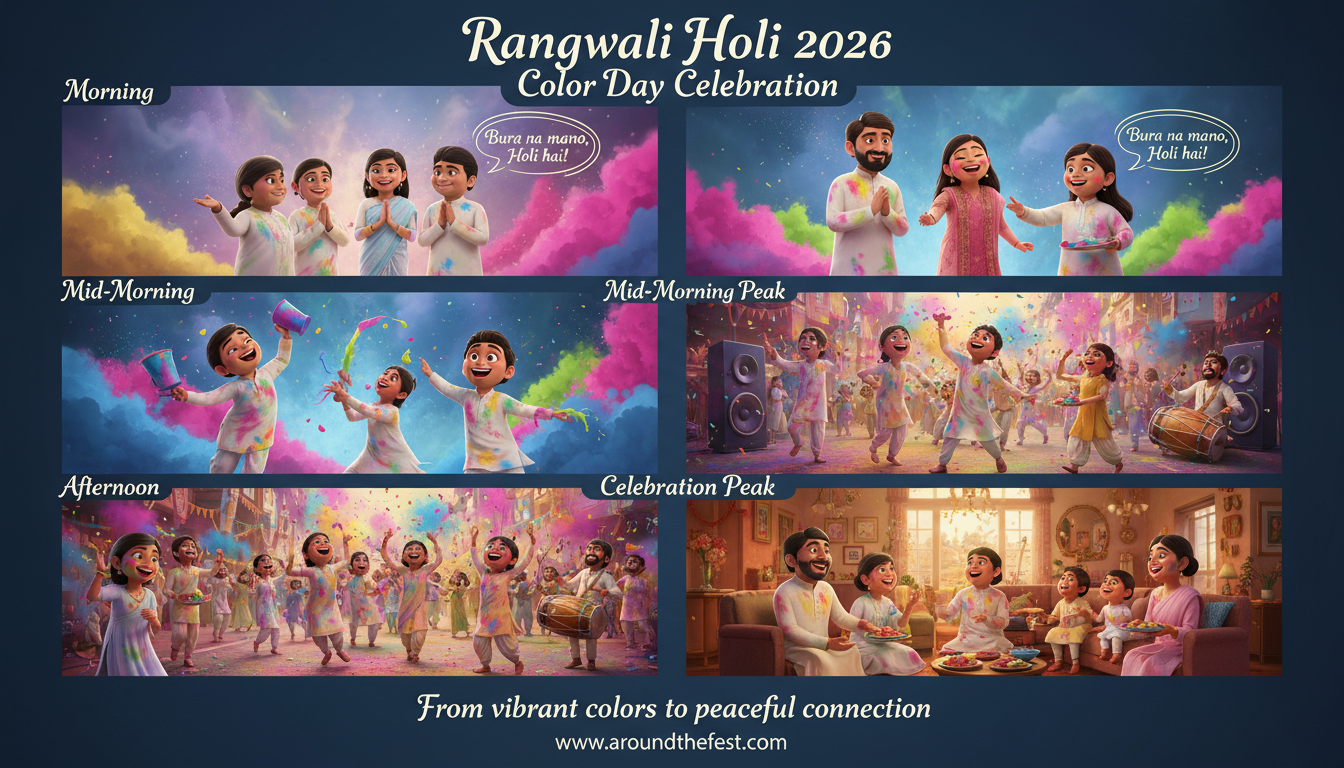
Here’s what typically happens:
1. Morning Gatherings
People visit friends and neighbors early in the morning. They apply dry gulal first — gently and respectfully.
This moment usually begins with the phrase:
“Bura na mano, Holi hai!”
2. Water and Color Play
As the morning progresses, celebrations grow energetic. Water balloons, colored water, and music take over.
However, modern celebrations increasingly encourage controlled and eco-friendly participation.
3. Music and Dance
From Bollywood Holi songs to traditional dhol beats, music drives the celebration.
Public spaces, residential societies, and temple courtyards all become dance floors.
4. Midday Closure
Unlike many festivals, Holi usually winds down by afternoon.
People return home, bathe, wear clean clothes, and visit relatives later in the day.
That rhythm — intensity followed by calm — makes Holi unique.
Where Families vs Youth Celebrate Differently
Holi 2026 will likely show two celebration patterns:
Family-style Holi: Controlled, community-based, daytime-only
Youth-led Holi events: DJ parties, rain dance setups, ticketed gatherings
Because Holi 2026 falls midweek (Wednesday), many workplaces may observe partial holidays, which could influence celebration timing.
Some cities might shift large public events toward the weekend before or after March 4.
How to Prepare Before Playing Holi
Preparation makes a big difference.
Before stepping outside:
- Apply oil to hair and skin
- Wear comfortable old clothes
- Use sunglasses for eye protection
- Charge your phone fully (waterproof pouch recommended)
Additionally, stay hydrated — March weather in many Indian cities starts warming up by early spring.
Preparation helps you enjoy the festival safely.
How Long Does Holi 2026 Typically Last?
Officially: 2 days.
Culturally: Anywhere from 2 days to 2 weeks (in Braj region).
Globally: Some Indian communities abroad celebrate on the nearest weekend for convenience.
So although the calendar marks March 3–4, the spirit of Holi often stretches beyond those dates.
You May also read – https://aroundthefest.com/what-animal-is-chinese-new-year-2026/
Holi 2026 FAQs (Frequently Asked Questions)
Q1. What is the exact date of Holi 2026 in India?
Ans. Holi 2026 will be celebrated on Wednesday, March 4, 2026 in India. The festival begins the evening before with Holika Dahan on March 3, 2026. The date follows the Hindu lunar calendar and falls on Phalguna Purnima (the full moon day of the Phalguna month).
Q2. When is Holika Dahan in 2026?
Ans. Holika Dahan in 2026 will take place on the evening of March 3, 2026, after sunset. The exact muhurat (auspicious timing) depends on the Purnima Tithi and Bhadra period, so devotees should check local Panchang timings for their city.
Q3. Why does the Holi date change every year?
Ans. The Holi date changes every year because it follows the Hindu lunar calendar, not the solar Gregorian calendar. Holi falls on the full moon (Purnima) of the Phalguna month, which shifts annually according to lunar cycles.
Q4. Why is Holi celebrated with colors?
Holi is celebrated with colors to symbolize joy, love, and the arrival of spring. The tradition also connects to Lord Krishna, who playfully applied colors to Radha and the gopis. Over time, colors became a symbol of equality and unity, dissolving social differences during the celebration.
Q5. What is the story behind Holi?
Ans. The story of Holi centers on Prahlad and Holika. Prahlad remained devoted to Lord Vishnu despite his father’s opposition. Holika attempted to burn him in a fire but perished herself, while Prahlad survived. The event symbolizes the victory of good over evil and devotion over ego.
Q6. Is there a lunar eclipse during Holi 2026?
Ans. Yes, a lunar eclipse occurs on March 3, 2026, around the time of Holika Dahan. Because eclipses hold spiritual significance in Hindu tradition, some communities may adjust ritual timings based on local astrological calculations.
Q7. Is Holi 2026 a public holiday in India?
Ans. Yes, Holi 2026 is a public holiday in most Indian states. Government offices, schools, and many businesses remain closed. However, exact observance dates may vary slightly depending on regional calendar interpretations.
Q8. How many days is Holi celebrated in 2026?
Ans. Holi 2026 is officially celebrated over two days:
- March 3 (Holika Dahan)
- March 4 (Rangwali Holi)
However, in regions like Mathura and Vrindavan, festivities may continue for several days before and after the main date.
Q9. What are the main rituals of Holi 2026?
Ans. The main rituals of Holi 2026 include lighting the Holika Dahan bonfire to symbolize purification and playing with colored powders (gulal) the next day. Families also exchange sweets, visit relatives, and seek blessings from elders.
Q10. Where is the best place to celebrate Holi 2026 in India?
The best places to celebrate Holi 2026 in India include Mathura, Vrindavan, Jaipur, Delhi, and Udaipur. Mathura and Vrindavan offer the most traditional celebrations, while metropolitan cities host organized and tourist-friendly events.
Q11. What should I wear for Holi 2026?
Ans. Most people wear white clothing during Holi because it enhances the vibrancy of colors. Choose comfortable outfits you don’t mind staining permanently. Applying oil to your skin and hair beforehand helps prevent dryness and color absorption.
Q12. How can I celebrate Holi 2026 safely?
Ans. To celebrate Holi 2026 safely, use organic colors, protect your eyes, stay hydrated, and respect personal boundaries. Avoid excessive water usage and participate in organized events if you are unfamiliar with the area.
Conclusion: Why Holi 2026 Is More Than Just a Festival
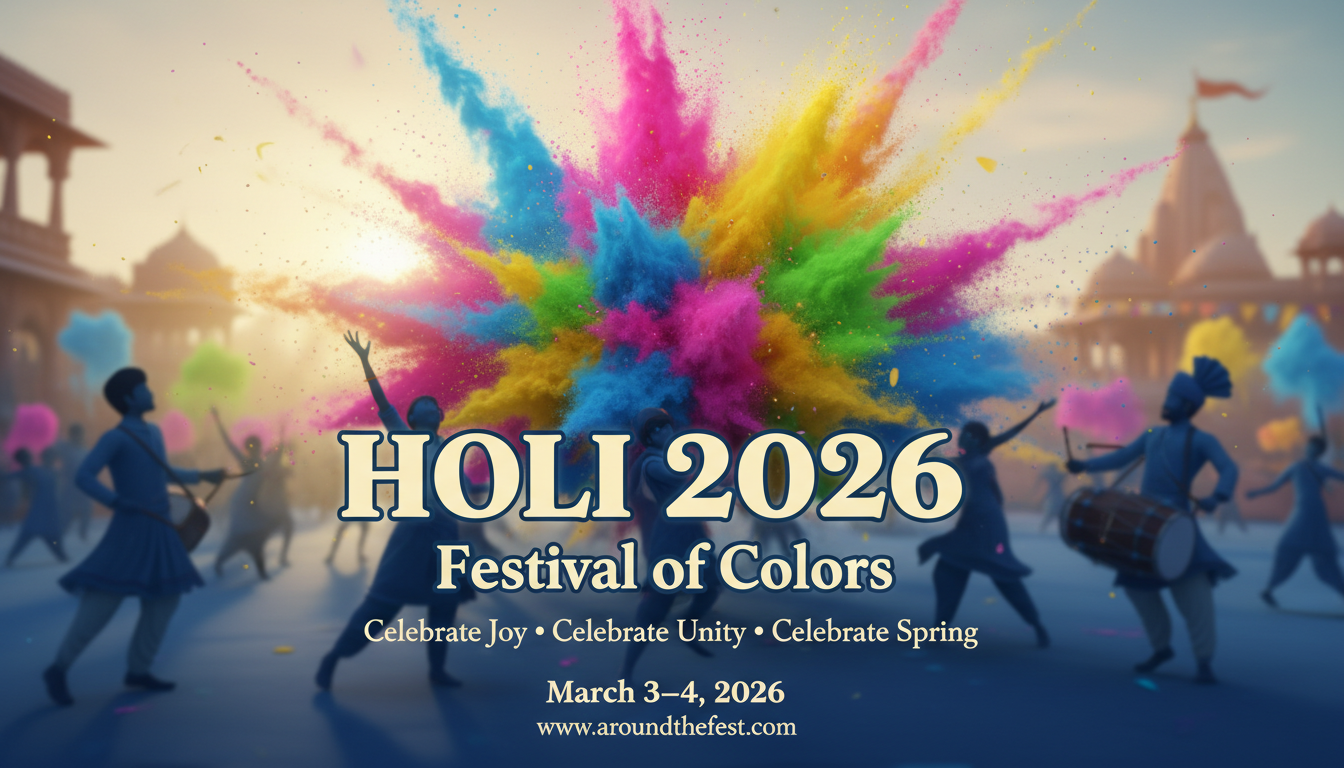
Holi 2026, celebrated on March 4, 2026, is more than a day of colors — it is a powerful blend of mythology, spirituality, seasonal transition, and human connection.
From the sacred fire of Holika Dahan on March 3 to the vibrant celebrations the next morning, the festival follows a meaningful journey. First, it invites reflection and release. Then, it welcomes joy and renewal.
This year feels especially significant. With the full moon and lunar eclipse aligning around Holika Dahan, Holi 2026 carries deeper symbolic energy — a reminder to let go of what no longer serves you and step into a new season with clarity.
At its core, Holi represents:
- The victory of good over evil
- The arrival of spring
- Emotional cleansing
- Social unity beyond differences
Whether you celebrate traditionally in Mathura, join a modern city gathering, or simply apply a small touch of color at home, the essence remains the same: renewal through connection.
So as Holi 2026 approaches, don’t just prepare for colors.
- Prepare to reset.
- Prepare to reconnect.
- Prepare to celebrate with intention.
Because Holi isn’t only about what you throw into the air — it’s about what you choose to release from within.
Happy Holi 2026