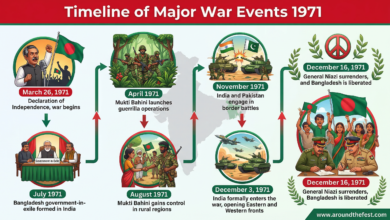
Bangladesh Independence Symbols: Flag, Anthem and Heroes
Introduction to Bangladesh Independence Symbols
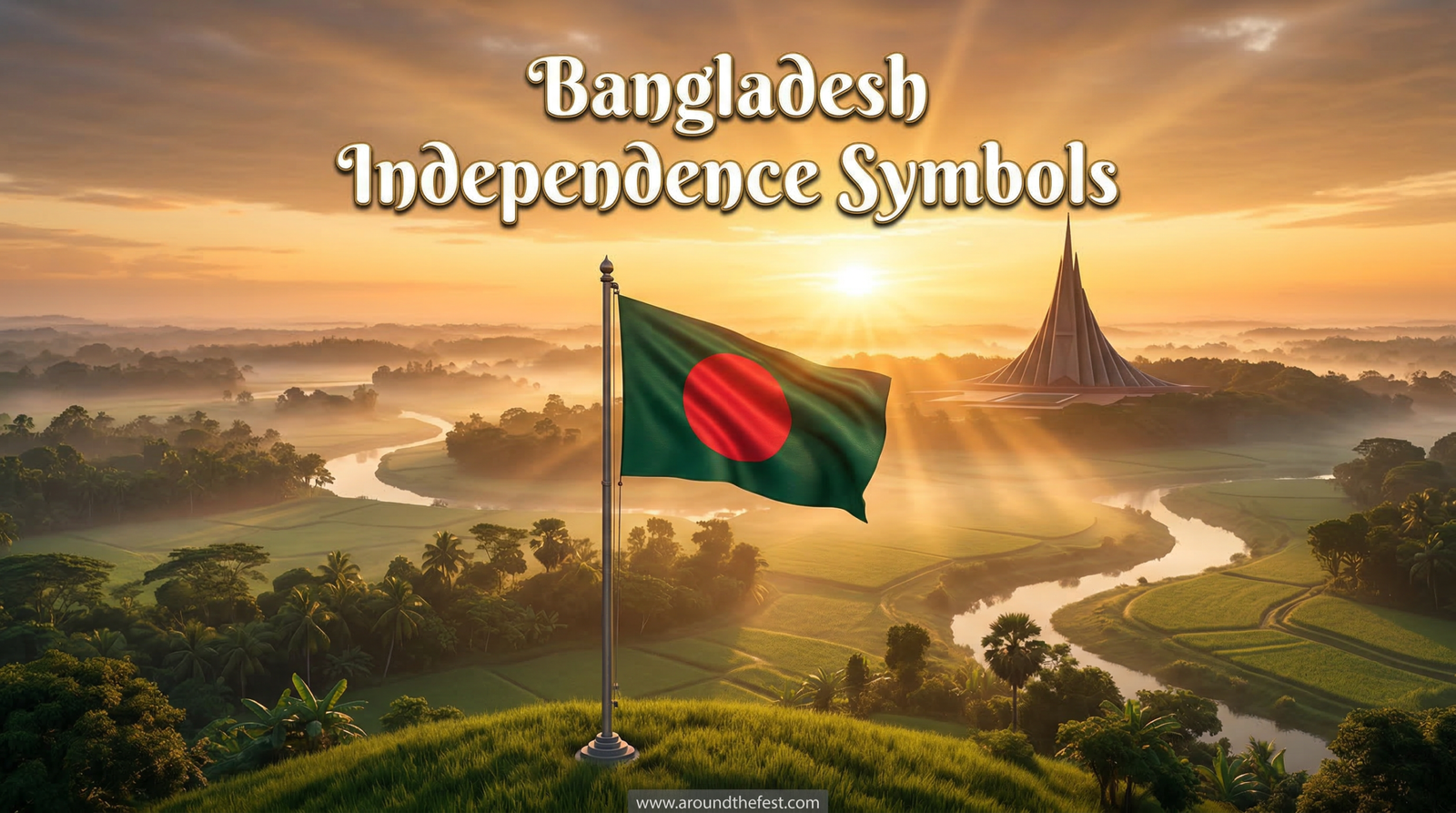
The Bangladesh Independence Symbols reflect the nation’s struggle, sacrifice, and pride. These symbols emerged after the historic Bangladesh Liberation War in 1971. They represent the journey of a people who fought for freedom and built a new national identity.
Today, these icons appear across the country. The red and green flag flies above government buildings. Patriotic songs are sung in schools. Memorials honor those who sacrificed their lives during the war.
Every year, people gather on Bangladesh Independence Day to remember this historic moment. The celebrations highlight courage, unity, and the birth of a new nation.hese Bangladesh independence symbols continue to shape the country’s identity even today.
The Meaning Behind Bangladesh Independence Symbols
National symbols tell the story of a country. They reflect shared history, culture, and values.
In Bangladesh, several important symbols represent the independence movement:
- The national flag
- The national anthem “Amar Sonar Bangla”
- War memorials honoring martyrs
- Leaders and freedom fighters of the liberation war
These symbols help citizens remember the sacrifices made during the struggle for freedom.
Why Bangladesh Independence Symbols Matter to the Nation
Symbols play an important role in shaping national identity.
For Bangladesh, they represent:
- The sacrifices made during the liberation war
- The language and cultural heritage of the Bengali people
- The unity that led to independence
The leadership of Sheikh Mujibur Rahman helped inspire this national identity. He is remembered as the Father of the Nation.
How These Symbols Inspire People Today
Even decades after independence, these symbols remain powerful.
They appear in many parts of public life, including:
- national ceremonies and public holidays
- schools and universities
- museums and historical memorials
- cultural programs around the world
They help younger generations understand the story of independence.
When Bangladesh Independence Symbols Are Honored
The most important occasion is Bangladesh Independence Day, celebrated every year on March 26.
On this day people:
- raise the national flag
- visit memorials
- sing patriotic songs
- attend cultural and educational events
These traditions ensure that the history of independence is never forgotten.
Historical Background Behind Bangladesh Independence Symbols
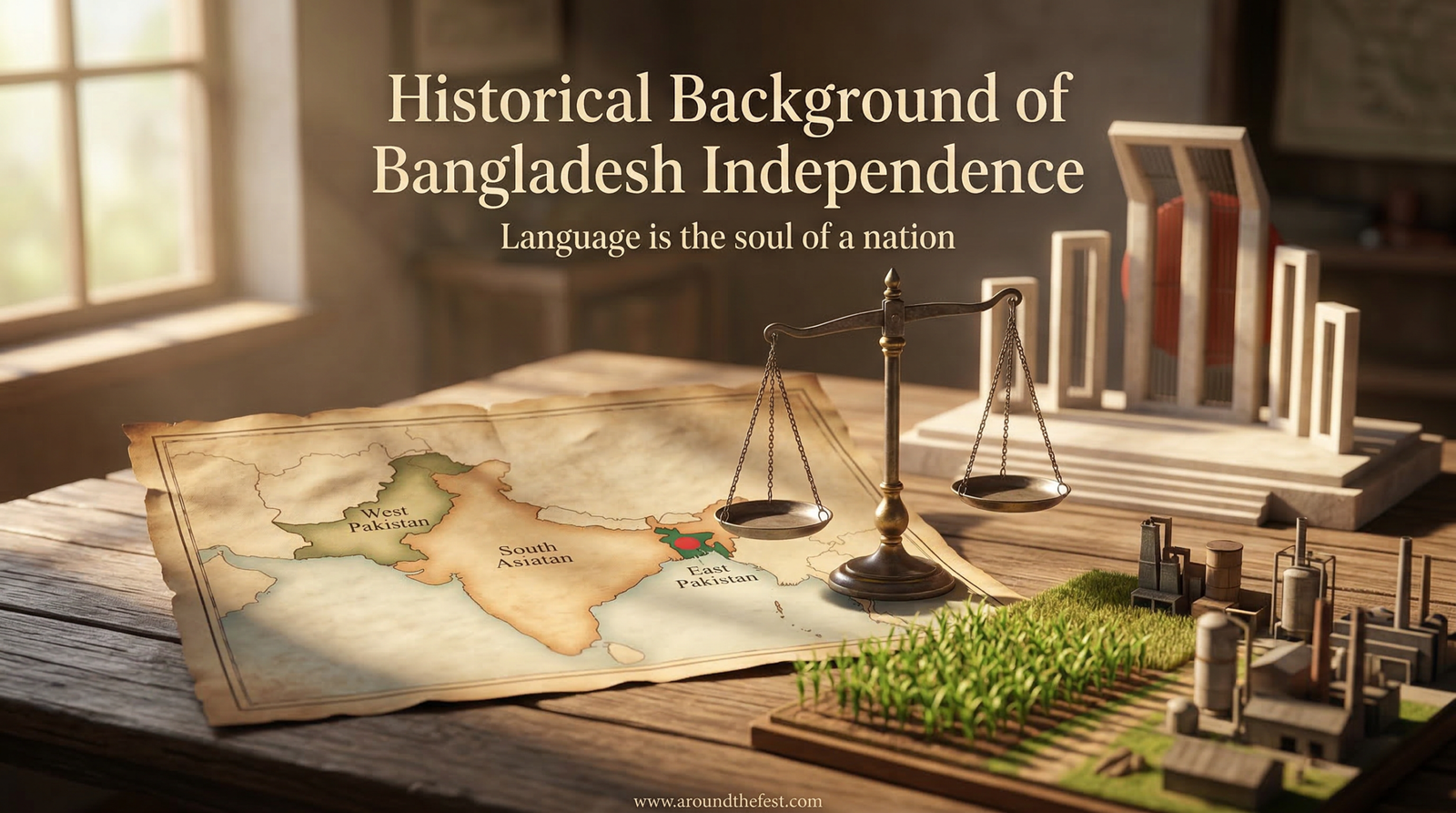
To understand the national symbols of Bangladesh, we must first look at the events that shaped the nation. These symbols emerged from the struggle that led to independence during the Bangladesh Liberation War in 1971.
Before independence, Bangladesh was known as East Pakistan. However, political tensions and cultural differences slowly created a strong demand for autonomy. Over time, these tensions grew into a powerful independence movement.
Why Independence Demands Shaped Bangladesh Independence Symbols
After the partition of British India in 1947, Pakistan became a country with two separate regions: West Pakistan and East Pakistan. Although both regions belonged to one nation, they remained geographically and culturally distant.
As a result, people in East Pakistan began to feel increasingly marginalized.
Political Inequality
First, political power remained concentrated in West Pakistan. Even though East Pakistan had a larger population, its leaders rarely controlled national decision-making.
Consequently, many citizens believed the political system treated their region unfairly. Political frustration therefore grew across the population.
Economic Discrimination
In addition to political issues, economic inequality also increased tensions.
East Pakistan generated significant export income through products like jute and agricultural goods. However, most development projects and investments went to West Pakistan.
Because of this imbalance, many residents believed their region supported the economy but received fewer benefits.
Cultural and Language Conflicts
Meanwhile, cultural identity became another major issue.
In 1948, the central government announced that Urdu would be the national language. However, most citizens in East Pakistan spoke Bengali.
As a result, students and activists launched protests to defend their language. This movement eventually became the historic Bengali Language Movement of 1952.
During these demonstrations, several students lost their lives. Their sacrifice deeply influenced the independence movement.
Today, the world remembers this event through International Mother Language Day, which UNESCO officially recognizes each year on February 21.
Events That Led to the Liberation War
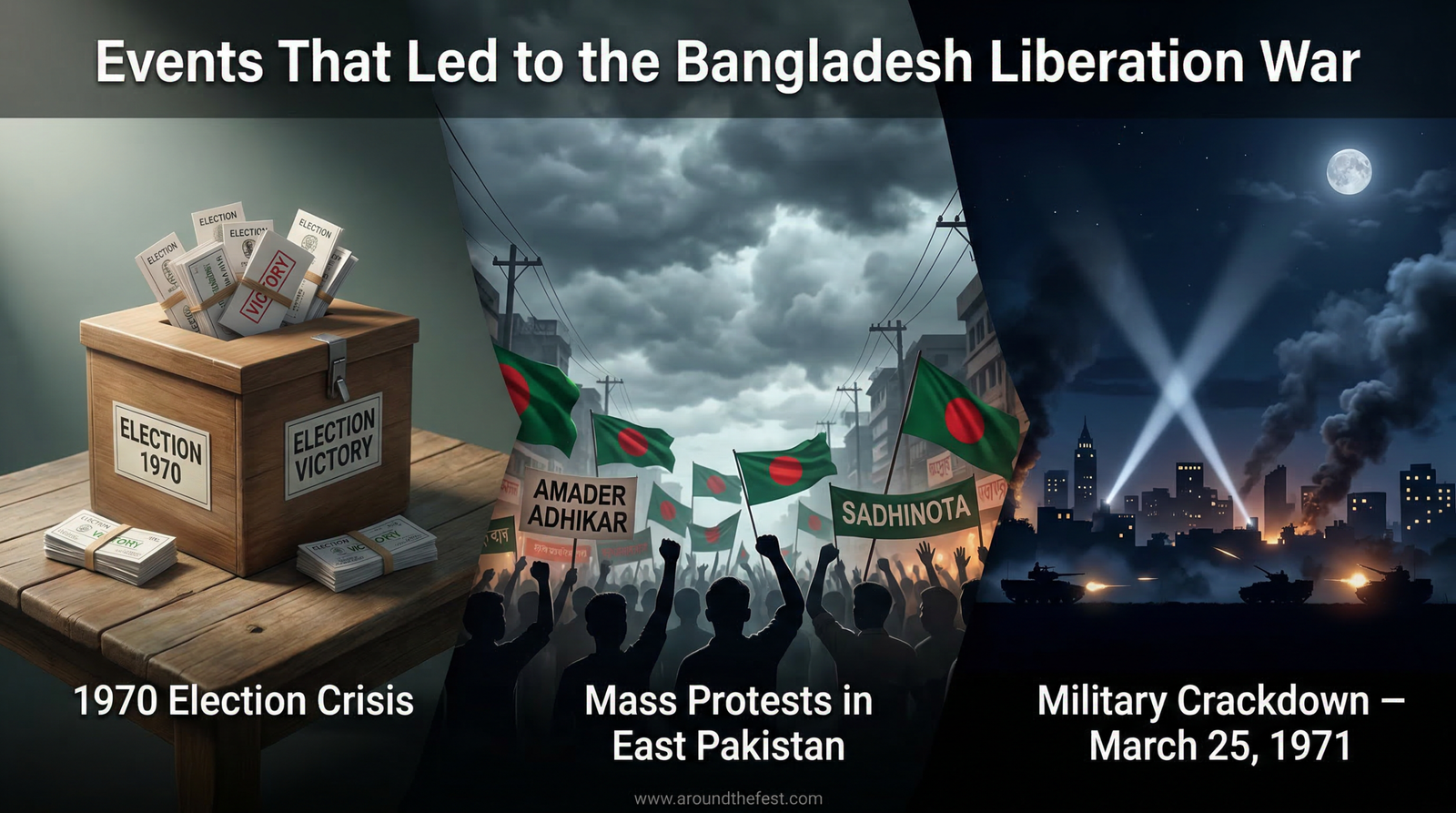
Tensions between the two regions continued to grow during the 1960s.
Political movements demanding autonomy gained strong support in East Pakistan.
The 1970 Election Crisis
In 1970, Pakistan held national elections. The political party led by Sheikh Mujibur Rahman, the Awami League, won a decisive majority.
Under democratic rules, this victory should have allowed the party to form the national government.
However, political leaders in West Pakistan refused to transfer power. This decision triggered massive protests across East Pakistan.
Military Crackdown in March 1971
The situation escalated on the night of March 25, 1971. The Pakistani military launched a large-scale operation to suppress political movements in East Pakistan.
Universities, student leaders, intellectuals, and civilians were targeted. The violence shocked the entire region.
Soon after these events, the independence movement intensified.
Role of Sheikh Mujibur Rahman
One of the most influential figures in this struggle was Sheikh Mujibur Rahman.
He is widely known as Bangabandhu, meaning “Friend of Bengal.”
His Historic Speech
On March 7, 1971, he delivered a powerful speech in Dhaka that mobilized millions of people.
In that speech, he urged citizens to prepare for a long struggle. The speech remains one of the most significant political speeches in South Asian history.
Declaration of Independence
Shortly after the military crackdown began, the independence movement formally started. The struggle quickly evolved into a full-scale liberation war.
Resistance fighters organized themselves into the Mukti Bahini, a guerrilla force that fought against the Pakistani military.
How the Liberation War Changed South Asia
The conflict lasted for about nine months. During this period, millions of people were displaced and many lost their lives.
India later entered the conflict in support of the Bengali resistance forces.
In December 1971, Pakistani forces surrendered. This moment marked the official birth of Bangladesh as an independent country.
The victory is remembered every year on Victory Day (Bangladesh), celebrated on December 16.
Why This History Matters
The independence struggle shaped the meaning of Bangladesh’s national symbols.
- The flag represents the sacrifice of those who fought for freedom.
- The national anthem celebrates the beauty and spirit of the homeland.
- The memorials honor those who gave their lives during the war.
These symbols remind people that independence came through courage, unity, and resilience.
National Anthem and Cultural Identity of Bangladesh: Meaning, History, and Symbolism
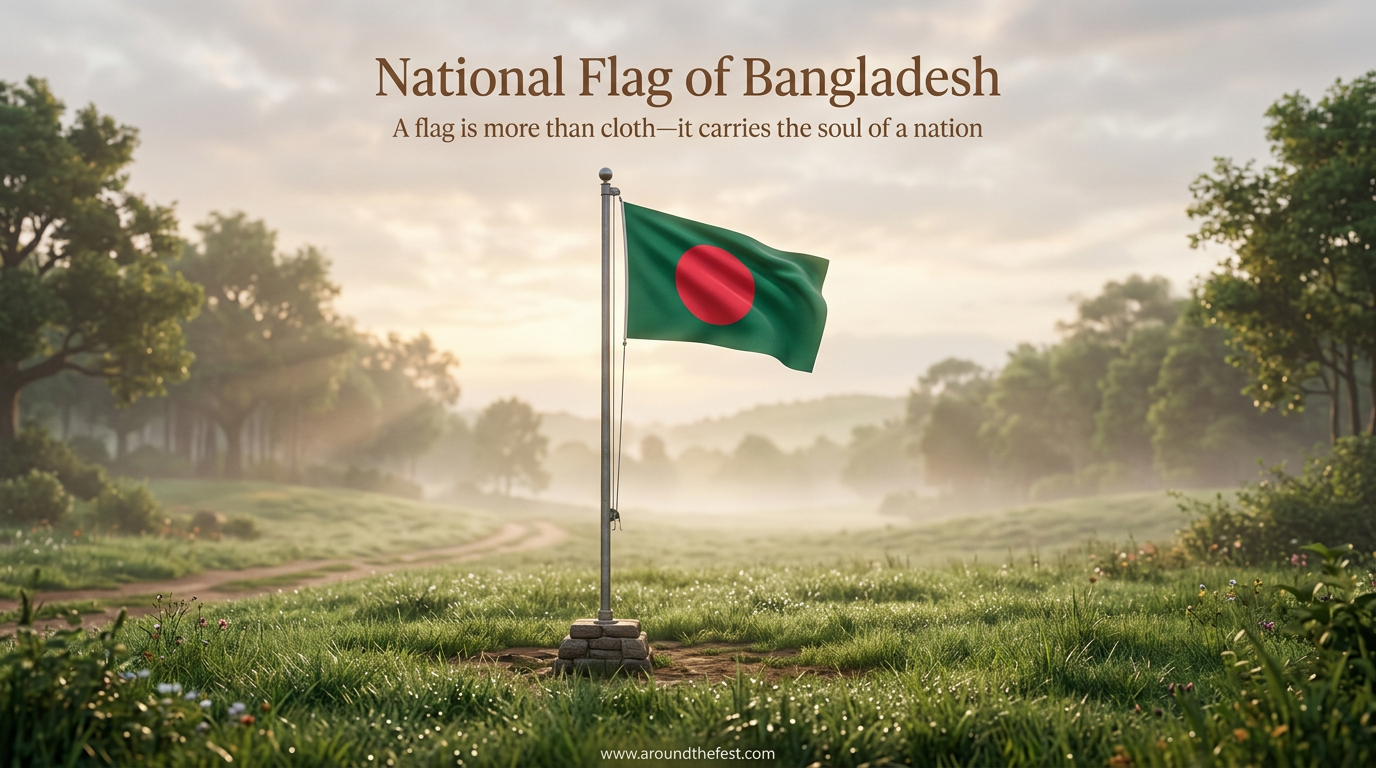
The national flag is one of the most recognizable symbols of Bangladesh. It reflects the sacrifices made during the independence struggle and the hopes of a new nation. Today, the flag stands as a powerful reminder of the journey that led to independence during the Bangladesh Liberation War.
Across the country, citizens proudly raise the red and green flag on public buildings, schools, and homes. In particular, people display it during national celebrations such as Bangladesh Independence Day and Victory Day (Bangladesh).
The national flag is one of the most recognized Bangladesh independence symbols, representing sacrifice and hope.
Among all symbols of Bangladesh independence, the flag holds the deepest emotional connection.
Meaning of the Red Circle and Green Background
At first glance, the design of the Bangladesh flag appears simple. However, each element carries deep symbolic meaning.
The Green Background
The green field represents the lush landscape of Bangladesh. The country is known for its fertile plains, rivers, and greenery.
In addition, the green color symbolizes:
- vitality and growth
- the natural beauty of Bengal
- hope for a prosperous future
Therefore, the green background reflects both the land and the spirit of the people.
The Red Circle
At the center of the flag lies a bold red circle. This circle represents the rising sun of a new nation.
However, the color red also carries a deeper meaning. It symbolizes the blood sacrificed by millions during the struggle for independence.
Because of this symbolism, the red circle serves as a tribute to the courage of the freedom fighters.
History of the Flag Design
Although the modern flag became official after independence, its origins go back to the early days of the independence movement.
Student Movement and Early Flag Design
In 1970, a group of student leaders from Dhaka University created the first version of the independence flag. Their goal was to design a symbol that represented the identity of the Bengali people.
The original design included:
- a green background
- a red circle
- a golden map of East Pakistan inside the circle
Students first raised this flag publicly during political demonstrations supporting independence.
As the independence movement grew stronger, the flag quickly became a powerful symbol of resistance.
Flag During the Liberation War
When the Bangladesh Liberation War began in 1971, freedom fighters carried the flag into battle. It became a symbol of unity and determination.
Meanwhile, many civilians also displayed the flag as a sign of support for the independence movement.
Because of this widespread use, the flag gained strong emotional significance for the people.
When the Flag Became Official
After Bangladesh gained independence in December 1971, the government officially adopted the national flag.
However, leaders made one small modification to the design. They removed the golden map from the center of the flag.
This change made the flag easier to reproduce and ensured a cleaner design.
Today, the national flag consists of:
- a dark green field
- a slightly off-center red circle
The circle appears slightly toward the hoist side. This adjustment ensures that it appears centered when the flag waves in the wind.
How the Flag Is Used Today
Today, the national flag plays an important role in public life across Bangladesh.
Citizens raise the flag during major national occasions, including:
- Bangladesh Independence Day (March 26)
- Victory Day (Bangladesh) (December 16)
- International sports competitions
- National cultural celebrations
Schools, government offices, and public institutions also display the flag regularly.
In addition, many Bangladeshis living abroad proudly display the flag during cultural events and national celebrations.
Why the Flag Remains a Powerful Symbol
Even decades after independence, the Bangladesh flag continues to represent unity, sacrifice, and national pride.
For many citizens, it tells the story of courage and resilience during one of the most important struggles in the nation’s history.
Every time the flag rises, it reminds people of the sacrifices made during the fight for freedom and the birth of a new nation.
The National Anthem “Amar Sonar Bangla”: History, Meaning, and Cultural Significance
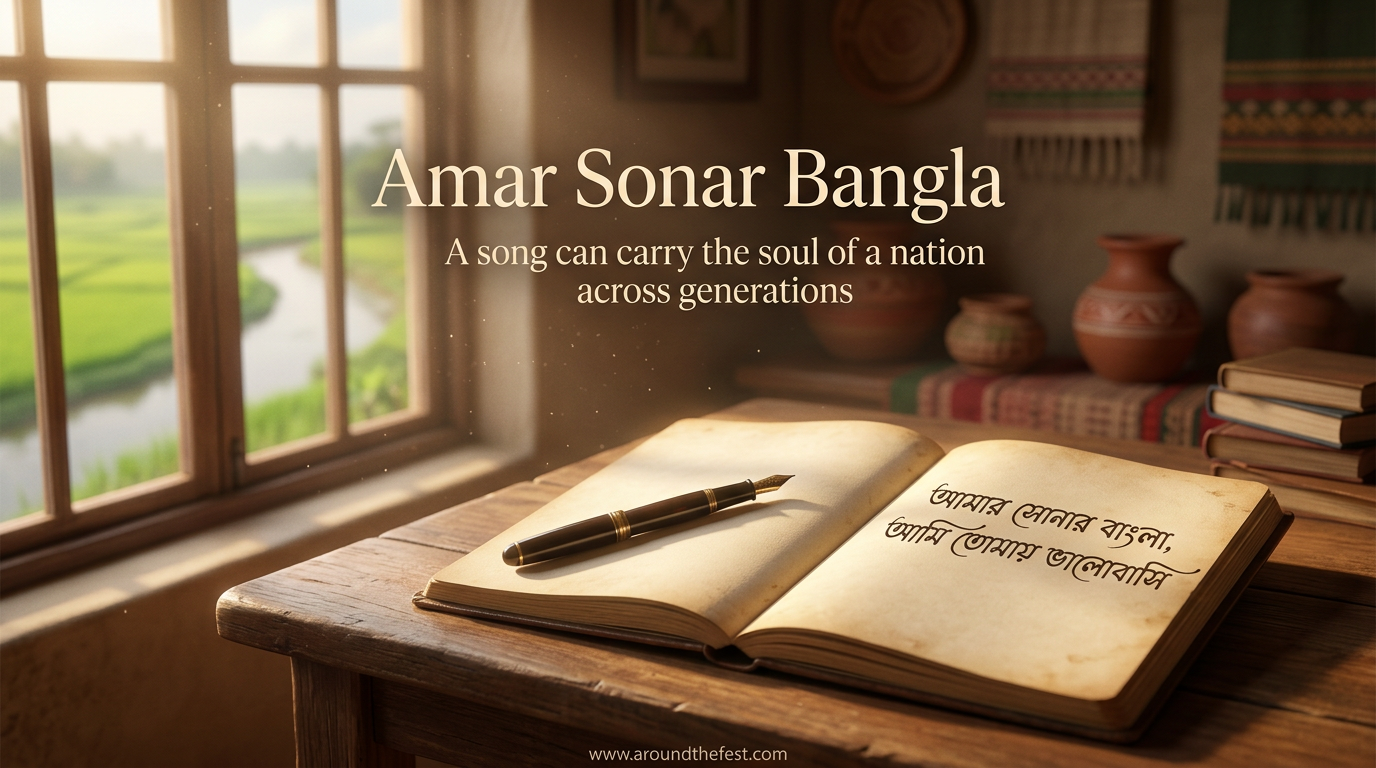
Every nation expresses its identity through music. In Bangladesh, the national anthem plays a powerful role in expressing love for the homeland. The anthem, Amar Sonar Bangla, reflects deep emotional connections between the people and their land.
Citizens sing this anthem during national ceremonies, school events, and important celebrations. In particular, it holds special meaning during Bangladesh Independence Day and Victory Day (Bangladesh).
The anthem reminds people of the cultural roots and patriotic spirit that strengthened the independence movement.
The national anthem is another powerful example of Bangladesh independence symbols rooted in culture.
Cultural expressions like songs became key symbols of Bangladesh independence during the liberation movement.
Who Wrote “Amar Sonar Bangla”
The song Amar Sonar Bangla was written by the renowned poet and Nobel laureate Rabindranath Tagore in 1905.
Tagore originally composed the song during a period of political tension in Bengal. At that time, the British government attempted to divide the Bengal region. Many intellectuals and artists opposed this decision because they believed it threatened Bengali cultural unity.
As a result, Tagore wrote the song to celebrate the beauty and spirit of Bengal. His lyrics praised the land, rivers, fields, and traditions of the region.
Over time, the song became a powerful cultural expression of Bengali identity.
Meaning and Symbolism of the Anthem
The lyrics of Amar Sonar Bangla describe the natural beauty of Bengal and the emotional connection people feel toward their homeland.
The phrase “Sonar Bangla” means “Golden Bengal.” It reflects the fertile land, golden crops, and natural richness of the region.
However, the song carries deeper symbolic meanings as well.
Love for the Homeland
First, the anthem expresses a deep sense of affection for the land. The lyrics describe the wind, the fields, and the fragrance of flowers across Bengal.
Because of this imagery, many listeners feel a strong emotional connection when they hear the anthem.
Cultural Identity
Second, the song celebrates Bengali culture and heritage. It highlights the traditions and values that unite the people.
During the independence movement, these cultural elements helped strengthen the national identity of Bangladesh.
Spirit of Freedom
Finally, the anthem also reflects the spirit of freedom. Although Tagore wrote it decades before independence, its message later inspired those who supported the independence movement during the Bangladesh Liberation War.
When It Became the National Anthem
After Bangladesh gained independence in 1971, leaders searched for a song that represented the nation’s culture and aspirations.
Because of its strong emotional and cultural significance, Amar Sonar Bangla became the national anthem of Bangladesh.
However, only the first ten lines of the original song form the official anthem today.
These lines capture the central message of love for the homeland and pride in the nation.
How the Anthem Is Performed Today
Today, the anthem holds an important place in national life. Schools, universities, and public events often begin with the singing of Amar Sonar Bangla.
Citizens also perform it during:
- national ceremonies
- sports competitions
- government events
- cultural celebrations
In addition, many Bangladeshis living abroad sing the anthem during international cultural gatherings.
As a result, the song continues to connect generations of Bangladeshis around the world.
Why the Anthem Remains a Powerful National Symbol
More than a century after it was written, Amar Sonar Bangla still inspires millions of people.
The anthem reminds citizens of:
- their shared culture
- their love for the homeland
- the sacrifices made for independence
Because of this emotional connection, the anthem remains one of the most meaningful symbols of Bangladesh.
Memorials Honoring the Liberation War
Memorials across Bangladesh serve as powerful reminders of the sacrifices made during the struggle for independence. These monuments honor the millions who fought and suffered during the Bangladesh Liberation War of 1971.
Today, visitors from across the country and the world travel to these sites to pay tribute to the martyrs. In addition, these memorials help younger generations understand the cost of freedom and the importance of preserving national history.
Many of these landmarks also play a central role in national ceremonies, especially during Bangladesh Independence Day and Victory Day (Bangladesh).
Memorials serve as physical Bangladesh independence symbols that preserve the memory of sacrifice.
Visiting these sites helps people connect with the deeper meaning of symbols of Bangladesh independence.
National Martyrs’ Memorial: The Main Tribute to Fallen Heroes
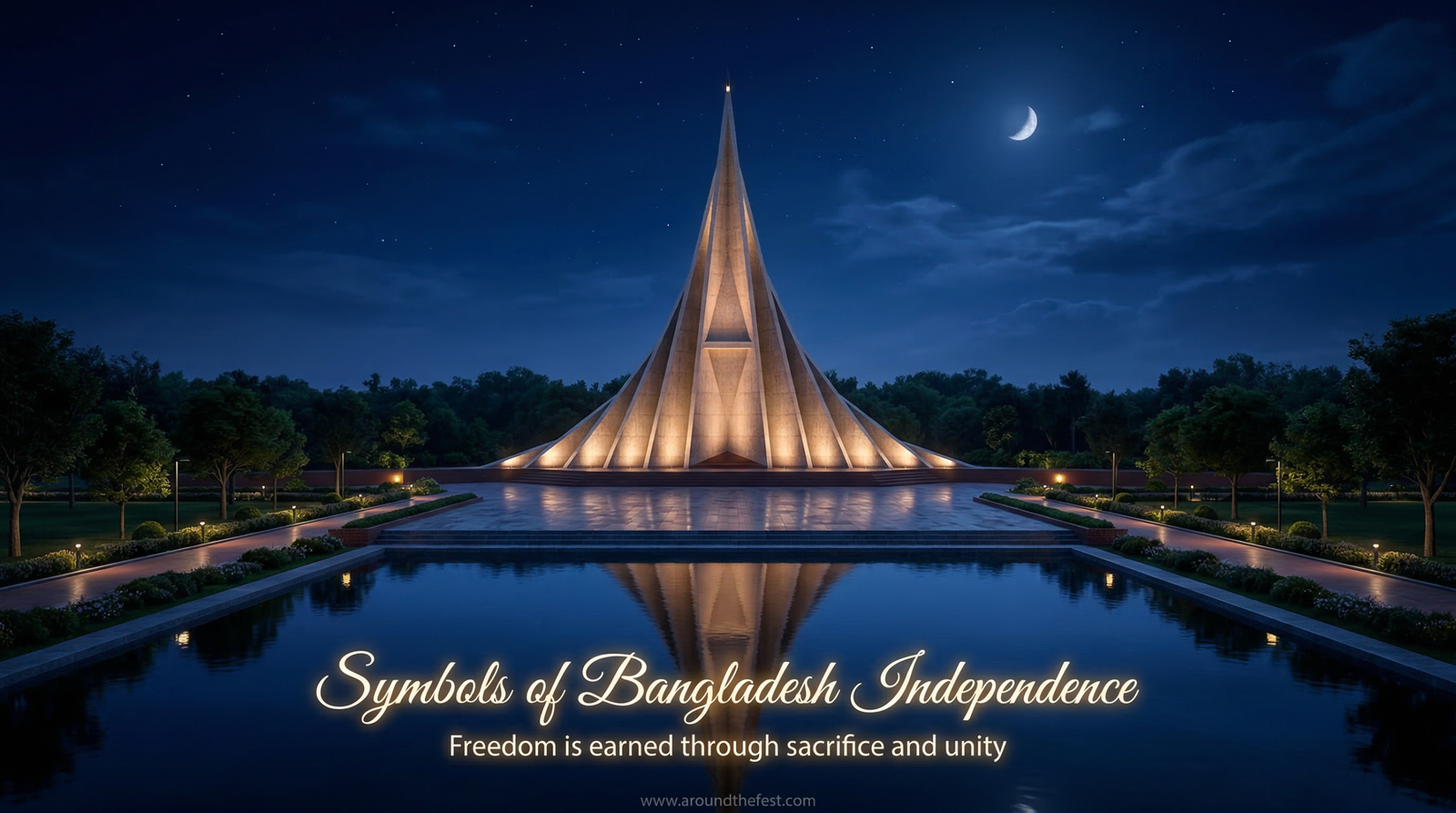
One of the most important monuments in Bangladesh is the National Martyrs’ Memorial. This monument stands about 35 kilometers northwest of Dhaka.
The memorial honors the millions of people who sacrificed their lives during the liberation war.
Symbolism of the Memorial
The design of the monument carries deep symbolic meaning. It consists of seven triangular concrete structures that gradually rise toward the sky.
These seven structures represent the major stages of the independence movement. As a result, the design visually reflects the nation’s journey from oppression to freedom.
The surrounding landscape also plays an important role. A large green field, water bodies, and pathways create a peaceful environment for reflection and remembrance.
National Ceremonies at the Memorial
Each year, national leaders, diplomats, and citizens gather at the National Martyrs’ Memorial during important national events.
For example, on Bangladesh Independence Day, officials lay wreaths at the monument to honor the martyrs. Schools and organizations also arrange visits to teach students about the history of the liberation war.
Shaheed Minar: A Monument to the Language Movement
Another important symbol of national identity is the Shaheed Minar.
Although this monument commemorates the Bengali Language Movement of 1952, it also holds deep significance for Bangladesh’s independence movement.
Why the Monument Matters
During the language movement, students protested for the recognition of Bengali as a national language. Several protesters lost their lives during these demonstrations.
Their sacrifice later inspired many activists who supported independence in 1971. Therefore, the monument represents both linguistic and cultural identity.
Annual Observances
Every year, thousands of people gather at the Shaheed Minar on International Mother Language Day. Citizens place flowers at the monument to honor the students who sacrificed their lives.
The event also attracts international visitors and cultural organizations.
Liberation War Museum: Preserving the History of 1971
While monuments provide symbolic remembrance, museums help preserve historical evidence. One of the most important institutions dedicated to this purpose is the Liberation War Museum.
This museum documents the events of the liberation war through photographs, personal accounts, artifacts, and historical records.
What Visitors Can See
Visitors to the museum can explore exhibitions that include:
- photographs from the war period
- personal belongings of freedom fighters
- letters, documents, and newspaper reports
- oral histories from survivors and witnesses
These materials help visitors understand the realities of the war and the struggles faced by civilians.
Educational Role of the Museum
The Liberation War Museum also plays an important educational role. Schools and universities frequently organize trips to the museum so students can learn about the independence movement.
In addition, researchers and historians often use its archives to study the war and its long-term impact on the region.
Why These Memorials Remain Important Today
More than fifty years after independence, these memorials continue to shape national memory.
They serve several important purposes:
- honoring the sacrifices of the martyrs
- educating new generations about history
- strengthening national identity
- promoting respect for freedom and democracy
Because of these roles, memorials remain essential symbols of Bangladesh’s independence.
They ensure that the stories of courage and sacrifice from 1971 remain alive for future generations.
National Heroes as Symbols of Bangladesh Independence
National Heroes of the Bangladesh Liberation War: Stories, Contributions, and Deeper Insights
The independence of Bangladesh did not come easily. It was achieved through the courage, sacrifice, and leadership of countless individuals. These national heroes shaped the outcome of the Bangladesh Liberation War and continue to inspire generations.
Some leaders guided the movement politically. Others fought on the battlefield. Meanwhile, millions of ordinary citizens supported the resistance in different ways. Together, they created a powerful force that led to independence in 1971.
However, to truly understand their impact, we must go beyond names and explore what these heroes actually did—and why their contributions still matter today.
These heroes are living examples of Bangladesh independence symbols of courage and sacrifice.
Their stories transformed individuals into lasting symbols of Bangladesh independence.
Sheikh Mujibur Rahman: Visionary Leader of Independence
No discussion of Bangladesh’s independence is complete without Sheikh Mujibur Rahman, widely known as Bangabandhu.
What He Did
He united millions of people under a shared vision of independence. Over the years, he transformed a regional political movement into a nationwide struggle.
His historic speech on March 7, 1971, inspired citizens to prepare for resistance. Although he did not formally declare independence in that moment, his words mobilized the nation.
Even after his arrest early in the war, his influence continued to guide the movement.
Deeper Insight
Importantly, his leadership did not begin in 1971. Instead, he spent decades raising awareness about economic inequality, political injustice, and cultural identity.
As a result, when the war began, people were already prepared—mentally and emotionally—for independence.
Key Political Leaders and Organizers
While Sheikh Mujibur Rahman provided vision, several leaders ensured execution and organization.
Tajuddin Ahmad – Strategic Architect
- He served as the first Prime Minister during the war.
- Formed the government-in-exile
- Managed war strategy and administration
- Coordinated international support
Deeper Insight: He built the structure behind the movement, ensuring it had direction, funding, and diplomatic backing.
Syed Nazrul Islam – Acting President
- He maintained leadership during a critical period.
- Ensured political stability
- Represented Bangladesh globally
- Supported coordination between leadership groups
Deeper Insight: His role ensured continuity, which is essential in any liberation struggle.
Kamal Hossain – Diplomatic and Legal Contributor
He contributed to diplomatic efforts and later helped draft the Constitution.
Deeper Insight: His work shaped the legal foundation of the new nation.
Military Leadership and Strategic Command-National Heroes of the Bangladesh Liberation War
Political leadership alone could not achieve independence. Military organization played an equally important role.
M. A. G. Osmani – Commander-in-Chief
- He led the Bangladesh Forces during the war.
- Organized the Mukti Bahini into sectors
- Directed military operations
- Coordinated with allied forces
Deeper Insight: He transformed a loosely connected resistance into a coordinated military structure.
Sector Commanders
The war was divided into sectors, each led by a commander.
- Planned operations
- Trained fighters
- Maintained communication
Deeper Insight: This structure allowed the resistance to operate efficiently across regions.
The Mukti Bahini: The People’s Army
At the heart of the independence movement was the Mukti Bahini.
Who They Were
- students
- farmers
- workers
- former soldiers
- ordinary citizens
Many had no formal training. However, their determination made them a powerful force.
How They Fought
They relied on:
- guerrilla warfare
- ambush tactics
- intelligence networks
Meanwhile, civilians supported them with shelter, food, and information.
Deeper Insight
The war was not limited to trained soldiers. It became a nationwide movement, where entire communities contributed.
Young people, especially students, played a major role. Their energy and belief in independence gave strength to the resistance.
Bir Sreshtho Heroes: Powerful Bangladesh Independence Symbols of Courage
Bangladesh honors its bravest fighters with the title Bir Sreshtho, the highest military award for gallantry. These seven heroes did not just fight in the Bangladesh Liberation War—they changed the course of key battles through extraordinary courage.
Each story reflects not only bravery but also sacrifice, leadership, and unwavering commitment to freedom.
Captain Mohiuddin Jahangir-Freedom Fighters as Symbols of Bangladesh Independence
Captain Mohiuddin Jahangir played a crucial role during operations in the Chapai Nawabganj region, near the western border.
What Happened
In December 1971, he led an attack to capture a strategically important enemy position. This area was heavily defended, making the mission extremely risky.
Instead of commanding from a safe distance, he moved forward with his troops. While advancing toward enemy bunkers, he came under heavy fire and was killed in action.
Why It Mattered
His leadership boosted the morale of his fellow fighters. More importantly, the attack helped weaken enemy control in that region during the final days of the war.
Lasting Legacy
He represents frontline leadership, where a commander leads by example rather than from behind.
Flight Lieutenant Matiur Rahman
Flight Lieutenant Matiur Rahman’s story stands out because of its uniqueness and personal risk.
What Happened
In August 1971, while serving in the Pakistan Air Force, he attempted to hijack a training aircraft to bring it to Bangladesh and join the resistance.
However, the attempt failed, and the aircraft crashed before reaching its destination.
Why It Mattered
His actions showed that the desire for independence existed even within enemy ranks. He was willing to risk everything—including his life—for the freedom of his homeland.
Lasting Legacy
He symbolizes ultimate personal sacrifice, where duty to the nation outweighed personal safety.
Lance Naik Munshi Abdur Rouf
Munshi Abdur Rouf played a key role in defensive combat operations.
What Happened
During a battle in the Chittagong Hill Tracts, his unit came under heavy attack. Enemy forces had superior firepower and numbers.
Despite this, he continued firing his machine gun to hold off advancing troops. Eventually, he was killed by enemy fire.
Why It Mattered
His resistance slowed down the enemy’s advance. This delay allowed his fellow soldiers to reposition and continue the fight.
Lasting Legacy
He represents defensive bravery, where holding ground can be just as important as attacking.
Sepoy Mostafa Kamal
Sepoy Mostafa Kamal’s story reflects self-sacrifice under extreme pressure.
What Happened
During a battle in Sylhet, his unit faced a strong enemy attack. As the situation worsened, his commander ordered a retreat.
However, Mostafa Kamal chose to stay behind. He continued firing at the enemy to cover his unit’s withdrawal.
He fought until he was killed.
Why It Mattered
His decision saved the lives of many fellow soldiers. Without his cover fire, the retreat could have turned into a major loss.
Lasting Legacy
He symbolizes selfless sacrifice, putting the safety of others above his own life.
Engine Room Artificer Mohammad Ruhul Amin
Ruhul Amin represents bravery in a less-discussed area of the war—naval combat.
What Happened
He served on a naval vessel during operations against enemy forces. During one mission, the vessel came under heavy attack.
Even after being seriously injured, he continued to operate the ship’s engine to keep it moving.
Eventually, he was captured and killed.
Why It Mattered
His actions ensured that the mission continued despite severe damage and danger. He demonstrated resilience even in critical conditions.
Lasting Legacy
He highlights the importance of naval contributions, which many articles often overlook.
Sepoy Hamidur Rahman
Hamidur Rahman played a key role in offensive combat operations.
What Happened
During a night attack on enemy positions, his unit encountered heavy resistance. The enemy had fortified bunkers that blocked their advance.
Despite intense gunfire, he charged forward and attacked enemy bunkers directly. During this mission, he was killed.
Why It Mattered
His attack disrupted enemy defenses and created an opening for his unit to move forward.
Lasting Legacy
He represents fearless offensive courage, taking action even in life-threatening situations.
Sipahi Noor Mohammad Sheikh
Noor Mohammad Sheikh’s story reflects courage under pressure and responsibility toward fellow soldiers.
What Happened
During a battle, his unit faced a sudden enemy attack. As the situation became dangerous, some soldiers were at risk of being captured or killed.
Despite being injured, he stayed behind to protect his fellow soldiers and continued firing at the enemy.
Eventually, he died from his injuries.
Why It Mattered
His actions allowed others to escape safely and regroup.
Lasting Legacy
He symbolizes loyalty and duty, even in the most difficult moments.
Why the Bir Sreshtho Heroes Matter Today
These seven heroes represent the highest level of courage shown during the war. However, their importance goes beyond individual acts of bravery.
Together, they highlight:
- leadership in critical moments
- sacrifice for collective survival
- courage in both attack and defense
- resilience under extreme conditions
Today, Bangladesh honors them through:
- memorials
- educational institutions
- national ceremonies
During events like Bangladesh Independence Day and Victory Day (Bangladesh), their stories are remembered and shared.
Unsung Heroes: Civilians and Women as Symbols of Bangladesh Independence
Not all heroes carried weapons during the Bangladesh Liberation War. In fact, a large part of the resistance came from ordinary people who never stepped onto a battlefield.
While soldiers fought on the front lines, civilians and women supported the war effort from behind the scenes. Their contributions were quiet but crucial. Without them, the independence movement could not have survived or succeeded.
Civilians: The Hidden Backbone of the Resistance
Across villages, towns, and cities, ordinary people took extraordinary risks.
What They Did
Civilians supported the resistance in several ways:
Sheltering fighters: Many families hid members of the Mukti Bahini in their homes, even though doing so could lead to severe punishment or death.
Sharing intelligence: Villagers often tracked enemy movements and passed critical information to freedom fighters.
Providing resources: Food, clothing, and safe passage routes were arranged quietly within communities.
Why Their Role Was Critical
Because the Mukti Bahini relied heavily on local support, these civilian networks became essential. They helped fighters move undetected and plan operations effectively.
In many ways, civilians acted as the eyes and ears of the resistance.
Women: Strength, Sacrifice, and Survival
Women played an equally powerful role, although many stories remain underrepresented.
What They Did
Women contributed in multiple ways:
- worked as caregivers and nurses for injured fighters
- acted as messengers, carrying sensitive information across regions
- supported underground resistance networks
The Hardships They Faced
In addition to their contributions, many women endured severe hardships during the war. They faced displacement, violence, and emotional trauma.
Despite these challenges, they continued to support the movement with resilience and courage.
Why Their Role Matters
Women were not just supporters. They were active participants in the struggle, helping sustain the resistance at every level.
Their strength ensured that the fight for independence continued even in the most difficult conditions.
Deeper Insight: A War Beyond the Battlefield
The Bangladesh Liberation War did not take place only in combat zones. It extended into homes, villages, and everyday life.
Families became safe houses. Villages became support networks. Entire communities worked together to resist oppression.
This is why the war is often described as a true people’s movement, not just a military conflict.
Key Insights Often Overlooked
To fully understand how Bangladesh achieved independence, we must go beyond basic historical summaries. Several deeper insights reveal the true strength behind the movement.
A Movement Built Over Time
The struggle for independence did not begin in 1971. Instead, it developed over decades of political activism, cultural resistance, and growing awareness.
Leaders like Sheikh Mujibur Rahman spent years preparing the population. They raised issues of inequality, identity, and rights long before the war began.
As a result, when the conflict started, people were already united in their desire for independence.
This long preparation explains why the movement gained such massive public support.
Leadership Behind the Scenes
While public speeches and battlefield actions often receive attention, much of the success came from strategic leadership behind the scenes.
Figures like Tajuddin Ahmad and Syed Nazrul Islam ensured that the movement remained organized and stable.
They handled:
- political coordination
- administration
- international communication
Their work created the structure that allowed the resistance to function effectively.
A People’s War
Unlike many traditional wars, the Bangladesh independence struggle involved people from all walks of life.
- civilians supported operations
- youth joined the Mukti Bahini
- women contributed in multiple roles
Because of this, the war became a nationwide movement, driven by collective effort rather than a single group.
Strategy Over Strength
The Mukti Bahini faced a stronger and better-equipped military force. However, they adapted their approach.
Instead of direct confrontation, they used:
- guerrilla tactics
- surprise attacks
- local intelligence networks
These strategies disrupted enemy control and gradually shifted the balance.
Smart planning and adaptability proved more powerful than sheer military strength.
International Influence
Although the movement was rooted within Bangladesh, external support also played a role.
For example, India provided military and logistical assistance during the later stages of the war. At the same time, international media coverage highlighted the humanitarian crisis.
This global attention increased pressure and helped accelerate the path to independence.
Cultural Strength and Unity
Beyond politics and warfare, culture played a vital role in sustaining the movement.
Songs, language, and shared traditions gave people a sense of identity and hope. Cultural expression helped maintain morale during difficult times.
This is why symbols like the national anthem and flag carry deep emotional meaning even today.
Why Bangladesh Independence Symbols Still Matter Today
These stories and insights go beyond historical facts. They represent the core values that shaped Bangladesh as a nation.
They symbolize:
- courage in the face of adversity
- unity during crisis
- sacrifice for freedom
- resilience against oppression
Today, during Bangladesh Independence Day and Victory Day (Bangladesh), people across the country remember these contributions through ceremonies, tributes, and education.
More importantly, these stories continue to inspire future generations. They remind people that independence was not achieved by a few individuals alone, but by the collective strength of an entire nation.
How Bangladesh Independence Symbols Are Celebrated Today (2025–2026 Trends)
More than five decades after independence, Bangladesh continues to celebrate its freedom with deep pride and emotion. However, the way people celebrate today has evolved. Traditional ceremonies remain important, but modern trends—especially digital participation and global engagement—have transformed how these celebrations unfold.
Every year on Bangladesh Independence Day (March 26), the entire nation comes together to honor the sacrifices made during the Bangladesh Liberation War.
When and Why the Day Is Celebrated
When
Bangladesh celebrates Independence Day on March 26, marking the official declaration of independence in 1971.
Why It Matters
This day is not just about celebration. It is about remembrance, reflection, and national pride.
It honors:
- the sacrifices of freedom fighters
- the resilience of civilians
- the unity of the nation
Even today, the emotional connection to this day remains strong across generations.
How Independence Day Is Celebrated in Bangladesh
Celebrations begin early in the morning and continue throughout the day. While traditions remain consistent, their scale and presentation have evolved over time.
National Ceremonies and Flag Hoisting
The day typically begins with official ceremonies.
- The national flag is hoisted across government buildings, schools, and homes
- Leaders pay tribute at the National Martyrs’ Memorial
- Military and civil officials participate in formal events
These ceremonies reinforce respect for history and national unity.
Parades and Military Displays
In major cities like Dhaka, large parades and displays take place.
- military processions
- cultural floats
- school participation
- patriotic performances
These events showcase both the country’s strength and its cultural identity.
Cultural Programs and Community Events
Throughout the country, people organize:
- music performances
- poetry recitations
- theater and storytelling
- school competitions
Patriotic songs like Amar Sonar Bangla are performed widely.
These cultural expressions keep the spirit of independence alive in a relatable and emotional way.
Modern Ways Bangladesh Independence Symbols Are Celebrated (2025–2026)
In recent years, celebrations have expanded beyond physical gatherings. Technology and global connectivity now play a major role.
Digital Celebrations and Social Media Campaigns
Today, platforms like Facebook, YouTube, and Instagram have become central to Independence Day celebrations.
People:
- share historical stories and tribute posts
- upload patriotic videos and reels
- participate in hashtag campaigns
- attend live-streamed events
In 2025–2026, short-form video content and storytelling have become especially popular among younger audiences.
Youth Engagement and Educational Initiatives
Schools and universities now focus more on interactive learning rather than just formal programs.
Students participate in:
- debates on independence history
- digital storytelling projects
- documentary screenings
- heritage awareness campaigns
This shift helps younger generations connect with history in a more meaningful way.
Global Celebrations by the Bangladeshi Diaspora
Bangladeshis living abroad actively celebrate Independence Day.
In countries like:
- United States
- United Kingdom
- Canada
communities organize:
- cultural festivals
- flag-hoisting ceremonies
- community gatherings
These events help preserve cultural identity even outside the homeland.
Tourism and Heritage Visits
Another growing trend is heritage tourism.
People visit historical sites such as:
- National Martyrs’ Memorial
- Liberation War Museum
Families and students use these visits as an opportunity to learn about the past.
This trend is especially strong among younger travelers and students.
Why These Celebrations Still Matter Today
Even with modern changes, the purpose of Independence Day remains the same.
It serves as a reminder of:
- the cost of freedom
- the importance of unity
- the strength of national identity
At the same time, evolving celebrations show how traditions can adapt while preserving their core meaning.
A Living Legacy of Independence
Today, Independence Day is not just a historical observance. It is a living tradition that connects past, present, and future.
From national ceremonies to digital campaigns, every form of celebration reflects the same message:
Freedom was earned through sacrifice, and it must be remembered, respected, and protected.
Global Recognition of Bangladesh Independence
The independence of Bangladesh in 1971 was not just a regional event. It had global significance and drew attention from countries, governments, and international organizations.
During the Bangladesh Liberation War, reports of conflict and humanitarian crises reached the international community. As a result, global awareness began to grow rapidly.
International Support During the War
One of the most significant contributors to Bangladesh’s independence was India.
Why India Supported Bangladesh
- Shared geographical and cultural ties
- Large number of refugees entering India
- Strategic and humanitarian concerns
India provided:
- military assistance
- logistical support
- shelter for refugees
This support played a decisive role in the final victory in December 1971.
Global Awareness and Media Coverage
International journalists and media outlets highlighted the realities of the war.
Images, reports, and stories revealed:
- displacement of millions
- humanitarian challenges
- impact on civilians
This global exposure increased pressure on governments worldwide to respond.
Recognition of Bangladesh as an Independent Nation
After victory in December 1971, many countries gradually recognized Bangladesh as an independent nation.
This recognition helped Bangladesh:
- establish diplomatic relations
- join international organizations
- participate in global affairs
Today, Bangladesh is an active member of global institutions like the United Nations.
Bangladesh in the Global Community Today
Today, Bangladesh plays an important role on the global stage.
It contributes to:
- peacekeeping missions
- international development programs
- global trade and cooperation
The journey from a war-torn region to a developing global nation reflects resilience and progress.
Frequently Asked Questions (FAQ)
Q1. What are the main symbols of Bangladesh independence and their meaning?
Ans. The main symbols of Bangladesh independence include the national flag, the national anthem Amar Sonar Bangla, war memorials like the National Martyrs’ Memorial, and national heroes. Together, these symbols represent sacrifice, identity, and the struggle for freedom during the Bangladesh Liberation War.
Q2. Why is the Bangladesh flag red and green and what does it symbolize?
Ans. The green background represents the country’s natural beauty and growth, while the red circle symbolizes the rising sun and the blood of those who sacrificed their lives for independence.
Q3. Who wrote Amar Sonar Bangla and why is it Bangladesh’s national anthem?
Ans. Rabindranath Tagore wrote Amar Sonar Bangla in 1905. It became the national anthem of Bangladesh because of its deep emotional connection to the country’s culture, land, and identity.
Q4. When did Bangladesh gain independence and why is March 26 celebrated?
Ans. Bangladesh gained independence in December 1971 after the war ended. However, Bangladesh Independence Day is celebrated on March 26 because it marks the official declaration of independence in 1971.
Q5. What happened in the Bangladesh Liberation War of 1971?
Ans. The Bangladesh Liberation War was a nine-month conflict in which the people of Bangladesh fought for independence. It involved resistance by the Mukti Bahini, support from India, and widespread participation from civilians.
Q6. Who were the main heroes of Bangladesh independence?
Ans. Key figures include Sheikh Mujibur Rahman, Tajuddin Ahmad, Syed Nazrul Islam, and the Bir Sreshtho heroes. In addition, thousands of unnamed freedom fighters and civilians contributed to independence.
Q7. What is the significance of Bangladesh Independence Day?
Ans. Bangladesh Independence Day represents freedom, national identity, and the sacrifices made during the liberation war. It is a day of remembrance, pride, and unity.
Q8. How is Bangladesh Independence Day celebrated today?
Ans. Independence Day is celebrated with flag hoisting, parades, cultural programs, and tributes at memorials like the National Martyrs’ Memorial. In recent years, digital campaigns and global diaspora events have also become popular.
Q9. Where is the National Martyrs’ Memorial located and why is it important?
Ans. The National Martyrs’ Memorial is located in Savar near Dhaka. It honors the millions who sacrificed their lives during the independence war and serves as a central site for national remembrance.
Q10. What is the history behind Bangladesh’s national symbols?
Ans. Bangladesh’s national symbols, including its flag, anthem, and memorials, emerged from the struggle for independence. Each symbol reflects the country’s history, culture, and the sacrifices made during the liberation war.
Q11. Why are the Bir Sreshtho heroes important in Bangladesh history?
Ans. The Bir Sreshtho heroes are the highest honored war heroes of Bangladesh. Their acts of bravery during the Bangladesh Liberation War represent the ultimate sacrifice and inspire future generations.
Q12. How did international support influence Bangladesh independence?
Ans. International support, especially from India, played a key role by providing military assistance and raising global awareness. This support helped accelerate the victory in 1971.
Q13. Why is cultural identity important in Bangladesh independence?
Ans. Cultural identity, including language, music, and traditions, played a major role in uniting people. It strengthened the emotional connection to the independence movement and continues to shape the nation today.
Conclusion: The Lasting Importance of Bangladesh Independence Symbols
The story of Bangladesh’s independence is not just a chapter in history—it is a powerful reminder of what unity, courage, and determination can achieve. From the national flag and anthem to memorials and heroes, every symbol reflects the sacrifices made during the Bangladesh Liberation War.
Leaders like Sheikh Mujibur Rahman inspired a nation. Brave fighters, including the Bir Sreshtho heroes, gave their lives on the battlefield. At the same time, civilians and women supported the movement from behind the scenes. Together, they built a collective force that made independence possible.
However, this journey was not only about war. It was also about identity, culture, and the unwavering belief in freedom. Symbols like the national anthem Amar Sonar Bangla and landmarks such as the National Martyrs’ Memorial continue to keep these memories alive.
Why This Legacy Still Matters Today
Even today, the meaning of independence goes beyond celebration. It serves as a foundation for national pride and unity.
During Bangladesh Independence Day and Victory Day (Bangladesh), people across the country—and around the world—pause to remember the cost of freedom.
More importantly, these moments remind future generations of the values that built the nation:
- resilience in the face of adversity
- unity across communities
- sacrifice for a greater cause
- pride in cultural identity
A Story That Continues
Bangladesh’s independence is not just a story of the past. It is a living legacy that continues to shape the present and future.
As the country grows and evolves, the lessons of 1971 remain just as relevant. They remind us that freedom must be valued, protected, and passed on to future generations.