Christmas Flowers and Trees: Names, Meanings, and Uses
Introduction: Why Christmas Flowers and Trees Mean More Than Decoration
Every December, the same scene quietly repeats itself across homes, shops, and streets: Christmas flowers and trees appear everywhere—poinsettias at doorways, evergreen trees filling living rooms, holly woven into wreaths, and mistletoe hanging above doorframes. Most people use these plants without stopping to ask why these specific flowers and trees return year after year.
Yet none of these choices are accidental.
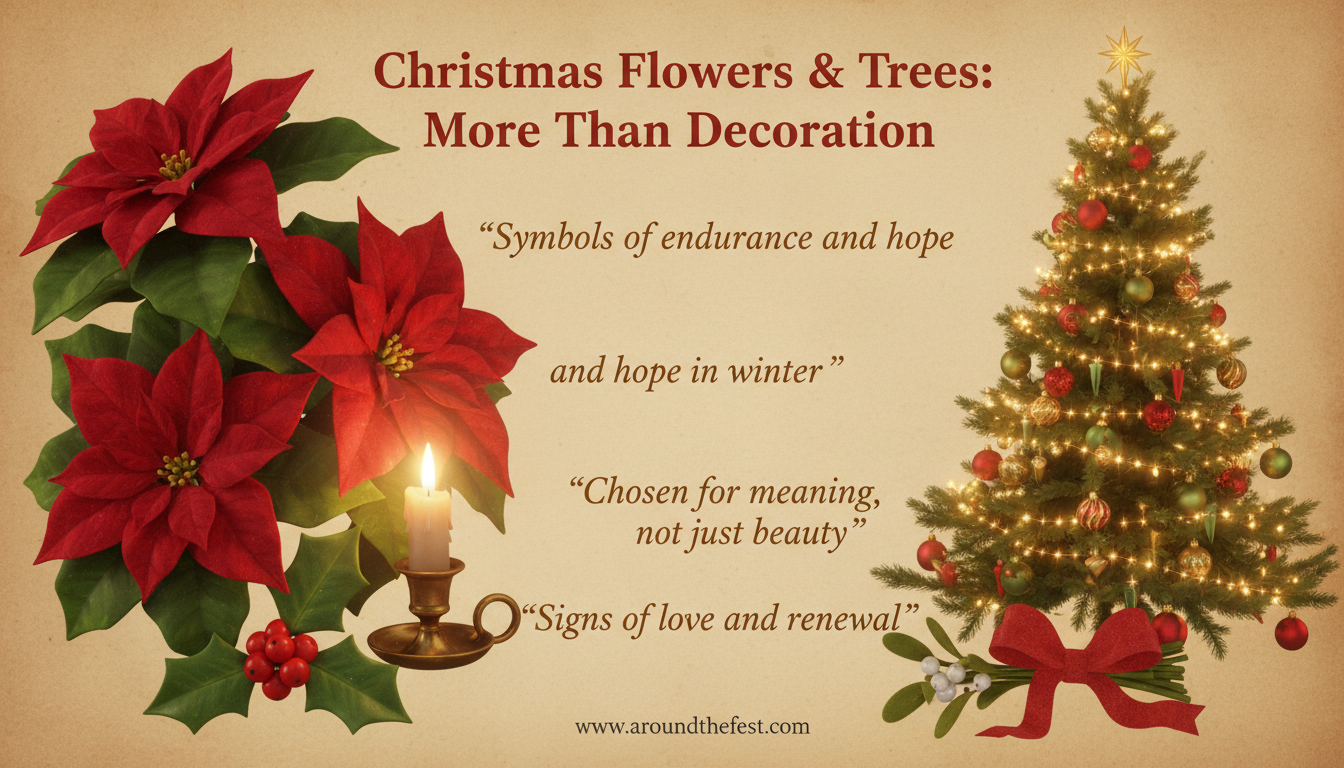
The Hidden Stories Behind Familiar Christmas Plants
Take the poinsettia, for example. In many households, it’s picked up during a routine grocery run, placed near a window, and admired for a few weeks before being discarded. But in Mexico, where the plant originates, the poinsettia has long been tied to stories of humble offerings and quiet devotion. Its rise as a Christmas symbol wasn’t driven by decoration trends—it came from meaning first, aesthetics second.
The same is true for Christmas trees. Long before ornaments, lights, and themed décor, evergreen trees were brought indoors during winter as a sign of endurance. In cold, dark months when most plants died back, evergreens stayed green. For families facing long winters, that mattered. A tree wasn’t just decoration—it was reassurance.
What modern Christmas décor often misses is this deeper layer. Flowers and trees were never meant to simply “look festive.” They carried messages: hope during hardship, continuity through change, and warmth in the coldest season of the year. Even today, people instinctively respond to these symbols, whether they realize it or not.
This guide goes beyond lists and quick definitions. You’ll discover the names of traditional and lesser-known Christmas flowers and trees, the meanings behind why they’re used, and how to use them intentionally—whether you’re decorating a small apartment, planning a meaningful family celebration, or simply curious about why these plants still matter.
Because once you understand the story behind Christmas flowers and trees, they stop being seasonal props—and start becoming part of the tradition itself.
Christmas Flowers Names You’ll See (and Some You Won’t)
When people search for Christmas flowers, they’re usually looking for familiar names—but they’re often surprised to learn how many plants quietly play a role in the season without being labeled as “Christmas flowers” outright. This section covers both: the well-known staples and the lesser-known plants that still carry strong seasonal meaning.
Classic Christmas Flowers (Widely Recognized)
These are the flowers most people instantly associate with Christmas, whether they know the names or not.
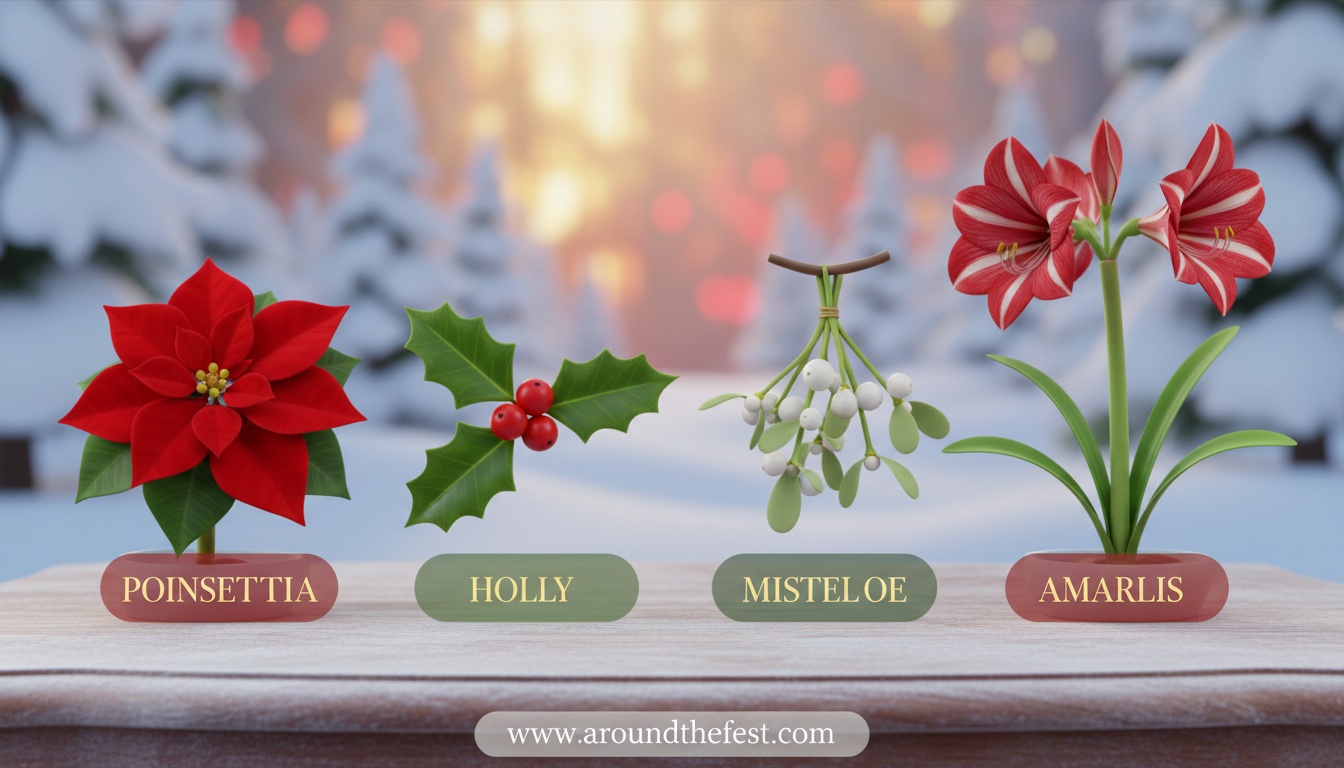
1. Poinsettia
The most iconic of all Christmas flowers, recognized by its red, white, pink, or marbled bracts. It dominates holiday displays, gift plants, and public spaces throughout December.
2.Holly
Technically a plant rather than a flower in common use, holly earns its place because of its bright red berries and glossy green leaves, which function visually like blooms during winter.
3.Mistletoe
Known more for tradition than appearance, mistletoe is instantly linked with Christmas rituals and symbolic gestures of peace and affection.
4.Amaryllis
A bold, dramatic winter-blooming flower often sold as bulbs, amaryllis has become a favorite for indoor Christmas décor thanks to its large trumpet-shaped blooms.
These plants dominate search results because they are visually obvious, commercially available, and culturally reinforced year after year.
Lesser-Known but Traditional Christmas Flowers
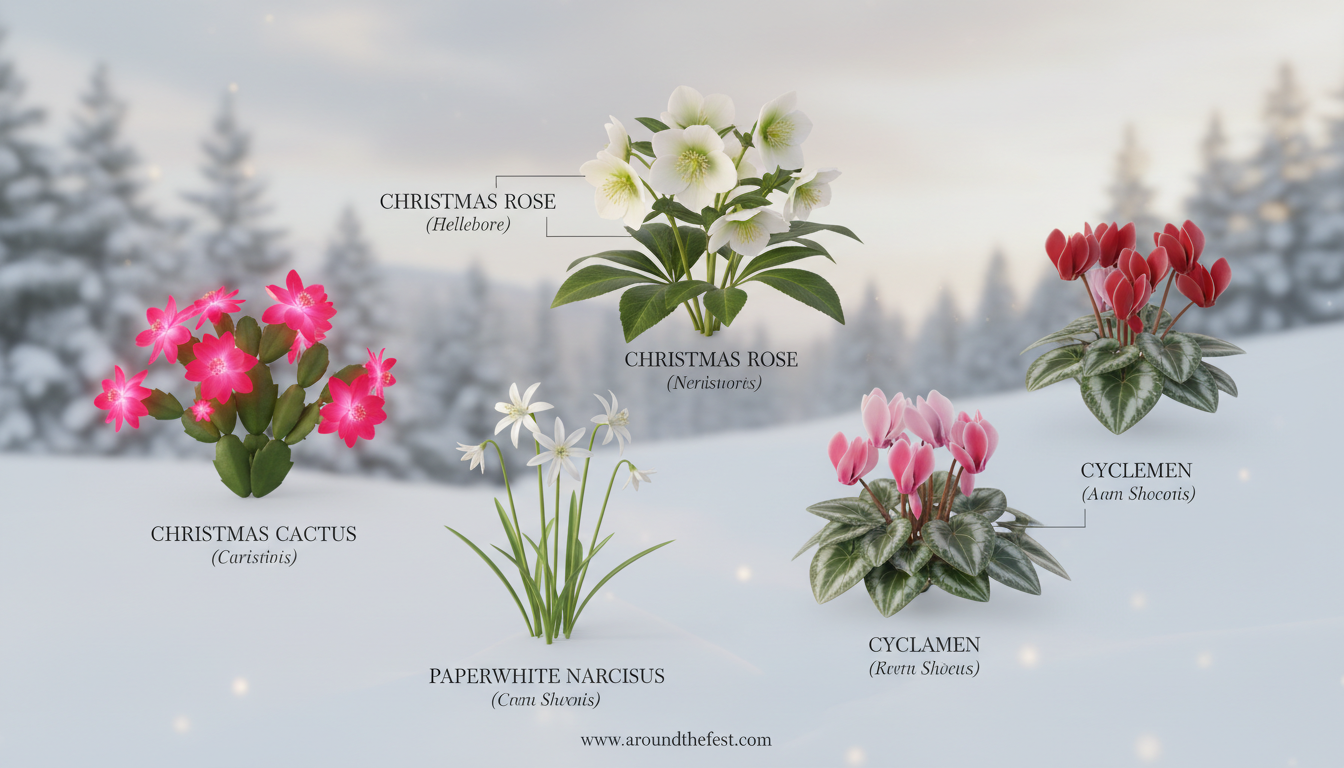
1.Christmas Rose (Hellebore)
Despite its name, it’s not a rose. It blooms in winter, often through frost or snow, making it one of the most symbolic flowers of resilience and quiet beauty during Christmas.
2.Paperwhite Narcissus
Commonly grown indoors during winter, paperwhites are popular for their fragrance and fast blooming cycle. Many families grow them as part of December traditions without realizing their long association with winter celebrations.
3.Cyclamen
With heart-shaped leaves and upward-facing blooms, cyclamen thrive in cool temperatures and are widely used in European Christmas décor, though less discussed online.
4.Christmas Cactus
Often overlooked in Christmas flower lists, this plant blooms reliably in late December and is deeply tied to family hand-me-down traditions, especially in warmer climates.
Why Some Christmas Flowers Are “Forgotten” Online
Many Christmas flowers don’t rank well individually because:
- They aren’t marketed as seasonal plants
- They bloom quietly indoors rather than in displays
- Their symbolism is cultural, not commercial
By understanding both the famous and the overlooked Christmas flowers, readers get a fuller picture—one that reflects real homes and traditions, not just storefront displays.
Meaning of Christmas Flowers (Beyond One-Line Definitions)
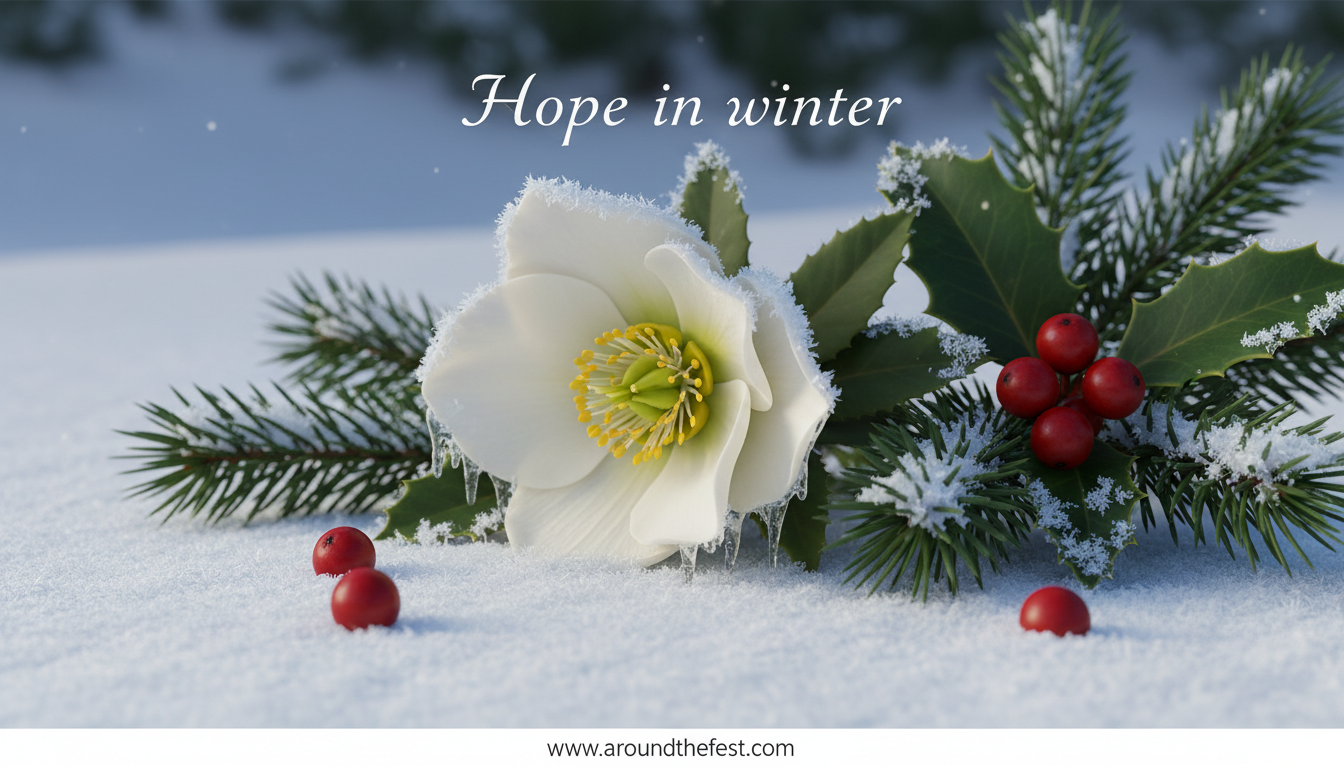
To understand what Christmas flowers really represent, it helps to look at how people used them—not just what they were said to symbolize.
How the Meanings of Christmas Flowers Took Shape
Long before Christmas became a commercial season, winter itself was the challenge. Flowers were rare. Color was scarce. Anything that bloomed, stayed green, or produced berries during cold months felt meaningful by default.
That’s why many Christmas flower meanings share common themes:
- Hope during darkness
- Life continuing through hardship
- Quiet strength rather than celebration
Unlike spring flowers, which symbolize beginnings and abundance, Christmas flowers often represent endurance. They mattered because they appeared when very little else could.
Over time, religious traditions layered meaning onto these plants, but the emotional response came first. People noticed what survived winter—and attached stories to it.
Meaning of the Most Popular Christmas Flowers
Rather than repeating folklore, this section explains what these meanings feel like in real life.
1.Poinsettia Meaning at Christmas
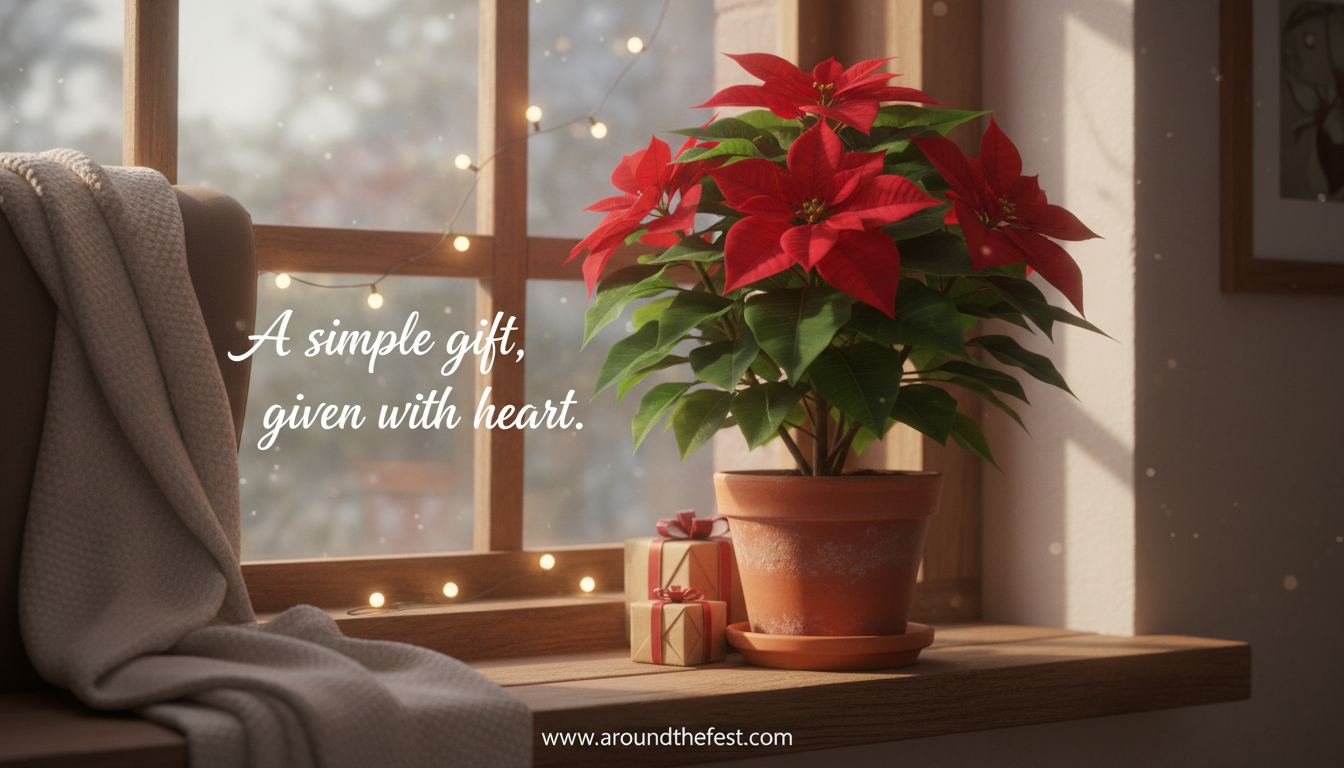
The poinsettia is often associated with celebration, but its deeper meaning comes from humble offering. Its Christmas symbolism grew from stories where simple, heartfelt gifts carried more weight than grand gestures.
That’s why poinsettias feel appropriate in ordinary homes, offices, and shared spaces. They represent warmth without extravagance—festive, but not demanding attention.
2.Holly Meaning and Symbolism
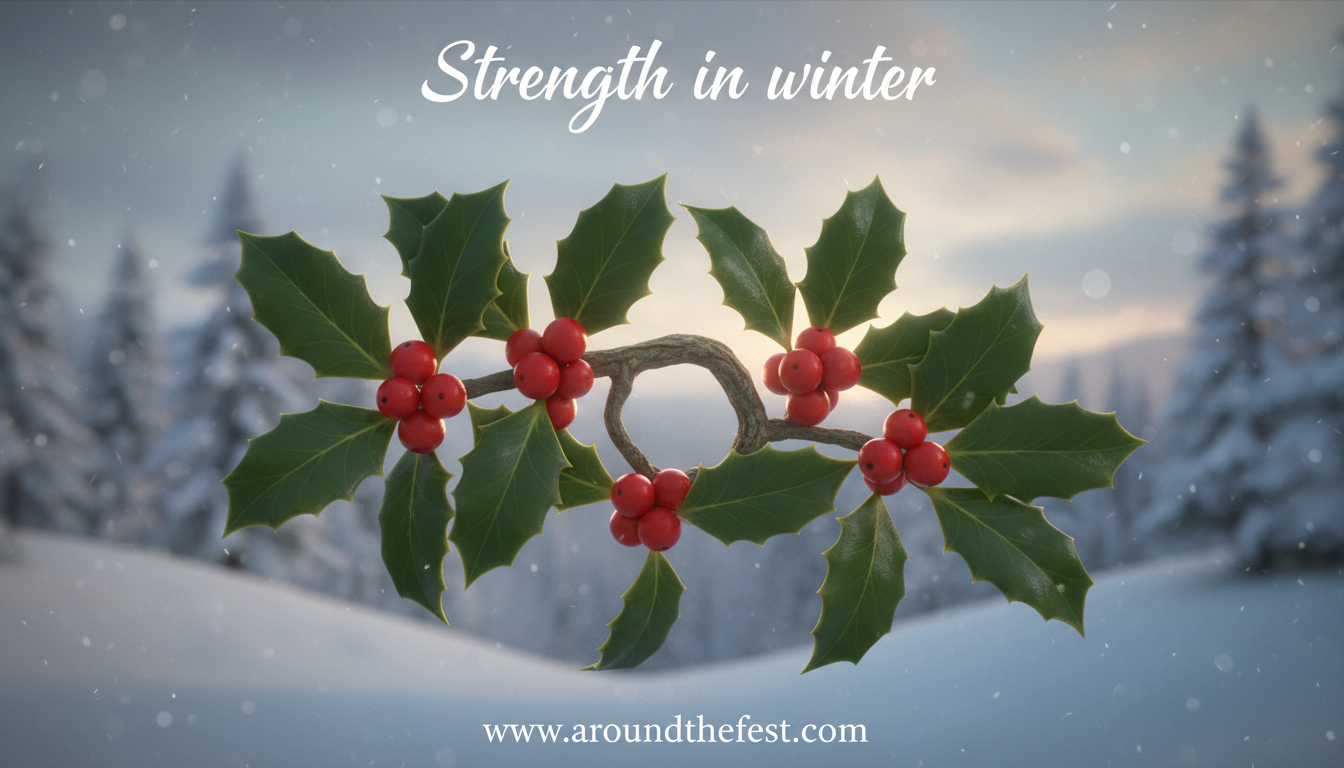
Holly’s meaning is rooted in protection and endurance. Its sharp leaves and persistent berries made it a natural symbol of resilience. Even when everything else looked bare, holly stayed visually strong.
In many traditions, hanging holly wasn’t about decoration—it was about marking a space as safe, warm, and inhabited during winter.
3.Mistletoe Meaning
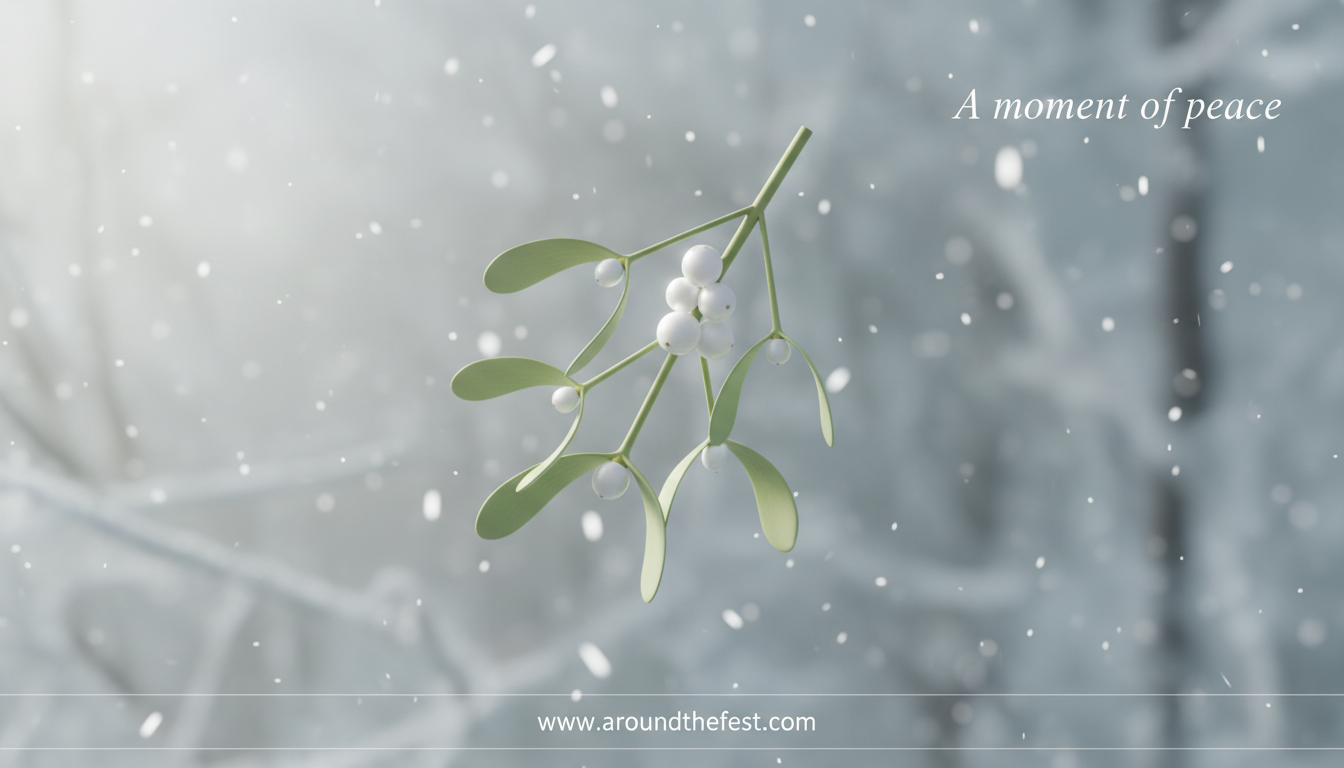
Mistletoe symbolizes peace and reconciliation, which explains why it became linked with gestures of affection. Historically, it represented neutral ground—a pause in conflict.
That’s also why mistletoe traditions feel lighthearted rather than solemn. Its meaning isn’t romantic love alone, but temporary harmony.
4.Amaryllis Flower Meaning
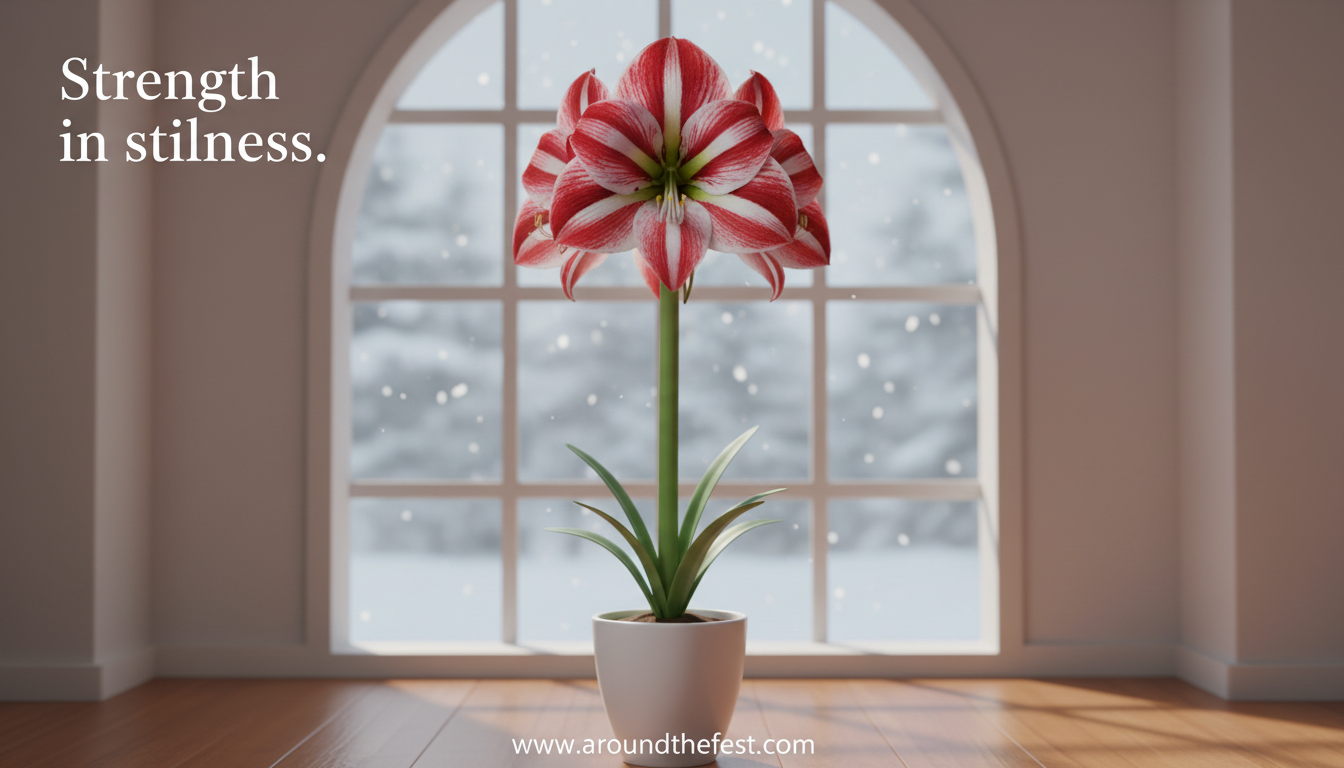
Amaryllis represents strength and quiet confidence. Its tall stem and large blooms rise quickly, even indoors, without needing elaborate care.
It’s often chosen unconsciously by people who want something bold but controlled—dramatic, yet orderly. That balance is central to its meaning.
5.Christmas Rose (Hellebore) Meaning
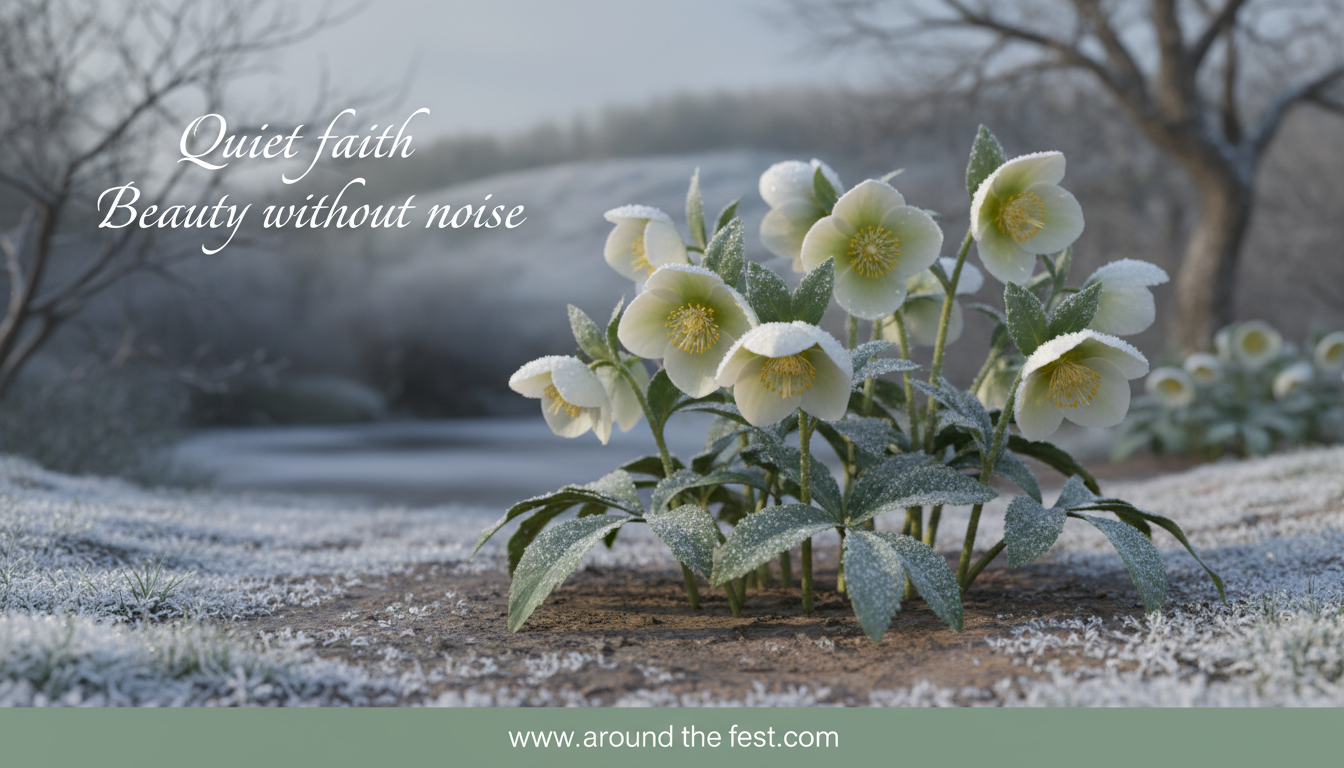
The Christmas rose carries one of the most understated meanings: humility and quiet faith. It doesn’t bloom loudly or brightly. It appears low to the ground, often in harsh conditions.
That’s why it’s associated with gentle belief rather than celebration. It’s meaningful precisely because it doesn’t demand attention.
Why These Meanings Still Matter Today
Even in modern homes, people respond emotionally to these plants without realizing why. A poinsettia near a window feels welcoming. Holly feels traditional. Amaryllis feels intentional.
These reactions aren’t random. They’re inherited emotional responses shaped by centuries of association. When people say a space “feels like Christmas,” they’re often responding to these visual and symbolic cues.
Understanding the meaning behind Christmas flowers doesn’t make decorating more complicated—it makes it more purposeful.
Types of Christmas Trees
When people search for types of Christmas trees, they’re rarely looking for botanical classifications. They’re trying to answer practical questions without realizing it:
Which tree smells the most? Which one drops fewer needles? Which one works in a small space?
This section focuses on how different Christmas trees feel, behave, and function once they’re inside your home.
1.Fir Trees
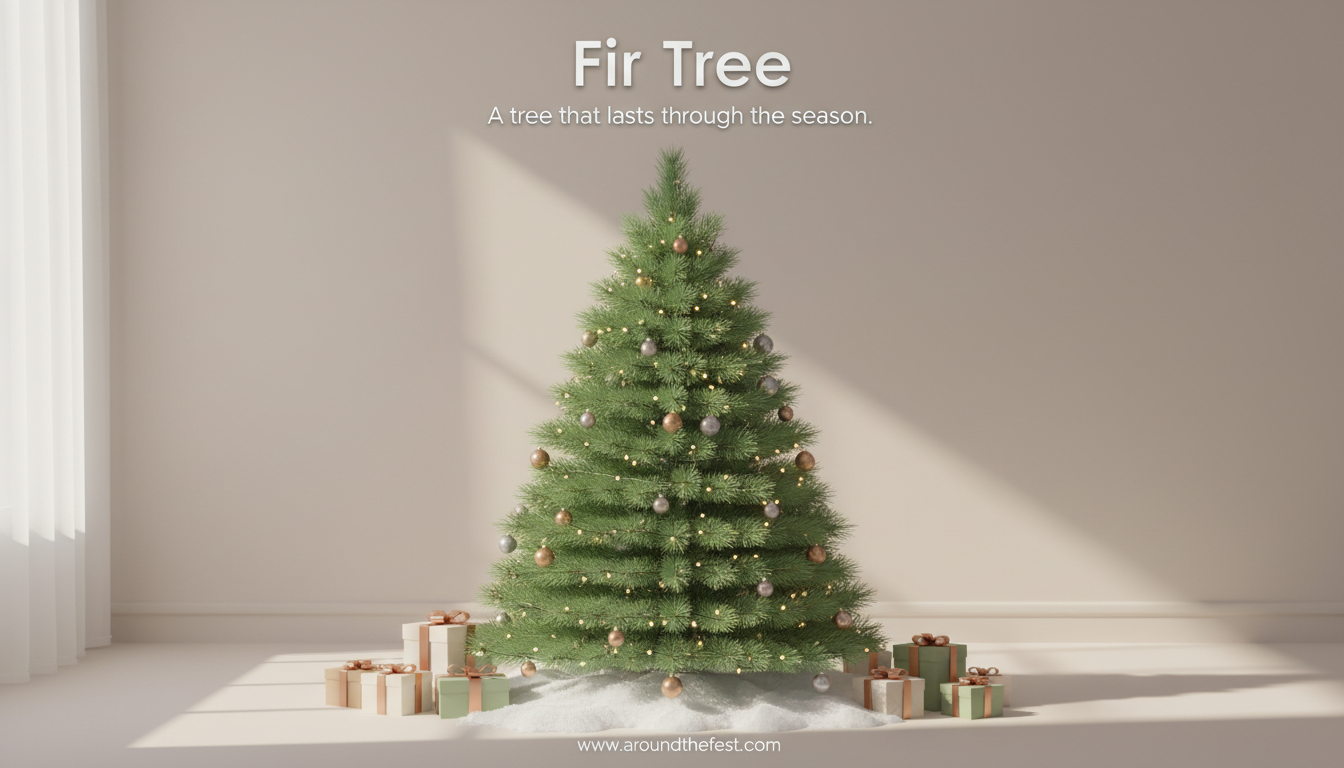
Fir trees are among the most popular choices for real Christmas trees, especially in North America.
- Needles are soft and flat, making them comfortable to decorate
- Strong, pleasant evergreen scent
- Full, symmetrical shape that holds ornaments well
- Needles tend to stay on longer, even when the tree starts drying
Because of these traits, fir trees are often chosen by families who decorate early and want a tree that looks good throughout the season.
2.Pine Trees
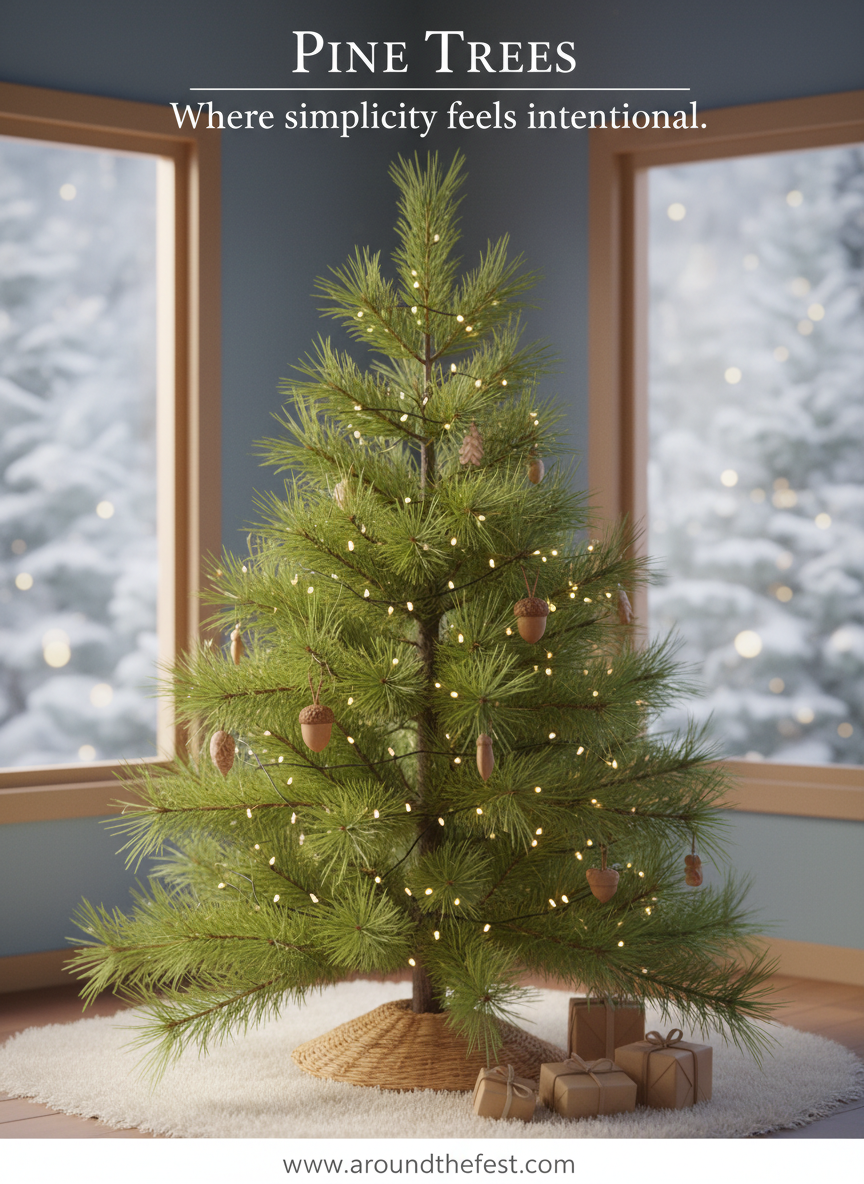
Pine trees are easy to recognize by their long needles and airy appearance.
- Long, flexible needles that don’t drop quickly
- Less dense branching compared to fir
- Lighter scent, which some people prefer indoors
- Works well for minimal or rustic decorating styles
These are often chosen for casual or smaller setups, where a slightly open shape feels intentional rather than sparse.
3.Spruce Trees
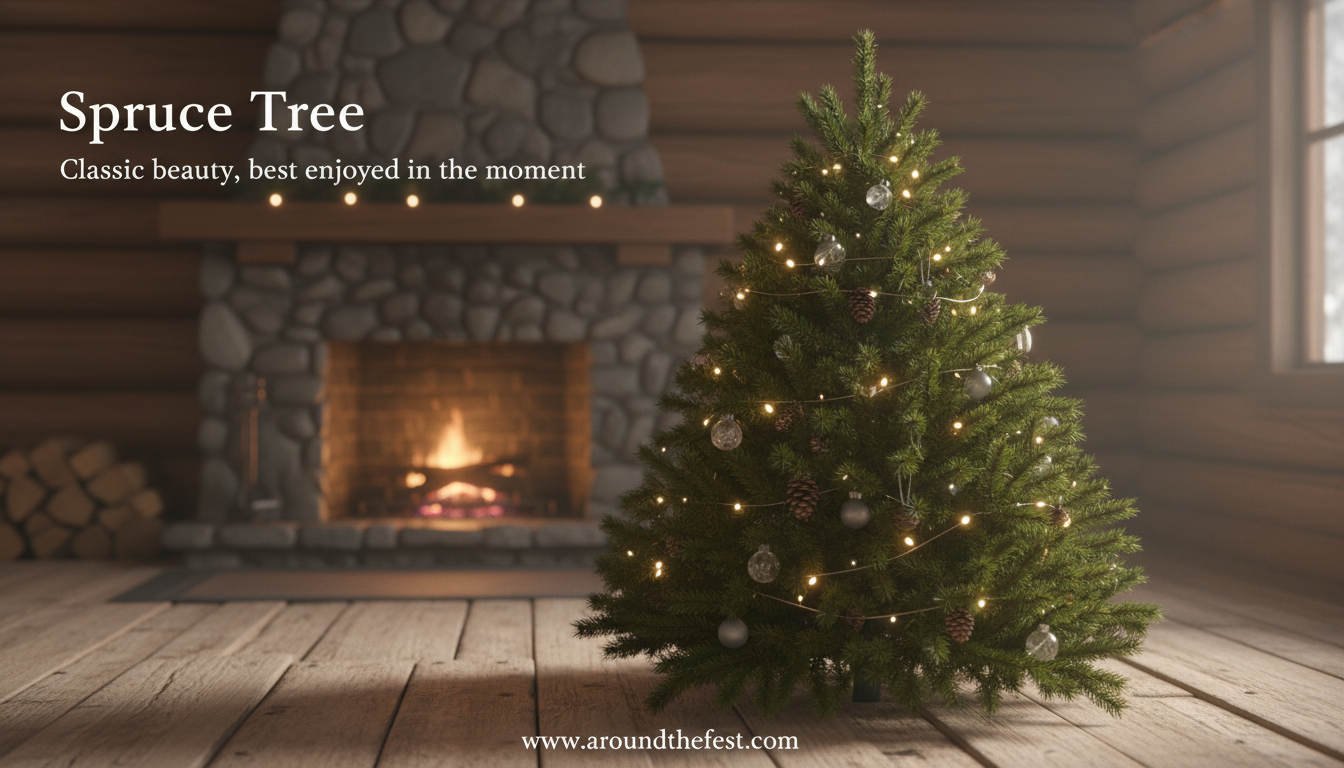
Spruce trees are the classic “storybook” Christmas tree many people picture.
- Short, stiff needles
- Strong traditional evergreen look
- Holds its shape well when freshly cut
- Needles drop faster if not watered consistently
These trees are visually striking but require more care. They’re often chosen for short display periods or by people who prioritize appearance over longevity.
Cedar and Other Regional Trees
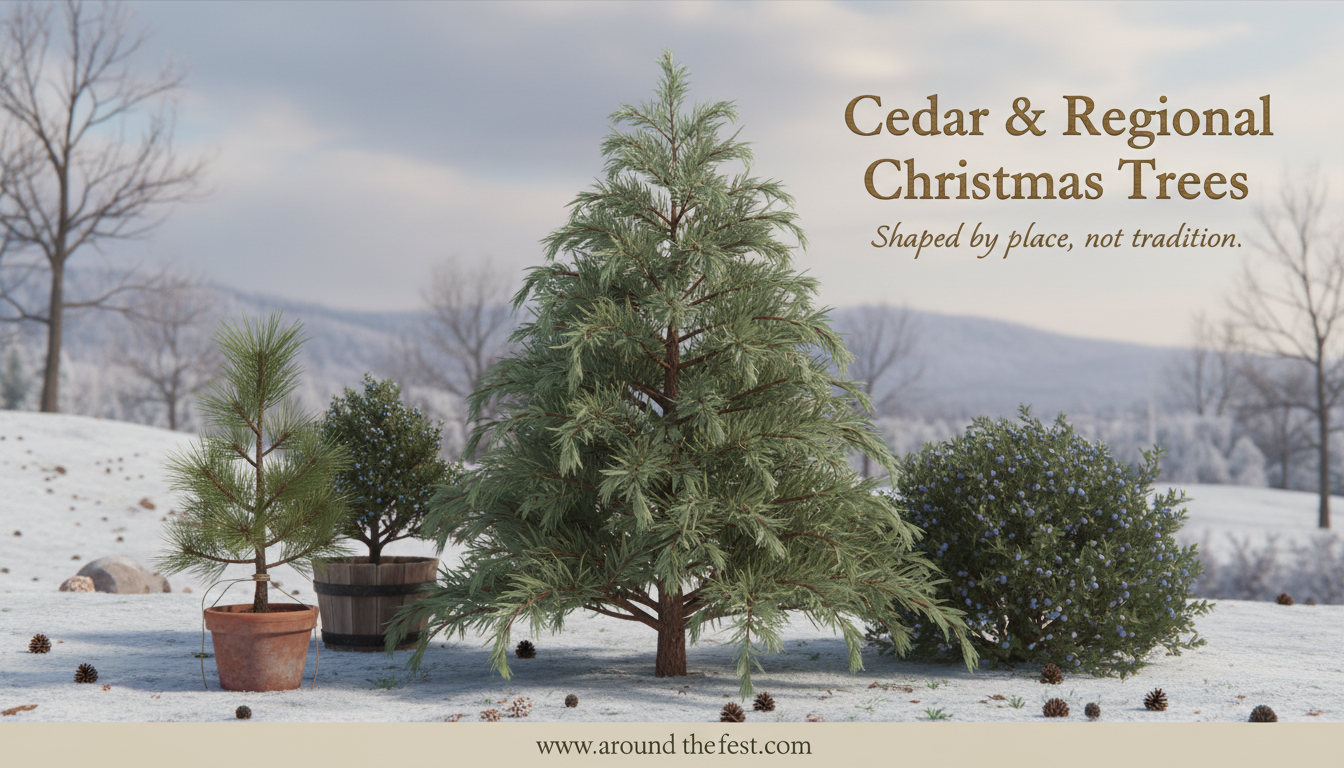
In some regions, especially warmer or coastal areas, other tree types are used at Christmas.
- Cedar trees offer a distinctive scent and softer visual style
- Regional evergreens may be chosen based on availability rather than tradition
- Smaller or potted versions are common where full-size trees aren’t practical
These choices reflect local climate and habit more than global tradition, which is why they’re often overlooked in general guides.
Choosing the Right Christmas Tree for Your Space
Rather than asking “Which tree is best?” a better question is “Which tree fits how I live?”
- Apartments and small rooms benefit from narrower trees
- Homes with pets or children may prefer softer needles
- Long holiday seasons call for trees with strong needle retention
- Low-scent preferences matter more than people expect
Christmas Tree Meaning and Symbolism
By the time a Christmas tree is decorated, most people already feel that it belongs there. That feeling doesn’t come from habit alone. The Christmas tree carries layers of meaning that developed long before modern celebrations, and those meanings still shape how people respond to it today.
Understanding this symbolism explains why the tree remains central to Christmas, even as styles, cultures, and homes change.
What a Christmas Tree Symbolizes
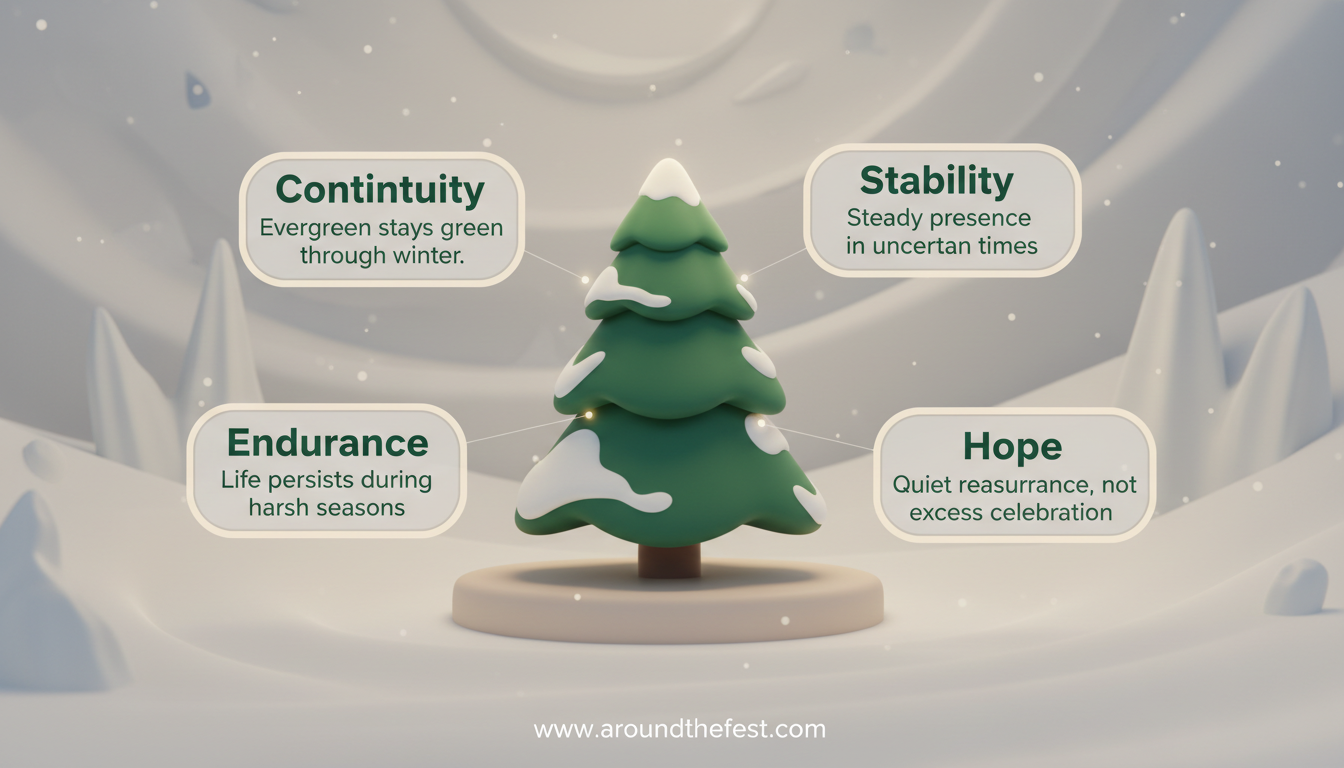
At its core, the Christmas tree represents continuity.
Evergreen trees were significant because they stayed green when most plants faded. In long winters, this wasn’t just visually comforting—it was emotionally reassuring. A green tree indoors signaled that life persisted, even during the harshest season.
Over time, this idea expanded into broader meanings:
- Endurance through difficulty
- Stability in uncertain times
- Hope without excess celebration
This is why Christmas trees often feel grounding rather than flashy, even when heavily decorated.
Religious Symbolism of the Christmas Tree
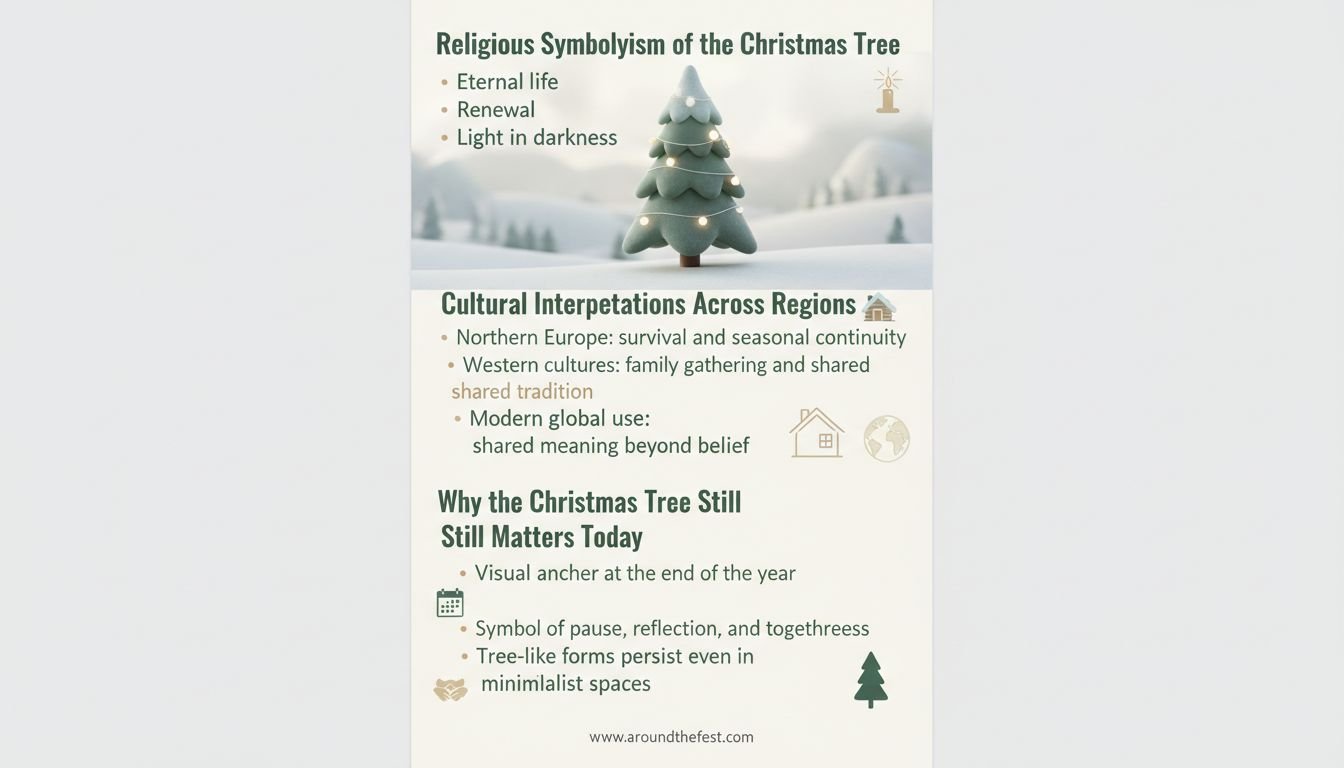
In Christian traditions, the evergreen tree came to represent:
- Eternal life
- Renewal
- The presence of light in darkness
The triangular shape of many trees was later interpreted symbolically, but this interpretation followed the tradition—it didn’t create it. The tree was already meaningful before religious symbolism was applied.
This layering of meaning explains why Christmas trees are embraced even in homes where religious observance is minimal.
Cultural Interpretations Across Regions
Different cultures emphasize different aspects of the Christmas tree:
- In Northern Europe, the tree reflects survival and seasonal continuity
- In Western cultures, it became a centerpiece for family gathering
- In modern global contexts, it represents shared tradition more than belief
Despite these differences, the emotional response remains consistent: warmth, familiarity, and presence.
Why the Christmas Tree Still Matters Today
Even in small apartments, digital spaces, or minimalist homes, people make room for a tree—or at least a symbolic version of one.
That persistence isn’t about nostalgia alone. The Christmas tree functions as a visual anchor during a time of transition at the end of the year. It marks pause, reflection, and togetherness in a way few decorations can.
This is why alternatives often imitate tree-like forms rather than replacing them entirely.
How to Use Christmas Flowers and Trees Intentionally
Most decorating guides focus on how much to decorate or what’s trending. Very few explain why certain choices feel right while others feel overwhelming or out of place. Using Christmas flowers and trees intentionally means matching space, purpose, and meaning, rather than copying a display style.
Using Christmas flowers and trees intentionally isn’t about following design rules. It’s about understanding what a space is used for during the season, and letting decorations support that purpose instead of competing with it. Most decorating fatigue happens when people add more without deciding why something is there.
Start With How the Space Is Actually Used
Before choosing flowers or a tree, it helps to ask one simple question:
What happens in this space during Christmas?
- Is it where people gather, talk, and spend long hours together?
- Is it a quiet area used for rest, reflection, or winding down?
- Is it passed through quickly, like an entryway or hallway?
Once the function of a space is clear, decoration choices become easier—and fewer. Intentional décor begins with observation, not purchase.
Choosing Christmas Flowers Based on Purpose, Not Trends
Instead of asking “Which flowers are popular this year?” a more useful question is:
“What role does this space play during Christmas?”
Flowers work best when they match the pace and energy of a space.
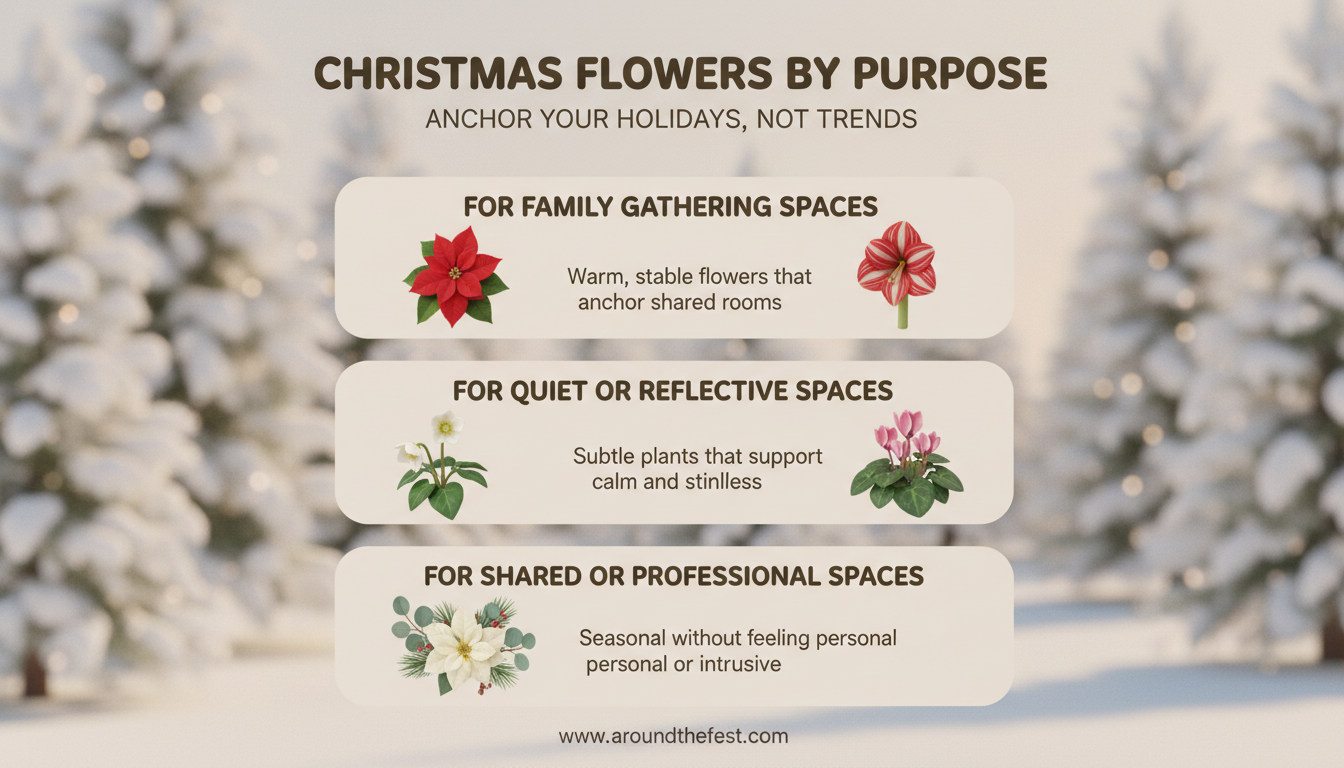
For family gathering spaces
Flowers that feel warm and stable—such as poinsettias or amaryllis—work well because they visually hold the space together without overpowering it. They anchor rooms where people sit, talk, and eat together.
For quiet or reflective spaces
Plants like the Christmas rose or cyclamen feel more appropriate because they don’t demand attention. They sit comfortably in the background and support calm rather than activity.
For shared or professional spaces
Neutral-colored poinsettias or simple greenery signal seasonality without feeling personal or intrusive. They acknowledge the season while remaining universally comfortable.
This approach prevents flowers from feeling decorative for decoration’s sake and reduces visual clutter.
Rethinking Where a Christmas Tree Belongs
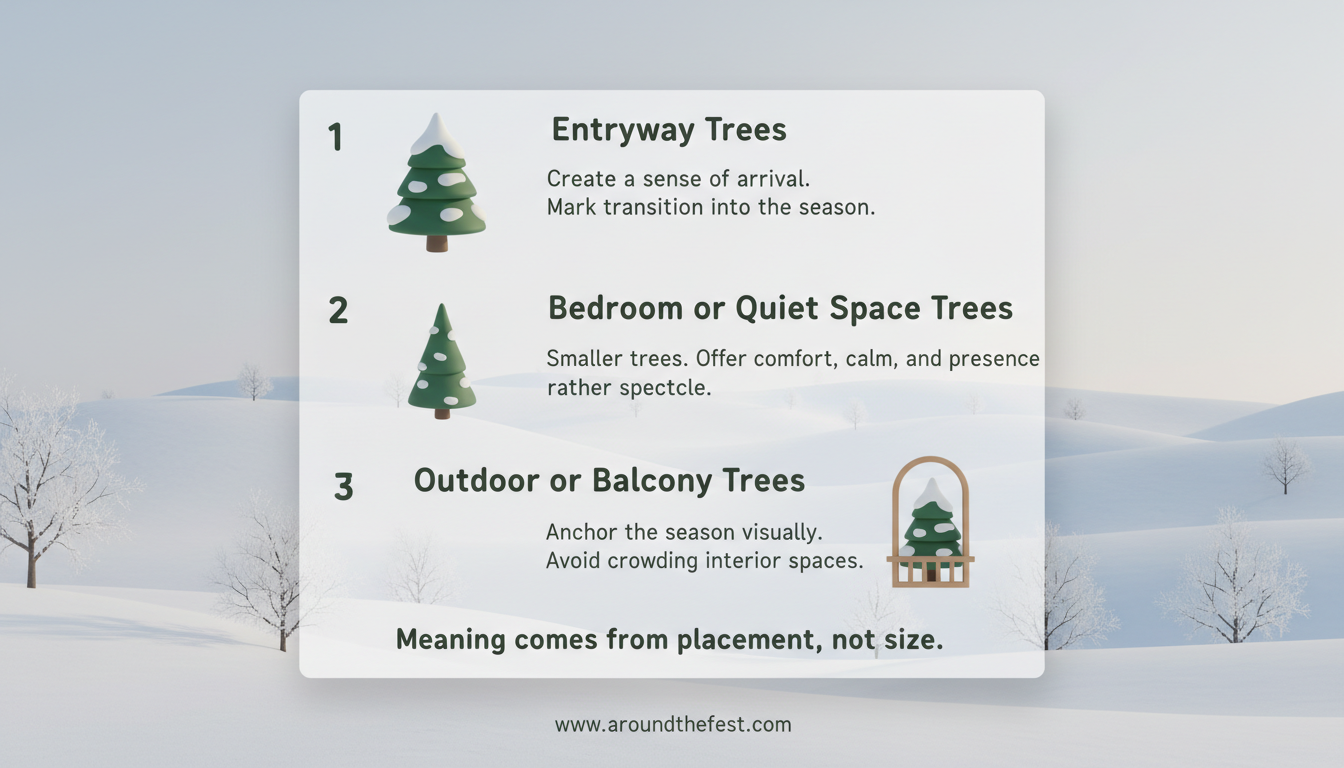
Many people assume there is only one “correct” place for a Christmas tree. In reality, trees work best when they reflect how a home is actually used, not tradition alone.
In many homes:
Entryway trees create a sense of arrival and transition
Small bedroom trees offer quiet comfort rather than spectacle
Outdoor or balcony trees anchor the season visually without crowding interiors
A smaller, thoughtfully placed tree often feels more meaningful than one oversized centerpiece placed out of habit.
The tradition of placing a single large tree in the living room is cultural—not mandatory. Choosing the right tree for the space matters more than choosing the biggest one.
Balancing Flowers and Trees in the Same Space
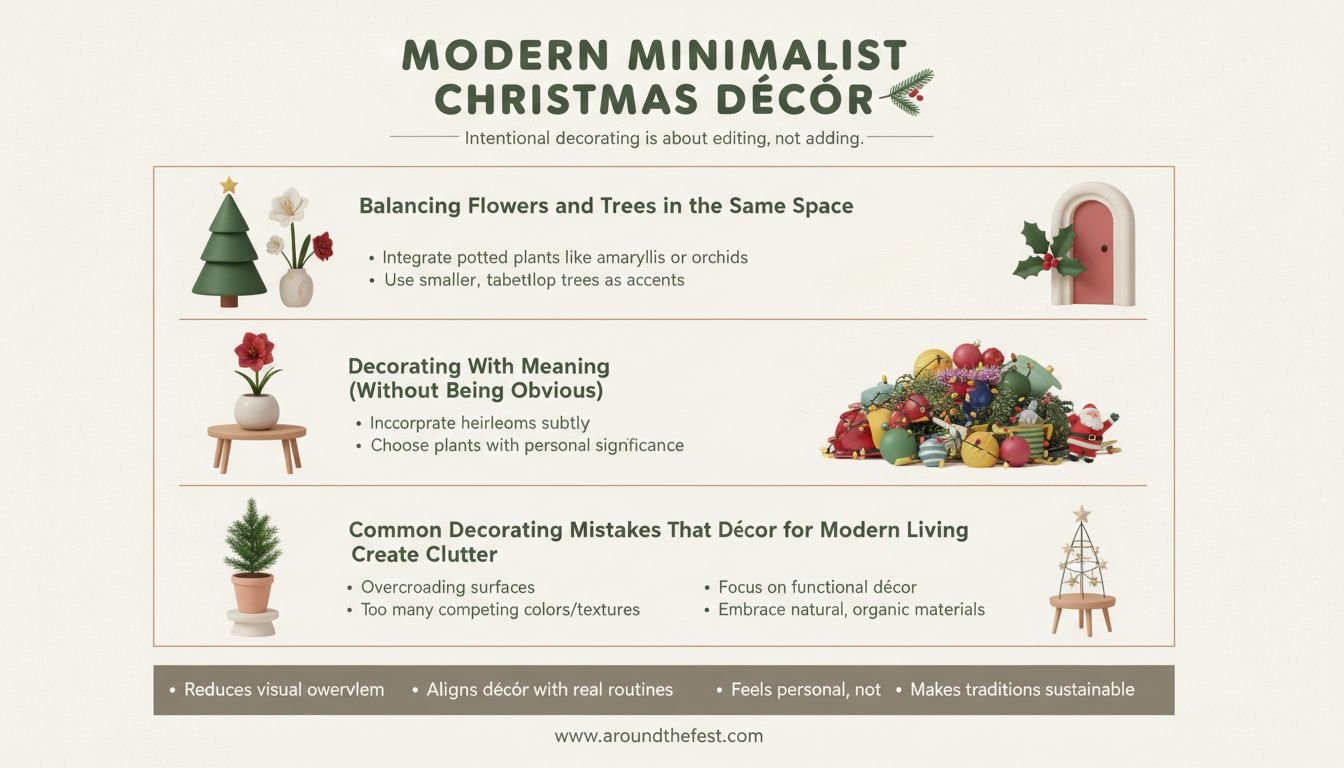
A common decorating mistake is treating flowers and trees as separate elements. In practice, they work best together, each playing a distinct role.
- Trees establish structure and vertical presence
- Flowers soften edges and add color at eye level
- Greenery visually connects the two
When these elements are balanced intentionally, a space feels layered rather than busy, even with minimal decoration.
Decorating With Meaning Without Being Obvious
Intentional décor doesn’t require explaining symbolism to guests. It works because people feel it, even if they can’t explain why.
For example:
- A simple amaryllis on a dining table feels deliberate, not decorative
- Holly near an entryway subtly marks the home as welcoming
- A lightly decorated tree creates calm rather than spectacle
These choices communicate care without excess or performance.
Common Decorating Mistakes That Create Clutter
Many people decorate more and enjoy it less. Common reasons include:
- Using too many focal points
- Placing flowers where movement is constant
- Mixing plants with conflicting visual weight
For Christmas flowers and trees :Intentional decorating is about editing, not adding.
Adapting Christmas Décor for Modern Living
Not everyone has the space, time, or energy for traditional setups—and that’s okay.
Intentional décor adapts to real life:
- Single potted plants instead of multiple arrangements
- Tabletop trees for small apartments or homes
- Reusable greenery for low-effort decorating
Meaning comes from presence, not quantity. Christmas décor works best when it supports daily life—not when it interrupts it.
Why This Approach Works
- Reduces visual overwhelm
- Aligns décor with real routines
- Feels personal without being performative
- Makes traditions sustainable over time
When Christmas flowers and trees are used with intention, they stop being seasonal obligations—and start feeling like natural extensions of home.
Caring for Christmas Flowers and Trees (What People Actually Get Wrong)
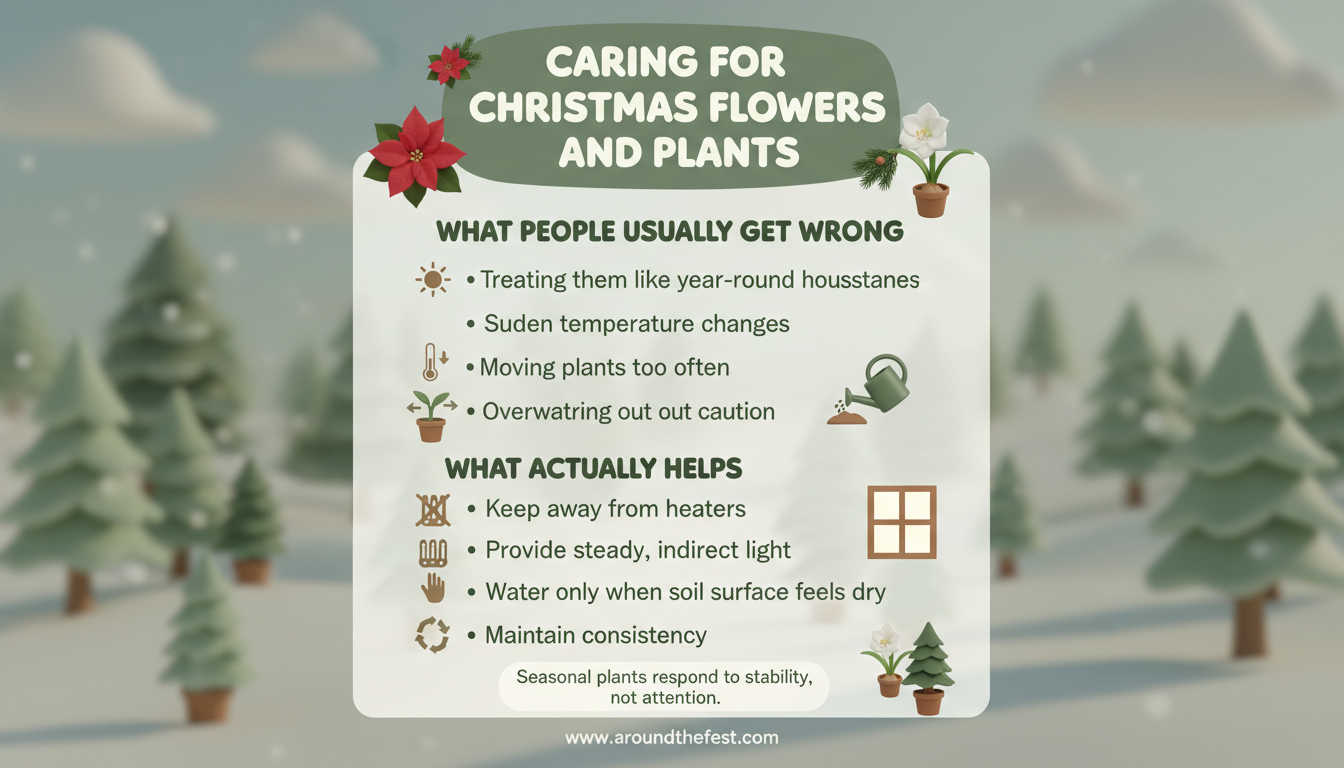
Most Christmas plants don’t fail because people don’t care—they fail because people apply general houseplant rules to seasonal plants. Christmas flowers and trees behave differently because they’re responding to light, temperature, and timing, not neglect.
This section focuses on the real mistakes people make and how to avoid them without turning care into a chore.
Keeping Christmas Flowers Alive Through the Season
Many Christmas flowers are bought in peak condition and then decline quickly—not because they’re fragile, but because their needs are misunderstood.
The biggest mistake: treating them like year-round houseplants
Christmas flowers are often grown under controlled conditions. When moved into homes, they experience:
- Sudden temperature changes
- Inconsistent light
- Overwatering out of caution
These shifts matter more than fertilizer or soil type.
What actually helps:
- Place plants away from direct heat sources (heaters, fireplaces, ovens)
- Keep them in stable, indirect light rather than constant repositioning
- Water only when the soil surface feels dry—not on a schedule
Consistency matters more than perfection.
Poinsettia Care: Why They Struggle in Homes
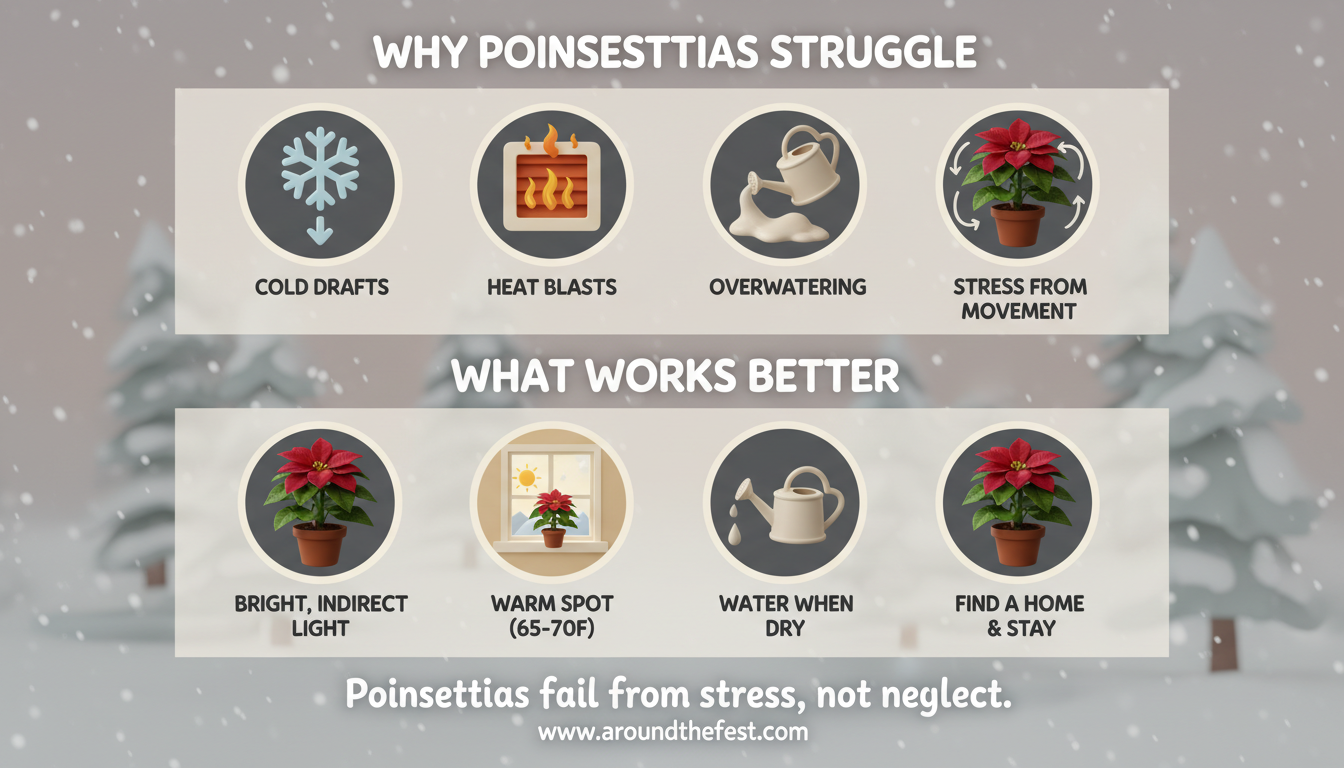
Poinsettias are often labeled as “difficult,” but most problems come from too much attention, not too little.
Common issues:
- Leaves dropping due to cold drafts or heat blasts
- Root rot from overwatering
- Stress from frequent movement
What works better:
- Leave them in one location
- Avoid cold windows at night
- Water sparingly and drain excess immediately
When treated calmly, poinsettias often last well beyond Christmas.
Caring for Amaryllis and Other Bulb Flowers
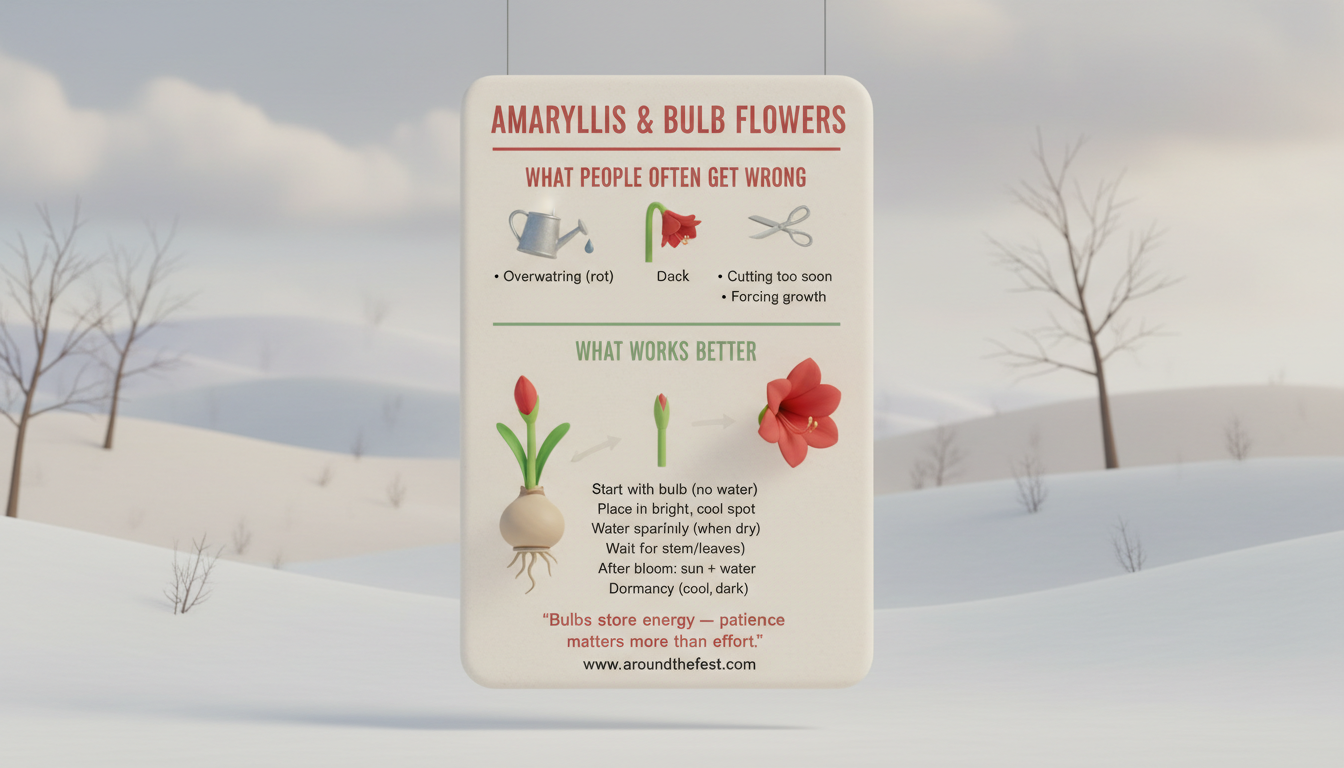
Bulb flowers like amaryllis behave differently from leafy plants. Their energy is already stored.
What people often get wrong:
- Overwatering bulbs
- Expecting constant blooms
- Cutting stems too early
Better approach:
- Water lightly until growth appears
- Allow blooms to fade naturally
- Keep foliage afterward if you want future blooms
Bulb plants reward patience more than effort.
How to Keep a Real Christmas Tree Fresh Longer
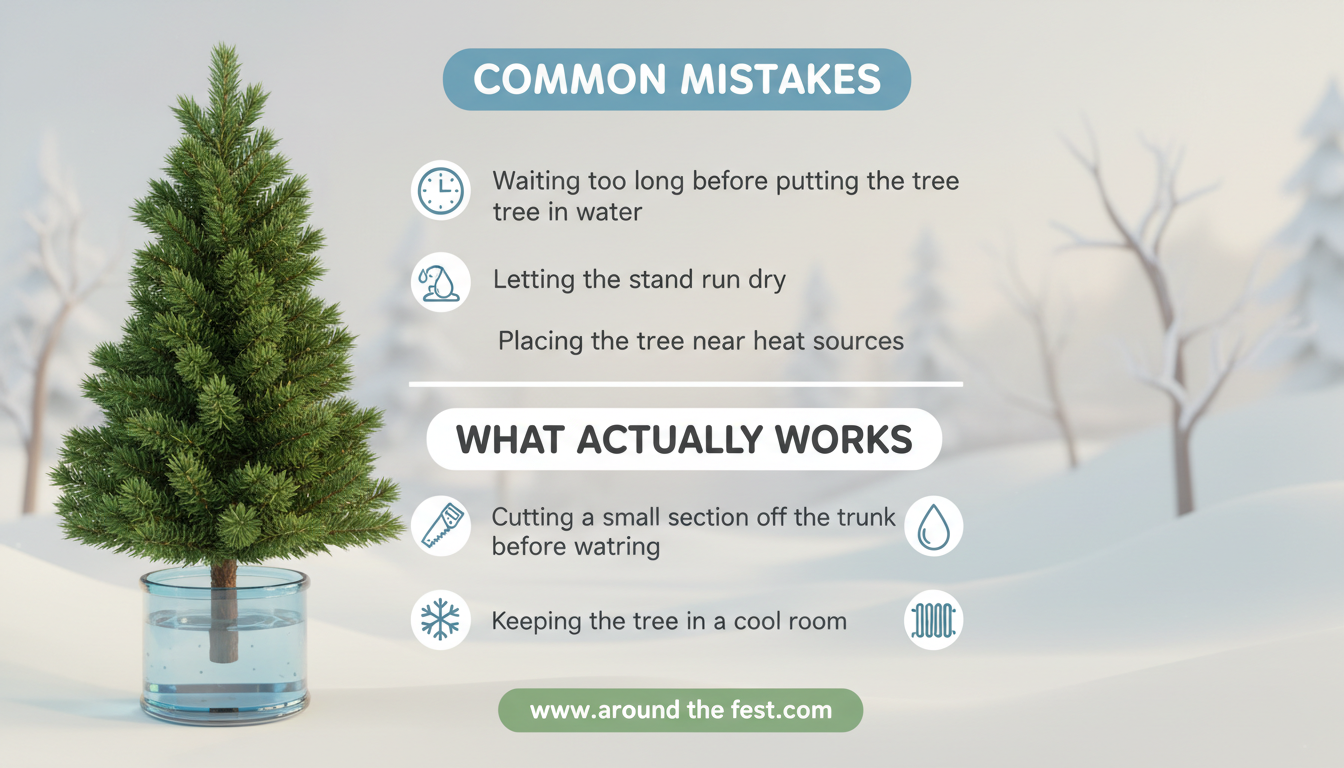
Christmas trees begin drying out as soon as they’re cut. Care isn’t about stopping that process—it’s about slowing it down.
Most common mistakes:
- Waiting too long before placing the tree in water
- Letting the stand run dry even once
- Placing the tree near heat sources
What actually makes a difference:
- Cutting a small section off the trunk before placing it in water
- Checking water levels daily during the first week
- Keeping the tree in the coolest suitable room
Watering matters more than additives or sprays.
Indoor vs Outdoor Christmas Trees
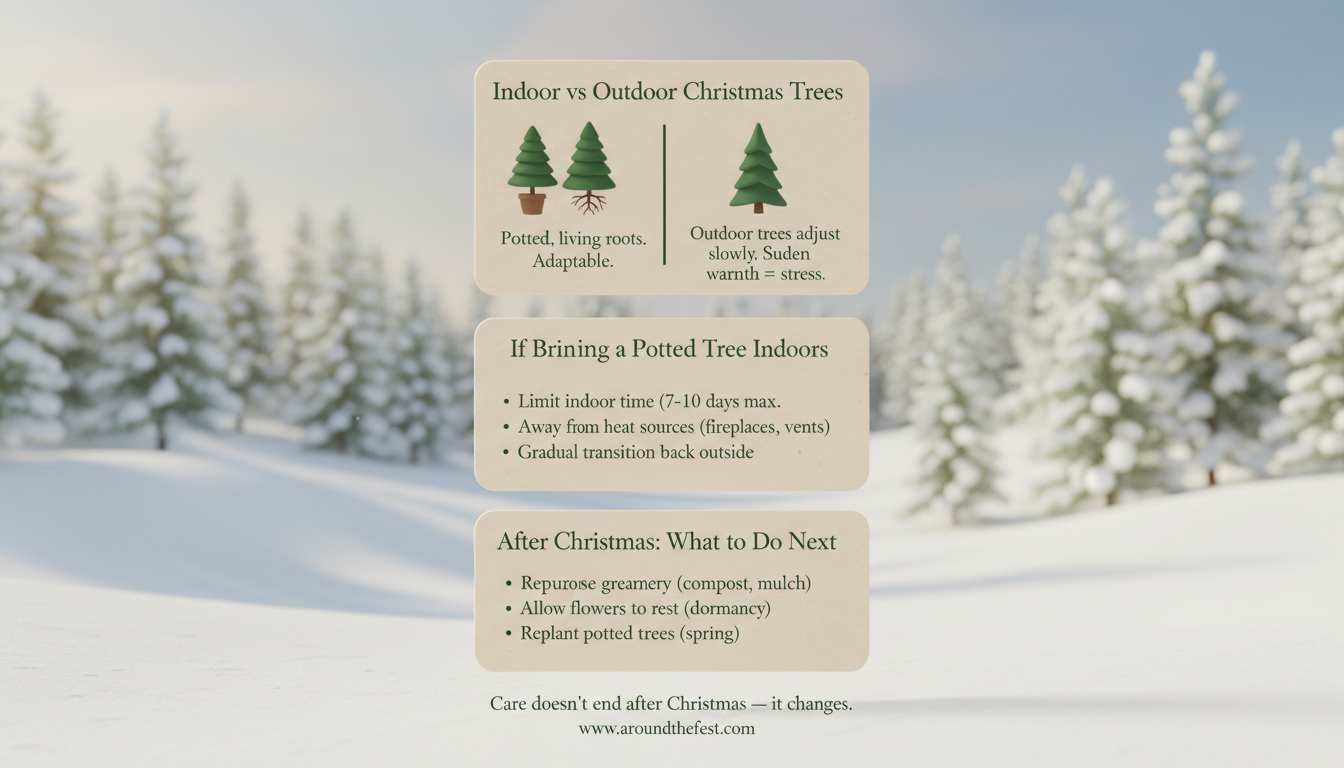
Potted or outdoor trees are often treated as interchangeable with cut trees—but they’re not.
Key differences:
- Potted trees still have living roots
- Outdoor trees aren’t acclimated to indoor warmth
- Sudden transitions cause stress
If bringing a potted tree indoors:
- Limit indoor time
- Keep it away from heat
- Transition it gradually back outside
These trees respond best to moderation.
After Christmas: What to Do With Plants and Trees
Many Christmas plants can continue to live if they aren’t discarded too quickly.
Options people often overlook:
- Repurposing greenery for winter décor
- Allowing flowers to rest instead of replacing them
- Replanting potted trees where climate allows
Care doesn’t end on December 25—it simply changes.
Why Care Matters More Than Perfection
Christmas plants aren’t meant to be permanent fixtures. They’re seasonal companions. Expecting them to behave like year-round décor creates unnecessary frustration.
When cared for with basic understanding rather than constant intervention, Christmas flowers and trees tend to last longer—and feel more rewarding.
Safety, Pets, and Kids: What’s Risky vs What’s Misunderstood
When it comes to Christmas flowers and trees, safety information online often swings between two extremes: either everything is labeled “dangerous,” or risks are brushed off entirely. Neither approach is helpful.
What people actually need is proportion—understanding what requires caution, what’s misunderstood, and how to create a safe environment without stripping the season of its warmth.
Are Poinsettias Really Toxic?
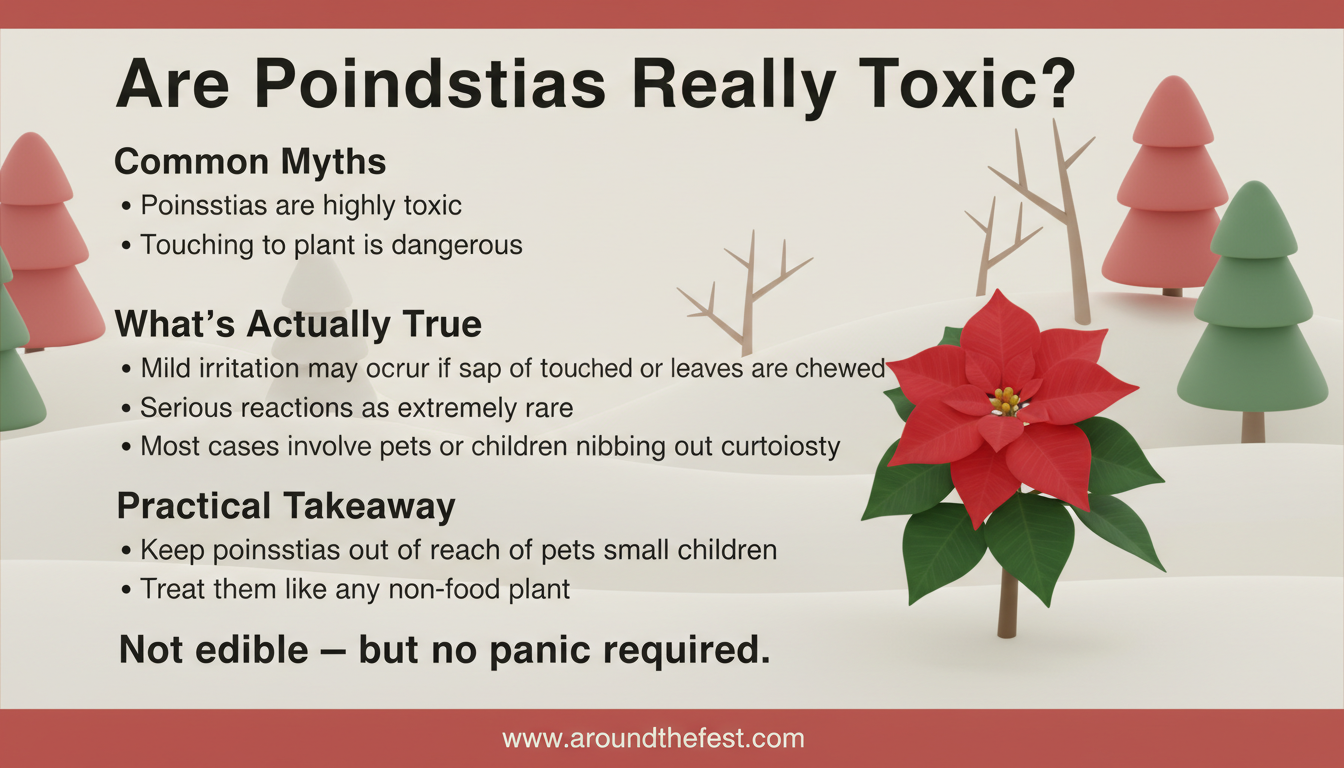
Poinsettias are one of the most misunderstood Christmas plants.
Despite persistent myths, poinsettias are not highly toxic. The confusion dates back to early, unverified reports that were repeated for decades. In reality:
- Mild irritation may occur if sap is touched or leaves are chewed
- Serious reactions are extremely rare
- Most issues involve pets or children nibbling out of curiosity
This doesn’t mean poinsettias are edible—but it does mean they don’t require panic-level avoidance.
Practical takeaway:
Keep poinsettias out of reach of pets and small children, just as you would any non-food plant.
Holly and Mistletoe: Where Caution Is Justified
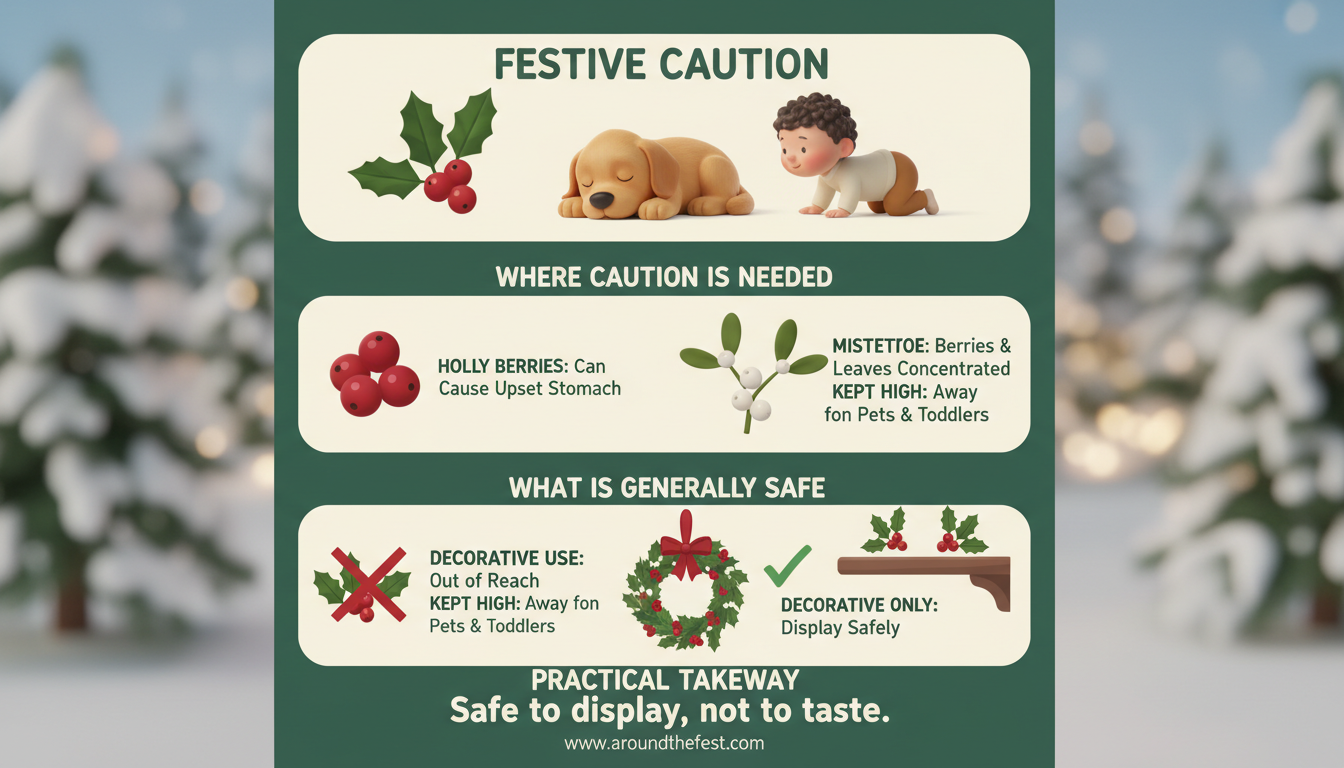
Unlike poinsettias, holly and mistletoe do deserve more care.
- Holly berries can cause stomach upset if ingested
- Mistletoe berries and leaves are more concentrated and should not be consumed
- Decorative use is generally safe when plants are placed high and out of reach
The risk comes from ingestion, not from being in the same room.
Practical takeaway:
Use holly and mistletoe decoratively, not accessibly—especially in homes with pets or toddlers.
Christmas Trees and Physical Safety
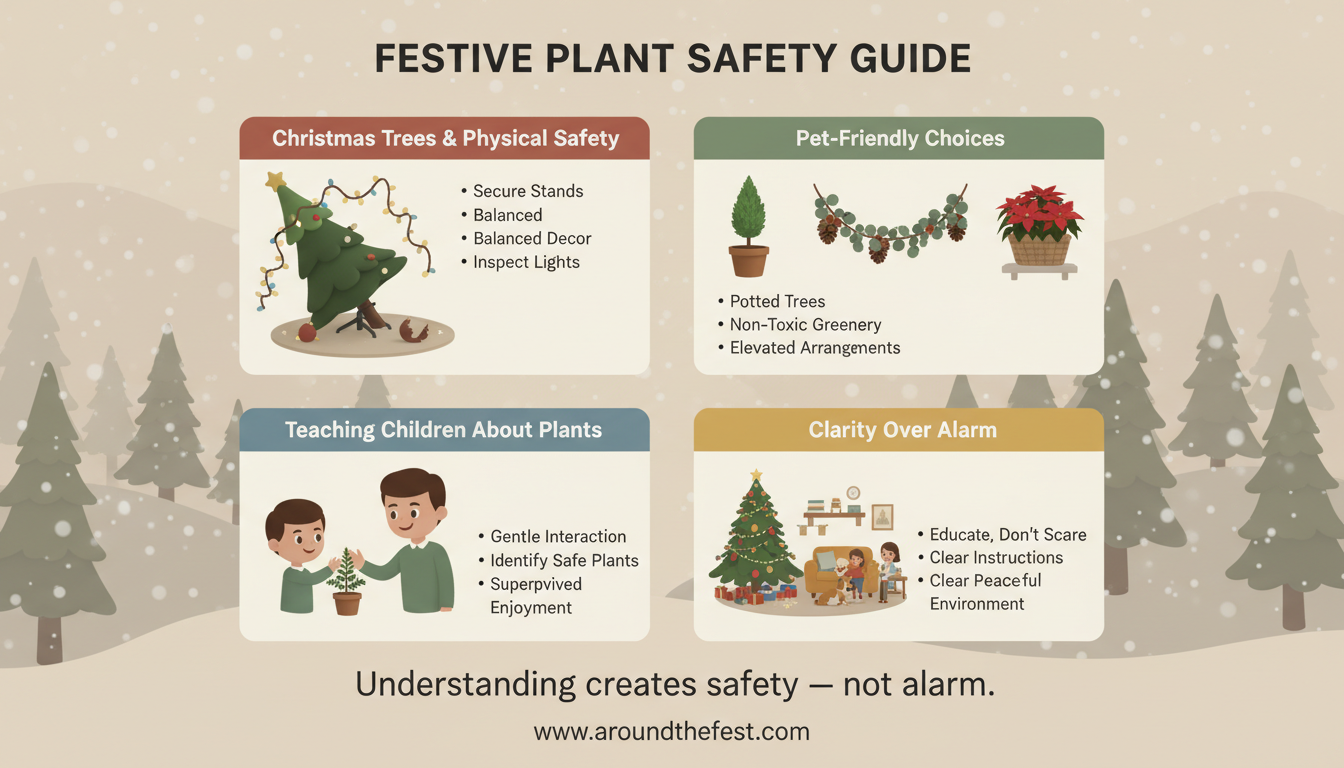
Trees themselves pose fewer plant-based risks than setup-related ones.
Common overlooked issues include:
- Unstable tree stands
- Overloaded branches with heavy ornaments
- Electrical hazards from lights
These risks increase in homes with pets or young children who may pull, climb, or chew.
Practical takeaway:
A securely anchored tree and thoughtful ornament placement reduce risk more than avoiding real trees altogether.
Pet-Friendly Alternatives and Adjustments
For households with pets, safety doesn’t require removing Christmas plants—it requires adjustment.
Examples include:
- Using potted trees instead of cut trees
- Choosing non-berry greenery for low placements
- Keeping floral arrangements elevated
Many homes successfully combine pets and plants by adjusting placement rather than eliminating tradition.
Teaching Children About Christmas Plants
For children, Christmas plants often become objects of curiosity rather than danger.
Instead of treating plants as forbidden:
- Explain which plants are “look-only”
- Encourage touching leaves gently rather than pulling
- Use sturdy plants in high-traffic areas
This approach builds awareness rather than fear.
Why Clarity Matters More Than Warnings
Overstating danger often leads to unnecessary stress and stripped-down celebrations. Understating risk creates avoidable problems.
Clear, balanced information allows families to:
- Keep traditions intact
- Adjust thoughtfully
- Feel confident rather than cautious
Christmas flowers and trees can be part of safe, joyful homes—with understanding, not alarm.
Eco-Friendly and Sustainable Christmas Flower and Tree Choices
Sustainability around Christmas plants is often framed as a simple choice: real or artificial. In reality, it’s more layered than that. The most sustainable option depends on how long something is used, how it’s sourced, and what happens afterward.
This section focuses on practical sustainability, not guilt-based decisions.
Real vs Artificial Christmas Trees: What Actually Matters
The environmental impact of a Christmas tree isn’t determined by what it’s made of alone—it’s shaped by use over time.
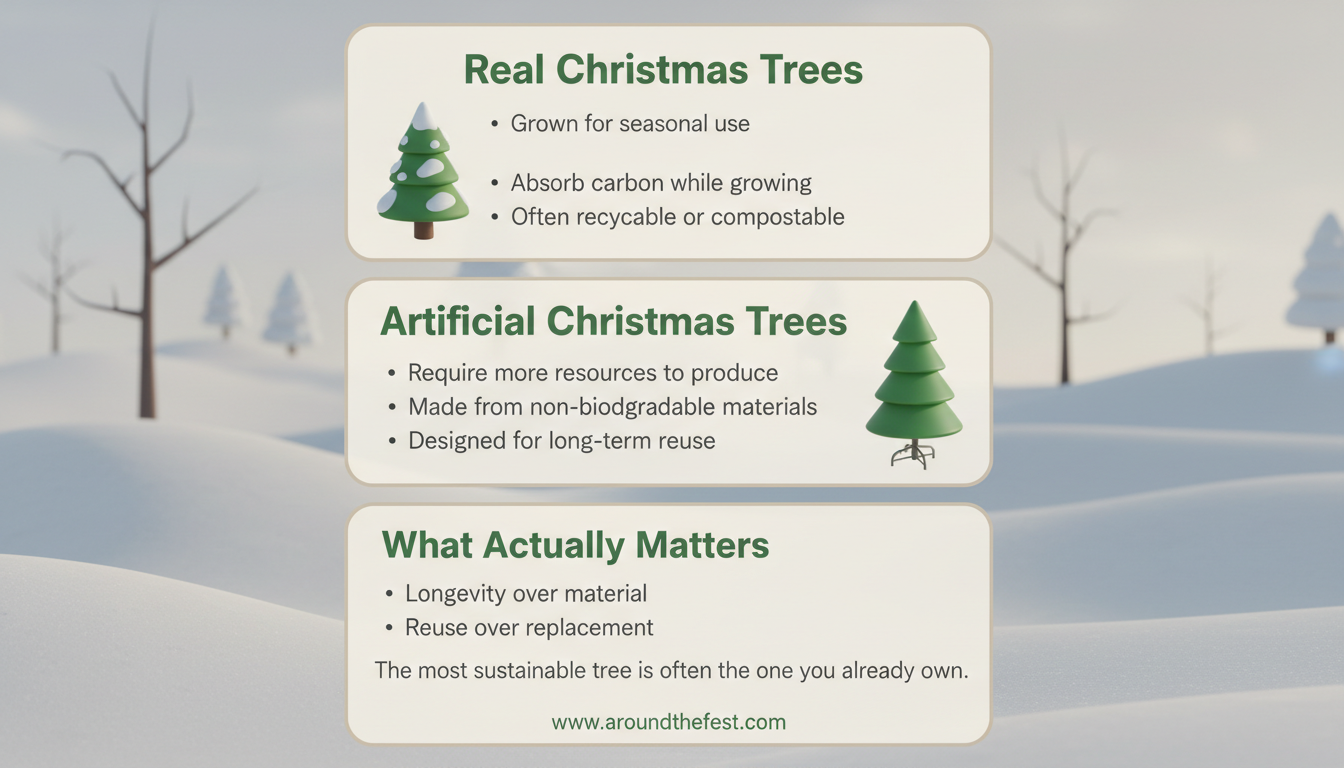
Real Christmas trees
- Grown specifically for seasonal use
- Absorb carbon while growing
- Often recyclable or compostable after use
Their impact is lower when:
- Sourced locally
- Properly recycled or mulched
- Used instead of driving long distances to purchase
Artificial Christmas trees
- Require more resources to produce upfront
- Usually made from non-biodegradable materials
- Last for many years if reused consistently
They become more sustainable only when:
- Used for a long time (often a decade or more)
- Stored and reused carefully
- Not replaced frequently for style changes
The most sustainable tree is often the one you already own.
Potted Christmas Trees: A Middle Ground
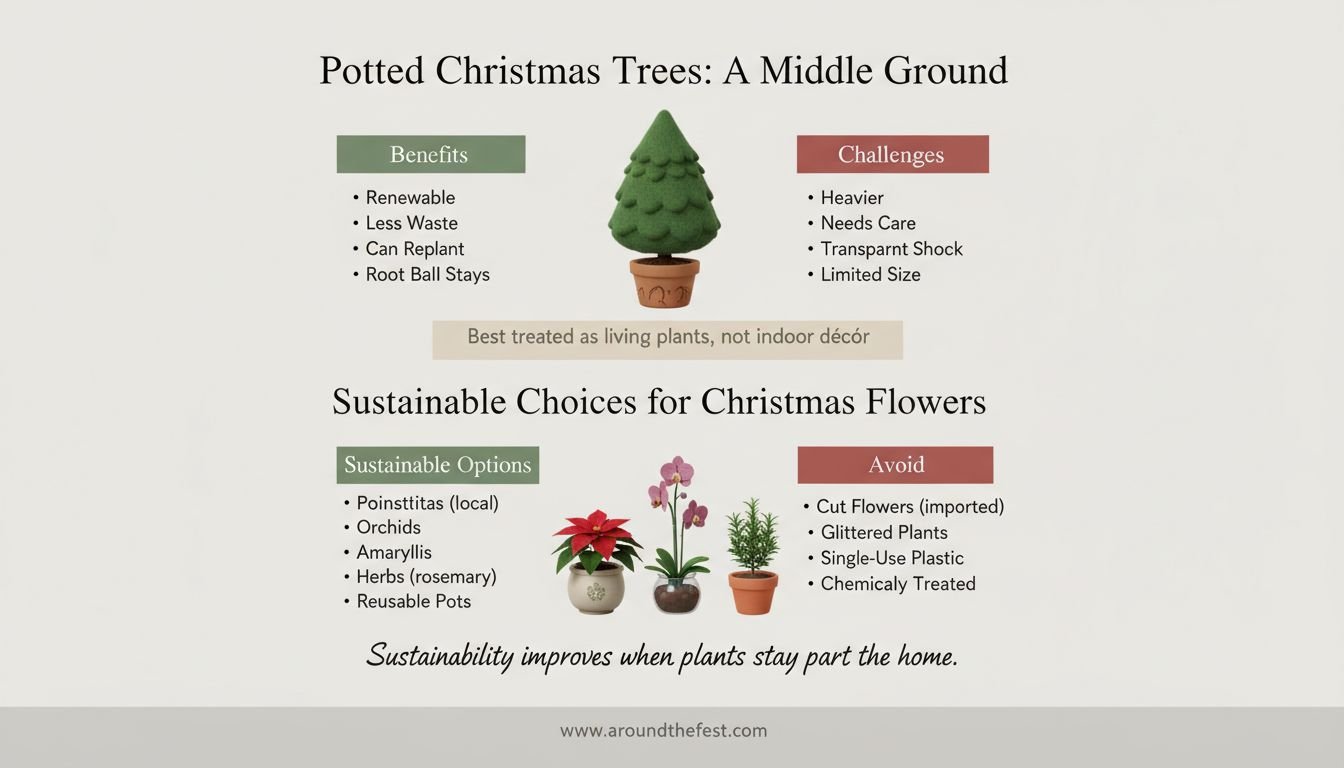
Potted trees are often presented as the “perfect” eco-friendly option—but they require realistic expectations.
Benefits:
- Can be reused year after year
- Offer flexibility for small spaces
- Reduce waste when cared for properly
Challenges people overlook:
- Limited indoor tolerance
- Need gradual temperature transitions
- Not all varieties survive replanting
Potted trees work best when treated as living plants, not indoor decorations.
Sustainable Choices for Christmas Flowers
Eco-friendly flower choices go beyond avoiding plastic pots.
More sustainable options include:
- Locally grown seasonal plants
- Plants that can live beyond the holidays
- Reusing pots and containers
Avoiding:
- Over-packaged arrangements
- Disposable decorative wraps
- Flowers flown long distances solely for appearance
Sustainability improves when plants stay part of the home after Christmas.
Reusing and Repurposing Christmas Greenery
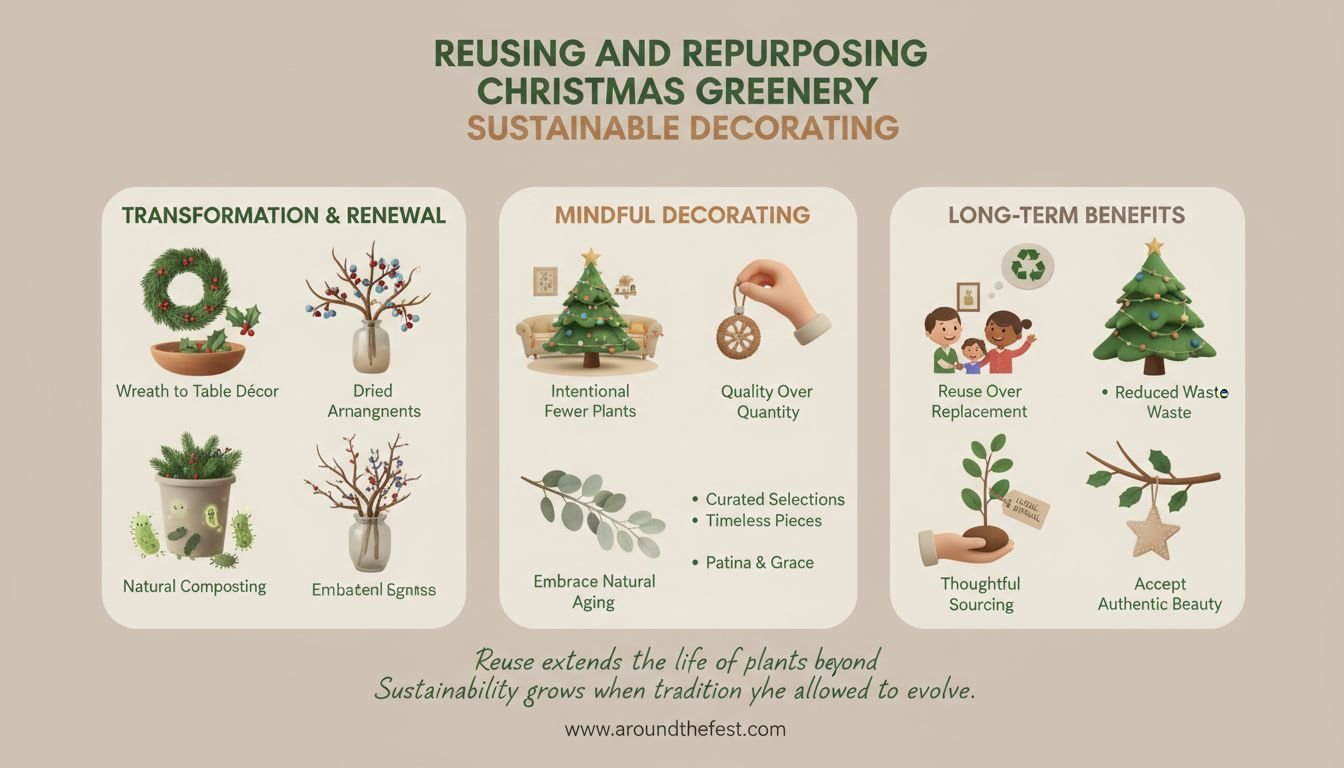
One of the simplest sustainable practices is reuse.
Examples include:
- Turning wreath greenery into table décor
- Drying branches for winter arrangements
- Composting natural greenery where possible
This extends the life of plants beyond a single moment.
Sustainable Decorating Without Sacrificing Tradition
Sustainable choices don’t require abandoning tradition. They require adjustment.
Examples:
- Decorating fewer plants more intentionally
- Choosing quality over quantity
- Letting plants age naturally rather than replacing them
Sustainability works best when it aligns with real habits, not idealized ones.
Why This Approach Is More Sustainable Long-Term
Short-term “green” decisions often lead to replacement and waste. Long-term sustainability comes from:
- Reuse
- Thoughtful sourcing
- Acceptance of imperfection
When Christmas flowers and trees are chosen and cared for intentionally, they naturally become more sustainable—without losing meaning or warmth.
Common Myths About Christmas Flowers and Trees (What People Get Wrong)
Many beliefs about Christmas flowers and trees are repeated year after year without being examined. Some come from outdated information, others from misunderstandings that became tradition themselves.
This section clears up the most common myths—not to correct people, but to help them make better, more confident choices.
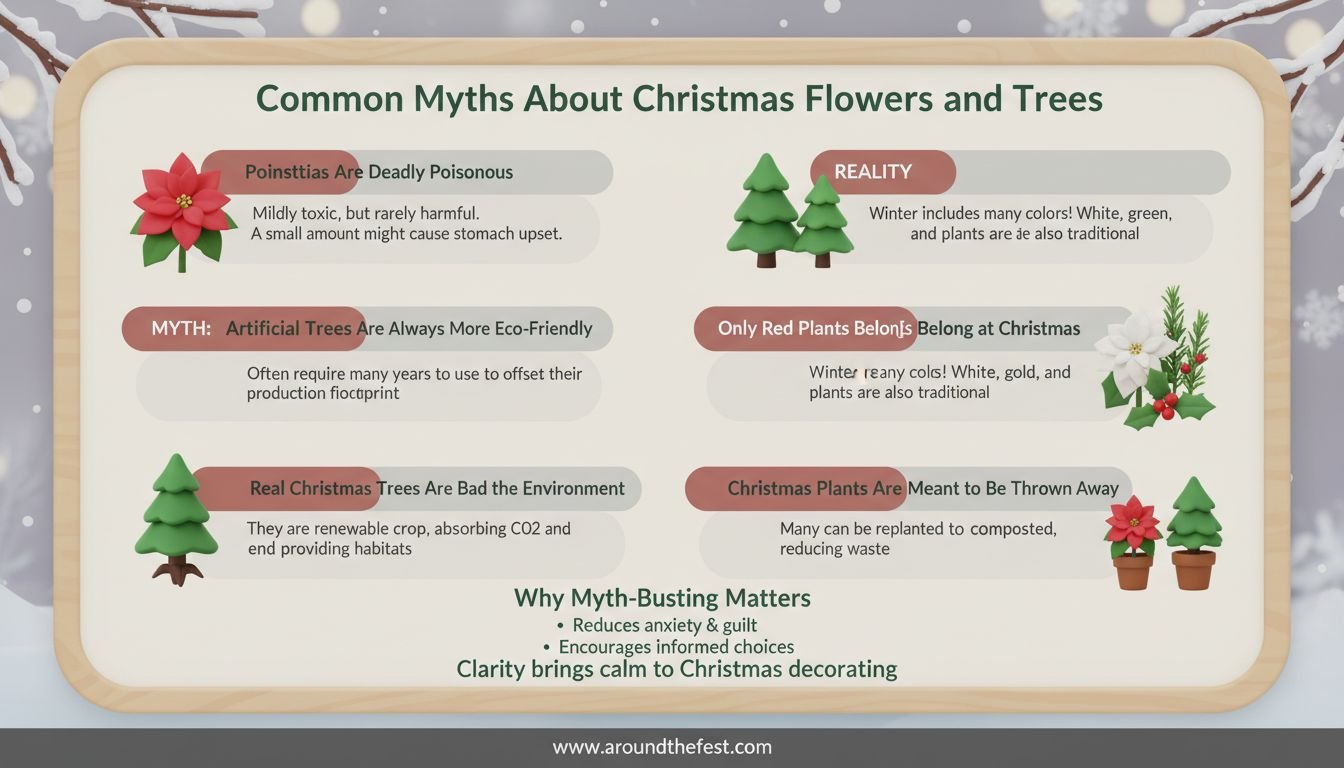
“Poinsettias Are Deadly Poisonous”
This is one of the most persistent Christmas myths.
While poinsettias should not be eaten, they are not highly toxic. The idea that they are dangerous comes from old, exaggerated reports that were never supported by evidence.
In reality:
- Mild irritation is possible if leaves or sap are chewed
- Serious reactions are extremely rare
- Most households safely use poinsettias every year
The myth has lasted longer than the evidence behind it.
“Artificial Trees Are Always More Eco-Friendly”
This belief oversimplifies sustainability.
Artificial trees can be more sustainable only when reused for many years. Replacing them frequently due to trends or storage damage increases their environmental impact.
Sustainability depends on usage patterns, not just materials.
“Only Red Plants Belong at Christmas”
Red became dominant because it’s visually striking and easy to associate with warmth and celebration—not because it’s the only appropriate color.
White, cream, pale pink, and deep green plants have long been part of Christmas décor, especially in quieter or more traditional settings.
Color preference is cultural, not mandatory.
“Real Christmas Trees Are Bad for the Environment”
Real trees are often blamed for environmental harm, but most are grown specifically for seasonal use and recycled afterward.
Problems arise when:
- Trees are transported long distances
- Disposal options aren’t used properly
In many cases, real trees are part of managed, renewable systems.
“Christmas Plants Are Meant to Be Thrown Away”
Many Christmas flowers and plants are discarded because people assume they’re temporary.
In reality:
- Many can live well beyond December
- Some are designed to rest and rebloom
- Others can be repurposed or replanted
The myth persists because care information is rarely shared.
Why Myth-Busting Matters
Myths create unnecessary fear, waste, or pressure to decorate a certain way. Replacing them with clarity allows people to:
- Enjoy plants without anxiety
- Decorate in ways that suit their lives
- Make sustainable, confident choices
Understanding what’s true—and what’s not—brings calm back into Christmas decorating.
Frequently Asked Questions About Christmas Flowers and Trees
Q1.What are the most common Christmas flowers?
Ans. The most common Christmas flowers are poinsettia, holly, mistletoe, amaryllis, Christmas rose (hellebore), and paperwhite narcissus. These plants are widely used because they bloom in winter, last indoors, or are strongly associated with Christmas traditions.
Q2.What is the most popular Christmas flower?
Ans. The poinsettia is the most popular Christmas flower worldwide. It dominates holiday displays because it’s widely available, long-lasting indoors, and visually linked to Christmas through decades of seasonal use.
Q3. What flowers are used at Christmas besides poinsettias?
Ans. Besides poinsettias, people commonly use:
- Holly
- Mistletoe
- Amaryllis
- Christmas rose
- Paperwhites
- Cyclamen
Many of these appear more often in homes and churches than in online lists.
Q4. Which Christmas tree lasts the longest indoors?
Ans. Fir trees usually last the longest indoors because they retain needles well and tolerate indoor temperatures better than spruce or pine. Proper watering and keeping the tree away from heat matter more than tree type alone.
Q5. What is the best Christmas tree for small spaces or apartments?
Ans. Narrow fir trees, tabletop trees, and potted Christmas trees work best for small spaces. They provide the seasonal feel without overwhelming the room.
Q6. Are Christmas flowers toxic to pets?
Ans. Most Christmas flowers are not highly toxic, but some need caution.
- Poinsettias usually cause mild irritation
- Holly and mistletoe berries should be kept out of reach
- Christmas trees pose more physical than toxic risk
Placement is more important than avoidance.
Q7. Are poinsettias really poisonous?
Ans. No. Poinsettias are not deadly poisonous. This is a long-standing myth. While they shouldn’t be eaten, serious reactions are extremely rare.
Q8. How long do Christmas flowers last indoors?
Ans. It depends on the plant:
- Poinsettias often last several weeks
- Amaryllis blooms last 2–3 weeks per cycle
- Christmas cactus and cyclamen can live for years
Most are discarded early due to care mistakes, not lifespan limits.
Q9. Can Christmas flowers live after Christmas?
Yes. Many Christmas flowers can survive well after the holidays if they receive stable light, moderate watering, and aren’t exposed to heat or cold shock.
Q10. Can you replant a Christmas tree after using it indoors?
Ans. Only potted Christmas trees can be replanted. Cut trees cannot regrow. Even potted trees need limited indoor time and gradual re-acclimation outdoors.
Q11. Why are evergreen trees used for Christmas?
Ans. Evergreen trees stay green during winter, symbolizing endurance and continuity. This meaning existed long before modern Christmas celebrations and still resonates today.
Q12. Do Christmas flowers and trees have religious meaning?
Ans. Some do, especially in Christian tradition, but many meanings are seasonal and cultural, which is why these plants are used widely in both religious and non-religious homes.
Q13. Is minimal Christmas decorating okay?
Ans. Yes. Many people now decorate minimally using one tree or a few meaningful plants. Christmas décor feels complete when it reflects how a space is used, not how much is added.
Conclusion: Choosing Christmas Flowers and Trees With Intention
Christmas flowers and trees have lasted not because they are decorative trends, but because they quietly meet a seasonal need. In the darkest and coldest part of the year, they bring color, structure, and a sense of continuity into everyday spaces. That role hasn’t changed—even if the way we decorate has.
What this guide shows is that meaning doesn’t come from abundance. It comes from awareness. Knowing the names of Christmas flowers helps us recognize what we’re already drawn to. Understanding their meanings explains why certain choices feel comforting rather than performative. Learning how to use and care for them intentionally allows those choices to fit real homes, modern routines, and personal values.
There is no single “correct” way to decorate for Christmas. A full tree, a small potted plant, a single branch placed with care—all can feel equally complete when they align with how a space is lived in. Sustainability, safety, and tradition don’t require perfection; they require thoughtfulness.
When Christmas flowers and trees are chosen with intention rather than obligation, they stop being seasonal tasks. They become quiet markers of time—signals that the year is slowing, gatherings are near, and home matters.
And that, more than any trend or rule, is why they continue to return each December.