January Festivals 2026: Colorful Festivals Lighting Up the World
Global & International Observances (January)
January Festivals 2026 Mark the True Beginning of the Cultural Year
January Festivals 2026 mark the emotional and cultural opening of the year across the world. While January may appear quiet after the holiday rush, it carries deep importance in many societies. Communities use this month to pause, reflect, and begin again with intention. Rather than excess, January festivals emphasize purpose, gratitude, and shared values.
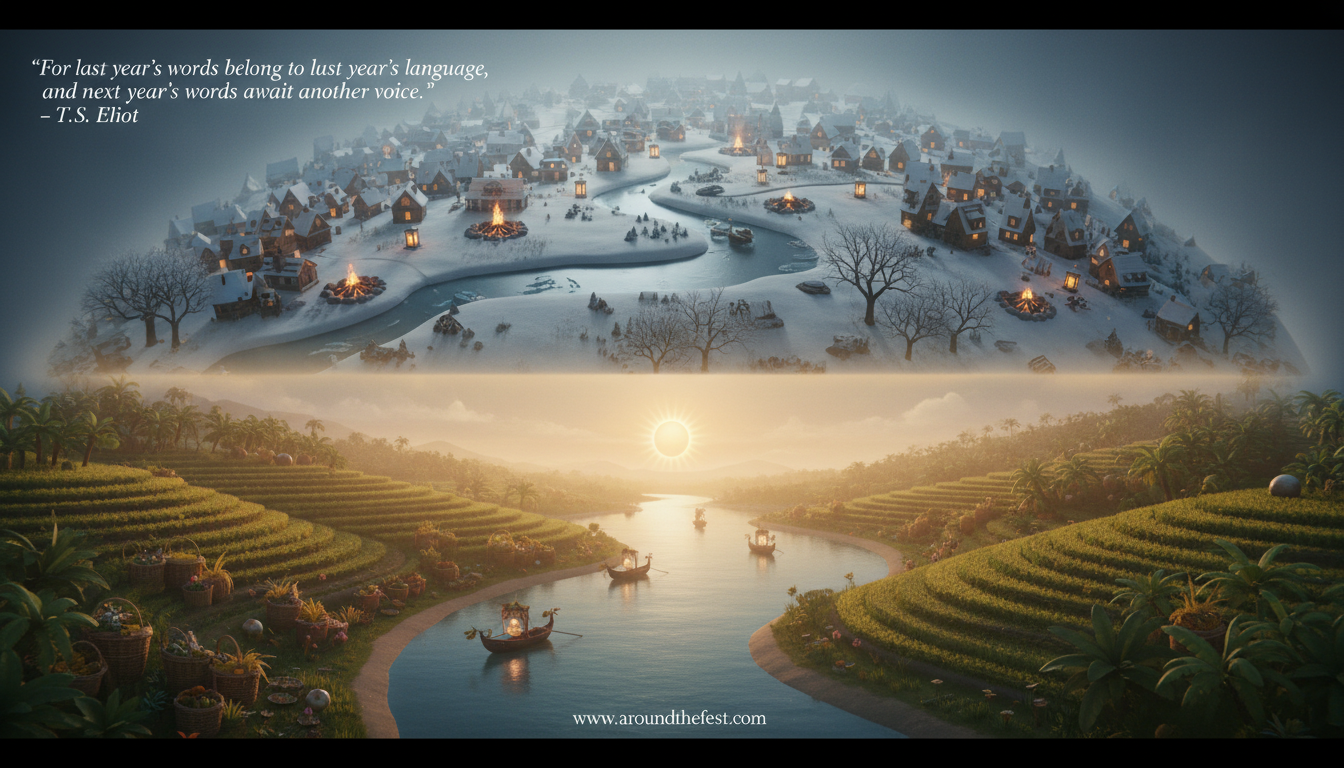
As writer T.S. Eliot once observed:
“For last year’s words belong to last year’s language, and next year’s words await another voice.”
This idea captures the spirit of January perfectly. The month exists to close one chapter and prepare for the next.
Seasonal Transitions Shape January Celebrations
Seasonal shifts explain why January holds so many festivals. In colder regions, winter reaches its deepest point. People gather for warmth, light, and connection. Fire rituals, lantern festivals, and communal meals rise from this need.
In farming cultures, January signals the end of harvest or a pause before planting. Communities thank the sun, the land, and the rivers. That is why harvest festivals and solar celebrations dominate January in parts of Asia and Africa.
These celebrations developed from survival and respect for nature. Over time, they became traditions passed down through generations.
New Year Rituals Reflect Universal Human Behavior
January festivals go far beyond fireworks and parties. Many traditions focus on cleansing, prayer, and discipline. People clean their homes, fast, attend religious services, or perform sacred baths. These actions symbolize releasing the past year.
Modern customs reflect the same instinct. Resolutions, goal setting, and reflection journals follow the same ancient pattern. Humans want a fresh mental and spiritual start.
As one old saying reminds us:
“The new year stands before us, like a chapter in a book, waiting to be written.”
Ancient Traditions Meet Modern Observances
What makes January Festivals 2026 especially rich is their diversity. Ancient rituals exist alongside modern global observances. Some honor gods and ancestors. Others promote education, inclusion, remembrance, and awareness.
This balance gives January a layered identity. The month feels timeless yet relevant. It honors the past while addressing present values.
Why January Festivals Feel Grounded Worldwide
January festivals often feel calmer than celebrations later in the year. They focus on community rather than consumption. Shared meals, local customs, and collective rituals take priority.
Across cultures, January sends a simple message. A meaningful year begins with intention. As this guide to January Festivals 2026 around the world continues, that shared human truth will appear again and again.
Global & International Observances During January Festivals 2026
January does more than open the calendar year. It also introduces global themes that shape how societies think, learn, and remember. Within January Festivals 2026, international observances add reflection and awareness to the month. While local festivals highlight culture, these days connect people across borders through shared values.
Because January encourages reflection, many global institutions place meaningful observances early in the year. As a result, the month balances celebration with responsibility.
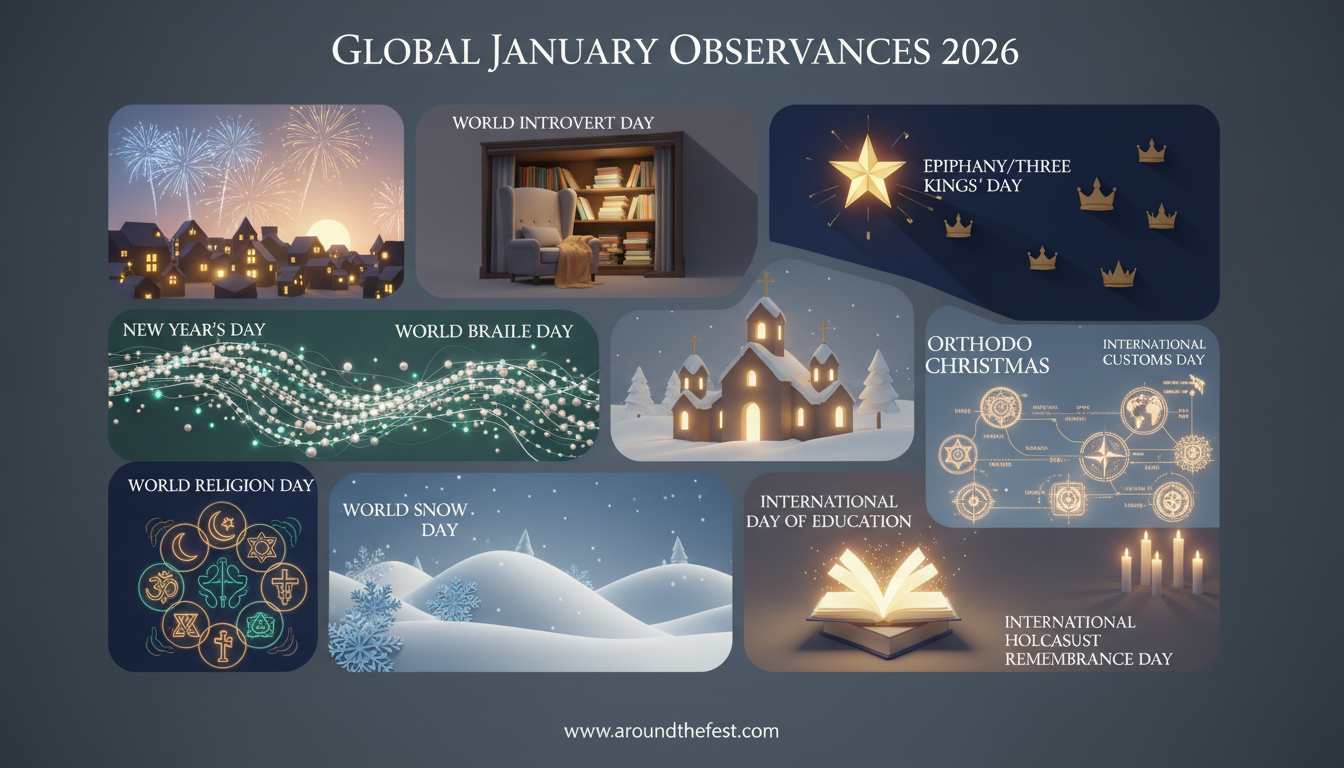
New Year’s Day – Global January Festival 2026 (January 1)
New Year’s Day marks the official beginning of the year worldwide. In many countries, celebrations include fireworks, concerts, and public gatherings. However, in others, the day focuses on prayer, rest, or family meals.
At the same time, spiritual rituals play a strong role. People visit temples, churches, and sacred spaces. As a result, the day feels hopeful yet grounded.
World Introvert Day – Reflective January Celebration 2026 (January 2)
World Introvert Day highlights the value of reflection and quiet energy. Unlike loud celebrations, this observance encourages slowing down. For this reason, January provides the perfect backdrop.
Moreover, the day reminds people that creativity and leadership also grow in silence. As author Susan Cain noted:
“Solitude matters, and for some people, it’s the air they breathe.”
World Braille Day – Global Awareness January Festival 2026 (January 4)
World Braille Day honors Louis Braille and promotes accessibility. More importantly, it raises awareness about equal access to education and communication. As a result, many organizations focus on inclusion and assistive learning tools.
In contrast to festive observances, this day carries a strong educational message.
Epiphany / Three Kings’ Day – Religious January Festival 2026 (January 6)
Epiphany commemorates the arrival of the Three Wise Men. In Spain, Mexico, and parts of Europe, parades and symbolic cakes mark the day. Meanwhile, children receive gifts rather than on Christmas.
Because of its joyful customs, Epiphany bridges spiritual meaning and community celebration.
Orthodox Christmas – Traditional January Celebration 2026 (January 7)
Orthodox Christmas follows the Julian calendar. Countries such as Russia, Serbia, and Ethiopia observe the day with prayer and fasting. However, family gatherings and shared meals also play an important role.
As a result, the festival feels deeply spiritual yet intimate.
World Snow Day – Winter-Themed January Festival 2026
World Snow Day promotes outdoor winter activities for children. Therefore, ski resorts and snowy regions host special programs. At the same time, the day encourages appreciation for winter landscapes.
World Religion Day – Spiritual January Observance 2026
World Religion Day promotes understanding between faiths. Moreover, it encourages dialogue and respect. Because January invites reflection, this observance fits naturally within the month.
Education, Trade & Remembrance January Observances 2026
Several late-January observances focus on responsibility and memory.
- International Day of Education – January 24 highlights learning as a path to peace.
- International Customs Day– January 26 recognizes global trade cooperation.
- International Holocaust Remembrance Day – January 27 honors victims and reinforces historical memory.
Together, these observances add depth to January Festivals 2026. Overall, they remind the world that a new year begins best when awareness walks alongside celebration.
January Festivals 2026 in India (Region-Wise Cultural Celebrations)
India experiences January as a deeply cultural and seasonal month. Unlike purely calendar-based celebrations, Indian January festivals follow solar transitions, harvest cycles, and regional traditions. As a result, the month feels festive across almost every state, though each region celebrates in its own way. Within January Festivals 2026, India stands out for its diversity and continuity of tradition.
North & Central India January Festivals
In northern and central India, January festivals often revolve around winter’s end, harvest gratitude, and patriotic identity.
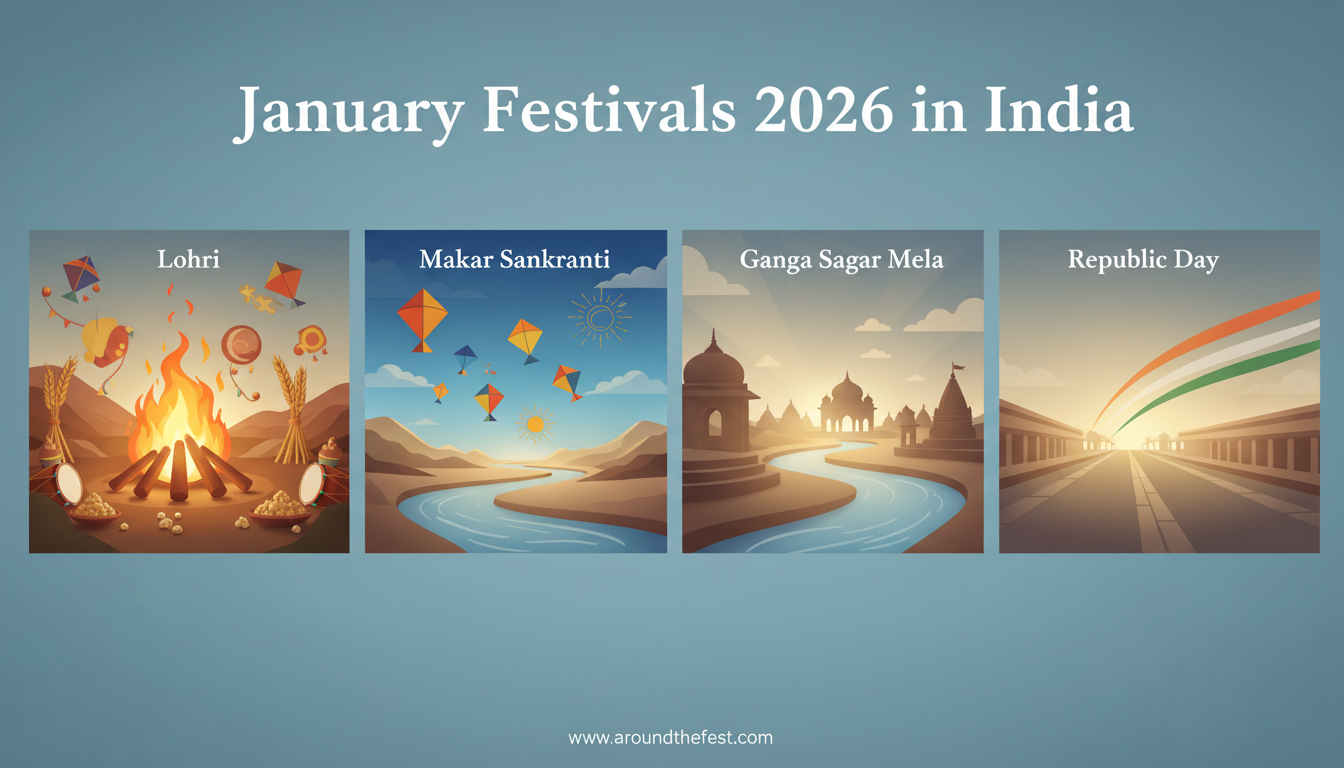
Lohri – January 13
Lohri marks the end of winter in Punjab and nearby regions. Families gather around bonfires, sing folk songs, and offer sesame sweets, peanuts, and popcorn to the fire. Traditionally, Lohri celebrates fertility, prosperity, and community bonding. Moreover, it carries special importance for newly married couples and newborns.
Makar Sankranti – January 14 or 15
Makar Sankranti celebrates the sun’s movement into Capricorn. Unlike lunar festivals, it follows the solar calendar. Therefore, it falls on nearly the same date every year. Across North and Central India, people fly kites, prepare jaggery-based sweets, and take ritual baths in rivers. The festival symbolizes light overcoming darkness.
Ganga Sagar Mela – January 14–15
Held at the meeting point of the Ganges and the Bay of Bengal, Ganga Sagar Mela attracts pilgrims from across the country. Devotees believe a holy dip here brings spiritual cleansing. As a result, the site becomes one of India’s largest religious gatherings in January.
Republic Day – January 26
Republic Day commemorates the adoption of India’s Constitution. The grand parade in New Delhi showcases cultural diversity, military strength, and regional heritage. Meanwhile, schools and communities nationwide host flag hoisting and cultural programs.
South India Harvest Festivals in January 2026
In South India, January focuses strongly on harvest gratitude and respect for nature.
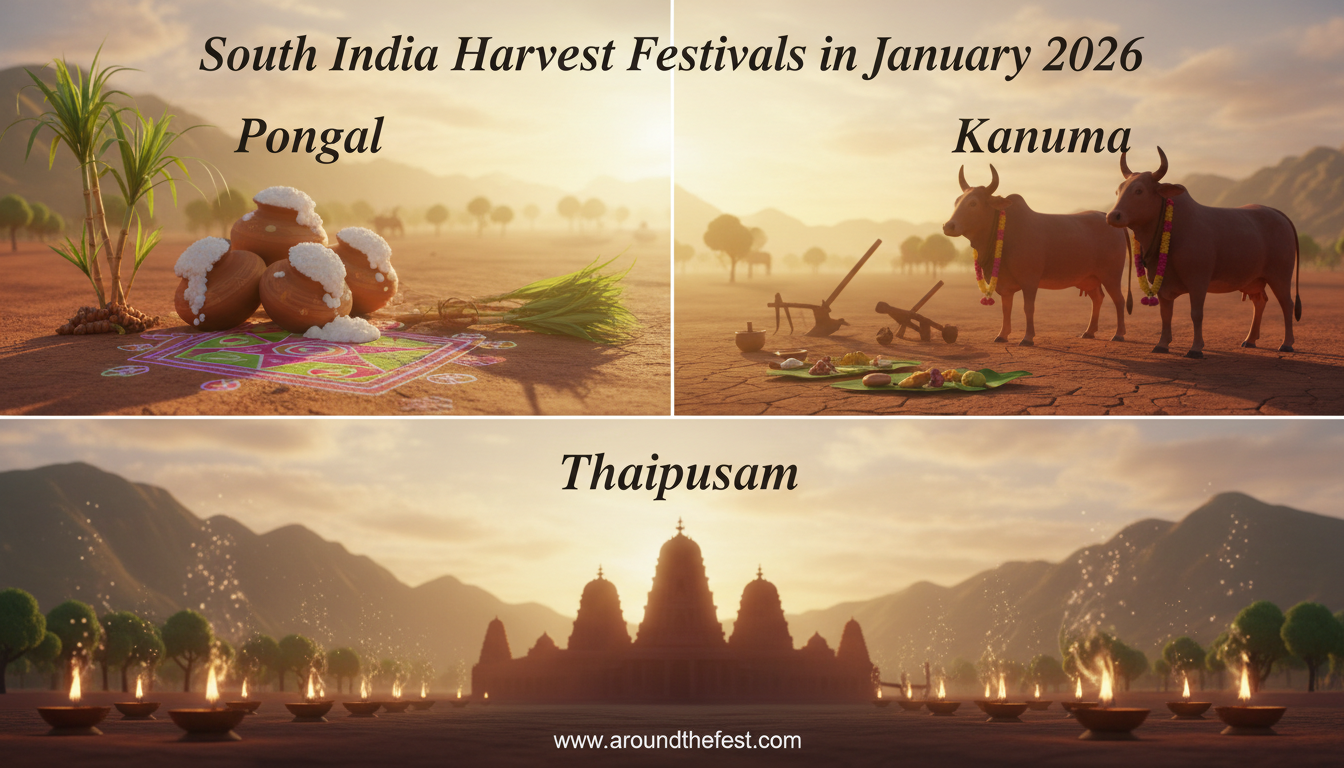
Pongal – January 14–17
Pongal spans four days in Tamil Nadu. Each day honors a different element—sun, rain, cattle, and community. Homes display colorful kolams, and families prepare sweet Pongal dishes. Above all, the festival expresses gratitude for abundance.
Kanuma – January 16
Kanuma follows Pongal in Andhra Pradesh and Telangana. The day honors cattle, which play a vital role in farming life. Villages celebrate with outdoor meals and traditional games.
Thaipusam – Late January
Thaipusam honors Lord Murugan. Devotees observe fasting, prayer, and processions. Some perform acts of penance as expressions of faith. Consequently, the festival carries deep spiritual intensity.
East & Northeast India Cultural Festivals
In eastern and northeastern regions, January emphasizes community bonding and seasonal change.

Magh Bihu – January 15
Magh Bihu marks the end of the harvest season in Assam. Community feasts, bonfires, and traditional sports define the celebration. Unlike other Bihu festivals, Magh Bihu focuses on food and togetherness.
Paush Purnima – Mid-January
Observed in parts of eastern India, Paush Purnima involves ritual bathing and religious observances. Devotees mark the full moon as a time for purity and reflection.
Overall, India’s regional celebrations highlight why January Festivals 2026 feel so culturally rich. Although traditions differ by region, the shared themes remain gratitude, renewal, and unity.
January Festivals 2026 in the USA – National & Cultural Events
January in the United States blends national observances, cultural heritage, and large-scale public events. While the month begins quietly for many, it quickly fills with festivals that reflect American history, creativity, and community values. Within January Festivals 2026, the USA stands out for its mix of civic remembrance and entertainment-driven celebrations.

New Year’s Day January Festival 2026 in the USA
New Year’s Day sets the tone for January nationwide. In major cities, fireworks and parades welcome the year. However, many Americans prefer smaller gatherings, religious services, or family meals. As a result, the day feels both festive and reflective.
Meanwhile, traditions vary by region. Polar plunges take place along cold coastlines. In contrast, warmer states host outdoor concerts and community events. Together, these customs reflect regional diversity within a shared national moment.
Rose Parade & Rose Bowl – Iconic January Festival 2026 USA
The Rose Parade in Pasadena, California, remains one of the most iconic New Year events in the world. Elaborate floats made entirely of flowers move through the streets. Shortly after, the Rose Bowl football game draws millions of viewers.
Because this event combines art, sport, and tradition, it continues to define January celebrations in the USA.
Martin Luther King Jr. Day – Third Monday of January
Martin Luther King Jr. Day honors the civil rights leader’s legacy. Unlike many holidays, it emphasizes service rather than leisure. Therefore, schools, organizations, and volunteers participate in community projects.
At the same time, marches, speeches, and educational programs reinforce themes of equality and justice. As a result, the day carries deep social importance.
Sundance Film Festival – Mid to Late January
Held in Utah, the Sundance Film Festival showcases independent cinema from around the world. Filmmakers, critics, and audiences gather to celebrate storytelling and creativity.
Moreover, Sundance often shapes film trends for the year ahead. Within January Festivals 2026, it represents modern cultural expression.
Three Kings Day – January 6 (Latino Communities)
Three Kings Day holds special meaning for Latino communities across the USA. Families celebrate with parades, music, and traditional foods. Children receive gifts, honoring the journey of the Three Wise Men.
In this way, the festival preserves cultural identity while enriching America’s multicultural landscape.
Overall, January festivals in the USA balance remembrance, creativity, and celebration. Together, they show how January Festivals 2026 reflect both national history and evolving cultural voices.
Europe: January Festivals & Winter Traditions
January in Europe blends ancient folklore, religious calendars, and winter survival traditions. While many regions face cold and short days, festivals bring warmth through fire, music, and community rituals. Within January Festivals 2026, Europe stands out for preserving centuries-old customs that still shape modern life.
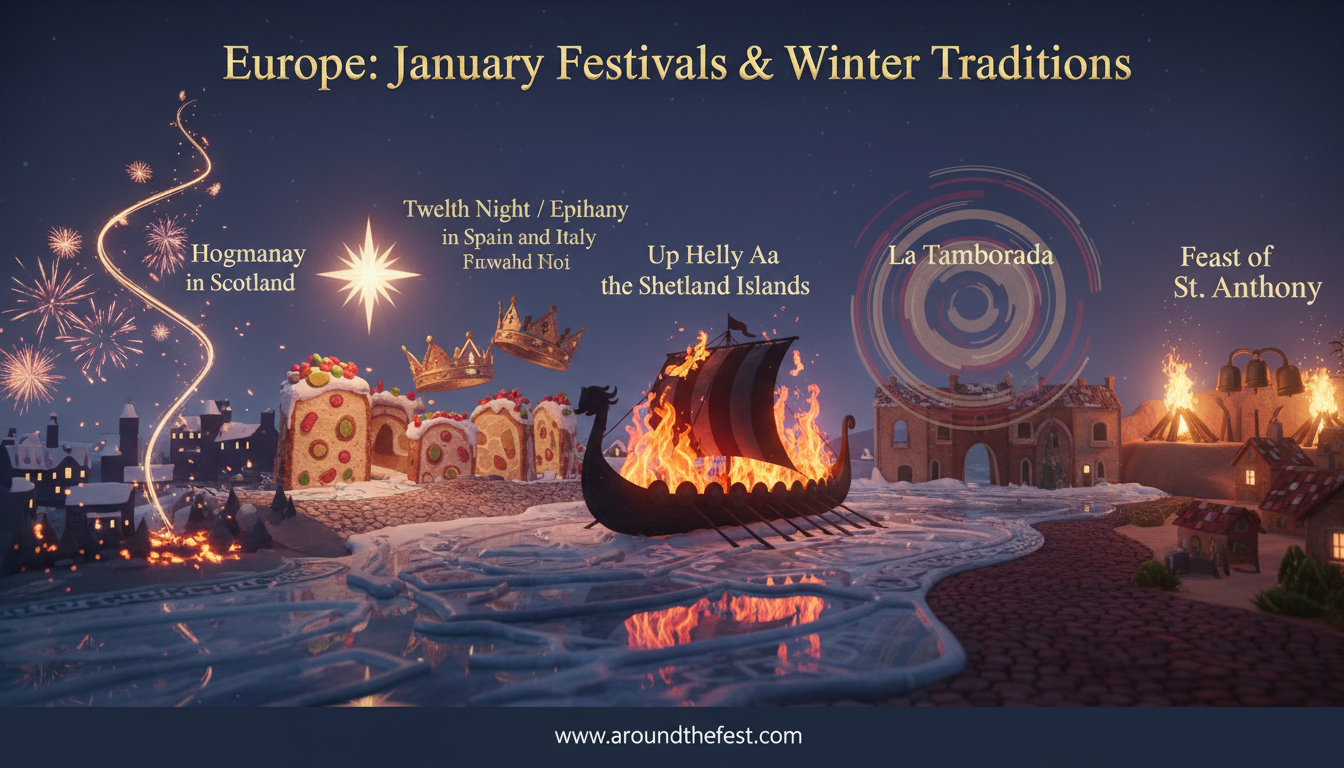
Hogmanay – Scotland
Hogmanay refers to Scotland’s famous New Year celebrations. Unlike single-day events, Hogmanay often lasts several days. Fireworks, torchlight processions, and street parties fill cities like Edinburgh.
Moreover, traditional customs such as “first-footing” emphasize good fortune for the year ahead. As a result, Hogmanay feels both celebratory and symbolic.
Twelfth Night / Epiphany – Spain and Italy
Epiphany, also known as Three Kings’ Day, remains one of the most important January festivals in southern Europe. In Spain and Italy, large parades recreate the journey of the Three Wise Men.
Meanwhile, families share special cakes like Roscón de Reyes. Children often receive gifts on this day rather than Christmas. Therefore, Epiphany blends faith with joy.
Up Helly Aa – Scotland
Up Helly Aa takes place in the Shetland Islands and celebrates Viking heritage. Participants dress as Norse warriors and march with flaming torches.
Eventually, the procession ends with the burning of a replica longship. This dramatic ritual symbolizes winter’s darkness and community strength.
La Tamborrada – Spain
La Tamborrada transforms San Sebastián into a city of rhythm. For 24 hours, thousands of participants drum continuously through the streets.
Although the festival feels playful, it also honors the city’s history. As a result, music becomes a shared cultural language.
Feast of St. Anthony – Italy and Spain
The Feast of St. Anthony honors animals and rural traditions. Villages host animal blessings, bonfires, and community meals.
In contrast to urban festivals, this celebration feels grounded and agricultural. Therefore, it reflects Europe’s deep connection to land and livestock.
Overall, European January festivals emphasize endurance, memory, and belonging. Through fire, faith, and folklore, these traditions reinforce why January Festivals 2026 remain culturally powerful across the continent.
East Asia: Lunar, Cultural & Winter January Festivals
East Asia experiences January as a month of deep symbolism, family reunion, and seasonal beauty. Rather than focusing only on the calendar year, many cultures follow lunar cycles and ancestral traditions. As a result, January Festivals 2026 in East Asia feel spiritual, communal, and visually striking.
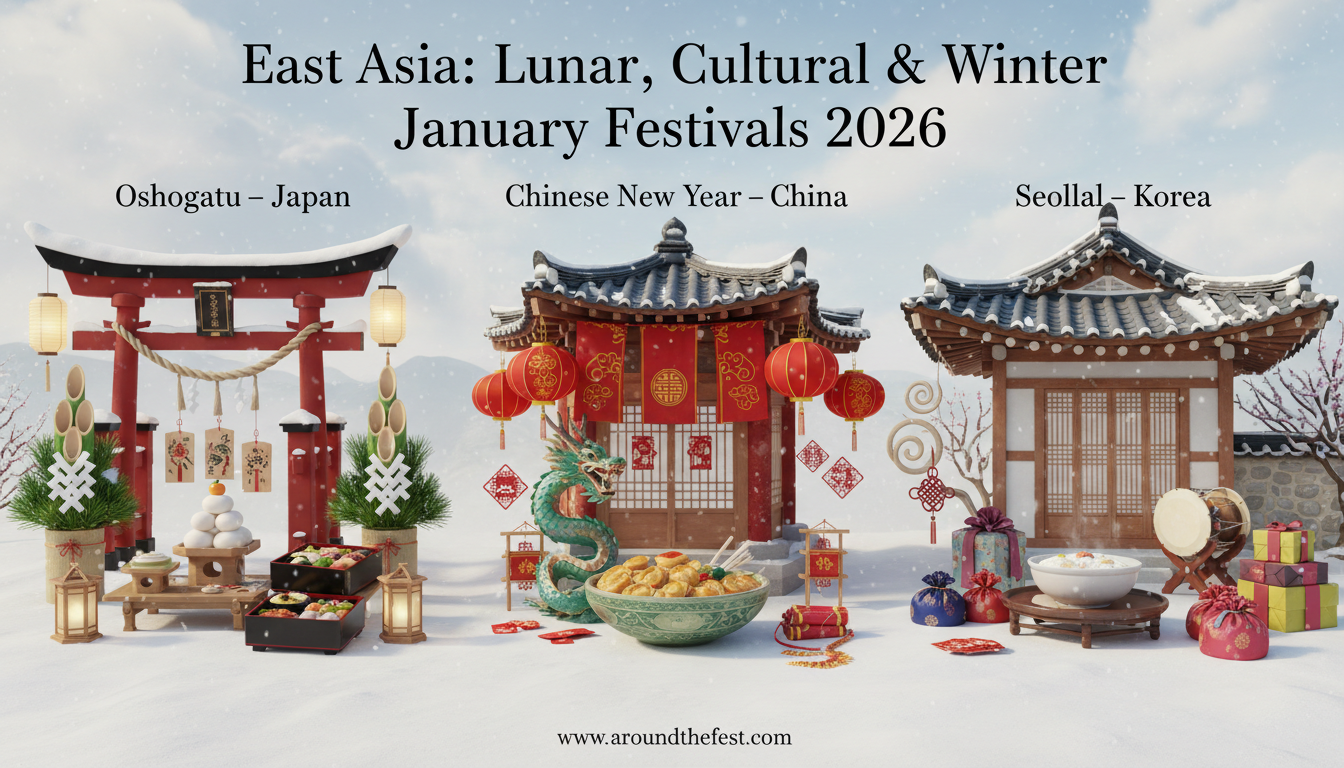
Japan: Oshogatsu and Snow Traditions
In Japan, Oshogatsu marks the New Year. Families clean their homes, settle debts, and visit shrines. These rituals welcome good fortune and clarity. Meanwhile, traditional foods such as osechi ryori symbolize health and prosperity.
At the same time, winter festivals flourish in northern Japan. The Zao Snow Monsters Festival features snow-covered trees shaped by heavy frost. These natural sculptures glow at night, creating a surreal winter landscape.
China: Laba Festival and Chinese New Year
January begins quietly in China with the Laba Festival. Families prepare Laba porridge and honor ancestors. This festival signals the approach of Lunar New Year.
Later in the month, Chinese New Year 2026 arrives with fireworks, red decorations, and family reunions. Streets fill with lion dances and lanterns. Because of its scale, this celebration becomes one of the world’s largest annual migrations.
Korea: Seollal (Lunar New Year)
In Korea, Seollal focuses on honoring ancestors and family unity. People wear traditional clothing and perform ancestral rites. Children receive blessings and symbolic gifts.
Moreover, traditional games and foods strengthen family bonds. Therefore, Seollal emphasizes respect, memory, and continuity.
Why Lunar Festivals Define East Asian January
Unlike Western New Year celebrations, East Asian January festivals center on ancestry and harmony. They encourage reflection rather than excess.
Overall, these traditions show why January Festivals 2026 feel deeply rooted in heritage across East Asia. Through ritual, family, and seasonal awareness, the month begins with meaning rather than noise.
Southeast Asia: January Festivals of Faith & Cultural Celebrations
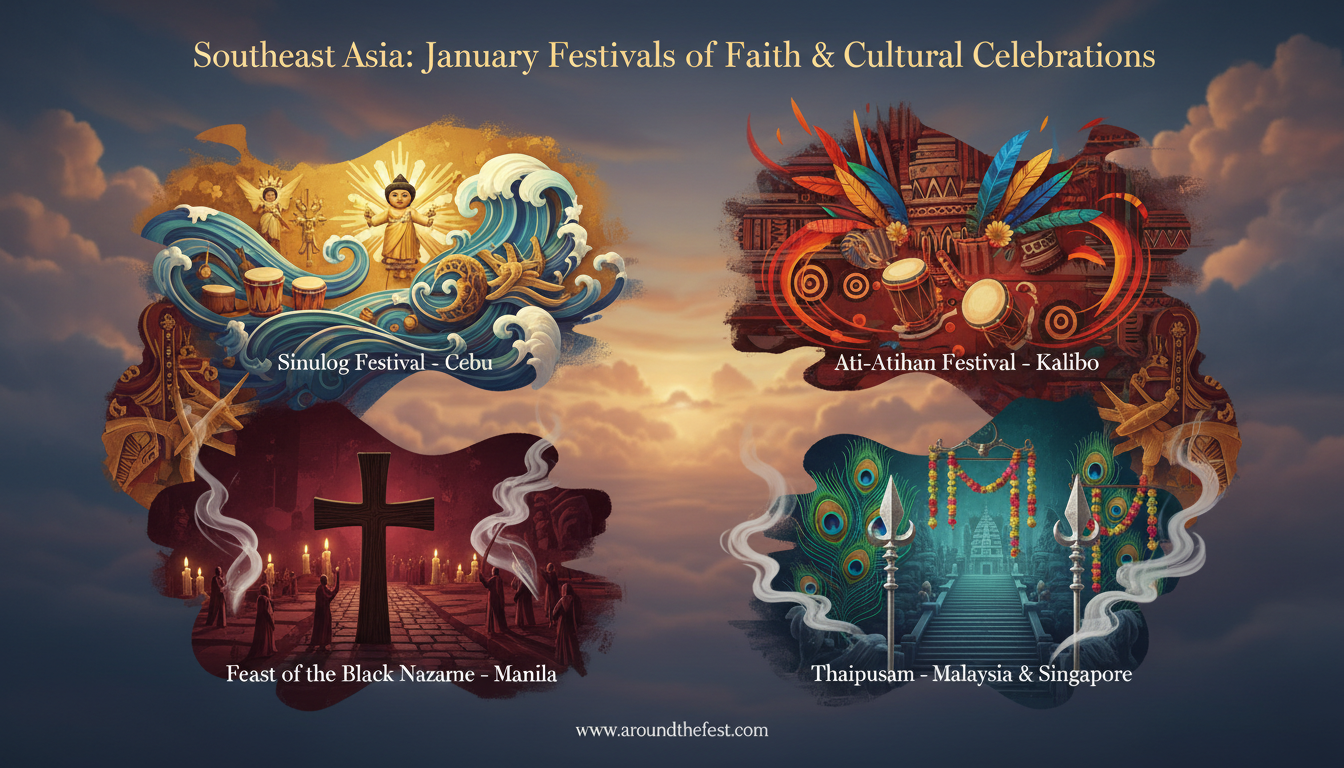
January in Southeast Asia feels intense, colorful, and deeply spiritual. Unlike colder regions, the climate allows outdoor processions and large gatherings. As a result, festivals during this month often fill streets with music, devotion, and movement. Within January Festivals 2026, Southeast Asia stands out for its strong blend of faith and community celebration.
Philippines: A Month of Devotion and Color
The Philippines dominates January festival calendars. Faith-driven events shape the entire month.
Sinulog Festival – Cebu
Sinulog honors the Santo Niño, or Child Jesus. Dancers move in rhythmic patterns that mimic river flows. Meanwhile, drums echo through Cebu’s streets. This festival combines devotion with spectacle.
Ati-Atihan Festival – Kalibo
Ati-Atihan features tribal-inspired costumes, face paint, and street dancing. Unlike formal parades, anyone can join. Therefore, the festival feels inclusive and energetic.
Feast of the Black Nazarene – Manila
This massive procession draws millions of devotees. Participants believe physical closeness to the statue brings blessings. As a result, the event becomes one of the world’s largest religious gatherings.
Thaipusam Across Southeast Asia
Outside the Philippines, Thaipusam plays a major role in January. In Malaysia and Singapore, devotees honor Lord Murugan through fasting and pilgrimage.
Some participants carry decorated structures or perform acts of penance. However, the focus remains spiritual endurance and faith. Consequently, Thaipusam carries emotional intensity.
Why January Matters in Southeast Asia
January festivals in Southeast Asia emphasize devotion, sacrifice, and community presence. Unlike commercial celebrations, these events center on belief and shared experience.
Overall, Southeast Asia’s festivals show how January Festivals 2026 thrive on faith-led traditions that unite millions through ritual and movement.
Middle East & Africa: January Observances
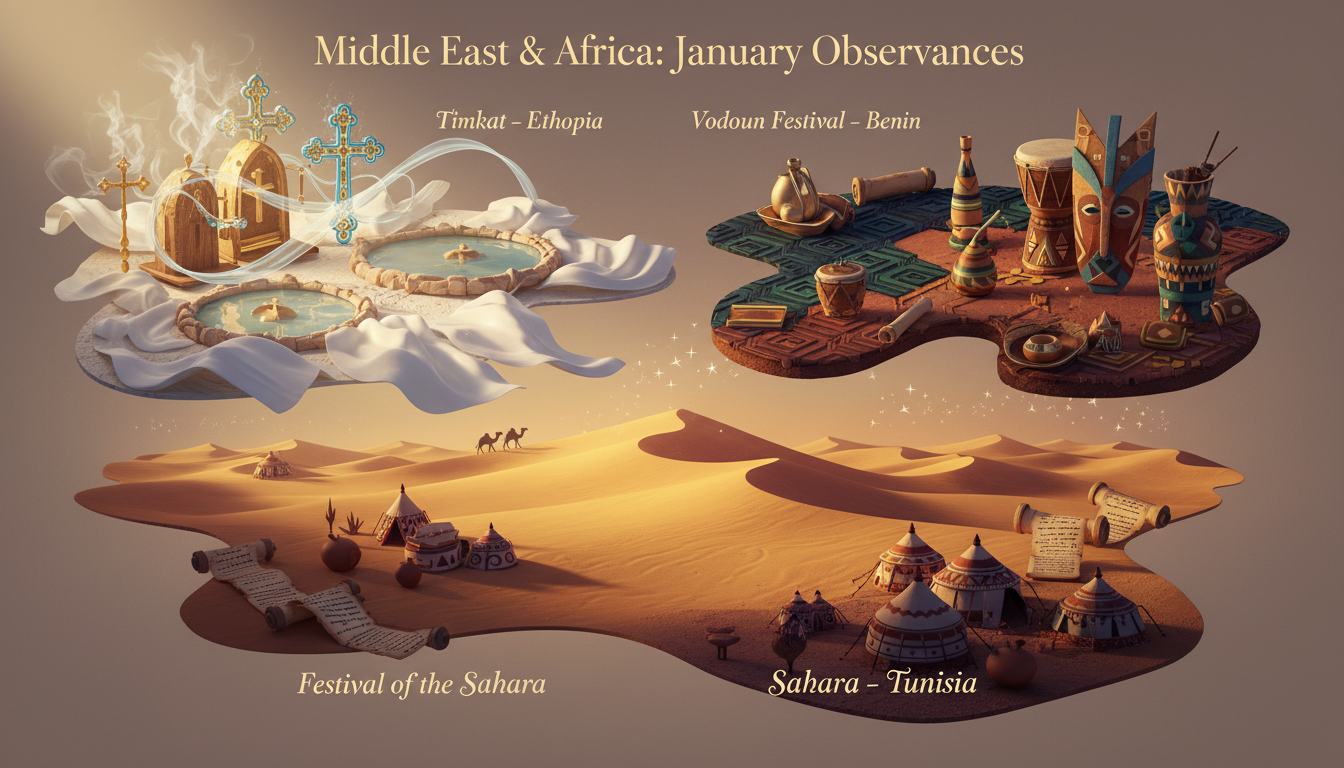
January in the Middle East and Africa highlights faith, ancestry, and cultural identity. While celebrations may appear quieter than street carnivals elsewhere, their meaning runs deep. Within January Festivals 2026, this region reflects spiritual continuity and ancient traditions that remain central to daily life.
Ethiopia: Timkat (Epiphany)
Timkat celebrates the baptism of Jesus Christ. Ethiopian Orthodox communities mark the festival with colorful processions and sacred water rituals. Priests carry replicas of the Ark of the Covenant, known as Tabots, through the streets.
Afterward, communal blessings and celebrations follow. As a result, Timkat feels both ceremonial and joyful.
Benin: Vodoun Festival
The Vodoun Festival honors traditional African spiritual practices. Held annually in January, it brings together priests, dancers, and musicians.
Moreover, rituals focus on connection with ancestors and natural forces. Unlike misunderstood stereotypes, Vodoun celebrations emphasize harmony, healing, and respect.
Tunisia: Festival of the Sahara
The Festival of the Sahara celebrates desert culture in southern Tunisia. Events include camel races, poetry, music, and craft exhibitions.
At the same time, the festival preserves nomadic traditions. Therefore, it serves both cultural and educational purposes.
Mawlid (Where Applicable)
Mawlid celebrates the birth of Prophet Muhammad. Because it follows the Islamic lunar calendar, the date shifts each year. When it falls in January, communities mark it with prayers, sermons, and charitable acts.
As a result, Mawlid emphasizes compassion and remembrance.
Why January Holds Spiritual Weight in This Region
January observances in the Middle East and Africa focus on continuity rather than spectacle. Faith, ancestry, and oral tradition guide these celebrations.
Overall, these observances reinforce why January Festivals 2026 remain deeply rooted in belief systems that value memory, devotion, and communal identity.
South America: January Cultural Festivals
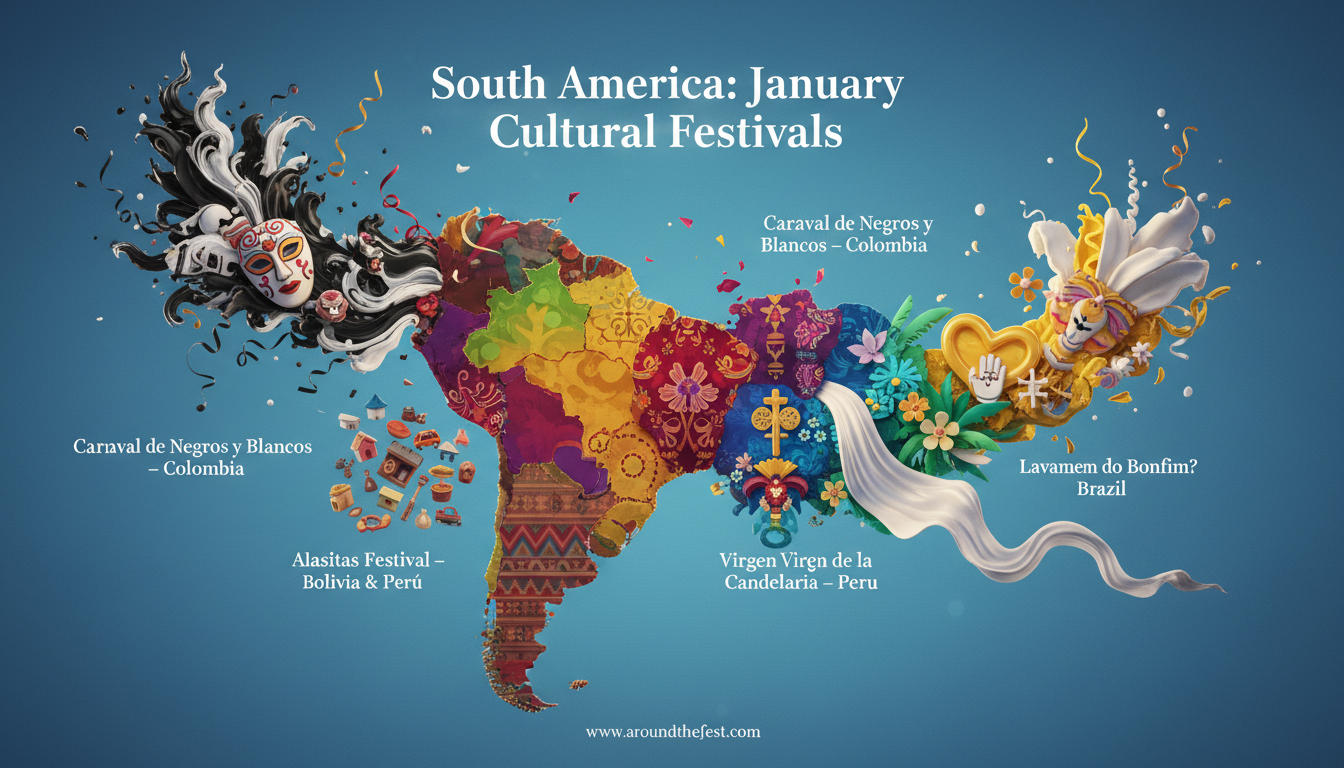
January in South America feels vibrant, expressive, and deeply rooted in identity. Warm weather allows outdoor celebrations to flourish. At the same time, indigenous traditions blend with Catholic influence. As a result, January Festivals 2026 in South America reflect both resistance and celebration, history and joy.
Colombia: Carnaval de Negros y Blancos
Held in southern Colombia, the Carnaval de Negros y Blancos celebrates equality and cultural freedom. Participants paint their faces black and white on different days. This act symbolizes unity and shared humanity.
Moreover, the festival includes parades, music, and artistic performances. Because of its cultural importance, UNESCO recognizes it as Intangible Cultural Heritage.
Bolivia & Peru: Alasitas Festival
The Alasitas Festival centers on miniature objects that represent wishes. People buy tiny houses, money, books, or tools. They then bless these items, hoping their dreams come true during the year.
Meanwhile, the festival honors Ekeko, the Andean god of abundance. As a result, Alasitas combines hope, humor, and belief.
Peru: Virgen de la Candelaria
The Virgen de la Candelaria festival blends Catholic devotion with Andean traditions. Dancers perform in elaborate costumes, while musicians fill the streets.
Although religious in nature, the festival also serves as a major cultural event. Therefore, it strengthens regional identity.
Brazil: Lavagem do Bonfim
In Salvador, Lavagem do Bonfim combines African and Catholic spiritual practices. Women dressed in white wash the steps of the Bonfim Church with scented water.
As a result, the ritual symbolizes cleansing and renewal. Music and dance follow, turning the day into a joyful gathering.
Why January Matters in South America
January festivals in South America celebrate survival, expression, and community pride. Unlike restrained observances, these festivals invite participation and movement.
Overall, South America shows how January Festivals 2026 transform memory into living culture through color, rhythm, and collective joy.
Australia & Oceania: January Events
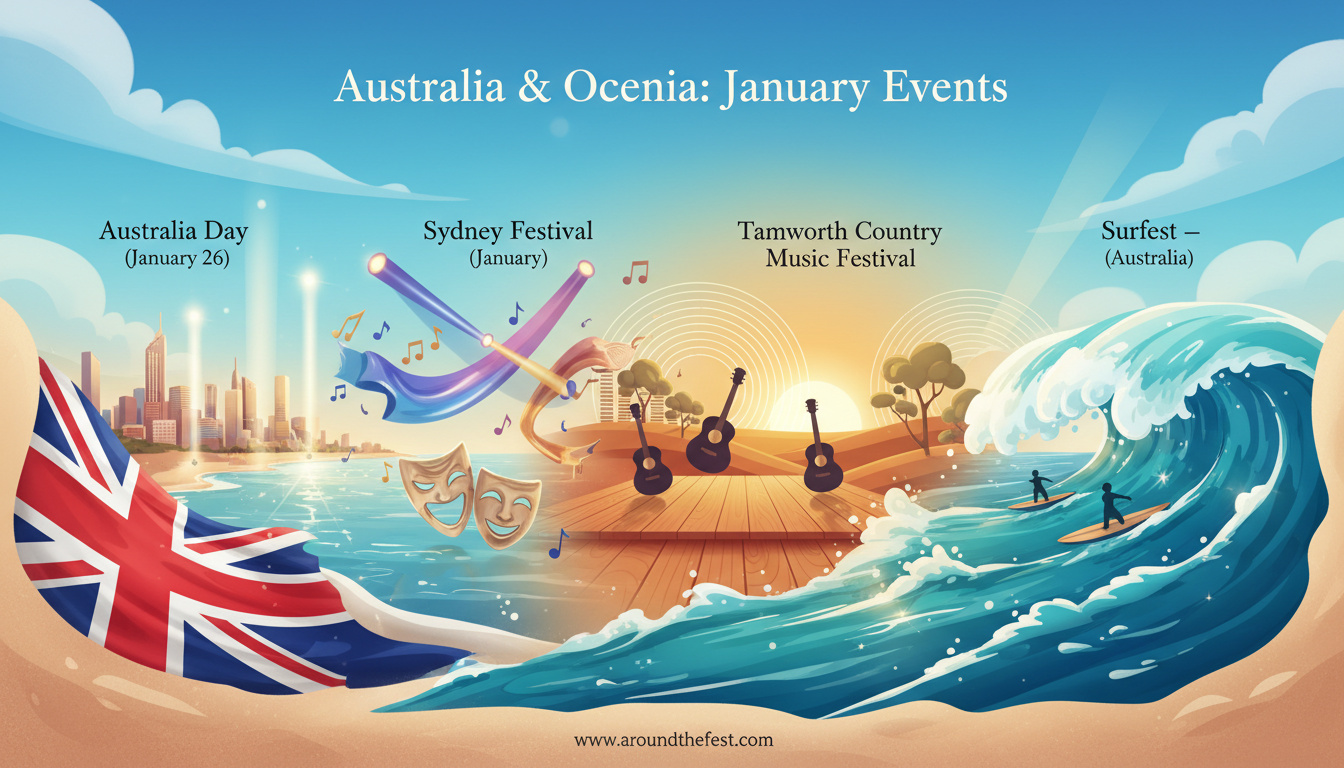
January marks midsummer across Australia and Oceania. Long days and warm weather shape how festivals unfold. As a result, celebrations often take place outdoors and focus on community, music, and national identity. Within January Festivals 2026, this region reflects a mix of modern culture and long-standing traditions.
Australia Day – January 26
Australia Day commemorates the country’s founding. Communities mark the day with ceremonies, fireworks, and public events. Many cities host waterfront celebrations and concerts.
At the same time, the day also encourages reflection. Indigenous voices use the occasion to highlight history and cultural awareness. Therefore, Australia Day combines celebration with conversation.
Sydney Festival – January
The Sydney Festival runs throughout January. It features theater, dance, music, and visual arts. Performances take place across the city, often in open-air venues.
Moreover, the festival showcases both Australian and international artists. As a result, it represents creative expression on a global scale.
Tamworth Country Music Festival
Held in New South Wales, the Tamworth Country Music Festival attracts fans from across the country. Live performances, street concerts, and songwriting events fill the town.
Because of its scale, it stands as Australia’s largest music festival. Therefore, it plays a major role in January’s cultural calendar.
Surfest – Australia
Surfest is an international surfing competition held along Australia’s coastline. Professional surfers compete in challenging waves.
Meanwhile, the event also celebrates beach culture and outdoor lifestyles. As a result, it reflects Australia’s strong connection to the ocean.
Why January Festivals Thrive in Oceania
Summer weather allows large gatherings and extended events. Unlike winter regions, festivals here emphasize movement and openness.
Overall, Australia and Oceania highlight how January Festivals 2026 adapt to climate while maintaining cultural significance.
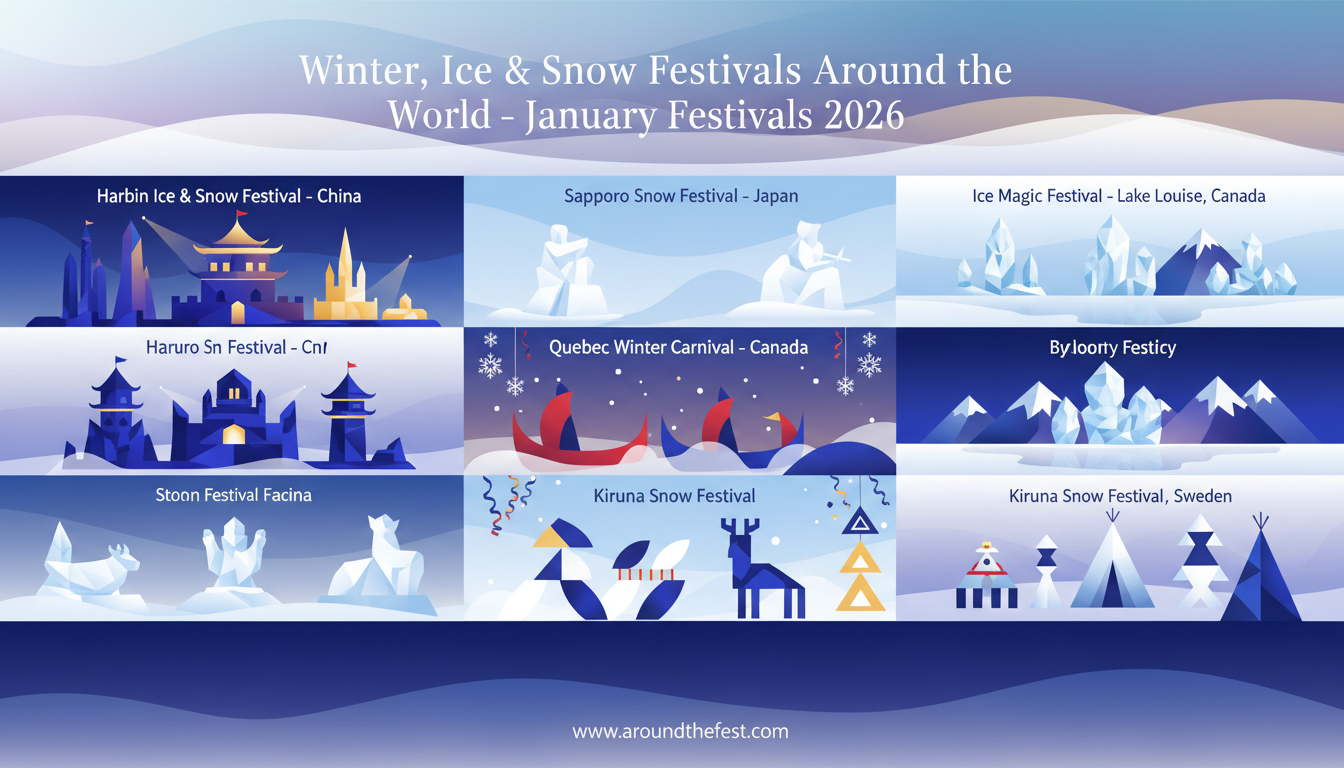
Winter, Ice & Snow Festivals Around the World
For many countries, January represents the heart of winter. Instead of retreating indoors, communities transform snow and ice into art and celebration. As a result, winter festivals become some of the most visually striking events within January Festivals 2026. These festivals turn extreme cold into creativity, light, and shared joy.
Harbin Ice & Snow Festival – China
The Harbin Ice & Snow Festival ranks among the world’s largest winter festivals. Artists carve massive ice structures from frozen rivers. At night, colorful lights illuminate entire ice cities.
Moreover, visitors enjoy ice slides, sculptures, and winter performances. Therefore, Harbin becomes a global winter destination every January.
Sapporo Snow Festival – Japan
In northern Japan, the Sapporo Snow Festival showcases enormous snow sculptures. Teams from around the world participate in creating temporary snow monuments.
Meanwhile, food stalls and concerts fill the city. As a result, the festival combines artistry with local culture.
Quebec Winter Carnival – Canada
The Quebec Winter Carnival celebrates cold weather with enthusiasm. Parades, ice canoe races, and snow baths define the event.
In addition, Bonhomme, the carnival’s snowman mascot, brings a playful spirit. Therefore, the festival feels lively and welcoming.
Kiruna Snow Festival – Sweden
The Kiruna Snow Festival highlights Scandinavian winter life. Snow sculptures line the streets, while cultural programs showcase Sami heritage.
Because of its smaller scale, the festival feels intimate. As a result, it focuses on local identity.
Ice Magic Festival – Canada
Held in Lake Louise, the Ice Magic Festival features ice sculpting competitions set against mountain backdrops. Artists shape frozen blocks into detailed forms.
Meanwhile, visitors enjoy winter sports and scenic views. Therefore, nature and creativity meet.
Why Winter Festivals Matter in January
Winter festivals challenge the idea that cold limits celebration. Instead, they turn climate into inspiration.
Overall, these events show how January Festivals 2026 embrace resilience, imagination, and community—even in the harshest conditions.
Conclusion: January Festivals 2026: Why Global Celebrations Shape the Start of the Year
January often arrives quietly, yet its cultural impact runs deep. Across continents, festivals in this month shape how communities enter the year ahead. Within January Festivals 2026, one pattern becomes clear. Societies do not rush into the future. Instead, they pause, reflect, and reconnect first.
Unlike louder festival seasons, January emphasizes meaning over excess. Many celebrations focus on gratitude, purification, and renewal. As a result, people begin the year with clarity rather than chaos.
At the same time, joy still plays a role. Music, dance, fire, and shared meals appear across cultures. However, these moments rarely feel rushed. They feel intentional.
Shared Themes Across Cultures
Although traditions differ, common themes unite January festivals worldwide. Communities honor nature, ancestors, faith, and collective memory. Moreover, many festivals acknowledge survival through winter or gratitude for harvests.
Because of this, January festivals feel grounding. They remind people where they come from before deciding where they will go.
A Global Beginning Rooted in Humanity
January sets emotional habits that influence the rest of the year. Reflection encourages better choices. Community gatherings strengthen bonds. Cultural rituals provide continuity.
Therefore, January does not simply start the calendar. It establishes direction.
From ice festivals and harvest rituals to spiritual observances and national holidays, January Festivals 2026 reveal a shared human instinct. People across the world begin again together.
Overall, January teaches an important lesson. A meaningful year starts not with noise, but with connection. When cultures honor that truth, the year ahead stands on stronger ground.
Frequently Asked Questions About January Festivals 2026
Q1. What are the best January festivals in 2026 around the world?
Ans. Some of the best January Festivals 2026 around the world include Makar Sankranti in India, the Sundance Film Festival in the USA, Harbin Ice and Snow Festival in China, Sinulog Festival in the Philippines, and the Sydney Festival in Australia. These celebrations highlight culture, winter traditions, and global heritage.
Q2. Which famous festivals happen in January 2026?
Ans. Famous January Festivals 2026 include Lohri, Pongal, Magh Bihu, Martin Luther King Jr. Day events, Up Helly Aa in Scotland, La Tamborrada in Spain, and the Quebec Winter Carnival. Many of these festivals are internationally recognized and attract large crowds.
Q3. What are the major January festivals in India in 2026?
Ans. Major January Festivals 2026 in India include Lohri, Makar Sankranti, Pongal, Magh Bihu, Ganga Sagar Mela, Thaipusam, and Republic Day. These festivals are celebrated across different regions and are closely linked to harvest cycles, spirituality, and national identity.
Q4. Are there winter and snow festivals in January 2026?
Ans. Yes, January Festivals 2026 include several winter and snow festivals such as the Harbin Ice & Snow Festival in China, Sapporo Snow Festival in Japan, Quebec Winter Carnival in Canada, Kiruna Snow Festival in Sweden, and Ice Magic Festival at Lake Louise. These festivals celebrate winter through art, ice sculptures, and outdoor activities.
Q5. When is Chinese New Year in 2026, and does it fall in January?
Ans. Chinese New Year in 2026 begins in February, not January. However, January Festivals 2026 in China include the Laba Festival, which marks the spiritual and cultural preparation period leading up to the Lunar New Year.
Q6. What are the most popular January festivals in the USA?
Ans. Popular January Festivals 2026 in the USA include New Year’s Day celebrations, the Rose Parade and Rose Bowl, Martin Luther King Jr. Day, Sundance Film Festival, and regional Three Kings Day celebrations in Latino communities.
Q7. Are there religious and spiritual festivals in January 2026?
Ans. Yes, many January Festivals 2026 are religious or spiritual. Examples include Epiphany (Three Kings’ Day), Orthodox Christmas, Thaipusam, Timkat in Ethiopia, the Feast of the Black Nazarene in the Philippines, and Mawlid (where applicable). These observances focus on faith, devotion, and reflection.
Q8. Which countries have the most cultural festivals in January?
Ans. Countries with a high number of January Festivals 2026 include India, the Philippines, Japan, China, Spain, Scotland, the USA, and Australia. These countries combine seasonal, religious, and cultural traditions throughout the month.
Q9. Why is January an important month for festivals worldwide?
Ans. January is important because it represents renewal, reflection, and seasonal transition. Across cultures, January Festivals 2026 focus on gratitude, community bonding, spiritual cleansing, and setting intentions for the year ahead.
Q10. Are January festivals suitable for international travel?
Ans. Yes, January Festivals 2026 are popular with international travelers because they offer cultural depth, winter experiences, and major public events. Many destinations also have fewer crowds compared to peak summer festival seasons.
Q11. How can I plan travel around January Festivals 2026?
Ans. To plan travel around January Festivals 2026, check festival dates early, book accommodations in advance, and research local customs. Many January festivals are deeply traditional, so understanding cultural etiquette enhances the experience.