All Saints’ Day With Kids in 2025: Fun Crafts, Stories & Activities
All Saints’ Day with Kids in 2025 doesn’t have to feel like a history lesson—it can be a joyful, hands-on way to teach children about kindness, faith, and tradition. Families, classrooms, and Sunday schools are finding creative ways to celebrate through fun crafts, saint-inspired stories, and interactive activities. Whether you’re a parent looking for a quiet project at home or a teacher planning a group lesson, this guide shares practical, kid-friendly ideas to make All Saints’ Day both meaningful and fun.
What Is All Saints’ Day With Kids 2025 and Why It Matters
When you think about celebrating All Saints’ Day with kids in 2025, the first question is often: “How do I explain it in a way they’ll actually understand?” This holiday may seem abstract at first, but at its heart, it’s about honoring heroes of kindness, courage, and faith—values every child can relate to.
Breaking It Down for Kids

Simple Definition: All Saints’ Day is a Christian feast that honors all saints—famous ones like St. Francis or St. Therese, and everyday people who lived holy, good lives.
Kid-Friendly Analogy: Think of it as a “spiritual hall of fame”—a day to remember heroes who showed us how to love, share, and be brave.
Faith Connection: It reminds children that anyone, even them, can try to live like a saint by choosing kindness and helping others.
Why It Matters for Kids in 2025
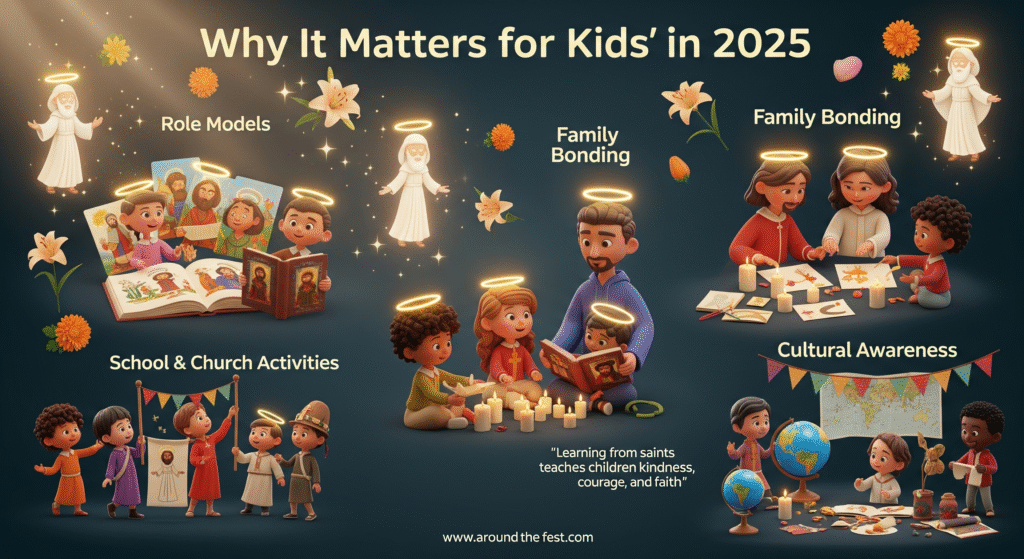
Positive Role Models: In today’s world, kids are surrounded by online influencers and celebrities. Saints offer them inspiring role models who stood for compassion and courage.
Family Bonding: Observing All Saints’ Day as a family—by lighting candles, reading a story, or doing a craft—helps children build meaningful traditions.
School & Church Life: Many Catholic schools and Sunday programs in 2025 organize plays, saint parades, or creative projects to help kids understand the holiday.
Cultural Awareness: Even in non-religious households, All Saints’ Day can spark conversations about history, traditions around the world, and the value of honoring good lives.
How to Explain All Saints’ Day With Kids 2025 (By Age Group)
Explaining All Saints’ Day with kids in 2025 doesn’t need to be complicated—it just depends on your child’s age and how they best learn. Younger children connect with colors and stories, while older kids prefer games, projects, and real-world connections. Here’s how you can tailor the conversation by age group.
1. Toddlers & Preschoolers (Ages 2–5)
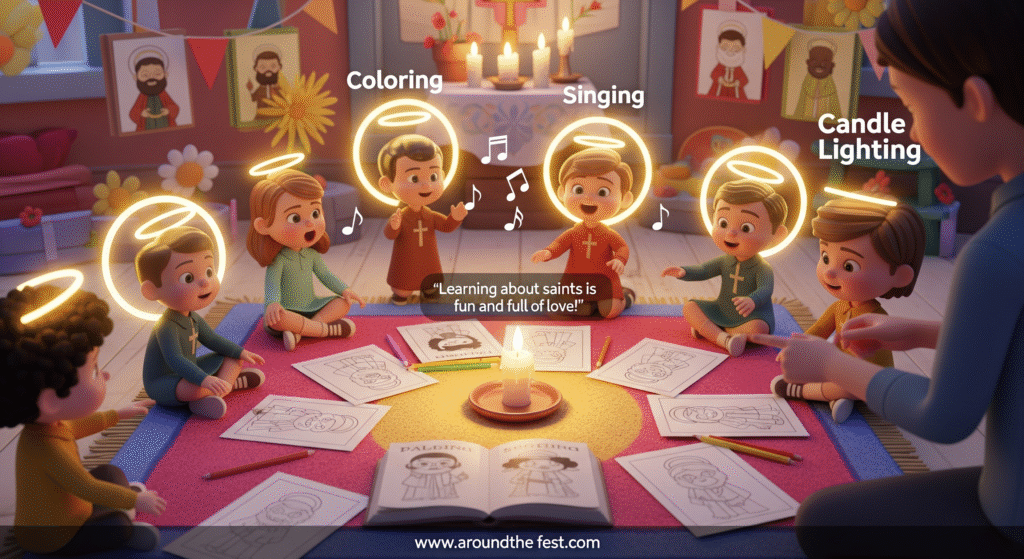
At this stage, little ones learn through pictures, songs, and short stories. Keep the explanation simple and joyful.
How to Explain: “All Saints’ Day is when we remember people who loved God and helped others.”
Ideas That Work:
- Use saint-themed coloring sheets or simple picture books.
- Sing a short, happy song about love or kindness.
- Light a candle together and explain it’s “for all the saints.”
Pro Tip: Limit it to 2–3 minutes—attention spans are short at this age.
2. Elementary School Kids (Ages 6–10)
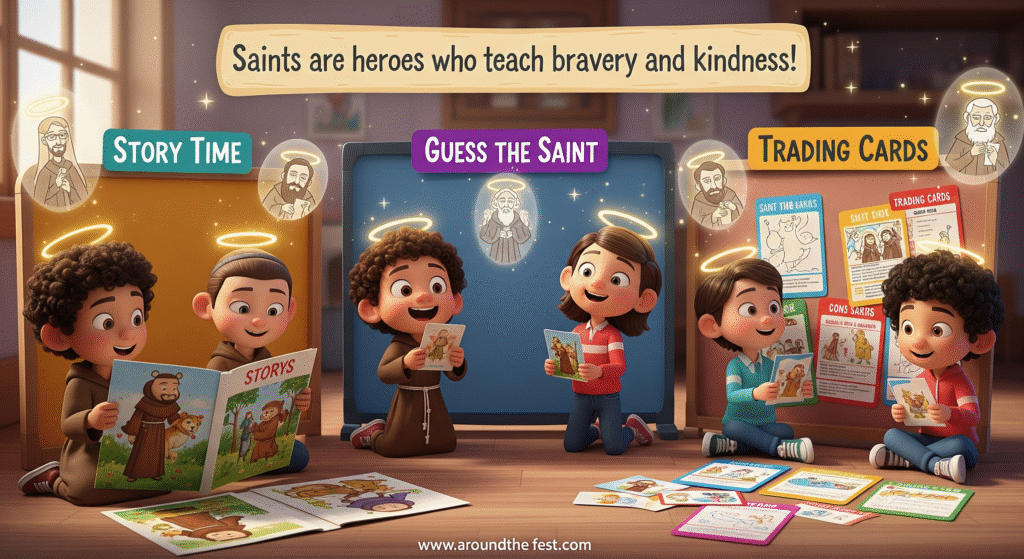 These kids are naturally curious, and they love stories, games, and hands-on projects.
How to Explain: “Saints are like heroes of faith who showed us how to be brave and kind.”
Ideas That Work:
- Read a short saint story (like St. Francis and the animals).
- Play “Guess the Saint”—give clues and let them guess the name.
- Make saint trading cards with drawings and fun facts.
Pro Tip: Encourage questions—this age group thrives on “why” and “how.”
3. Tweens & Teens (Ages 11+)
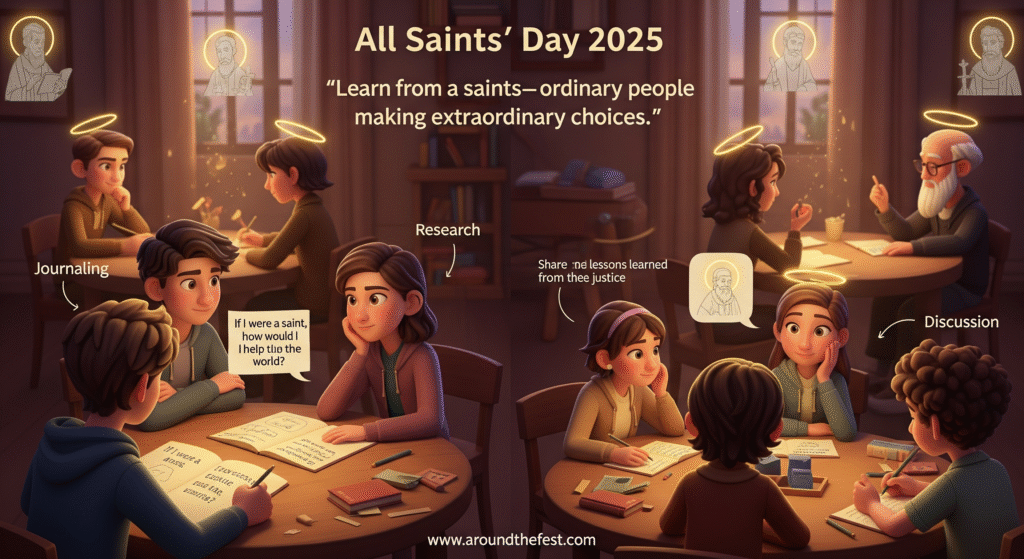
Older kids want deeper meaning and real-world connections.
How to Explain: “All Saints’ Day is about real people who made a difference—and how you can make a difference, too.”
Ideas That Work:
- Journaling prompt: “If I were a saint, how would I help the world?”
- Research project: Pick a favorite saint and share lessons from their life.
- Discussion: Connect saintly values like courage or justice to issues teens care about today.
Pro Tip: Make it relevant—show them saints weren’t perfect, but they made choices to do good.
All Saints’ Day Crafts for Kids 2025
Crafts are one of the easiest ways to make All Saints’ Day with kids in 2025 fun, memorable, and meaningful. The best part? You don’t need fancy supplies—just paper, markers, glue, and a little creativity. Here are some kid-friendly crafts with simple instructions.
1. DIY Saint Halo Crowns Craft
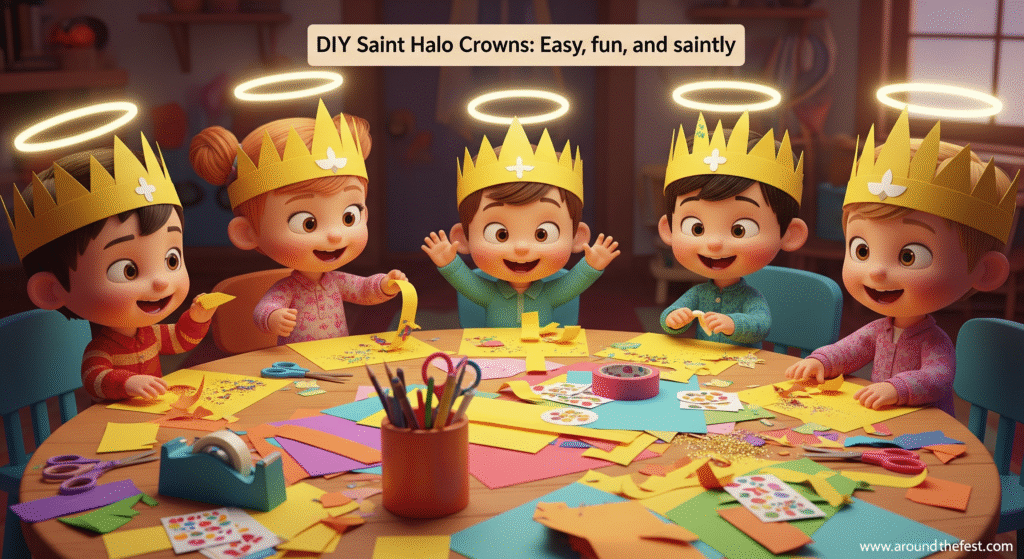
A quick, fun craft for younger kids.
Supplies: Yellow or gold construction paper, scissors, tape or stapler, stickers or glitter (optional).
Steps:
- Cut a strip of yellow paper long enough to fit around the child’s head.
- Let kids decorate with glitter or stickers.
- Tape or staple into a circle to make a “halo crown.”
Why It Works: Easy, safe, and instantly connects kids to the saint imagery they see in church art.
2. Saint Trading Cards
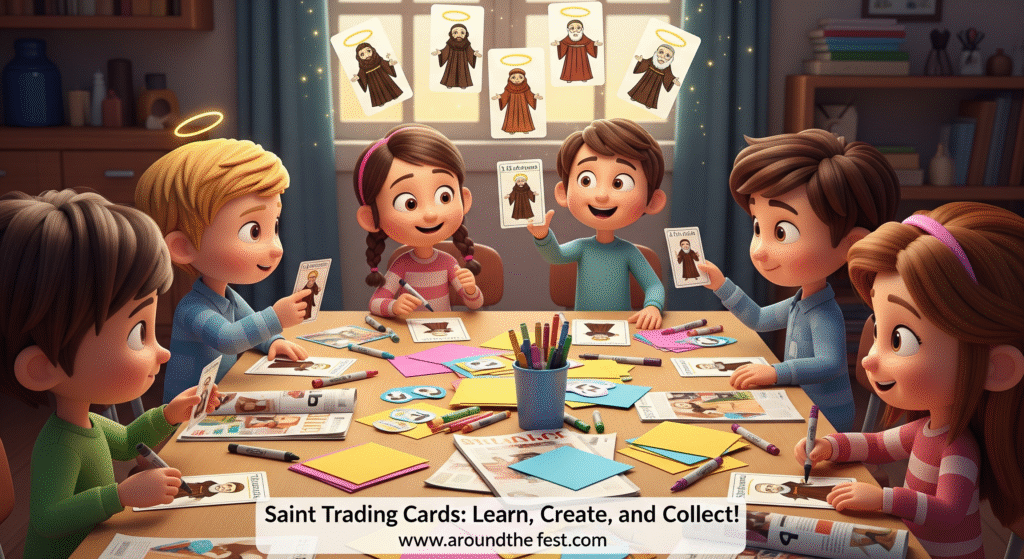
Great for elementary school classrooms.
Supplies: Index cards or cardstock, markers, crayons, magazines (for pictures).
Steps:
- On the front of each card, draw or paste a picture of a saint.
- On the back, write 2–3 fun facts (e.g., “St. Francis loved animals”).
- Kids can collect and trade cards with friends.
Why It Works: Turns learning into a game, and kids love building collections.
3. Saint Lanterns
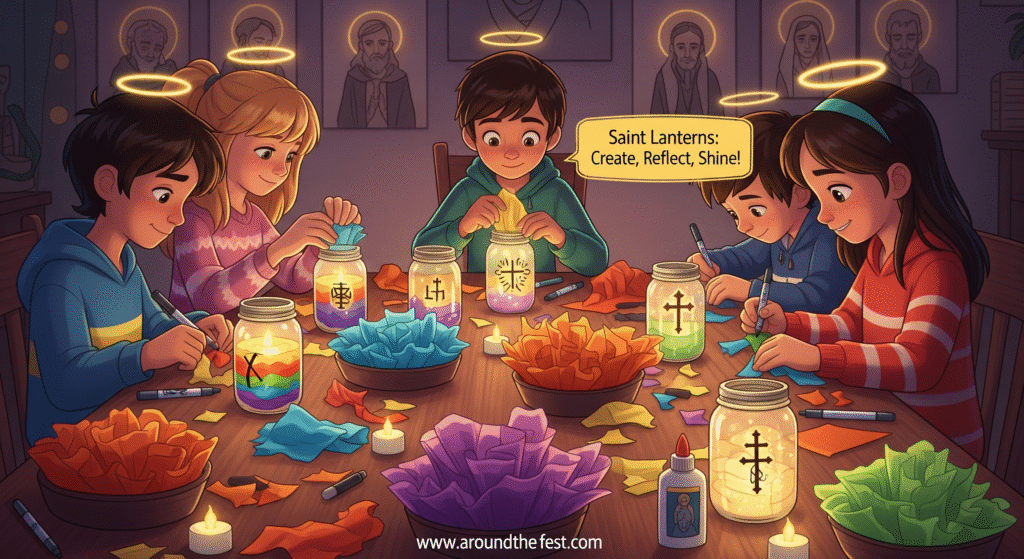
A reflective craft for older kids.
Supplies: Mason jars or recycled jars, tissue paper, glue, LED tea lights.
Steps:
- Tear tissue paper into small pieces.
- Glue onto the outside of the jar in layers.
- Once dry, add a saint’s name or symbol with a marker.
- Place an LED light inside for a glowing lantern.
Why It Works: Creates a calming, faith-based decoration kids can take home.
4. DIY Saint Costumes
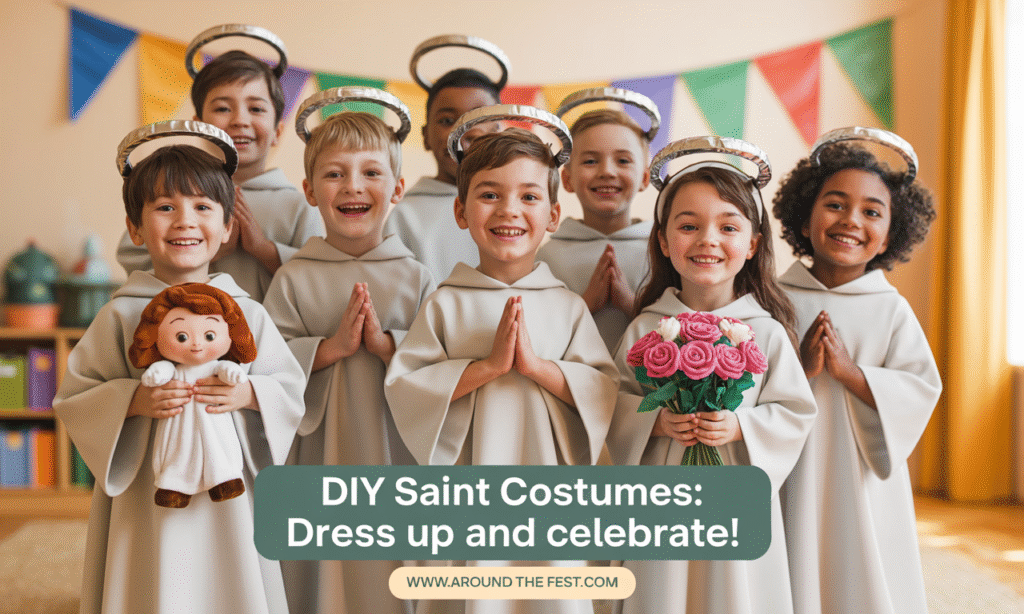
Perfect for school or Sunday school parades.
Supplies: Bedsheets, cardboard, markers, safety pins.
Steps:
- Use a simple bedsheet as a robe or tunic.
- Cut a halo from cardboard, wrap in foil, and attach to a headband.
- Add props (e.g., stuffed animals for St. Francis, roses for St. Therese).
Why It Works: Inexpensive, fun, and lets kids “become” their favorite saint.
5. Printable Prayer Cards
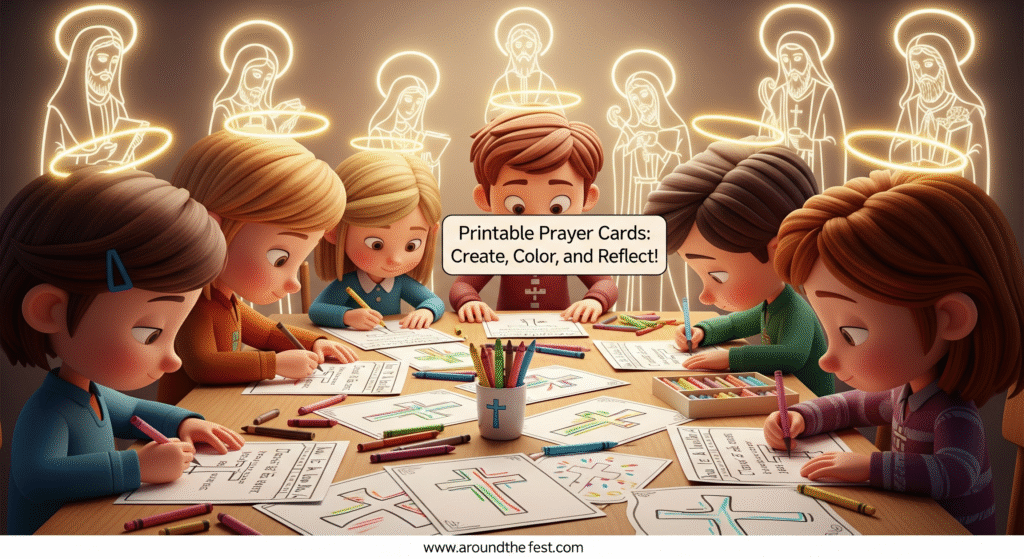 An activity kids can personalize and share.
Supplies: Printable templates, crayons or markers.
Steps:
- Print saint or cross outlines.
- Kids color and decorate.
- Write a short prayer or kind message on the back.
Why It Works: Encourages both creativity and reflection.
With these crafts, families and teachers get practical, ready-to-use activities for All Saints’ Day in 2025. They’re simple enough for younger children but can be adapted for older kids with more detail.
Fun & Engaging Stories for All Saints’ Day With Kids 2025
Stories have always been at the heart of All Saints’ Day. Kids love narratives that spark imagination, and stories of saints are perfect for teaching courage, kindness, and faith in a relatable way. But instead of presenting them as “history lessons,” you can make these tales interactive, age-friendly, and even fun for classrooms or bedtime.
1. Stories for Younger Kids (Ages 4–7)
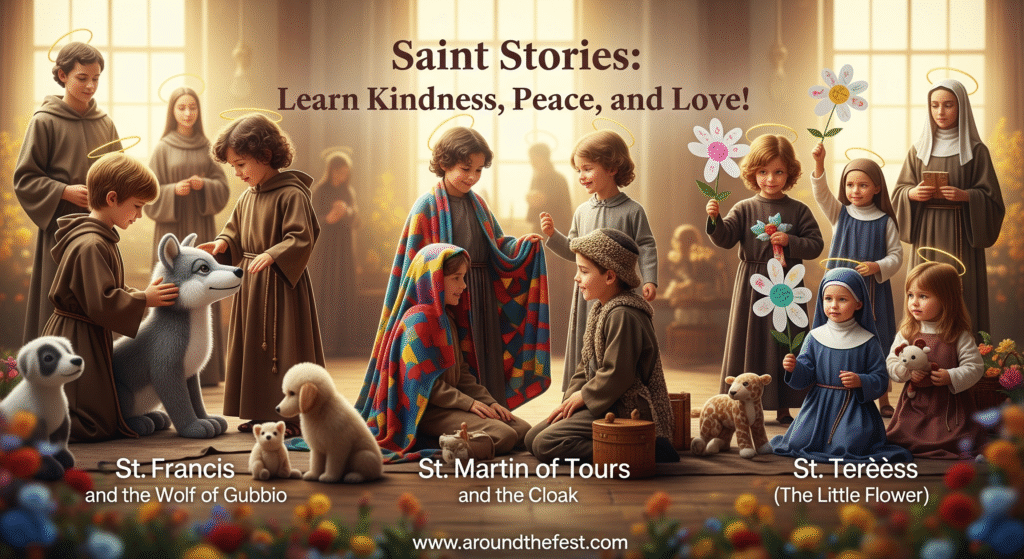
At this age, kids connect best with short, simple tales that highlight virtues through action and imagery.
- St. Francis and the Wolf of Gubbio
Why kids love it: It’s about a brave saint who befriended a scary wolf instead of fighting it. Kids quickly grasp the lesson of peace and kindness.
How to tell it: Use animal plushies or paper puppets to act out the story. - St. Martin of Tours and the Cloak
Why kids love it: Martin shares his warm cloak with a beggar. Simple, visual, and easy to retell.
How to tell it: Let kids use a blanket or colored paper as a “cloak” to act out sharing. - The Little Flower: St. Thérèse of Lisieux
Why kids love it: Thérèse is known for doing small things with great love — easy for kids to copy in their daily lives.
How to tell it: Hand out paper flowers and let kids write/draw one kind act on each.
2. Stories for Older Kids (Ages 8–12)
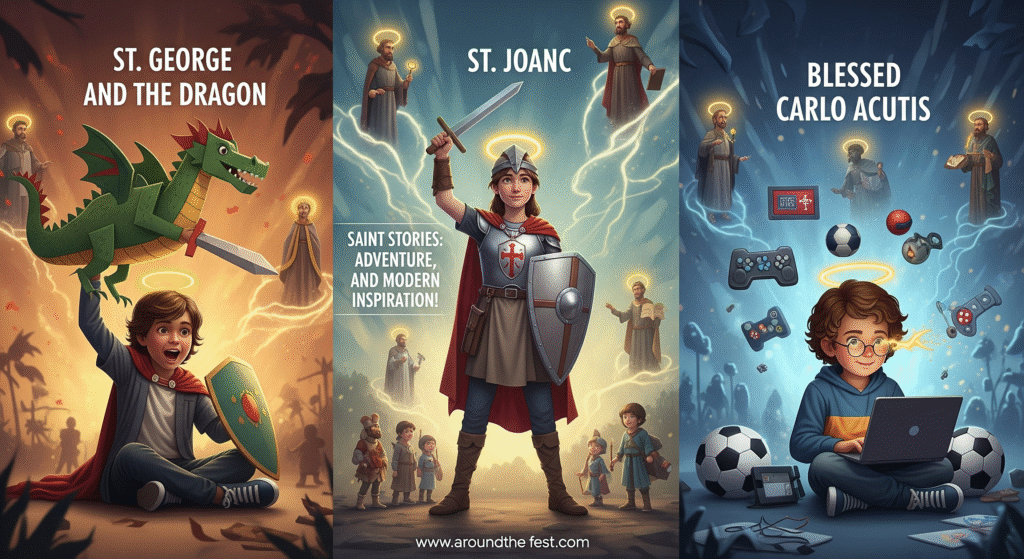
This group can handle more detailed, adventurous stories that mix history with inspiration.
- St. George and the Dragon
Why kids love it: Knights, dragons, bravery — it feels like a fairy tale, but with a moral backbone.
How to tell it: Turn it into a dramatic reading with sound effects or let kids draw the battle scene. - St. Joan of Arc
Why kids love it: A teenager who led armies! Joan shows that even young people can make a difference.
How to tell it: Encourage role-play with simple props like a toy sword or shield. - Blessed Carlo Acutis (2000–2006)
Why kids love it: A modern saint who loved soccer, computers, and Pokémon. He shows that holiness isn’t only for ancient times.
How to tell it: Use slides or a short video about Carlo, then let kids brainstorm ways they can use technology for good.
3. Storytelling Formats That Work in Classrooms & Homes
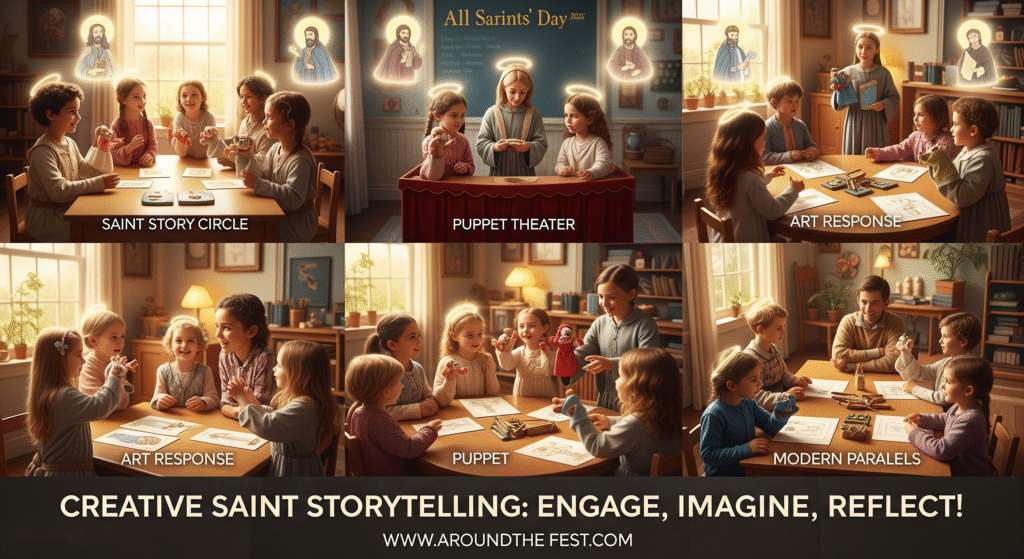
To keep kids engaged, don’t just read the story. Try these creative formats:
Saint Story Circle – Each child shares one sentence of the story, building it together.
Puppet Theater – Perfect for younger kids using sock or paper bag puppets.
Interactive Questions – Pause mid-story: “What do you think happened next?”
Art Response – After the story, let kids draw their favorite scene or character.
Modern Parallels – Link the saint’s act to kids’ daily lives (sharing lunch, helping a friend, caring for pets).
4. Recommended Books for 2025
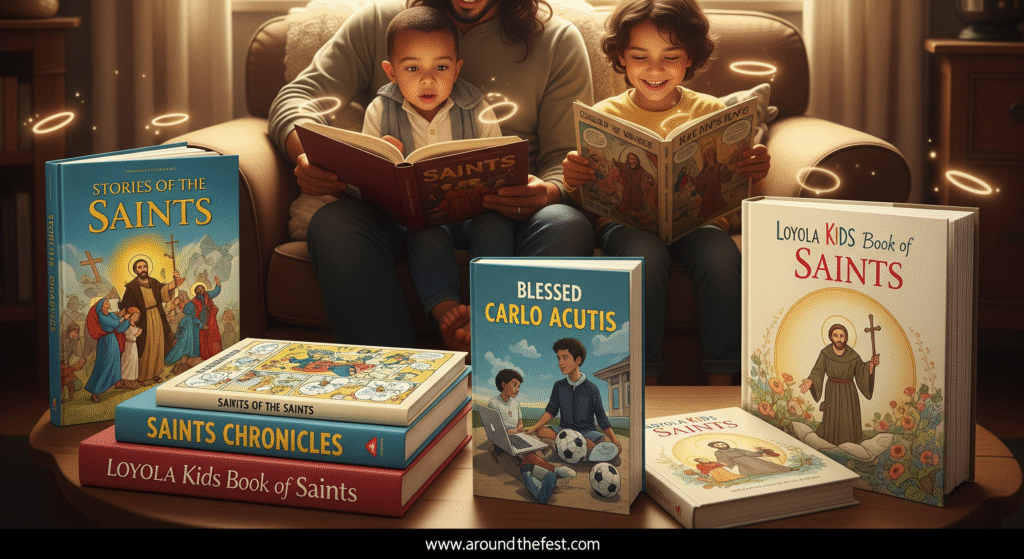
Parents and teachers often search for ready-to-use books. These are well-loved, easy to read aloud, and engaging:
- Loyola Kids Book of Saints by Amy Welborn – Great for ages 6–12.
- Stories of the Saints: Bold and Inspiring Tales by Carey Wallace – Illustrated and adventurous.
- The Saints Chronicles Graphic Novels – Comic-style stories kids love.
- Blessed Carlo Acutis: A Millennial in Paradise – Modern connection for older kids.
Classroom Activities for All Saints’ Day With Kids 2025
Celebrating All Saints’ Day in the classroom goes beyond decorations — it’s about helping kids actively experience the meaning of the day. Whether in a Catholic school, Sunday school, or homeschool co-op, these activities make learning hands-on, collaborative, and fun.
1.Saint-Themed Games for All Saints’ Day With Kids 2025
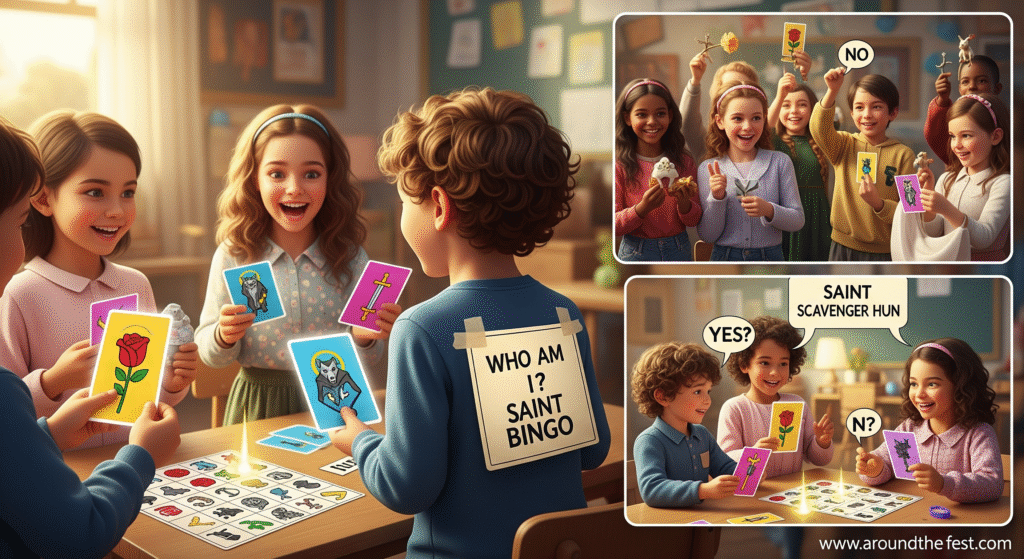
Saint Bingo
- Create bingo cards with saint symbols (e.g., rose = St. Thérèse, wolf = St. Francis, sword = St. George).
- Instead of numbers, call out the saint’s story, and kids mark the matching symbol.
- Why it works: Combines memory, storytelling, and fun competition.
Who Am I? (Guess the Saint)
- Write saint names on cards, tape one on each child’s back.
- Kids ask yes/no questions: “Did I live in the Middle Ages?” “Am I a patron of animals?”
- Why it works: Encourages critical thinking and reinforces saint facts.
Saint Scavenger Hunt
- Hide saint images, holy cards, or symbolic objects around the classroom.
- Each item has a short fact kids must read aloud when they find it.
- Why it works: Gets kids moving, reading, and learning at the same time.
2. All Saints’ Day With Kids 2025 Group Projects
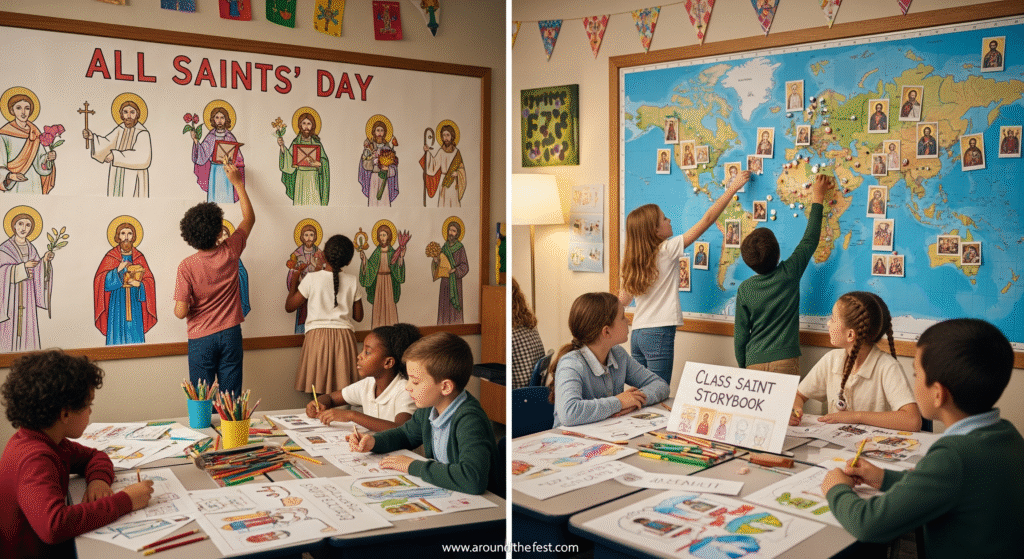
All Saints’ Day Mural
- Split the class into small groups, and have each group draw or craft a saint along with a symbol that represents them.
- Put all the creations together to form a big “Communion of Saints” wall display.
- Why it works: Visual, creative, and emphasizes the idea of unity in the church.
Class Saint Storybook
- Each child writes/draws one saint’s story in a simple format.
- Collect them into a binder as a class keepsake or gift for the parish.
- Why it works: Builds literacy skills while deepening saint knowledge.
Saints Around the World Map
- Post a world map and let students place pins/photos of saints from different countries.
- Why it works: Shows the global diversity of faith and connects history to geography.
3. Quick & Interactive Activities for All Saints’ Day With Kids 2025
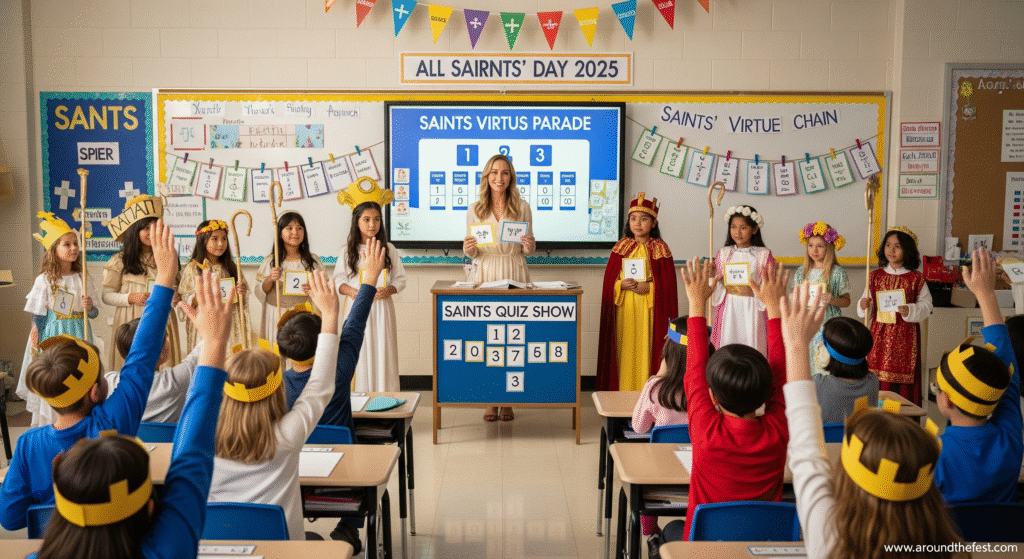
Saint Costume Parade
- Students dress up as their favorite saint (with simple props, no full costumes needed).
- Each child shares one fun fact about their saint.
- Why it works: Boosts confidence and helps kids “step into” a saint’s life.
Saints Quiz Show
- Divide the class into two teams.
- Ask quick trivia: “Which saint tamed a wolf?” “Who was only 15 when canonized?”
- Offer small prizes like stickers or bookmarks.
- Why it works: Reinforces memory in a fun, competitive way.
Saints’ Virtue Chain
- Each child writes one virtue or good deed (inspired by a saint) on a paper strip.
- “Join everyone’s links to build a giant classroom ‘Chain of Holiness’ that shows how we’re all connected.”
- Why it works: Visualizes how small actions connect to something bigger.
4. For Older Students (Grades 6–8)
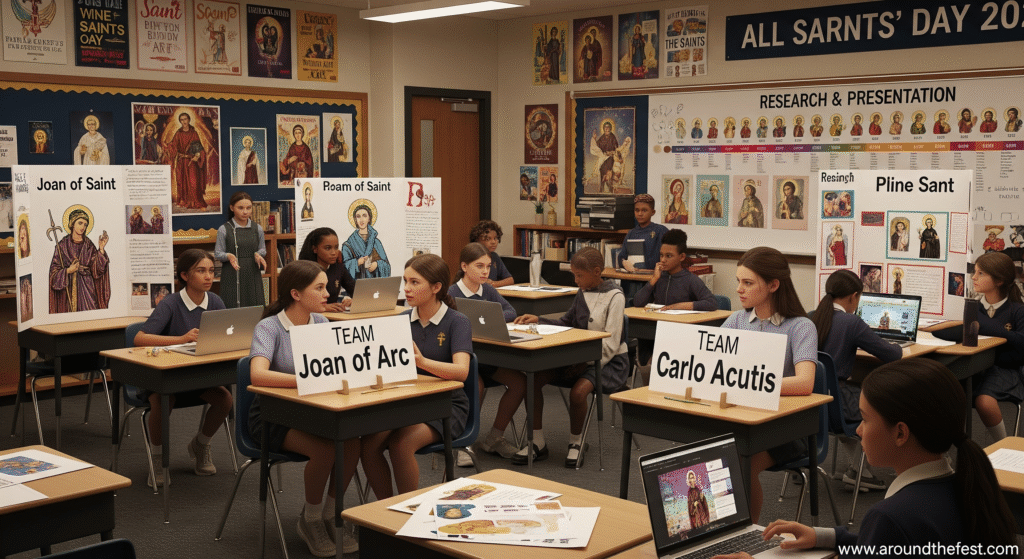
Debate: Ancient vs. Modern Saints
- Assign groups to argue which inspire kids more today: ancient saints like St. Joan of Arc or modern ones like Carlo Acutis.
- Why it works: Critical thinking + relevance to modern life.
Research & Presentation
- Each student creates a short digital or poster presentation about one saint.
- Encourage multimedia (images, videos, timelines).
- Why it works: Builds research and presentation skills while honoring the feast.
5. Why These Activities Work in 2025
They balance fun + faith so kids don’t just “hear” about saints but actually live and share the lessons.
These activities engage different learning styles: visual learners through murals, kinesthetic learners with scavenger hunts, auditory learners via storytelling, and interpersonal learners through group projects.
They are scalable — teachers can adapt them for small groups, large classrooms, or even online learning.
They tie directly into core classroom skills like reading, writing, geography, public speaking, and teamwork — making All Saints’ Day part of holistic education.
You may also read –https://aroundthefest.com/why-canada-and-us-thanksgiving-are-different-explained/
Family & Home Celebrations for All Saints’ Day With Kids 2025
All Saints’ Day isn’t just for church or school—it can also be a beautiful family tradition at home. Kids love when faith becomes part of their everyday life, especially when it’s hands-on, cozy, and filled with shared stories. Here are meaningful yet simple ways families can celebrate All Saints’ Day 2025 at home.
1. Create a “Saints Corner” at Home
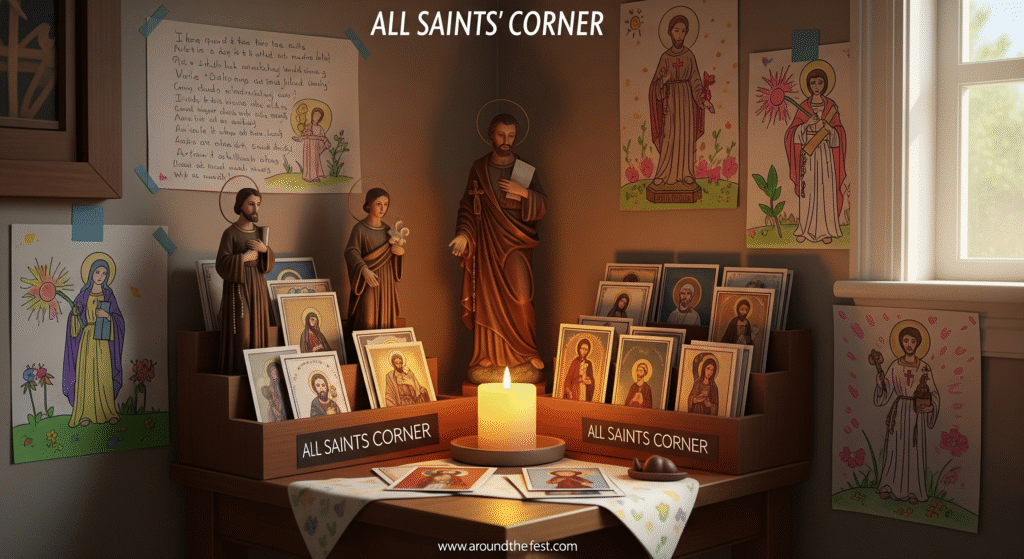
- Set up a small table or shelf with saint statues, holy cards, or printed images.
- Let kids add drawings of their favorite saints or write prayers.
- Add a candle (real or battery-operated) to symbolize the light of faith.
- Why it works: Gives children a daily visual reminder of the day’s meaning.
2. Family Prayer Time with a Twist
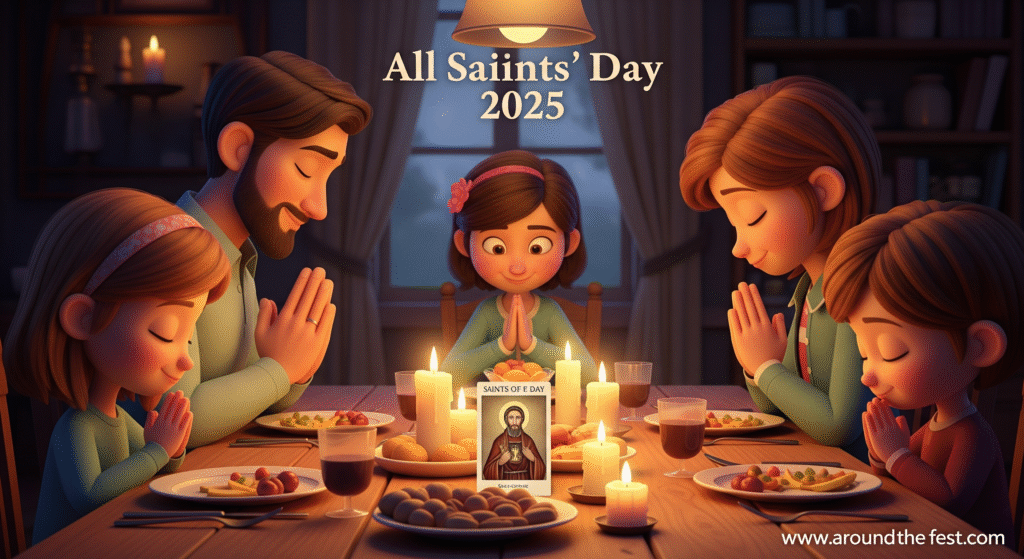
- Choose one saint for the evening meal blessing.
- Share a one-minute story about that saint before grace.
- Invite each child to say what they admire about that saint.
- Why it works: Turns prayer into a conversation, not just a routine.
3. Cooking “Heavenly” Meals Together
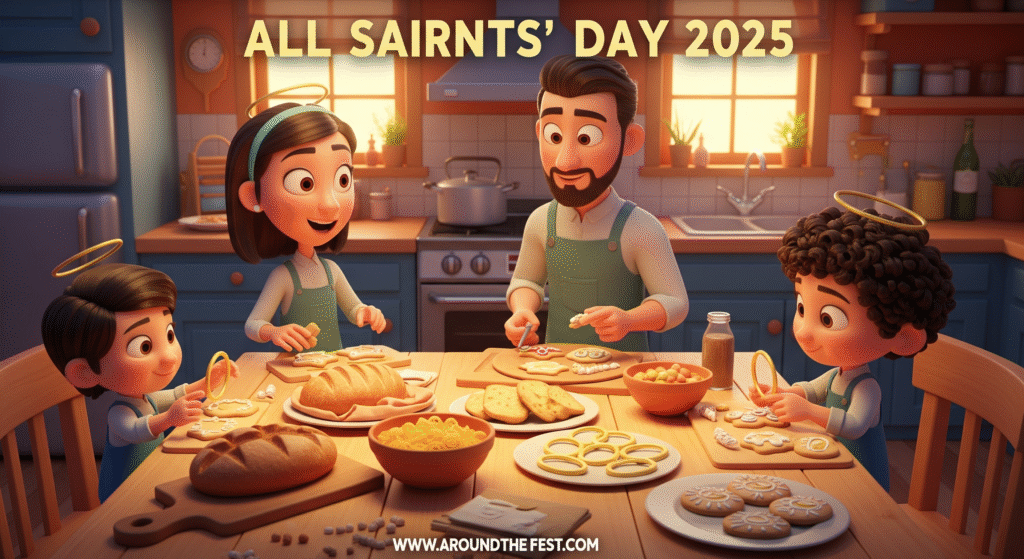
Saint-Inspired Dishes:
- Bake bread to honor St. Elizabeth of Hungary, who was known for sharing food with those in need.
- Make Italian pasta for St. Francis of Assisi.
- Try “halo” sugar cookies or angel-shaped pancakes.
- Why it works: Kids remember food traditions and connect them with stories.
4. Dress-Up & Family Skits
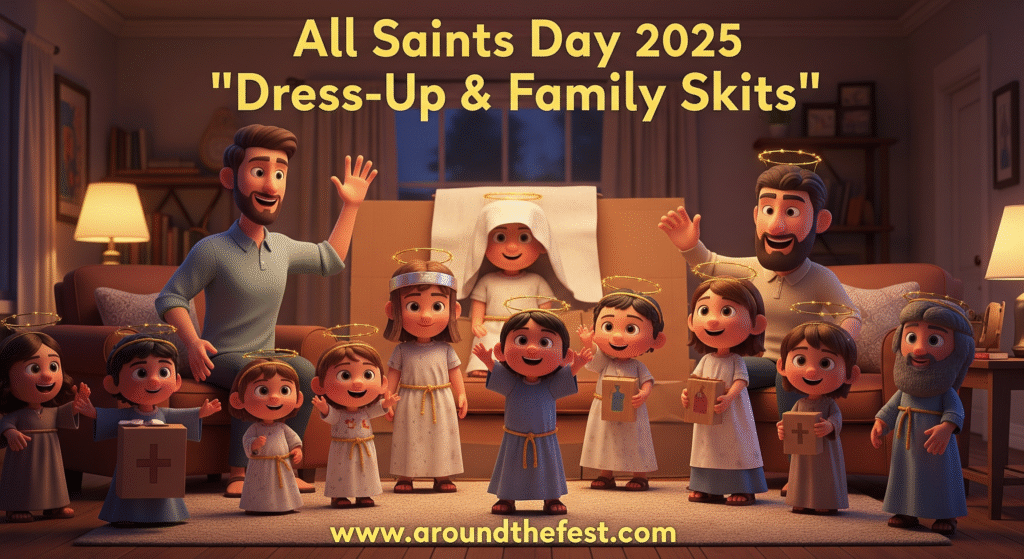
- Activity: Let kids choose a saint, build a costume from simple household items (sheets as robes, foil halos, cardboard shields), and act out a short saint story.
- Family Twist: Parents can join in too—kids love when mom or dad becomes part of the “saint play.”
- Why it Works: Builds storytelling skills, sparks creativity, and creates lasting family memories.
5. Storytime Before Bed
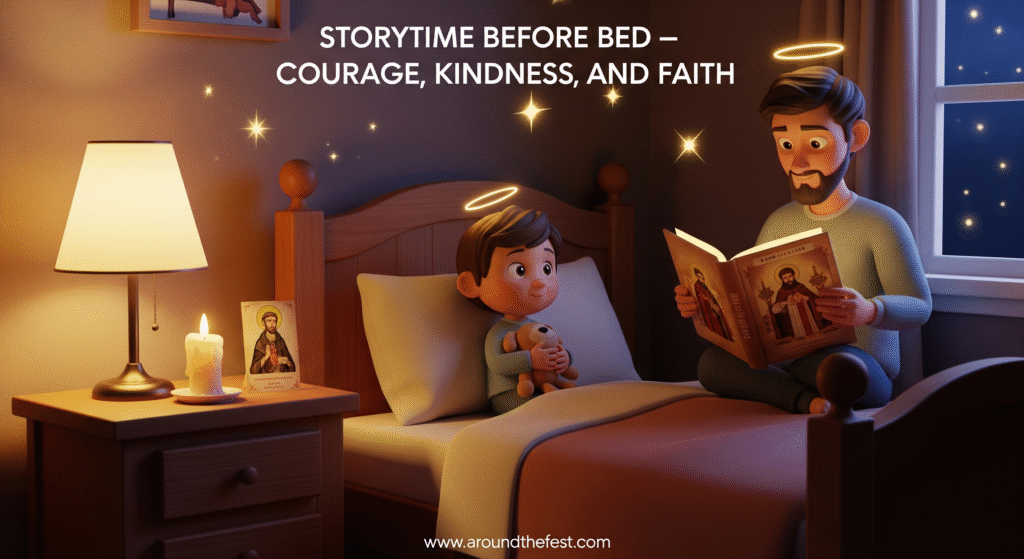
- Activity: Read short saint biographies or illustrated saint books together as bedtime stories.
- Modern Twist: Use “saint of the day” apps or kid-friendly podcasts for fresh content each night.
- For Younger Kids: Tell simplified saint stories in a fairy-tale style, using gentle language and plenty of imagery.
- Why it Works: Helps kids wind down peacefully while learning values of courage, kindness, and faith.
6. Acts of Kindness Challenge
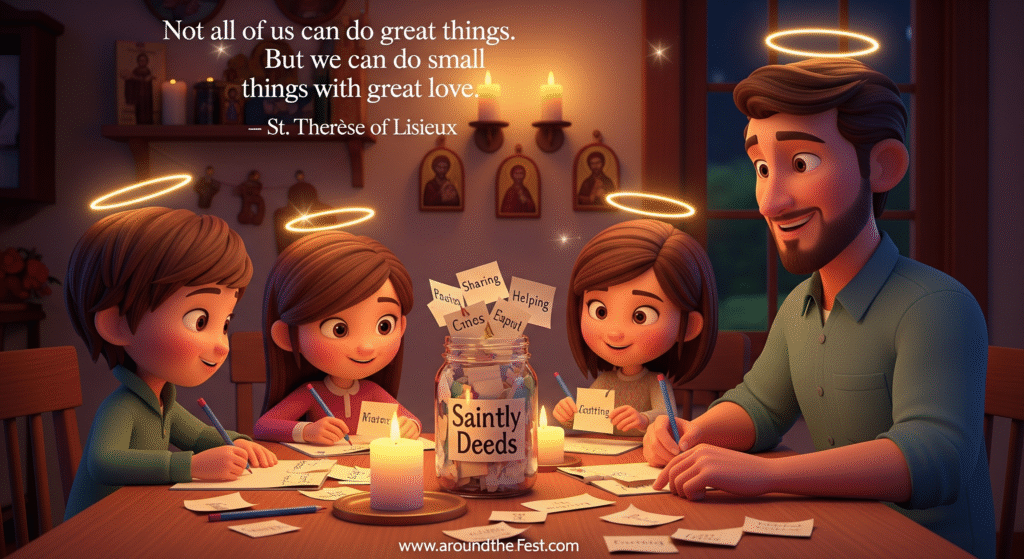
Activity: Create a family “saintly deeds jar.”
How it Works: Each family member writes down one kind act they practiced during the week—helping a sibling, sharing a toy, or comforting a friend.
On All Saints’ Day: Gather together and share these deeds as a family. Celebrate the small, everyday choices that make a big difference.
Why it Works: Encourages kids to live like saints in daily life, not just read about them.
Quote to Share with Kids:
“Not all of us can do great things. But we can do small things with great love.” – St. Thérèse of Lisieux
7. Family Pilgrimage or Visit
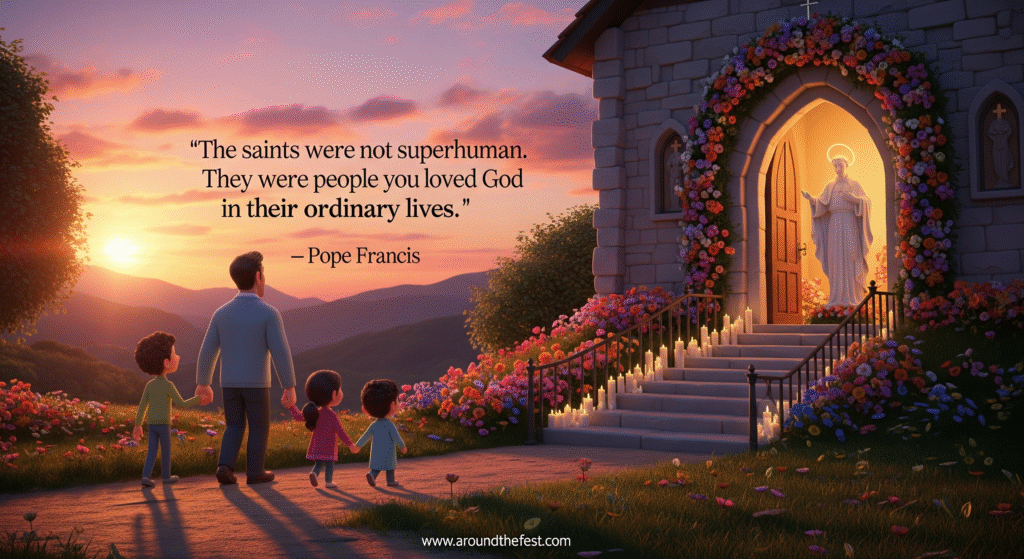
Activity: Take your family to a nearby church, cathedral, or cemetery to spend time in prayer and reflection.
How it Works: Bring flowers or candles to place at a saint’s statue, altar, or loved one’s resting place. Say a short prayer together as a family.
Why it Works: Adds a real-world, tangible connection to faith traditions and shows kids that honoring saints and ancestors can be a lived experience, not just something read in books.
Quote to Share with Kids:
“The saints were not superhuman. They were people who loved God in their ordinary lives.” – Pope Francis
Why Families Love These Celebrations in 2025
Low-cost & doable → Most ideas use things you already have at home.
Flexible for ages → Toddlers can color while teens lead prayers.
Balances fun + faith → Kids enjoy activities while parents pass on tradition.
Creates lifelong memories → Traditions become something children look forward to each November.
Crafts & DIY Projects for All Saints’ Day With Kids 2025
Kids love crafts because they get to touch, create, and proudly display their work. Parents and teachers love them because they make learning about faith fun and memorable. Here’s a list of step-by-step DIY crafts that are budget-friendly, engaging, and packed with meaning for All Saints’ Day 2025.
1. Cloud & Halo Mobile

Materials: Hanger, string, cotton balls, yellow paper circles.
Steps:
- Cover hanger with cotton balls to look like clouds.
- Hang paper halos from strings beneath the “cloud.”
- Add saint names or virtues (like kindness, bravery).
Tip: Hang in classrooms or kids’ rooms as a festive decoration.
2. Saint Bookmark Workshop
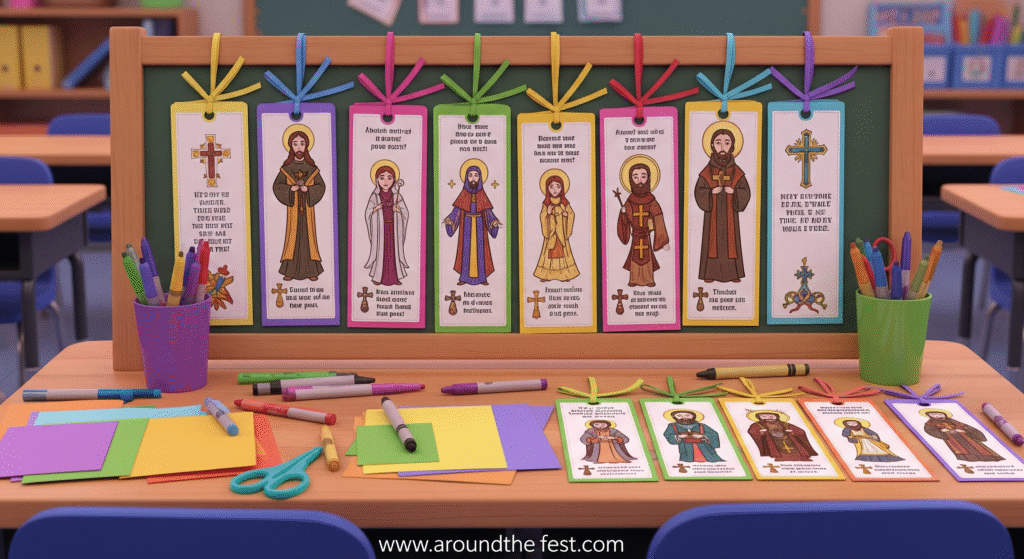
Materials: Cardstock, ribbons, markers.
Steps:
- Cut bookmarks from cardstock.
- Decorate with saint drawings or quotes.
- Punch a hole and add ribbon.
Tip: Encourage kids to use them in their prayer books or storybooks.
3. Angel Wings Photo Booth
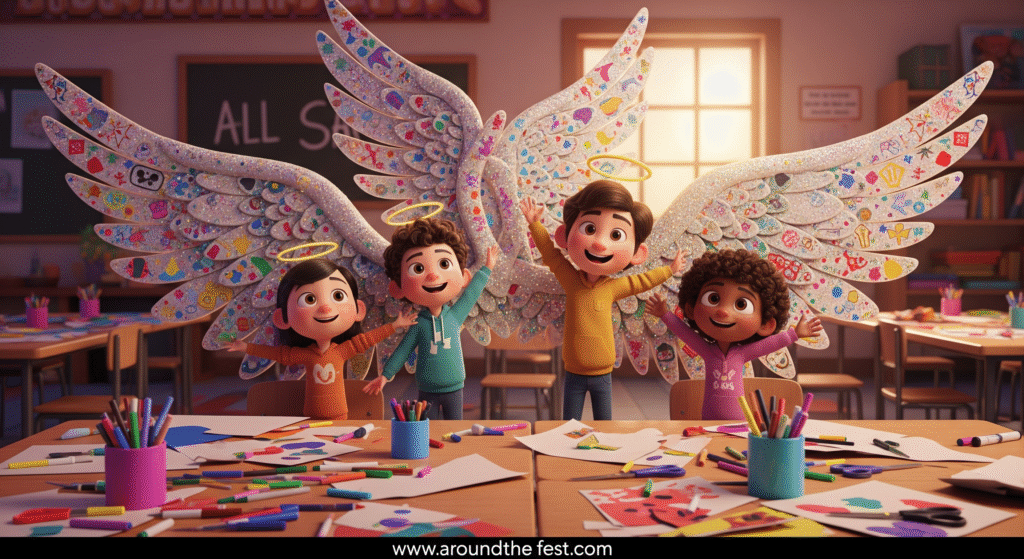
Materials: Poster board, scissors, markers, glitter.
Steps:
- Cut large angel wings and decorate.
- Tape to a wall at child height.
- Kids stand in front for “heavenly” photos.
Tip: Great for parish or school events—parents love sharing the photos.
Why These Crafts Work for 2025
Budget-friendly → Most supplies are basic school or art items.
Inclusive → Crafts fit preschoolers to middle-schoolers.
Interactive → Kids can play with the crafts, not just look at them.
Memorable → Each project ties creativity to the meaning of All Saints’ Day.
Games & Interactive Activities for All Saints’ Day With Kids 2025
Kids absorb lessons faster when they’re having fun. These interactive games for All Saints’ Day 2025 are perfect for classrooms, church groups, or family celebrations. They mix faith, fun, and teamwork.
1. Saint Bingo
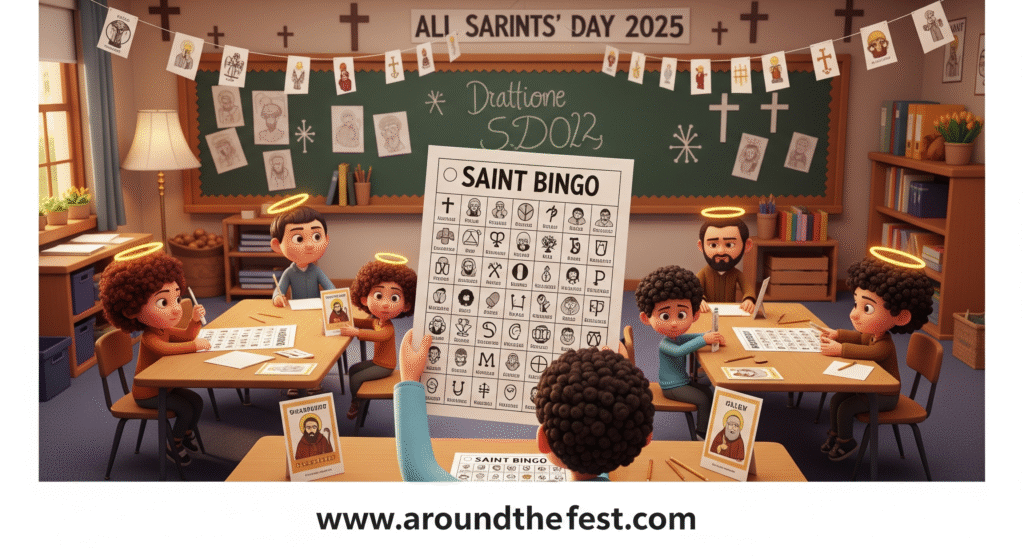
- Create bingo cards with saint names, symbols, or feast days.
- Call out clues like “Patron of animals” (St. Francis) or “Feast Day on November 1.”
- First to complete a row shouts “Holy!” instead of “Bingo.”
2. “Guess the Saint” Charades
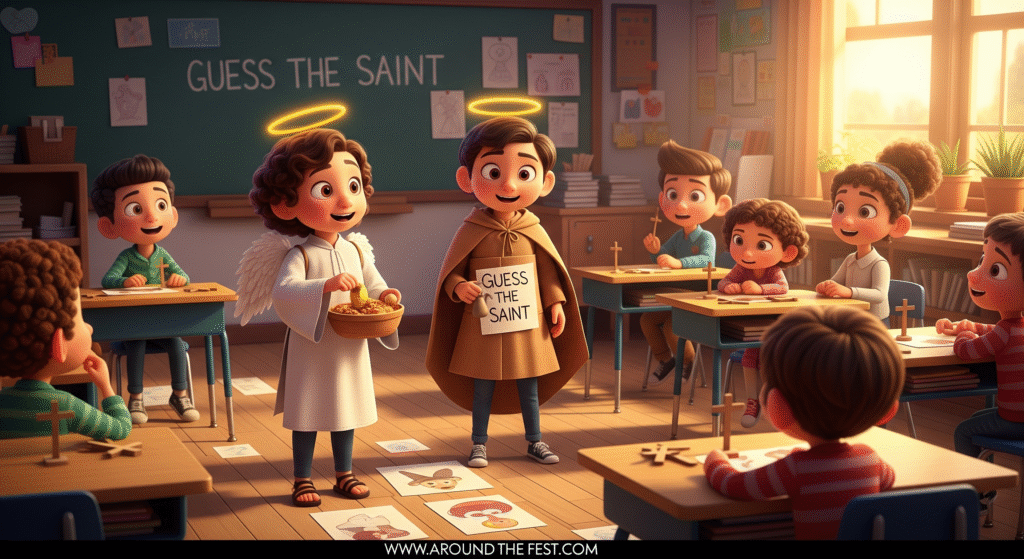
- One child acts out clues about a saint (feeding animals, wearing armor, praying).
- The group guesses which saint it is.
- Variation: Use simple props like halos, cloaks, or a cross.
3. Saint Relay Race
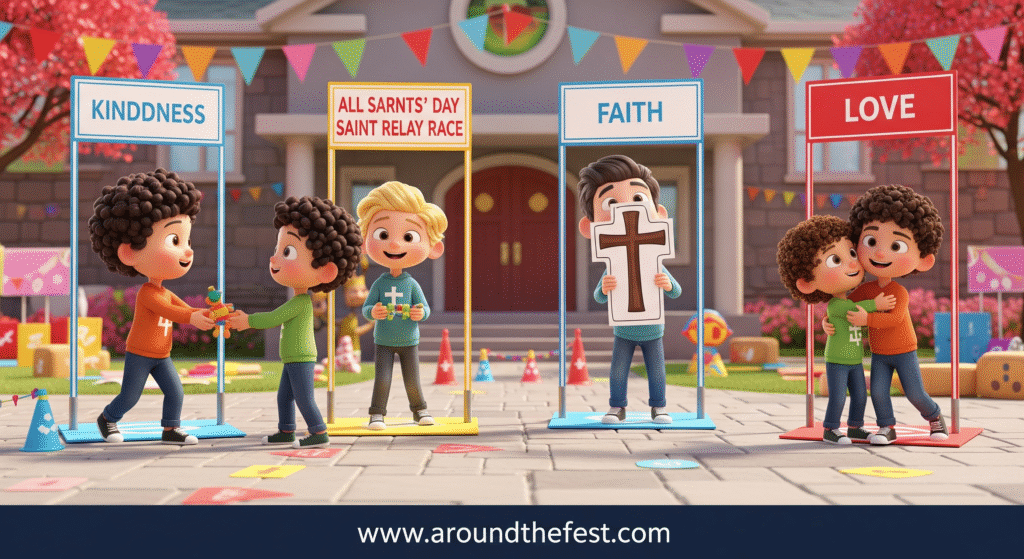
- Set up stations where kids complete quick challenges related to virtues:
- Share a toy (kindness).
- Carry a cross cut-out (faith).
- Give a hug (love).
- Each team “runs the race of saints” to the finish line.
4. All Saints’ Day Scavenger Hunt
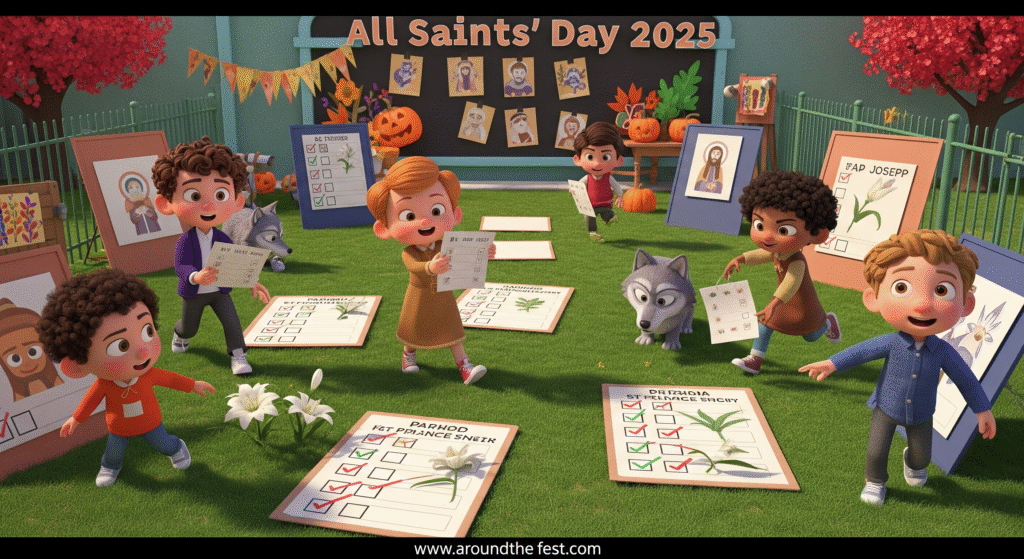
- Hide saint symbols or pictures around the classroom/yard.
- Give kids a checklist (e.g., lily = St. Joseph, wolf = St. Francis).
- Kids race to find and match the items.
5. “Who Am I?” Saint Game
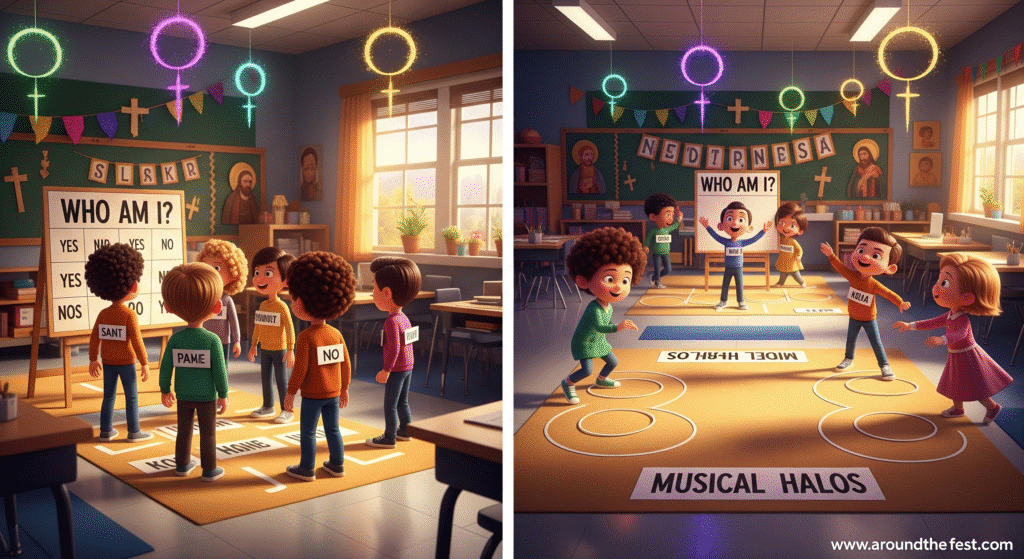
- Tape a saint’s name to each child’s back.
- They ask yes/no questions: “Am I a man?” “Did I live in France?”
- First to guess their saint wins a small prize.
- 6. Musical Halos (Twist on Musical Chairs)
- Place paper halos on the floor like chairs.
- Play music; when it stops, kids stand on a halo.
- Remove one halo each round until one “saint” remains.
7. Virtue Ball Toss
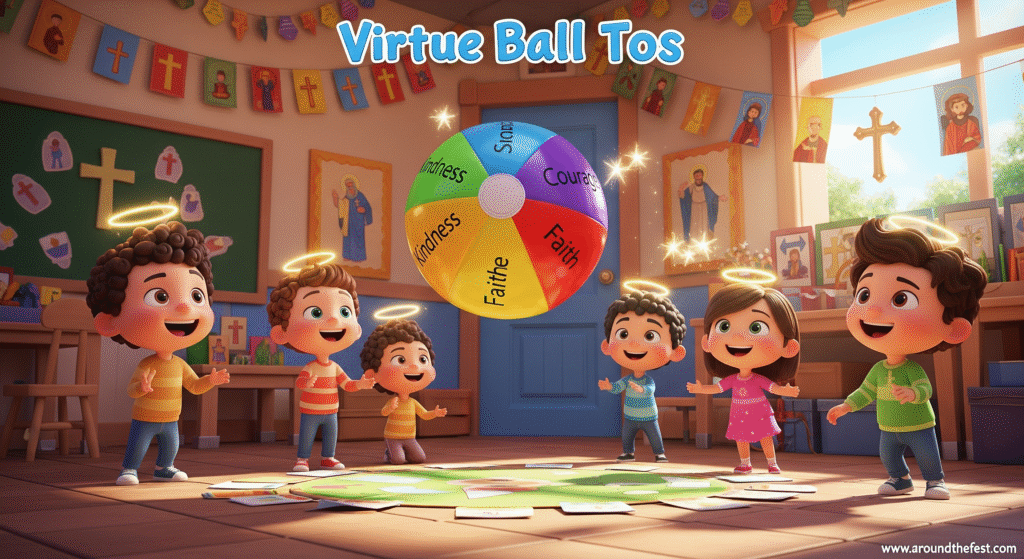
- Use a beach ball with virtues written on each section (kindness, courage, faith).
- Kids toss the ball; wherever their hand lands, they share an example of practicing that virtue.
8. Angel vs. Saint Tag
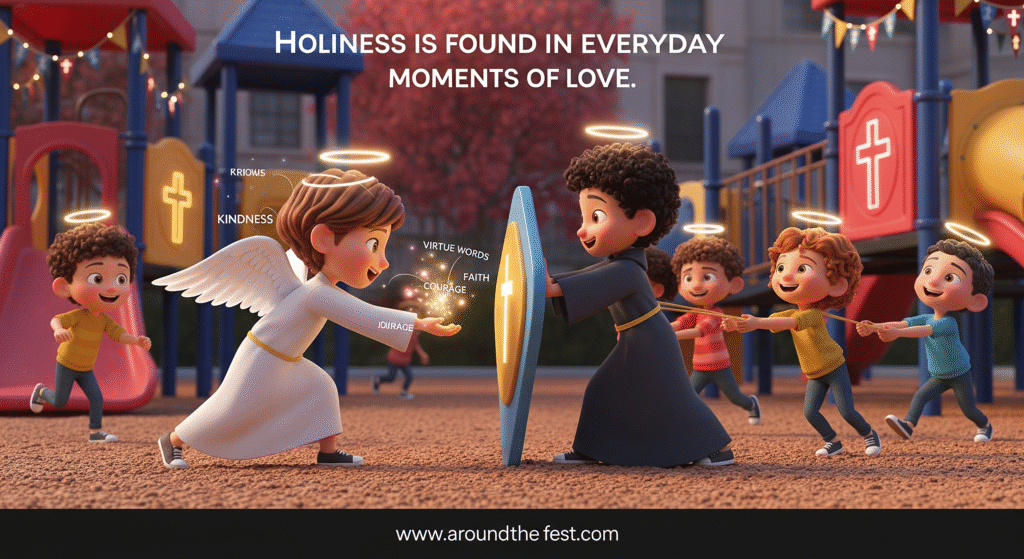
- One child is the “angel” who rescues tagged kids by giving them a virtue word.
- The “saint” tries to protect others by holding hands in a chain.
- A playful way to mix energy with faith themes.
Why These Games Work for All Saints’ Day with Kids in 2025
Inclusive: Adaptable for preschool, elementary, or middle school.
Physical + mental: Combines movement with learning.
Food & Treat Ideas for All Saints’ Day With Kids 2025
Sharing food has always been a big part of celebrations, and All Saints’ Day 2025 is no exception. For kids, themed snacks and simple treats can help connect faith with fun. Here are some easy, creative, and symbolic food ideas.
1. Halo Donuts
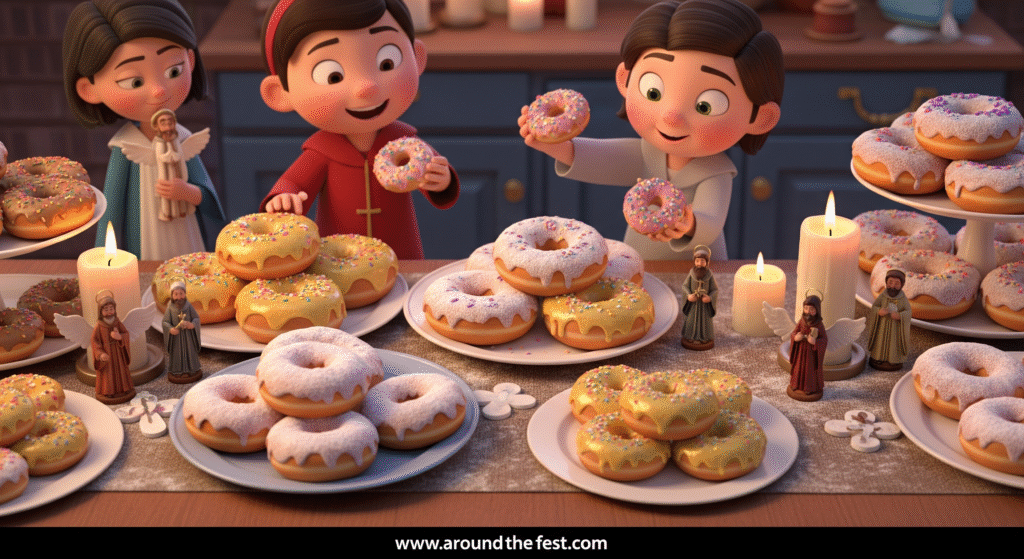
Materials/Ingredients: Plain donuts (or bagels), powdered sugar or golden icing, sprinkles.
Steps:
- Use plain donuts or bagels as the “halo” base.
- Dust with powdered sugar or glaze with golden icing.
- Let kids decorate with sprinkles for a festive touch.
Symbolism: The circular shape represents the halo of holiness around the saints.
Quote to Share with Kids:
“Holiness consists simply in doing God’s will, and being just what God wants us to be.” – St. Thérèse of Lisieux
2. “Cloud of Witnesses” Marshmallow Cups
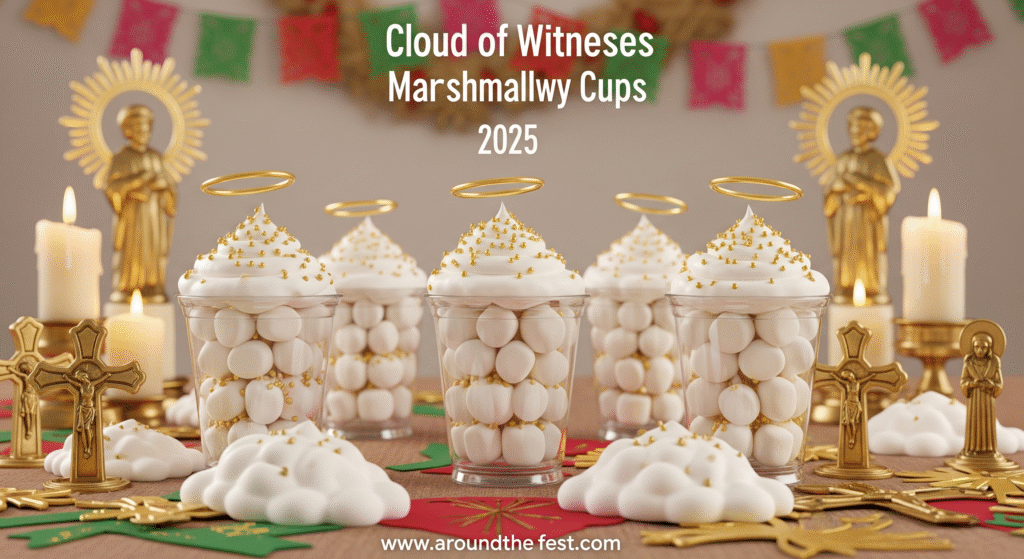
Materials/Ingredients: Whipped cream, mini marshmallows, gold sprinkles, clear cups.
Steps:
- Fill cups with layers of whipped cream and marshmallows to look fluffy like clouds.
- Sprinkle a few gold sprinkles on top as a heavenly touch.
- Serve as a light, faith-inspired treat for All Saints’ Day.
Symbolism: Represents the “great cloud of witnesses” mentioned in Hebrews 12:1, reminding kids of the saints who inspire us.
Quote to Share with Kids:
“Since we are surrounded by so great a cloud of witnesses… let us run with perseverance the race set before us.” – Hebrews 12:1
3. Saint Medal Cookies
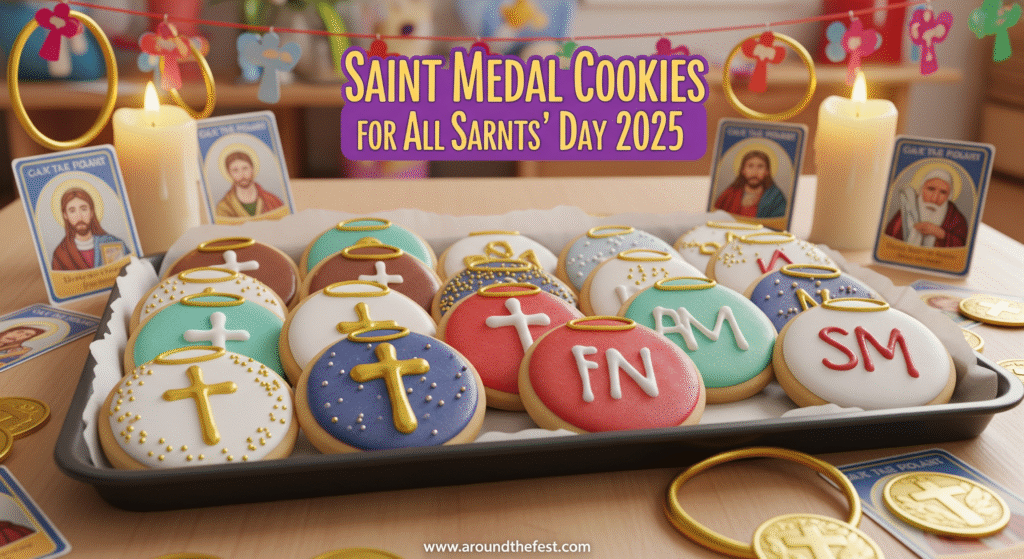
Materials/Ingredients: Sugar cookie dough, circular cookie cutters, icing (white, gold, colored), sprinkles.
Steps:
- Bake cookies using circular cutters to resemble saint medals.
- Decorate with simple symbols: crosses, halos, or saint initials.
- For classrooms: assign each cookie to a saint—kids “discover” their saint by receiving and learning about the cookie.
Symbolism: Just like medals remind us of the saints, these cookies make the celebration sweet and memorable.
Quote to Share with Kids:
“Be who God meant you to be, and you will set the world on fire.” – St. Catherine of Siena
4. Angel Wing Sandwiches
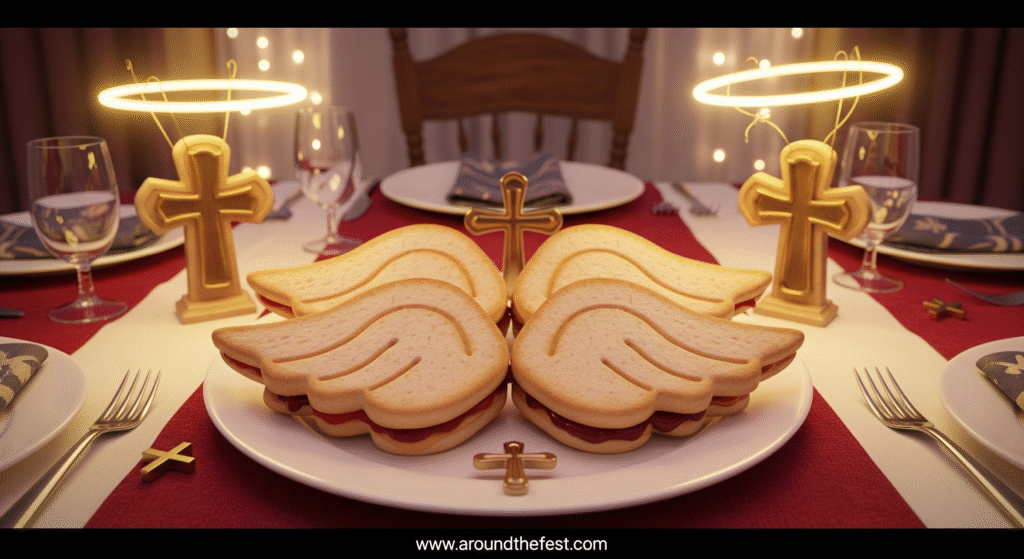
Materials/Ingredients: Bread, cookie cutter (wing shape), spreads like peanut butter, Nutella, or jam.
Steps:
- Use a wing-shaped cookie cutter to cut sandwiches.
- Fill with simple spreads your kids love.
- Arrange two halves together on a plate to form “angel wings.”
Symbolism: Represents the protection and guidance of angels watching over us.
Quote to Share with Kids:
“For He will command His angels concerning you to guard you in all your ways.” – Psalm 91:11
5. Fruit & Virtue Skewers
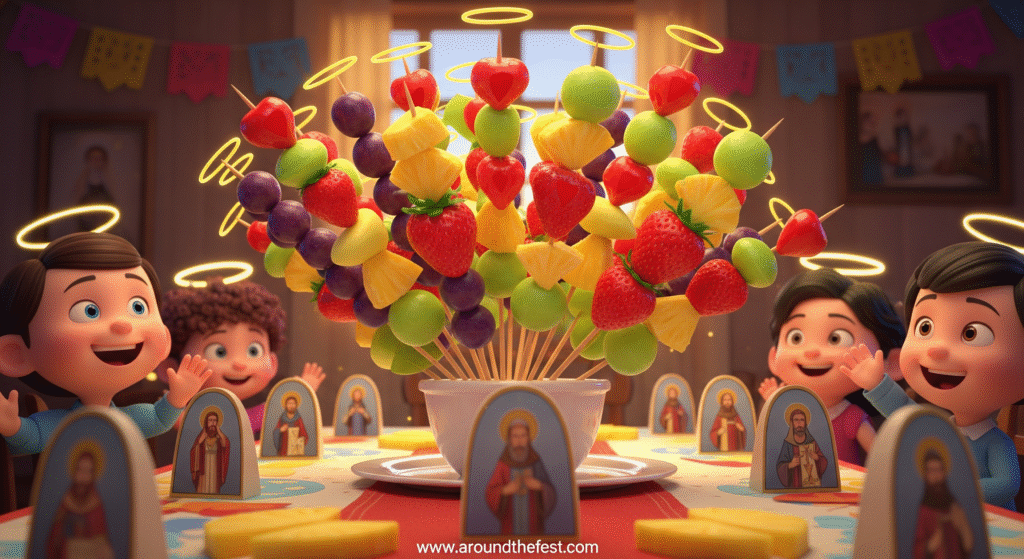
Materials/Ingredients: Grapes, strawberries, pineapple chunks, melon balls, skewers.
Steps:
Thread fruits onto skewers in colorful patterns.
Assign virtues to colors:
❤️ Red = Love
💚 Green = Faith
💛 Yellow = Joy
💜 Purple = Courage
As kids eat, they call out the virtue of the fruit’s color.
Why it Works: Turns snack time into a faith-filled lesson on virtues while keeping it fun and healthy.
Quote to Share with Kids:
“The fruit of the Spirit is love, joy, peace, patience, kindness, goodness, faithfulness.” – Galatians 5:22
6. Saint Cupcake Parade
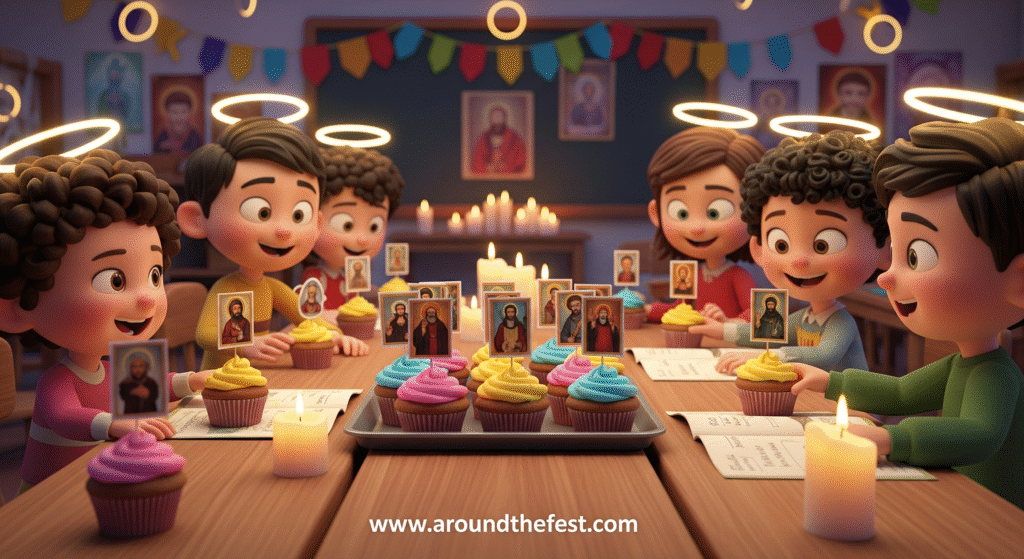
Materials/Ingredients: Cupcakes (any flavor), printable saint images, toothpicks, glue/tape.
Steps:
- Bake or buy cupcakes.
- Print small saint images, cut, and tape to toothpicks.
- Stick the saint toppers into each cupcake.
- Each child “adopts” their saint cupcake and learns one fact before eating.
Why it Works: Combines a tasty treat with faith learning—kids connect sweets with saintly fun.
Quote to Share with Kids:
“Be who God meant you to be and you will set the world on fire.” – St. Catherine of Siena
7. Heavenly Trail Mix
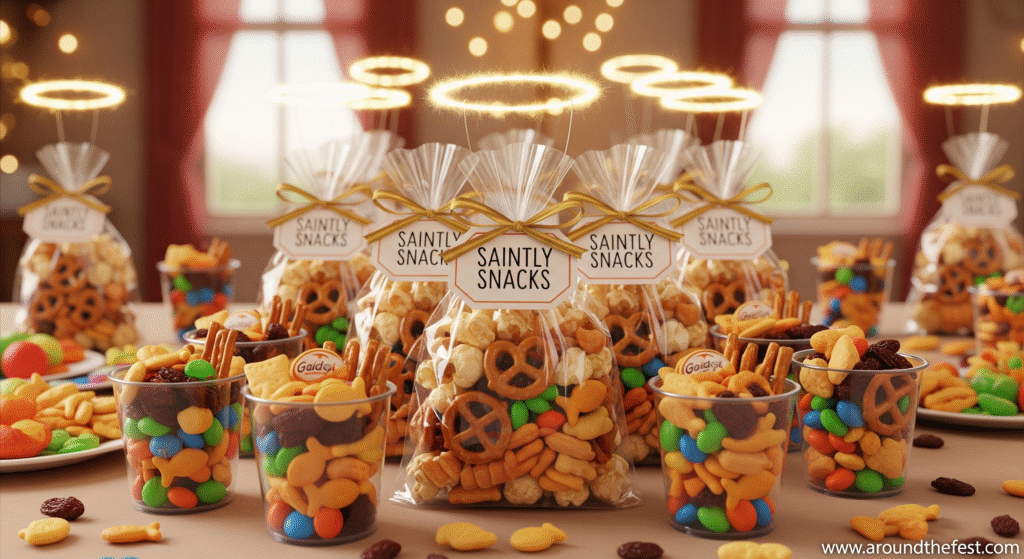
Create a fun and faith-filled snack that kids and adults will love!
How to Make:
- Combine popcorn, pretzels, Goldfish crackers, raisins, and M&Ms.
- Portion into small clear bags or cups.
- Add a simple label like “Saintly Snacks” and tie with ribbon for a festive touch.
- Perfect For:
Classroom celebrations
Parish gatherings
Family movie nights on All Saints’ Day
This quick, no-bake treat is budget-friendly, colorful, and easy to prepare in large batches—making it a go-to option for parties and church events.
8. Eucharist-Inspired Treats (Kid-Friendly)
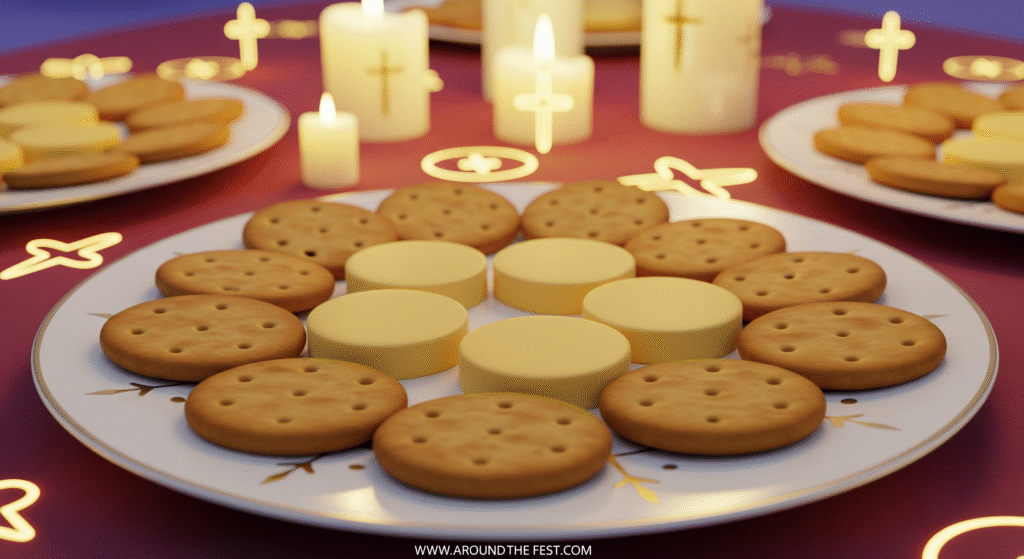
- Use round crackers with cheese slices to remind children of Communion bread.
- Explain the symbolism in a gentle, age-appropriate way.
Why These Treats Work for All Saints’ Day with Kids in 2025
Simple & affordable: All recipes use everyday ingredients.
Interactive: Kids decorate, build, or connect the food to virtues.
Symbolic: Snacks tie directly into saints, halos, and scripture
Bonus Resources: Storytelling Tools for All Saints’ Day With Kids 2025
If you want to go beyond simply reading stories with kids, these ready-to-use tools and ideas will make All Saints’ Day 2025 even more interactive and memorable:
1. Printable Worksheets for All Saints’ Day With Kids 2025
- Saint Story Map – Fill in: Who was the saint? What did they do? What can I learn?
- Comic Strip Template – Kids illustrate their favorite saint story in comic panels.
- Virtue Tracker – A simple checklist where kids note acts of kindness, courage, or generosity they practice during the week.
2. Audio & Video Storytelling Ideas for All Saints’ Day With Kids 2025
- Explore safe YouTube channels or podcasts that narrate saint stories in kid-friendly ways.
- Record your own “family audiobook” of saint tales kids can listen to at bedtime.
- Use simple slideshows or animations (Canva/PowerPoint) to pair visuals with storytelling.
3. Role-Play Mini Scripts for All Saints’ Day With Kids 2025
Turn stories into 2–3 minute plays for classrooms:
- St. Martin and the Cloak: Martin + beggar.
- St. Francis and the Wolf: Narrator, Francis, Wolf.
- St. Joan of Arc: Joan + soldiers.
4. Reflection Questions for All Saints’ Day With Kids 2025
After each story, spark deeper thought with questions like:
- “What would you have done if you met the hungry beggar?”
- “How can you be a peacemaker like St. Francis at school?”
- “Why do you think God chose Joan, even though she was young?”
5. Storytelling Challenge for All Saints’ Day With Kids 2025
Encourage kids to:
- Pick a saint story.
- Retell it creatively — through art, puppetry, video, or writing.
- Share their work with classmates, family, or parish groups.
A great way to keep the celebration going beyond the classroom!
FAQs About All Saints’ Day With Kids 2025
Q1. What is All Saints’ Day and why is it celebrated with kids?
Ans. All Saints’ Day, celebrated on November 1, 2025, honors all saints — known and unknown — who lived lives of faith and virtue. Celebrating with kids helps them learn about role models, values like kindness and courage, and the meaning of holiness in a way that’s relatable and fun.
Q2. Is All Saints’ Day 2025 a holiday for schools and families?
Ans. In most countries, including the U.S., All Saints’ Day 2025 is not a public holiday. However, Catholic schools, parishes, and families often hold special Masses, activities, or classroom events to mark the day.
Q3. How can I explain All Saints’ Day to young children?
Ans. Keep it simple: say that it’s a day to remember people who loved God and helped others. Use picture books, short stories about saints, or role-playing games to help younger children understand.
Q4. What are some easy classroom activities for All Saints’ Day 2025?
Ans. Popular classroom ideas include:
- Saint Bingo
- “Guess the Saint” charades
- Prayer chain crafts
- Saint trading cards
- Storytime with age-appropriate saint tales
Q5. What food can I serve for All Saints’ Day with kids?
Ans. Kid-friendly options include halo donuts, marshmallow “cloud” cups, saint medal cookies, and fruit skewers tied to virtues. The symbolism makes food more than just snacks — it becomes part of the teaching moment.
Q6. Do kids dress up for All Saints’ Day 2025?
Ans. Yes, in many Catholic schools and churches, kids dress up as their favorite saints. This activity helps them learn about the saint’s story and virtues, and makes the celebration joyful and interactive.
Q7. How is All Saints’ Day different from All Souls’ Day?
Ans. All Saints’ Day (Nov 1) = Honors all saints in heaven.
All Souls’ Day (Nov 2) = Prays for all souls who have died and are in purgatory.
Q8. Can non-Catholic families celebrate All Saints’ Day with kids?
Ans. Absolutely. Even if you’re not Catholic, teaching kids about kindness, courage, and role models from history can be meaningful. The crafts, games, and food ideas can be enjoyed by any family looking for positive, faith-based activities.
Conclusion: Making All Saints’ Day With Kids 2025 Memorable for Kids
Celebrating All Saints’ Day with kids in 2025 is about more than just a church tradition — it’s about passing on values of kindness, courage, and faith in ways children can truly understand. From storytelling and crafts to games, food, and classroom activities, there are endless opportunities to make this day joyful, meaningful, and hands-on.
By mixing fun (bingo, crafts, halo donuts) with learning (stories, virtues, saint role models), you’ll help kids remember that All Saints’ Day isn’t just a date on the calendar — it’s a celebration of everyday heroes who inspire us to live with love and faith.
So whether you’re a parent planning a family activity, a teacher leading a classroom, or a parish volunteer organizing an event, these ideas will help you create a celebration that kids won’t just enjoy — they’ll carry the lessons with them all year long.
Takeaway Tip: Kids learn best through play and creativity. The more you connect the saints’ stories to real-life actions (sharing, kindness, courage), the more meaningful All Saints’ Day 2025 will be for them.