Why Makar Sankranti Is Celebrated: Meaning, History ,Significance
Why Makar Sankranti Is Celebrated Across India
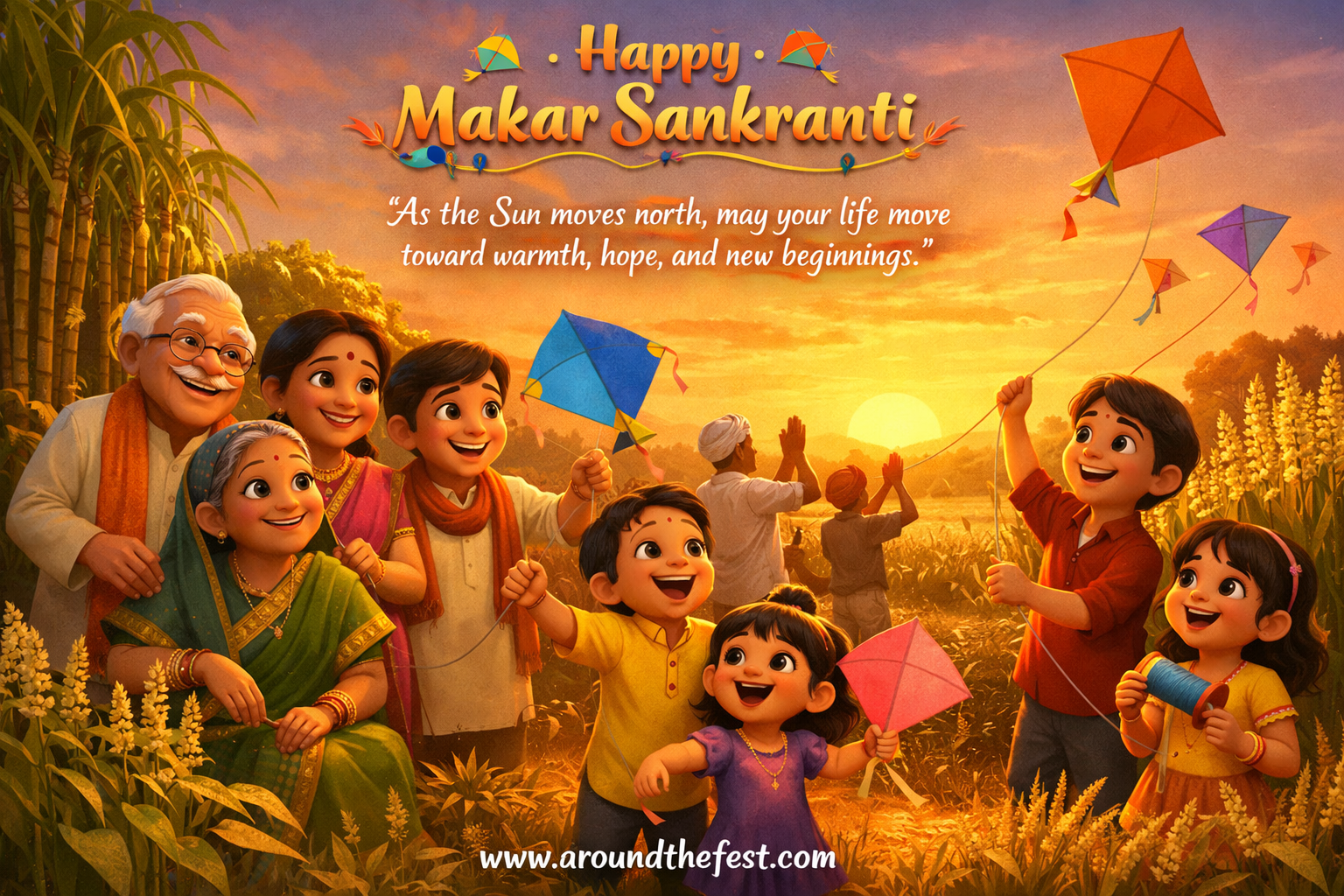
Why Makar Sankranti is celebrated is closely linked to astronomy, seasonal change, and ancient Indian knowledge. Unlike many Hindu festivals that follow the lunar calendar, Makar Sankranti is based on the solar calendar. Because of this, it falls on a nearly fixed date every year, usually January 14. This solar alignment is a key reason the festival holds lasting importance.
Makar Sankranti marks the day when the Sun enters Makara Rashi (Capricorn). This movement begins the Sun’s northward journey, known as Uttarayan. Traditionally, this transition signals the end of harsh winter conditions. It also marks the start of longer days and warmer temperatures. For centuries, people have viewed this shift as a symbol of progress, renewal, and positive energy.
Across India, the festival is known by names such as Pongal, Uttarayan, and Magh Bihu. Despite regional differences, the reason why Makar Sankranti is celebrated remains the same. It expresses gratitude to the Sun, respects agricultural cycles, and welcomes new beginnings. Even in 2025 and 2026, the festival remains relevant by connecting science, culture, and tradition.
What Is Makar Sankranti? Meaning Explained in Simple Words
Before diving deeper into why Makar Sankranti is celebrated, let’s first understand what the name actually means. Once you break it down, it’s much simpler than it sounds.
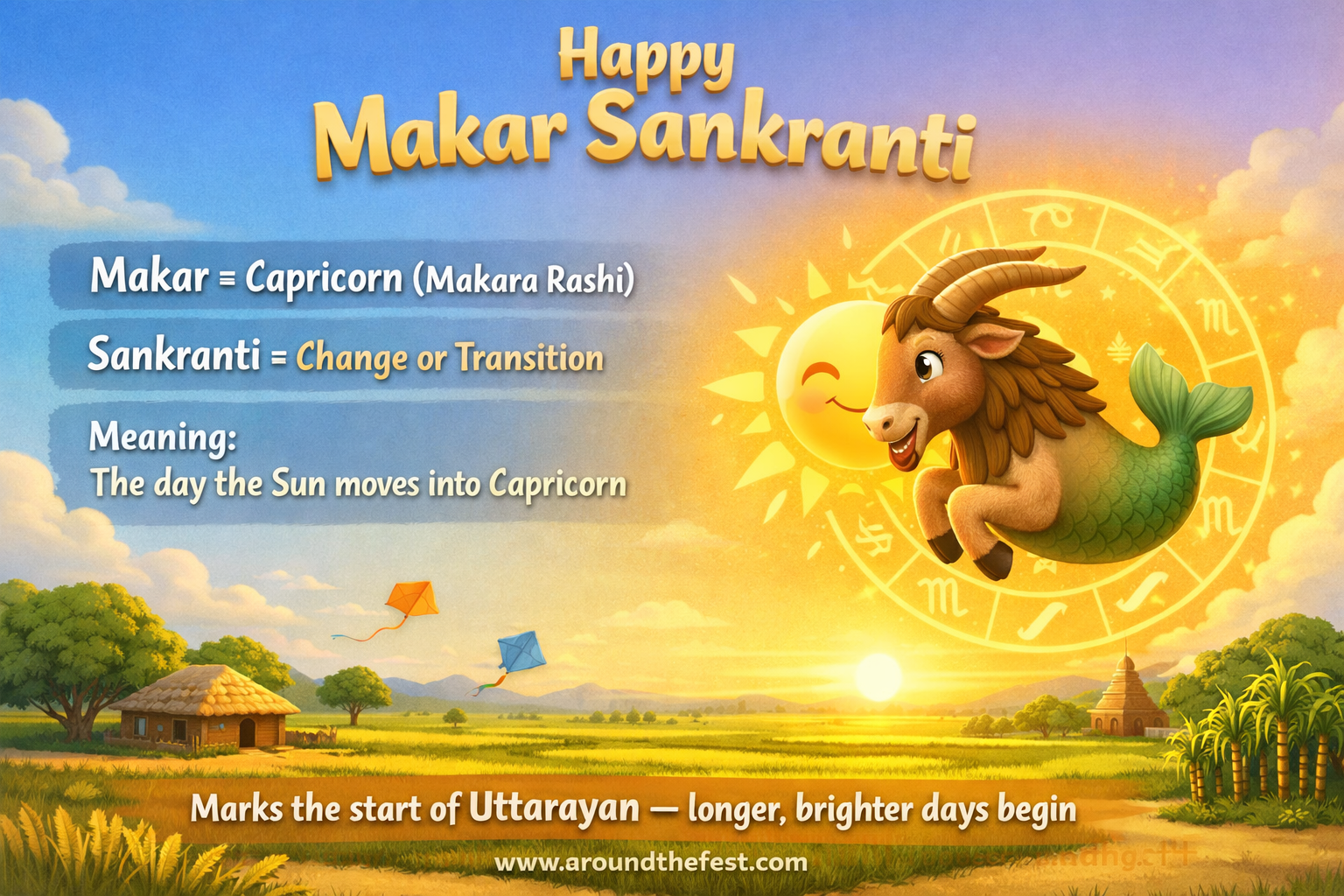
- Makar means Makara Rashi, which is Capricorn in astrology.
- Sankranti means a transition or movement/shift or change
- Together, Makar Sankranti marks the day when the Sun moves into Capricorn.
- This solar shift begins the Sun’s northward journey, known as Uttarayan.
In simple words, Makar Sankranti celebrates a change in the Sun’s position that signals the end of intense winter and the start of brighter, warmer days.
Think of it like that moment when you realize evenings don’t get dark so early anymore. You may not check the calendar, but you feel the change. Ancient societies noticed this shift in nature and gave it meaning through celebration.
When is Makar Sankranti celebrated?
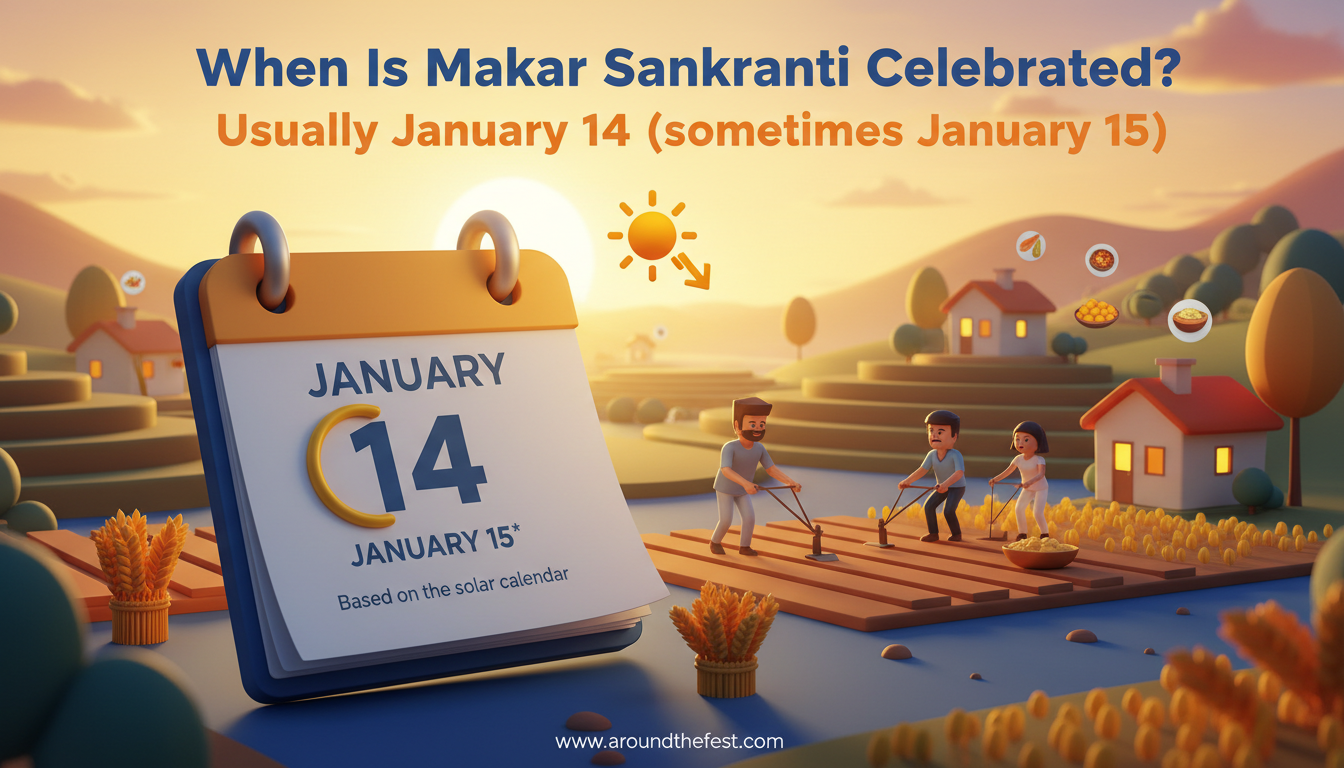
Makar Sankranti is celebrated almost every year on January 14. In some years, it falls on January 15 due to leap year adjustments. Unlike most Hindu festivals that depend on the Moon, this festival follows the solar calendar, which is why the date remains nearly fixed.
Even today, farmers, astrologers, and households treat Makar Sankranti as a seasonal turning point. Crop planning, food habits, and charitable acts often revolve around this day, showing that the meaning of Makar Sankranti is still practical—not just symbolic.
Why Makar Sankranti Is Celebrated: Astrological Importance Explained
To truly understand why Makar Sankranti is celebrated, we need to look at its astrological meaning. This is one of the strongest reasons the festival holds such importance across India.

Why does the Sun’s movement matter in astrology?
In Vedic astrology, the Sun is not just a planet. It represents:
- Energy and vitality
- Growth and progress
- Seasonal rhythm and balance
Makar Sankranti marks the day when the Sun moves from Sagittarius into Makara Rashi (Capricorn). This change is not seen as ordinary. It signals a powerful shift in cosmic energy.
What is Uttarayan, and why is it important?
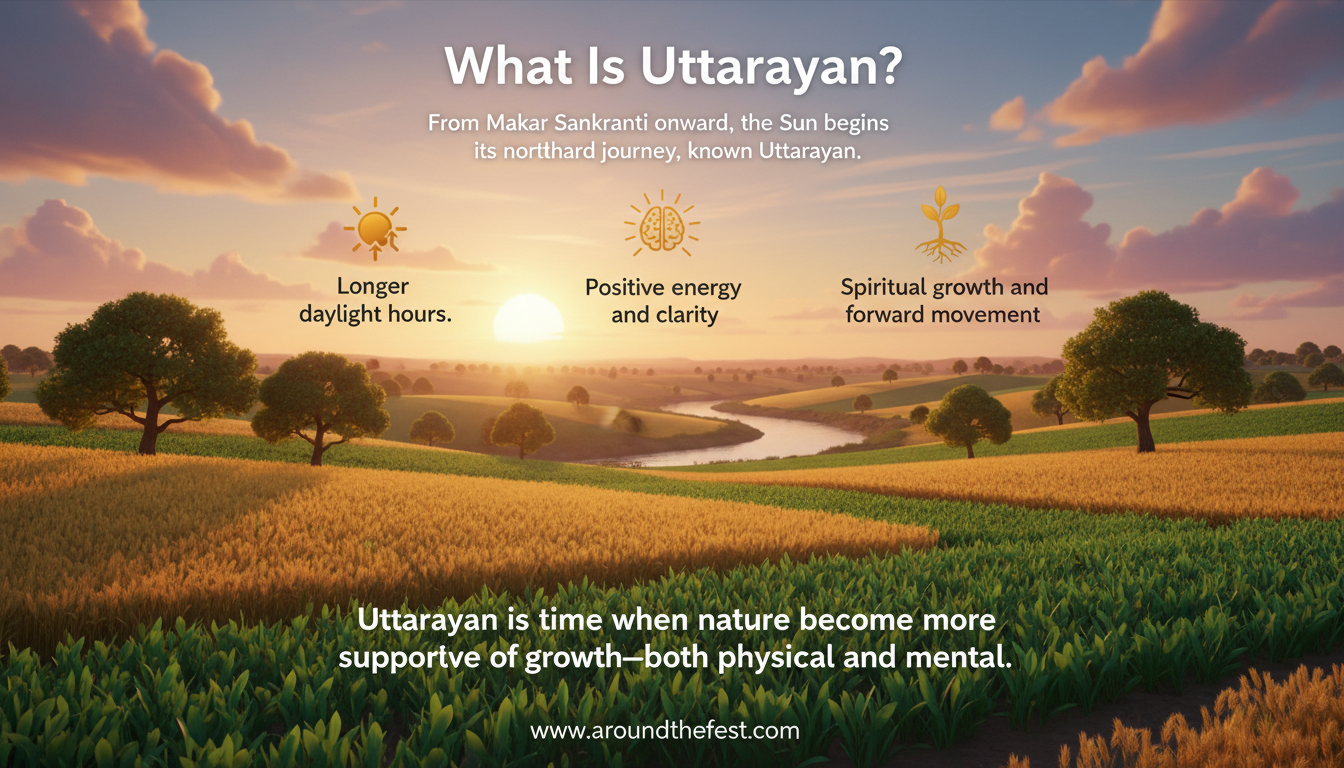
From Makar Sankranti onward, the Sun begins its northward journey, called Uttaraayan.
This phase is traditionally associated with:
- Longer daylight hours
- Positive energy and clarity
- Spiritual growth and forward movement
In simple terms, Uttarayan is believed to be a time when nature becomes more supportive of growth—both physical and mental.
Why is this shift considered auspicious?

Ancient belief holds that efforts made during Uttaraayan bring better results. That’s why:
- Charity and donations are encouraged
- Spiritual practices increase
- New beginnings are considered favorable
A well-known example comes from the Mahabharata, where Bhishma Pitamah chose to leave his body during Uttaraayan, believing it to be an auspicious time for liberation.
A real-life way to understand this
Think of Uttarayan like waking up earlier as days grow longer. You naturally feel more active and hopeful. In the same way, people see this solar shift as a reminder to move forward with optimism and purpose.
2025–2026 relevance
Even today, astrologers and Panchangs in 2025 and 2026 continue to mark Makar Sankranti as a key solar transition. This shows how ancient astrological understanding still aligns closely with modern astronomical observation.
The Scientific Reason Behind Why Makar Sankranti Is Celebrated
While astrology explains one side of the story, science helps us understand why Makar Sankranti is celebrated in a very practical way. This is where ancient observation meets modern understanding.
What actually happens in space?
Makar Sankranti is linked to the Earth’s tilt and its movement around the Sun. Around late December, the Earth reaches the winter solstice, when nights are longest. After this point, daylight slowly starts increasing.
By mid-January, this change becomes noticeable. Makar Sankranti marks the time when the Sun’s apparent movement shifts northward, bringing longer days and slightly warmer temperatures.
In simple terms, nature starts moving away from winter and toward spring.
Why ancient people noticed this change
Ancient communities lived close to nature. They didn’t have weather apps, but they observed:
- Sunlight lasting a little longer
- Morning cold slowly reducing
- Better conditions for crops and outdoor work
They marked this visible shift with a festival, which later became Makar Sankranti.
How food habits support the science
Traditional Makar Sankranti foods are not random.
- Sesame seeds help generate body heat
- Jaggery provides instant energy
- Ghee supports digestion in cold weather
Modern nutrition science still supports these choices, especially during seasonal transitions.
A real-life way to relate to this
Think about how your mood changes when days become brighter. You feel more active and motivated, even without realizing why. That same natural response is what people celebrated centuries ago.
2025–2026 scientific relevance
Climate experts in recent years have emphasized the importance of respecting seasonal cycles due to changing weather patterns. Festivals like Makar Sankranti remind us to stay connected to natural rhythms—something increasingly valuable in 2025 and 2026.
Historical Origins: Why Makar Sankranti Has Been Celebrated for Centuries
To fully understand why Makar Sankranti is celebrated, it helps to look back at its historical roots. This festival did not begin as a single event or strict rule. Instead, it developed gradually as people observed the Sun, changing seasons, and agricultural cycles over time.
Where does Makar Sankranti come from?
Several ancient Hindu texts, including the Puranas, mention Makar Sankranti. These texts explain how people once tracked time by watching the Sun’s movement. As a result, the Sun became a powerful symbol of change and continuity. Unlike festivals linked to specific mythological stories, Makar Sankranti stays closely connected to natural cycles. This strong connection explains why people have celebrated it for centuries.
One of the most well-known historical references appears in the Mahabharata. Bhishma Pitamah chose to leave his mortal body during Uttarayan because he believed this period was especially auspicious. Through this story, ancient texts highlight the deep respect given to the Sun’s northward journey.
How the festival evolved over time
In early agrarian societies, Makar Sankranti marked:
- The end of harsh winter conditions
- A natural pause after harvesting
- Preparation for the next agricultural cycle
As communities grew, people gradually added rituals to the celebration. Families began offering food, bathing in rivers, and giving to charity. Over time, regional customs developed. However, the core meaning of the festival remained unchanged.
A real-life historical connection
Even today, rural communities across India treat Makar Sankranti as a seasonal milestone. Farmers review harvest outcomes, households prepare special foods, and elders pass down traditions. Because of this continuity, the festival feels alive rather than distant history.
Many ancient festivals faded with time. Makar Sankranti did not. Its close connection to the Sun and seasons keeps it meaningful in every era, including 2025 and 2026.
Why Makar Sankranti Is Celebrated as a Harvest Festival
To understand why Makar Sankranti is celebrated as a harvest festival, it helps to look at India’s agricultural rhythm. For farming communities, this time of year marks an important pause between what has been harvested and what lies ahead.
Why Makar Sankranti is linked to agriculture
In many parts of India, January signals the end of the Rabi harvest season. Farmers complete months of hard work and finally see the results of their efforts. Because of this, Makar Sankranti became a time to express gratitude—for the crops, the land, and the Sun that made growth possible.
Traditionally, families thank nature before planning the next farming cycle. This mindset turns the festival into a moment of reflection rather than just celebration.
How harvest traditions became part of the festival
In early agrarian societies, people used Makar Sankranti to:
- Celebrate successful harvests
- Rest after intense seasonal labor
- Prepare fields and seeds for upcoming crops
Over time, these practical activities turned into cultural traditions. Special foods made from freshly harvested grains became common. Community feasts and shared meals strengthened social bonds. As a result, the festival grew beyond farming and became a community-wide celebration.
A real-life farming connection
Even today, many rural families plan important agricultural decisions around Makar Sankranti. Farmers assess crop yields, discuss market plans, and prepare for the next season. In 2025 and 2026, despite modern farming tools, this seasonal checkpoint still holds value.
Many festivals focus on rituals alone. Makar Sankranti stands apart because it celebrates effort, patience, and gratitude. Its harvest roots keep it grounded in real life, which is why it continues to resonate across generations.
Cultural Significance: Why Makar Sankranti Is Celebrated Differently Across India
To understand why Makar Sankranti is celebrated differently across India, it helps to look at the country’s cultural diversity. While the Sun’s movement remains the same everywhere, regional traditions shape how people celebrate the festival.
Why one festival has many names
India’s geography and climate vary widely. Because of this, communities adapted Makar Sankranti to match local lifestyles and crops. Over time, the festival took on different names and customs, even though the core meaning stayed unchanged.
For example, in North India it is known as Makar Sankranti, while in Gujarat it is called Uttarayan. In Tamil Nadu, people celebrate it as Pongal, and in Assam, it appears as Magh Bihu. Each name reflects regional identity rather than a different festival.
How regional traditions shaped celebrations
Different regions added their own customs to the festival:
North India: Holy river baths, charity, and spiritual gatherings
Gujarat & Rajasthan: Kite flying that symbolizes freedom and joy
Tamil Nadu: Multi-day Pongal celebrations honoring the Sun, land, and cattle
Maharashtra: Tilgul exchange with the message of harmony and kindness
Assam: Community feasts and bonfires during Magh Bihu
Although the rituals differ, all these traditions express gratitude, renewal, and hope.
A real-life cultural connection
Even today, families who move to cities often keep their regional Makar Sankranti traditions alive. In 2025 and 2026, social media and community events help people celebrate together, even when they live far from their hometowns.
Many festivals lose meaning when customs change. Makar Sankranti grows stronger because it adapts. Its ability to fit different cultures keeps it relevant and deeply rooted across India.
Religious & Spiritual Importance: Why Makar Sankranti Is Celebrated as an Auspicious Day
To truly understand why Makar Sankranti is celebrated as an auspicious festival, we must look beyond rituals and into its spiritual meaning. This day marks a shift not only in the Sun’s path but also in how people reflect, reset, and reconnect with their beliefs.
Why Makar Sankranti is considered spiritually powerful
Makar Sankranti signals the beginning of Uttarayan, when the Sun starts moving northward. In Hindu philosophy, this phase symbolizes light, growth, and positive energy. As a result, many people believe that actions taken during this time carry long-lasting spiritual benefits.
Unlike most Hindu festivals, which follow the lunar calendar, Makar Sankranti follows the solar calendar. Because of this, the date remains relatively fixed, usually falling on January 14 or 15 each year, including in 2025 and 2026. This consistency strengthens its spiritual reliability.
How spirituality shapes Makar Sankranti rituals
People express their devotion in simple yet meaningful ways:
- Holy river bathing to cleanse the body and mind
- Charity and donations, especially food and clothes
- Prayers to the Sun God (Surya) for health and prosperity
- Fasting or light meals to encourage discipline and clarity
These practices focus less on grand ceremonies and more on inner balance.
A real-life spiritual example
Even today, many families begin Makar Sankranti mornings with quiet prayers. Elders often advise donating food before eating themselves. In cities during 2025–2026, temples report higher footfall on this day, especially during sunrise prayers, showing that faith remains strong despite modern lifestyles.
In a fast-paced world, festivals can feel rushed. However, Makar Sankranti invites pause. It reminds people to let go of negativity and move forward with intention—just like the Sun’s steady journey north.
This spiritual simplicity is why Makar Sankranti continues to feel meaningful, generation after generation.
Astronomical & Scientific Reasons: Why Makar Sankranti Is Celebrated Based on the Sun’s Movement
Beyond religion and tradition, one of the strongest reasons why Makar Sankranti is celebrated lies in astronomy. This festival is directly linked to a real, observable change in the Sun’s position—something ancient scholars tracked with remarkable accuracy.
What actually happens astronomically on Makar Sankranti
On Makar Sankranti, the Sun enters the zodiac sign Makara (Capricorn). This transition is known as Makara Sankramana. From this point onward, the Sun begins its northward journey, called Uttarayan.
Scientifically, this period aligns closely with the post-winter solstice phase, when:
- Days gradually become longer
- Sunlight intensity increases
- Temperatures slowly begin to rise
In 2025 and 2026, astronomical calendars confirm this solar transition around January 14, with minor regional variations due to Earth’s axial tilt and orbital calculations.
Why ancient India treated this solar shift as important
Long before modern astronomy, Indian scholars observed how the Sun affected:
- Crop growth
- Seasonal health patterns
- Animal behavior
- Human energy levels
They noticed that after mid-January, harsh winter conditions eased. As a result, they marked this solar movement as a turning point—both physically and symbolically.
Unlike many festivals based on mythological stories, Makar Sankranti stands out because it is science-driven.
How science connects with daily life
Even today, doctors and wellness experts acknowledge that increased sunlight helps improve:
- Vitamin D absorption
- Mood and energy levels
- Metabolic activity
That’s one reason traditional foods during Makar Sankranti—like til (sesame) and jaggery—support warmth and digestion during seasonal transition.
A real-life modern example
In rural India, farmers still plan sowing cycles around mid-January sunlight patterns. Meanwhile, in urban areas during 2025–2026, many people notice earlier sunrises and slightly warmer afternoons after Makar Sankranti—small changes, but consistent ones.
Why this scientific relevance keeps the festival timeless
Trends change. Calendars update. But the Sun’s movement remains constant. That’s why Makar Sankranti hasn’t lost relevance. It celebrates a natural event that affects every living being—then and now.
This rare blend of science, tradition, and observation explains why Makar Sankranti is celebrated across centuries and cultures.
Cultural & Regional Traditions: Why Makar Sankranti Is Celebrated Differently Across India
One reason why Makar Sankranti is celebrated so widely is its ability to adapt to local cultures. While the Sun’s movement stays the same, the way people celebrate changes from state to state. This diversity makes the festival feel personal everywhere, not uniform.
Why Makar Sankranti has many regional names
As the festival spread across India, communities shaped it around their language, crops, and climate. That’s why Makar Sankranti appears under different names:
Pongal in Tamil Nadu
Uttarayan in Gujarat
Magh Bihu in Assam
Lohri in Punjab (closely linked to Sankranti)
Maghi in parts of North India
Although the names differ, each celebration honors the same solar transition.
How traditions reflect local life and agriculture
Regional customs grew from daily life:
In Gujarat, people fly kites to welcome the Sun and warmer skies
Tamil Nadu, families cook sweet Pongal as a sign of gratitude
In Assam, communities celebrate harvest success through Magh Bihu feasts
Maharashtra, people exchange til-gud and say, “Til-gud ghya, goad goad bola”
These rituals reflect local food habits, farming cycles, and social values.
A real-life cultural example
During Makar Sankranti 2025, Ahmedabad again hosted large public kite-flying events, while villages in Tamil Nadu focused on home-based Pongal rituals. Even within the same country, the mood, food, and activities felt completely different—yet spiritually connected.
Why cultural diversity strengthens the festival
Instead of dividing people, regional variations create unity. Everyone celebrates in their own way, but everyone celebrates together in time. This flexibility helps Makar Sankranti stay relevant across generations and regions.
Why this matters today
In a globalized world, festivals often become commercial. However, Makar Sankranti resists that trend. Its regional roots keep it grounded, meaningful, and deeply human—even in 2026 and beyond.
This cultural richness explains why Makar Sankranti is celebrated not as one event, but as many shared experiences across India.
Food Traditions & Seasonal Diet: Why Makar Sankranti Is Celebrated with Sesame and Jaggery
One of the most relatable ways to understand why Makar Sankranti is celebrated is through food. Across India, this festival is closely tied to seasonal eating habits that developed from real health needs, not trends or superstition.
Why sesame and jaggery are central to Makar Sankranti
Mid-January marks a delicate seasonal shift. Winter hasn’t fully ended, yet the Sun’s warmth begins to return. During this time, the body needs foods that generate heat and support digestion.
That’s exactly why traditional Makar Sankranti foods include:
Sesame seeds (til) – rich in healthy fats and warmth-producing energy
Jaggery (gur) – helps cleanse the body and boost iron levels
Ancient dietary wisdom recognized this balance long before modern nutrition science confirmed it.
How food choices connect to health and climate
During winter, digestion slows down. Makar Sankranti foods counter this naturally:
- Til helps lubricate joints and improve digestion
- Jaggery supports immunity and prevents seasonal fatigue
- Warm preparations reduce cold-related stiffness
In 2025–2026, nutrition experts continue to recommend seasonal eating, reinforcing how traditional Sankranti diets remain relevant today.
Regional food variations with the same purpose
Although recipes differ, the intention stays the same:
- Til-gud laddoos in Maharashtra
- Sweet Pongal in Tamil Nadu
- Chikki and rewadi in North India
- Pitha in Assam
Each dish uses local ingredients while serving the same seasonal need.
A real-life food tradition example
Even today, families make Sankranti sweets at home instead of buying them. Grandparents often explain why til-gud is eaten before sunrise or shared with neighbors. These small habits quietly pass down generations of knowledge.
Why food traditions keep the festival grounded
Unlike festivals driven by luxury or display, Makar Sankranti’s food culture feels practical and inclusive. Everyone eats. Everyone shares. That simplicity keeps the festival warm—both literally and emotionally.
This is another reason why Makar Sankranti is celebrated not just as a ritual, but as a lifestyle tradition that adapts beautifully to time.
Social & Ethical Values: Why Makar Sankranti Is Celebrated as a Festival of Charity and Togetherness
Beyond rituals, science, and food, one powerful reason why Makar Sankranti is celebrated lies in its social message. This festival encourages kindness, sharing, and community bonding at a time when warmth—both emotional and physical—matters most.
Why charity plays a central role in Makar Sankranti
Makar Sankranti falls at a moment when many households have recently completed harvests. Historically, this made it the perfect time to give back. As a result, charity became a core tradition.
People donate:
- Food grains and sweets
- Warm clothes and blankets
- Money to temples or community kitchens
- Unlike charity driven by obligation, Sankranti giving feels natural and joyful.
How togetherness shapes the celebration
Makar Sankranti rarely focuses on isolation or private worship. Instead, it brings people together:
- Families gather for shared meals
- Neighbors exchange sweets
- Communities organize fairs and kite festivals
- This social interaction reduces winter loneliness and strengthens relationships.
A real-life example of modern relevance
In 2025, many cities across India saw Sankranti food drives organized by resident groups and NGOs. Volunteers distributed til-gud, khichdi, and winter essentials to those in need. Even in urban life, the festival continues to promote empathy.
Why ethical values keep the festival timeless
Trends change, but values endure. Makar Sankranti reminds people that progress means lifting others as you move forward—just like the Sun’s steady rise brings light to everyone.
Why this message matters today
In a fast-paced digital world, genuine connection often feels rare. Makar Sankranti quietly pushes back against that. It encourages people to step outside, share food, and speak kindly.
This ethical grounding explains why Makar Sankranti is celebrated not only as a festival, but as a reminder of how society thrives through generosity.
Modern-Day Relevance: Why Makar Sankranti Is Celebrated Even in Today’s Fast-Paced World
With changing lifestyles, many people wonder why Makar Sankranti is celebrated with the same enthusiasm today. The answer is simple: the festival has adapted without losing its soul. Even in modern, urban settings, its core meaning still fits everyday life.
Why Makar Sankranti still matters in urban life
City life often disconnects people from seasons. Air-conditioned homes, fixed routines, and digital work blur natural cycles. Makar Sankranti gently restores that connection.
It reminds people to:
- Notice changing daylight
- Adjust food habits seasonally
- Pause and reset intentions
- This awareness feels refreshing in a busy world.
How celebrations have evolved in recent years
Traditions have changed, but they haven’t disappeared:
- Kite flying now happens on rooftops and terraces
- Digital greetings replace handwritten notes, yet the message remains
- Community events mix tradition with sustainability
In 2025–2026, eco-friendly kites and online charity drives gained popularity, showing thoughtful evolution.
A real-life modern example
In many metro cities, working professionals take short breaks on Sankranti mornings to perform simple prayers or share homemade til sweets with colleagues. Some offices even host cultural lunches, keeping traditions alive within modern routines.
Why the festival works across generations
Elders appreciate its meaning. Younger generations enjoy its simplicity. Children love kites and sweets. This multi-generational appeal helps the festival stay relevant without force.
Across the US, UK, and Australia, Indian communities organize Sankranti gatherings every January. Even abroad, the festival helps people feel grounded and connected to home.
This adaptability explains why Makar Sankranti is celebrated not as a relic of the past, but as a living tradition that grows with time.
Conclusion: Why Makar Sankranti Is Celebrated and Why It Still Matters Today
After exploring its history, science, culture, food, and social values, one thing becomes clear: Makar Sankranti is celebrated because it marks meaningful change. It celebrates the Sun’s northward journey, the easing of winter, and the quiet promise of renewal.
Unlike many festivals tied to stories or legends alone, Makar Sankranti connects people to nature in a real, observable way. It reminds us to eat with the season, give generously, and move forward with warmth—both literal and emotional.
Even in 2025 and 2026, when life feels faster and more digital, this festival still asks us to slow down. Whether through kite flying, shared sweets, charity, or simple prayer, Makar Sankranti offers balance.
That enduring relevance explains why Makar Sankranti is celebrated across centuries, regions, and generations—not out of habit, but because its message still fits modern life.
Frequently Asked Questions: Why Makar Sankranti Is Celebrated
Q1. Why is Makar Sankranti celebrated every year on almost the same date?
Ans. Makar Sankranti follows the solar calendar. It occurs when the Sun enters Capricorn, usually on January 14 or 15, making it one of the most date-consistent Hindu festivals.
Q2. What is the scientific reason behind Makar Sankranti?
Astronomically, the festival marks the Sun’s northward movement (Uttarayan), which leads to longer days and increasing warmth after winter.
Q3. Why is Makar Sankranti considered auspicious?
Spiritually, Uttarayan symbolizes growth, positivity, and new beginnings. Many believe actions taken during this period bring lasting benefits.
Q4.Why are sesame and jaggery eaten on Makar Sankranti?
Ans. These foods generate heat, aid digestion, and support immunity during the seasonal transition from winter to spring.
Q5. Why is Makar Sankranti celebrated differently across India?
Ans. Each region adapts the festival to its climate, crops, and culture. While rituals vary, the core meaning tied to the Sun remains the same.
Q5. Is Makar Sankranti relevant in modern times?
Ans. Yes. Even today, it promotes seasonal awareness, community bonding, and ethical values—making it meaningful in both rural and urban life.